Tag: Barroso project

  • Savannah Resources Gains Local Support for Controversial Barroso Lithium Project in Portugal

    Savannah Resources Gains Local Support for Controversial Barroso Lithium Project in Portugal

    Savannah Resources has secured new backing from local landowners for its Barroso lithium project in northern Portugal, which is set to become Europe’s largest lithium mine. This development comes as the company seeks to navigate years of community opposition and legal challenges that have delayed the project. The Barroso project, with a capital expenditure of $417 million, has been designated as strategic by the EU, highlighting its importance in establishing a European lithium supply chain critical for the electric vehicle industry.

    The company announced three new benefit-sharing agreements with local communal land managers, known as baldios, which aim to ensure that the communities have a stake in the project and its benefits. CEO Emanuel Proença emphasised that these agreements are not just about land access but also about recognising the rights of local communities that have managed these lands for generations. Savannah is optimistic about receiving its final environmental licence in the third quarter of this year, with plans to make a final investment decision by the end of the year and commence production by 2028.

    Despite the backing from local landowners, the Barroso project has faced significant opposition from residents and environmental groups concerned about its potential impact on agriculture, water resources, and biodiversity in the region, which is recognised by the UN as a Globally Important Agricultural Heritage System. The project’s feasibility study, released in July, indicated that it could produce an average of 183,000 tonnes of spodumene concentrate annually, enough to supply batteries for approximately 500,000 electric vehicles.

    Savannah’s study also projected a robust after-tax net present value of $913 million and an internal rate of return of 43%, with a payback period of less than two years. The project is positioned competitively within the global hard-rock lithium cost curve, with average operating costs estimated at $473 per tonne of concentrate.

    To address environmental concerns, Savannah has proposed measures such as dry-stack tailings, a lined storage facility, and a water recycling system. The new agreements with local baldios include provisions for community participation in project oversight, local reinvestment of project benefits, and inflation-indexed rental payments. Additionally, a partnership with the regional baldios secretariat aims to support forest management and wildfire prevention in the area.

    Portugal has a history of lithium production for the ceramics industry, but the Barroso project represents a significant step towards developing a large-scale battery materials sector in the country. Earlier this year, the Portuguese government awarded Savannah a €110 million grant to support the advancement of the Barroso project, further underscoring the official backing for this initiative. The project has also seen a 40% increase in its mineral reserve estimates, reinforcing its economic viability as it aims to become western Europe’s first major lithium mine.


  • Savannah Resources Delays Key Studies for Barroso Lithium Project in Portugal

    Savannah Resources Delays Key Studies for Barroso Lithium Project in Portugal

    Savannah Resources has slightly revised the timeline for its flagship Barroso lithium project in northern Portugal, now expecting to complete its definitive feasibility study and environmental compliance process in July.

    The updated schedule represents a minor delay from the company’s previous target of end-June completion. Despite this, Savannah maintains its broader development timeline, with the final environmental licence anticipated in the third quarter of 2026, a final investment decision by year-end, and first production targeted for 2028.

    Chief executive Emanuel Proença stated that the company can meet required technical and environmental standards without waiting for additional geotechnical and resource data from ongoing fieldwork. Instead, this data will be incorporated into future engineering phases. The decision follows validation from independent technical consultants and project finance advisers.

    The Barroso project has been designated as a “strategic” asset under the European Critical Raw Materials Regulation and is considered by Savannah to be Europe’s largest spodumene lithium deposit. The company is currently finalising metallurgical testing and conducting environmental studies, including noise modelling, as part of the permitting process.

    Savannah plans to develop four open-pit mines at the site, with projected annual output sufficient to supply lithium for approximately 500000 electric vehicles. According to the company, the project is economically viable at lithium prices of around $600 per tonne, positioning it as a competitive source of supply for European battery manufacturers seeking shorter and more secure supply chains.

    The company is also progressing procurement, with a tender underway for detailed engineering services and a contractor expected to be selected in the coming weeks. Additional fieldwork is pending approval for temporary land access and will inform subsequent project stages.

    Portugal has historically produced lithium for ceramic applications but has yet to establish large-scale battery-grade production. The government has recently awarded Savannah a €110 million grant to support the project’s development.

    However, the Barroso project continues to face opposition from local communities and environmental groups, particularly given the area’s designation as a World Heritage agricultural landscape since 2018.

  • Portugal’s Lithium Debate Intensifies as EU Pushes for Faster Mining Projects

    Portugal’s Lithium Debate Intensifies as EU Pushes for Faster Mining Projects

    Portugal has once again become a focal point in Europe’s race to secure lithium for electric mobility, as the European Commission presses for the removal of barriers delaying mining projects. This comes just as Savannah Resources, a UK-based company, announced a major increase in estimated resources at its Barroso project in Boticas, northern Portugal.

    Savannah reported that confirmed resources at Barroso have risen by 40% to 39 million tonnes, with exploration targets potentially lifting that figure to 62 million tonnes. The company suggested that in time, deposits could exceed 100 million tonnes of lithium mineralisation — theoretically enough to supply batteries for 47 million electric vehicles. The project, flagged by Brussels as one of three “strategic” lithium developments in Portugal, benefits from simplified licensing procedures under the EU’s Critical Raw Materials Act.

    However, local opposition remains fierce. Communities in Covas do Barroso, environmental groups, and academics argue that the mine would devastate heritage landscapes, deplete scarce water resources, and offer limited returns given Portugal’s comparatively small reserves. Despite being described as Europe’s largest deposit, Portugal holds just 60,000 tonnes of lithium reserves — far less than global leaders such as Chile, Australia, and China, which hold millions of tonnes.

    Former PSD environment secretary Joaquim Poças Martins has warned that lithium cannot be a long-term solution for Europe’s energy transition. “You cannot destroy a mountain in order to extract a few kilos of lithium,” he said, pointing instead to hydrogen as a more viable energy storage alternative.

    The European Commission, led by President Ursula von der Leyen, maintains that lithium projects are vital for reducing dependence on China and other dominant suppliers. Von der Leyen this week called for urgent action to fast-track such initiatives, citing lithium processing in Portugal as a priority.

    Yet Portugal’s environment minister Maria da Graça Carvalho has acknowledged the difficulty of advancing projects “against the will of everyone around you.” Meanwhile, a UN committee recently ruled that Portuguese authorities failed to respect citizens’ rights to environmental information and participation in the case of the Barroso mine.

    For residents, the stakes remain high. Campaigner Aida Fernandes of United in the Defence of Covas do Barroso argues the mine represents “destruction in the name of climate protection,” while former mayor Fernando Queiroga has warned that water scarcity could make the project disastrous during drought years.

    With Brussels urging speed and locals vowing resistance, Portugal’s lithium question has become a defining test of how Europe balances strategic ambitions with environmental and social sustainability.

  • Savannah Resources Raises £4.24M to Advance Barroso Lithium Project in Portugal

    Savannah Resources Raises £4.24M to Advance Barroso Lithium Project in Portugal

    Savannah Resources Plc (LON:SAVS, AIM:SAV) has successfully raised £4.24 million ($5.81 million) to fund its flagship Barroso Lithium Project in northern Portugal, the company announced on Friday. The fundraising was completed through an accelerated bookbuild and subscription, with shares priced at 3.5 pence each.

    The raise included £2.22 million via a placement of over 63 million shares and a minimum of £2.02 million from the subscription of nearly 58 million shares. Savannah’s retail offer remains open until July 1, with final figures to be announced thereafter.

    Key institutional investors participated in the raise, including AMG Lithium B.V., Al Marjan Limited, Grupo Lusiaves SGPS, and Mário Nuno dos Santos Ferreira, as well as company directors Rick Anthon and Dale Ferguson, who subscribed for a combined 1,000,002 shares.

    The new shares are set to begin trading on AIM on July 2.

    CEO Emanuel Proença emphasized that the proceeds will bolster Savannah’s financial position and support continued development of the Barroso Lithium Project, designated a Strategic Project by the European Commission under the Critical Raw Materials Act in March 2025.

    According to the company, Barroso is Europe’s largest defined battery-grade spodumene lithium deposit and is forecasted to supply enough lithium for around 500,000 EV battery packs annually once in production.

    The bookbuilding was led by SP Angel Corporate Finance LLP, with Canaccord Genuity Limited, Caixa-Banco de Investimento, S.A, and Alantra Equities, SV, S.A acting as joint bookrunners.

  • Savannah Resources to Resume Drilling at Barroso Lithium Project After Suspension Lifted

    Savannah Resources to Resume Drilling at Barroso Lithium Project After Suspension Lifted

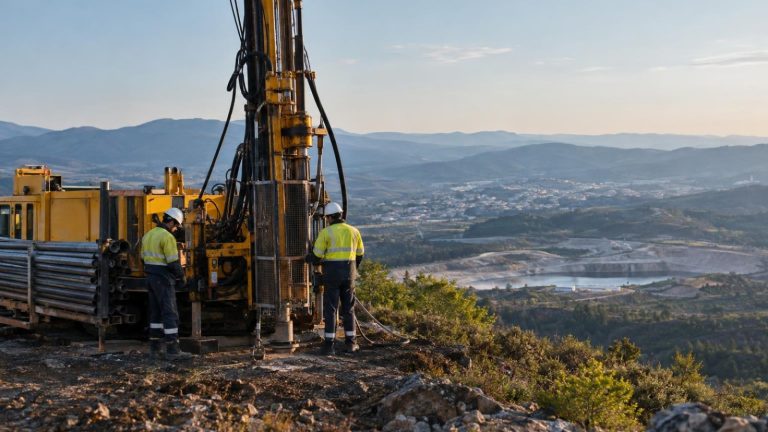
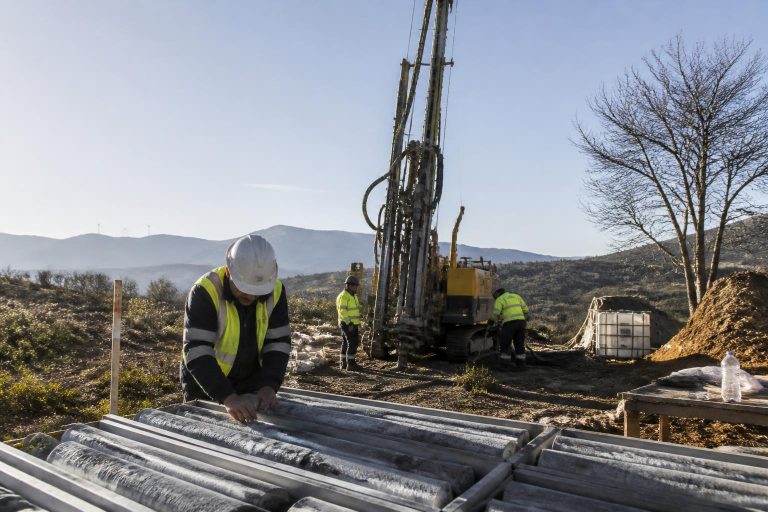
    Savannah Resources (LON: SAV) will immediately restart fieldwork and drilling at its Barroso lithium project in Portugal after the government lifted a temporary suspension order.

    The British company had paused work earlier this month following a precautionary injunction filed by landowners challenging the government’s approval for Savannah to access land it does not own. However, authorities issued a “reasoned resolution” stating that delays would be costly and harmful to the public interest, according to Savannah’s statement.

    Despite the news, Savannah’s stock fell 1.02% to £4.36 per share in London on Friday, giving the company a £95 million ($120 million) market capitalization.

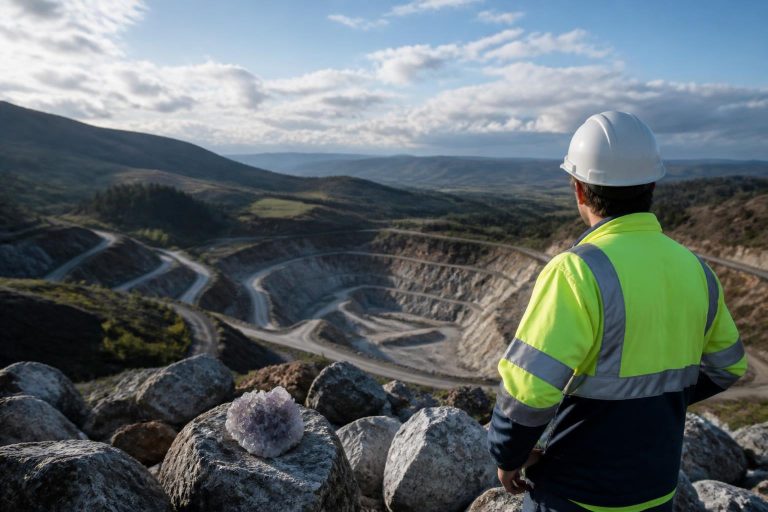
    Barroso’s spodumene deposit is Europe’s largest, with recent prospecting results indicating it could exceed the previously estimated 28 million tonnes of high-grade lithium. However, the project has faced strong local opposition, including protests, legal battles, and refusals to sell land. Approximately 24% of the required land is privately owned, while 75% consists of common land (“baldios”).

    First Lithium Output in 2027

    Savannah aims to build four open-pit mines to supply lithium for 500,000 to 1 million electric vehicle batteries annually. The company is targeting first production by 2027.

    Once operational, Barroso is expected to produce 1.5 million tonnes annually over a 14-year mine life, based on a 20.5-million-tonne resource at 1.05% lithium oxide.

  • Savannah Resources Predicts Lithium Price Rebound by 2027, Targets Production in Portugal

    Savannah Resources Predicts Lithium Price Rebound by 2027, Targets Production in Portugal

    Savannah Resources, a London-based mining company, anticipates a rebound in lithium prices by 2027, aligning with its plans to begin commercial production at its Barroso mining project in Portugal, according to CEO Emanuel Proenca. Lithium, a key material used in electric vehicle (EV) batteries and appliances, has seen an 80% price dropover the past year due to overproduction in China and a reduction in EV demand.

    Proenca emphasized that the market’s fundamentals remain strong, predicting a supply deficit from 2027 onward, which fits Savannah’s project timeline. He expressed optimism about global lithium demand, expecting it to grow 2.6 times over the next seven years, with a sharp acceleration starting in 2027.

    Savannah aims to bring the Barroso project online in 2027, delayed by a year due to a political change in Portugal. The company plans to build four open-pit mines in the northern Barroso region, extracting enough lithium for half a million EV batteries annually. Despite facing opposition from local residents and environmentalists, Proenca assured that the project would proceed.

    His optimism is echoed by Rio Tinto’s CEO, Jakob Stausholm, who recently announced the company’s acquisition of Arcadium Lithium for $6.7 billion, positioning Rio Tinto as a leading global player in lithium mining.