Region: Europe

  • Cornish Tin & Lithium Confirms 3.27km Lithium System and New High-Grade Tin Discovery at Tregonning as Company Rebrands

    Cornish Tin & Lithium Confirms 3.27km Lithium System and New High-Grade Tin Discovery at Tregonning as Company Rebrands

    Cornish Tin & Lithium — formerly Cornish Tin Limited — has announced significant Phase 3 drilling results from its Tregonning project in west Cornwall, confirming that a lithium-bearing rock formation extends 3.27 kilometres from Tregonning North to Tregonning South while simultaneously intersecting a new high-grade tin mineralisation system containing ten lodes identified to date.

    The Phase 3 programme, conducted between September 2025 and January 2026, was primarily designed to test lithium-enriched aplite-pegmatite sheets in the newly identified Tregonning South extension area. Results confirmed that the Newall Formation — a lithium-bearing geological unit first identified at Tregonning North, where earlier drilling returned intervals including 0.3 metres grading 1.33% lithium oxide with a peak grade of 1.42% — extends continuously across the full 3.27 kilometre strike length. Multiple lithium-bearing layers at different depths across the project area suggest the total resource potential may be larger than previously assessed.

    The tin discovery at Tregonning South adds a second commodity dimension of significant scale. High-grade intersections include 2.69% tin in the Norcross No.1 Lode, 1.68% tin in Rib South Lode and 1.26% tin in Rib North Lode, alongside an associated sheeted vein system extending across the area.

    To reflect the project’s dual-commodity evolution, the company has rebranded as Cornish Tin & Lithium. CEO and founder Sally Norcross-Webb said the name change underscored the company’s potential to become a leading domestic source of responsibly produced tin and lithium for electric vehicles, renewable energy systems and advanced electronics. “Tregonning South clearly has spectacular potential. Never before explored systematically, as a combined mining operation, our project areas in West Cornwall could make a very significant and positive contribution to Cornwall’s economy and the critical minerals resilience of the UK and Europe,” she said.

  • Ukraine Raises Alarm Over Irish Alumina Exports to Russia as Aughinish Controversy Deepens

    Ukraine Raises Alarm Over Irish Alumina Exports to Russia as Aughinish Controversy Deepens

    The Ukrainian Embassy in Ireland has issued a formal statement expressing serious concern over continuing exports of alumina from the Aughinish Alumina plant in Limerick to Russia, as the Irish government conducts an investigation and the European Commission declines to include the facility in its latest sanctions package.

    Ukraine’s embassy said the exports — which it claims are extensively used by Russia’s military-industrial complex — have grown significantly since the full-scale invasion of Ukraine in February 2022, rising from €196 million in 2021 to €318 million in 2025 and making Russia the largest single destination for Irish alumina exports. The embassy linked the material directly to Russian weapons production, naming Iskander-M ballistic missiles, Tsirkon hypersonic missiles, Kh-101 and Kalibr cruise missiles and Shahed-136 attack drones as systems that use aluminium derived from processed alumina.

    The Aughinish plant, Europe’s largest alumina refinery, has been owned since 2007 by Rusal — the Russian aluminium giant founded by Oleg Deripaska, a close associate of President Vladimir Putin who has himself been subject to repeated Western sanctions. The company operating the plant says it complies fully with all applicable EU laws, sanctions and export controls, and has implemented a robust sanctions compliance framework across its supply chain.

    The controversy deepened after an investigation by the Organised Crime and Corruption Reporting Project — a collective that includes The Irish Times — found that alumina from Aughinish was processed into aluminium and sold through a Moscow-based trader to clients including more than 40 EU-sanctioned Russian arms manufacturers. The European Commission nonetheless decided against including the plant in a recent sanctions package despite calls from nearly 40 MEPs.

    An accuracy dispute over the scale of Russian exports has also emerged. Ireland’s Central Statistics Office received data from the operating company indicating more than 80% of Aughinish exports went to Russia, a figure the company now says should be closer to 45% and is being corrected. Minister for Enterprise Peter Burke said the discrepancy in data supplied to the CSO was now being rectified.

    Minister of State Niall Collins defended the government’s approach, saying the Department of Enterprise review would be completed and furnished to the European Commission before any collective EU decision was taken. He also criticised some media reporting on the issue, though his remarks appeared directed at sources beyond the OCCRP, which has a long track record of award-winning investigations into corporate and financial data.

    The plant employs 475 staff directly and supports several hundred more indirect jobs, complicating any decision to restrict its operations.

  • The Transshipment Loophole: Is China using Morocco as a backdoor to Europe?

    The Transshipment Loophole: Is China using Morocco as a backdoor to Europe?

    The European Union faces a multi-billion-dollar geopolitical dilemma that cuts to the very core of its economic security.

    EU Trade Commissioner Maroš Šefčovič recently issued a stark warning regarding a massive surge in Chinese industrial investment in Morocco. The fear? Beijing is utilising “transshipment” to offshore its domestic industrial overcapacity and bypass mounting Western tariffs.

    With over $6 billion in Chinese capital flooding into Morocco’s green energy and automotive sectors, the North African nation is rapidly morphing into Africa’s premier EV hub.

    🔍 The Scale of the Pivot

    Major projects are reshaping the supply chain:

    • Gotion High-Tech is constructing a $1.3 billion battery gigafactory in Kenitra.
    • Industrial giants like CNGR, Shinzoom, and BTR New Material Group are establishing massive cathode, anode, and copper processing facilities.

    ⛓️ From Raw Materials to Consumer Products: The Resilience Crisis

    This isn’t just about final vehicle assembly; it is an encroachment across the entire vertical supply chain. To build truly resilient European supply chains, the block needs secure access to everything from critical raw materials up to the final consumer product.

    However, China already possesses the capability to dominate key components of Morocco’s industrial ecosystem, including the processing facilities and logistics infrastructure right up to the shipping ports. By dominating these upstream segments, foreign entities effectively lock in dependencies long before a battery component ever reaches a European consumer showroom. Under frameworks like the EU’s Critical Raw Materials Act (CRMA), Brussels has set ambitious targets to reduce reliance on dominant single nations—yet this investment pattern actively challenges those resilience goals.

    🇺🇸 vs 🇪🇺 Market Protection: Carrots vs. Sticks

    The Morocco-China nexus highlights a profound asymmetry in how the US and the EU protect their domestic markets and enforce economic resilience:

    • The US “Carrot” Model (Inflation Reduction Act): The US takes a highly transactional, aggressive approach to friendshoring. The IRA relies on massive tax incentives and localised demand signals (like the $7,500 EV consumer credit). Crucially, it deploys strict Foreign Entity of Concern (FEOC) restrictions that explicitly bar subsidies if battery components or critical minerals are sourced from Chinese entities—even if they are processed in an FTA partner nation. It explicitly redirects the flow of capital via financial reward.
    • The EU “Stick” Model (Regulatory & Compliance): Conversely, the EU relies on complex legal enforcement, strict “Rules of Origin” audits, and retrospective anti-subsidy tariffs. Without an equivalent pool of centralised cash or explicit bans on foreign entities operating in neighbouring free-trade zones, the EU has a much less efficient mechanism for preventing circumvention. Brussels must rely on tedious bureaucratic investigations to prove a product wasn’t “significantly transformed” locally—a process that is slow, easily litigated, and reactive.

    ⚖️ Brussels’ Policy Gridlock

    Retaliation isn’t simple. The European Commission is caught between economic defence and its own climate targets:

    • Supply Chain Disruption: European automotive giants like Renault and Stellantis have massive, long-standing manufacturing operations in Morocco. Punishing Moroccan exports directly penalises European corporate bottom lines.
    • The 2035 EV Mandate: Roughly 85% of Morocco’s automotive output is bound for Europe. The EU fundamentally relies on these close, cost-effective supply routes to meet its legally mandated 2035 ban on new fossil-fuel vehicles.
    • The Local Content Battle: Moroccan trade officials strongly reject allegations of corporate camouflage, noting that Chinese firms must achieve strict, legal thresholds of “significant local transformation” to qualify for tariff-free EU access.

    The EU has previously penalised specific Moroccan exports (like aluminium wheels) after finding evidence of unfair state aid. But scaling up enforcement to cover the entire battery ecosystem could spark a massive trade dispute or tank Europe’s own EV transition.

    🌐 Join the Discussion Across Europe, the Middle East, and Central Asia!

    These complex cross-border value chains, regulatory shifts, and mineral security strategies will be at the very center of our upcoming regional forums. Connect with industry leaders, policymakers, and midstream operators to debate the future of critical raw materials:

    🗓️ 24–25 June | Ankara: https://2026.minexasia.com/

    🗓️ 28–29 Oct | Trim: https://2026.minexeurope.com/

    👇 To the supply chain, trade policy, and automotive experts in my network:

    Is the EU’s regulatory approach robust enough to prevent this kind of economic circumvention, or does Europe need to adopt a US-style, incentive-backed “FEOC” policy to truly protect its clean-tech sector?

  • Slovakia Revokes Military Metals’ Trojarova Antimony Licence Without Explanation, Sending Shares Down 60%

    Slovakia Revokes Military Metals’ Trojarova Antimony Licence Without Explanation, Sending Shares Down 60%

    Military Metals Corp has suffered a potentially devastating setback at its flagship European asset after Slovakia’s Ministry of the Environment revoked the exploration licence for the Trojarova antimony-gold project near Bratislava without providing clear justification — a decision that sent the company’s shares sliding by up to 60% to a 52-week low on Friday.

    The revocation is particularly striking given its timing and context. The ministry’s decision came just weeks after Military Metals filed the NI 43-101 technical report supporting a maiden inferred mineral resource estimate of 6.5 million tonnes grading 1.02% antimony and 1.06 grams per tonne gold, containing 67,000 tonnes of antimony and 222,000 ounces of gold. The MRE had been published on 8 April, with analyst Christopher Ecclestone of Hallgarten & Company highlighting its strategic importance for Europe’s critical minerals needs and the value of the project’s existing Soviet-era underground infrastructure. The licence revocation also came despite Trojarova having been listed in Slovakia’s own National Program for the Exploration of Critical Mineral Raw Materials.

    Military Metals has announced it will appeal the decision within the 15-day statutory window and pursue all available legal options. The company described the revocation as inconsistent with Europe’s stated goals for secure critical mineral supply chains — a pointed observation given that antimony has been subject to Chinese export controls since September 2024, causing prices to double and exposing Western defence and semiconductor supply chains to acute vulnerability.

    Trojarova’s strategic case rests on antimony’s role in hardening lead for ammunition, flame retardants in military equipment, infrared detectors, semiconductors and next-generation batteries. The project’s location near Bratislava and its extensive historical workings were seen as advantages that could accelerate development and reduce costs relative to greenfield projects.

    While the legal battle proceeds in Slovakia, Military Metals is continuing exploration at its North American assets — the Last Chance antimony property in Nye County, Nevada, with a history of production, and the West Gore antimony-gold property in Nova Scotia, which produced during the First World War.

  • Finland’s Mining Cluster Targets Global Export Growth as New CEO Sets Sights on Critical Minerals and Sustainable Technology

    Finland’s Mining Cluster Targets Global Export Growth as New CEO Sets Sights on Critical Minerals and Sustainable Technology

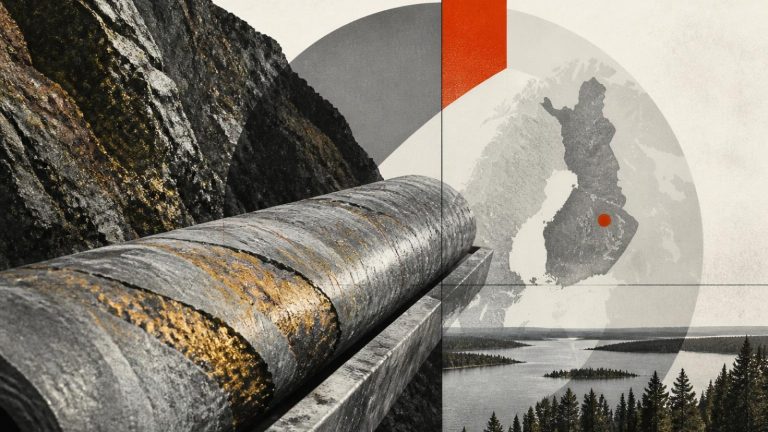
    Finland is positioning itself as a leading exporter of mining technology, services and expertise as the country’s underexplored geological potential and world-class research infrastructure attract growing international attention, according to the newly appointed chief executive of Mining Finland.

    Aleksi Salo, who took the role in November 2025, says the association’s 130-member cluster — spanning more than ten universities, research organisations and over 200 technology and service providers — offers a compelling proposition for international markets seeking sustainable and responsible mining solutions. “In this role, I believe I can have a positive impact on the growth of business and the Finnish mining sector as a whole,” Salo told Mining Technology.

    Finland sits on the Fennoscandian Shield, which bears strong geological similarities to the Canadian Shield and the cratonic regions of Southern Africa and Western Australia. The shield hosts world-class deposits of iron, nickel, copper, platinum group metals and gold, yet the Central Lapland Greenstone Belt in the north remains largely unexplored and is considered to have significant gold potential. The country is consistently rated among the world’s most attractive mining jurisdictions for its combination of geological endowment, accessible data and innovation ecosystem.

    Salo identified promoting Finnish water management technologies, mineral processing capabilities and original equipment manufacturers in international markets as key priorities. For small and medium-sized enterprises that cannot afford their own presence at major conferences and trade fairs, Mining Finland’s brand recognition provides an important market entry vehicle. The association works with Business Finland and the Team Finland network to organise delegations and market-specific webinars, connecting Finnish companies with potential partners and clients abroad.

    On Finland’s domestic mining outlook, Salo expressed cautious optimism. Several gold and platinum projects are realistic candidates for production by 2030, alongside expansion projects at existing operations, though he flagged the regulatory environment — and court appeal processes in particular — as a potential source of delay. A recently introduced mineral tax has also created uncertainty for some larger operating mines.

    Looking ahead, Salo said he hoped to see greater investment flowing to junior explorers and miners in Finland over the next four years, and called on the industry to communicate its economic significance and value chain contribution more effectively to the broader public

  • Yugo Metals Confirms Gold Discovery at First-Ever Drilling Campaign in Bosnia as Erak Prospect Shows Open Mineralisation in All Directions

    Yugo Metals Confirms Gold Discovery at First-Ever Drilling Campaign in Bosnia as Erak Prospect Shows Open Mineralisation in All Directions

    Yugo Metals has intersected gold across multiple holes in its first drilling campaign at the Erak prospect within the Sinjakovo Project in Bosnia and Herzegovina, with CEO Petar Tomašević declaring the results confirm a genuine gold discovery.

    Five holes totalling 632 metres have been drilled to date, returning intervals including 4 metres at 1.2 grams per tonne gold from 101 metres, 4 metres at 1.9 grams per tonne from 105.1 metres, 8 metres at 1.2 grams per tonne gold equivalent from 26.1 metres, and 3 metres at 0.9 grams per tonne from 107.4 metres. The gold-bearing mineralisation is associated with phyllic alteration striking east-west, dipping north, and open in all directions. Drilling has also intersected gold-silver-copper-antimony mineralisation of up to 8 metres at 1.2 grams per tonne gold equivalent, including intervals carrying 40 grams per tonne silver, 0.6% copper and 0.25% antimony.

    Two further holes — ERDD005 and ERDD006 — have intersected alteration zones of 23 metres and 34 metres respectively, with assay results still pending from the laboratory in six to eight weeks. Tomašević noted that the thickest alteration intervals are among those still awaiting results, suggesting the overall system could grow considerably.

    The drill rig has now moved to pad three to test a previous trenching result of 61 metres at 1.5 grams per tonne gold at surface — the company’s strongest surface result to date. Further drilling is planned in the western area before the rig relocates to the eastern section of Erak.

    The Sinjakovo Project spans 80 square kilometres across two tenements in Republika Srpska and targets gold, antimony, silver, copper, cobalt, zinc and lead across multiple prospects.

  • EU Designates Spain’s Mina Doade Lithium Project as Strategic Under Critical Raw Materials Act

    EU Designates Spain’s Mina Doade Lithium Project as Strategic Under Critical Raw Materials Act

    The Mina Doade lithium project in Galicia, northwest Spain, has been designated a Strategic Project by the European Union under the Critical Raw Materials Act, placing it among 47 projects selected in the first strategic list as the bloc moves to build domestic supply chains for materials essential to the automotive, technology and industrial sectors.

    The designation, awarded to project developer Recursos Minerales de Galicia S.A., reflects both the strategic importance of lithium to European industry and the supply risk associated with the metal — a risk assessed as high given the concentration of global production in a limited number of countries and the material’s limited substitutability in applications such as EV batteries.

    Under the CRMA framework, which entered into force in May 2024, Strategic Project status unlocks significant practical advantages. Projects on the list gain access to accelerated permitting processes, with approvals available within a maximum of 27 months, and receive priority consideration for financing. These streamlined procedures are designed to close the gap between Europe’s geological potential and its current near-total dependence on imported lithium, almost entirely refined in China.

    Spain holds significant lithium resources across Galicia, Extremadura and Castilla y León, and sits alongside northern Portugal as one of the Iberian Peninsula’s most promising lithium jurisdictions. The Doade-Beariz area in Galicia has been identified as one of the most prospective sites, and the project’s inclusion on the EU’s first strategic list is seen as confirmation of its technical quality and alignment with European sustainability and supply security objectives.

  • Serbia Secures €953 Million in New Chinese Investments During Vučić State Visit, Including Humanoid Robot Production From July

    Serbia Secures €953 Million in New Chinese Investments During Vučić State Visit, Including Humanoid Robot Production From July

    Serbia has secured €953 million ($1.1 billion) in new investment commitments from Chinese companies during President Aleksandar Vučić’s state visit to China, with projects spanning automotive manufacturing, advanced technology and artificial intelligence set to create 1,650 jobs across multiple Serbian cities.

    Vučić announced the agreements following meetings with local firms and a visit to the innovation centre of Hong Kong-listed car parts manufacturer Minth Group in Jiaxing. The investments will be spread across Niš, Novi Sad, Zrenjanin, Šabac, Ćuprija and Inđija.

    Among the most notable announcements is a phased technology investment that will see humanoid robot production begin as early as July, followed by the construction of data factories and AI training centres for the robots, and ultimately the application of artificial intelligence across production systems. Vučić did not identify the investor or provide further financial details.

    The largest single contract was signed with tyre maker Linglong for €566 million, which will create 400 new jobs at its existing factory in Zrenjanin. Minth Group signed two agreements: a €135 million deal creating 600 jobs at its Loznica plant and a €91 million investment adding 220 jobs in Šabac. Xingyu Automotive committed €77 million and 100 new jobs in Niš, while automotive chassis manufacturer SHAK will invest €33.5 million in Novi Sad, creating 50 jobs. Car parts maker Yusei announced a €27 million investment for its second Niš factory bringing 280 new jobs, and BMTS Technology signed a €13.3 million automation-focused agreement.

    The deals add to an already substantial Chinese economic footprint in Serbia. According to Serbian Chamber of Commerce president Marko Cadez, approximately 2,000 firms with Chinese capital currently operate in the country, with the 37 largest having invested around €7.7 billion and employed more than 40,000 people. Zijin Mining and steelmaker HBIS Group are among the largest investors.

    Vučić’s visit to China also included a meeting with President Xi Jinping in Beijing, where more than 20 cooperation documents were signed, marking the tenth anniversary of the China-Serbia comprehensive strategic partnership.

  • Europe Could Meet More Than Half Its Critical Minerals Demand Through Recycling by 2050, Major EU Study Finds

    Europe Could Meet More Than Half Its Critical Minerals Demand Through Recycling by 2050, Major EU Study Finds

    Recovering critical minerals from used batteries, end-of-life vehicles and electronic waste could supply more than half of Europe’s critical minerals demand by 2050, according to a major new report — offering the continent a substantial route to reducing its dependence on Chinese-dominated supply chains without relying solely on new mining.

    The findings come from the FutuRaM project, a European Union-funded research initiative that analysed Europe’s recycling potential across three scenarios. In 2022, approximately 2 million metric tonnes of critical minerals were contained in waste generated across the 27 EU member states plus Switzerland, Norway, the UK and Iceland. That figure is projected to grow to up to 6 million tonnes by 2050 as the stock of clean energy technologies — from EV batteries to wind turbines — reaches end of life. If the secondary raw materials already being collected were fully and functionally recycled, they could supply up to 56% of Europe’s critical minerals demand by 2050.

    The study identifies end-of-life electric vehicles as the single largest contributor to this recycling potential, containing a variety of rare earth elements with high recoverability. However, despite relatively high vehicle collection rates in the EU, most of the minerals contained in them are not currently being processed. Lithium, cobalt and rare earth elements are among the materials most commonly lost during collection or waste processing today.

    Kees Baldé, a senior researcher at the UN Institute for Training and Research and one of the report’s authors, described harnessing Europe’s waste streams as essential for strengthening supply security and supporting the clean energy transition. The report calls for a structural shift in European waste management, noting that countries currently track these materials differently and lack a unified regional market. It also recommends increased investment in recycling infrastructure, skills development and awareness.

    The urgency is amplified by China’s position. China holds a firm grip on the production and refining of 19 out of 20 critical minerals identified by the IEA and accounts for approximately 80% of the world’s mineral recovery capacity. In the past year, Beijing has enacted export controls on rare earths, rare earth magnet components and lithium battery components, raising costs and supply security concerns across European industry. The IEA estimates that scaling up recycling globally could reduce the need for new mining by 25 to 40% by 2050 under climate-aligned scenarios.

    Pascal Leroy of the WEEE Forum said the findings demanded a fundamental mindset shift: “Our mindset needs to shift to think of secondary sources of CRMs as the new primary source.”

  • Verde Magnesium Aims to End Europe’s 25-Year Absence From Primary Magnesium Production With Zero-Carbon Romanian Project

    Verde Magnesium Aims to End Europe’s 25-Year Absence From Primary Magnesium Production With Zero-Carbon Romanian Project

    Europe produces not a single tonne of primary magnesium metal despite the material being essential to the automotive, aerospace and defence industries — a dependency that Verde Magnesium, the only European strategic project for magnesium designated under the EU’s Critical Raw Materials Act, is working to end with a low-carbon operation in Romania’s Bihor County.

    CEO Alexandru Rosu says the project at the Budureasa deposit represents the first realistic prospect of European primary magnesium production in 25 years. China currently provides 90% of global magnesium output, exposing every European industrial user to supply volatility driven by factors entirely outside their control. Verde Magnesium’s process uses an aluminothermic reduction route combining calcined ore and aluminium scrap with electric furnaces, dry processing and full CO2 capture for valorisation as dry ice. Independent pilot tests have confirmed magnesium metal at 99.9% purity, and a life cycle assessment by the German Aerospace Centre has validated what Rosu describes as the cleanest magnesium metal production process in the world. With 100% renewable power, the project would operate as a near-zero carbon primary magnesium facility.

    The automotive case for the project is compelling. Magnesium is approximately 35% lighter than aluminium and 78% lighter than steel. For electric vehicles, that weight reduction translates directly into increased range and battery efficiency. Rosu notes that applications are expanding from legacy components into large structural automotive parts, with thixomolding and gigacasting techniques now making intricate magnesium components commercially viable.

    Despite the technical case being established, Verde Magnesium has identified a structural gap in the EU’s carbon pricing architecture that prevents European low-carbon producers from competing against coal-fed Chinese incumbents. Under the current EU Emissions Trading System, the CO2 avoided when European production substitutes for high-carbon imports carries no economic value. Rosu calculates that one tonne of European primary magnesium produced via Verde’s route avoids approximately 25 tonnes of CO2 relative to the dominant import alternative — a carbon-cost equivalent of roughly €1,900 per tonne at current EU allowance prices, comparable to the cost gap preventing viable European production. The company has submitted a structured proposal to the European Commission suggesting that CRM Act-compliant projects with verified third-party life cycle assessments should be eligible for tradeable carbon certificates equivalent to their avoided emissions.

    The project is targeting quarry restart by end-2026, a 360 tonne per year Mother Plant, and a higher-capacity smelter of up to 30,000 tonnes per year by 2030. A full JORC-compliant mineral resource estimate is targeted for completion alongside the Environmental and Social Impact Assessment in 2027.