Region: Poland

  • Poland’s Coal Sector Loses PLN 300-400 Per Tonne as Output Falls to 42.8 Million Tonnes and Taxpayer Subsidy Reaches PLN 450,000 Per Job

    Poland’s Coal Sector Loses PLN 300-400 Per Tonne as Output Falls to 42.8 Million Tonnes and Taxpayer Subsidy Reaches PLN 450,000 Per Job

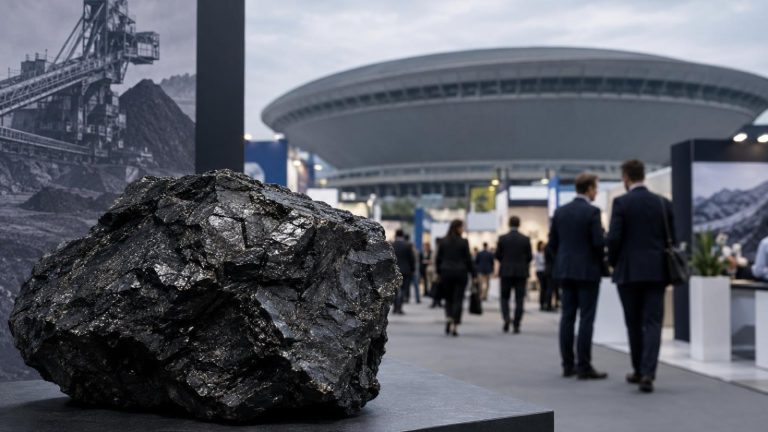
    Poland’s hard coal mining sector is generating losses of between PLN 300 and PLN 400 per tonne extracted, with average extraction costs running at approximately PLN 800 per tonne against a market value that does not exceed $100 — a structural deficit so deep that maintaining a single job in the loss-making segment of the industry costs Polish taxpayers approximately PLN 450,000 per year.

    Production has been on a consistent downward trajectory. Hard coal output fell to 42.8 million tonnes in 2025, 1.2 million tonnes below 2024 levels and a sharp decline from 52.8 million tonnes in 2022. Sales volumes of 43.2 million tonnes exceeded production in 2025, drawing down existing inventories. Domestic consumption of thermal hard coal stood at 37.8 million tonnes last year, with imports falling 26% to 3 million tonnes as domestic output remained sufficient to cover most needs.

    Despite the economic losses and declining output, coal remains indispensable to Poland’s electricity system. It accounted for more than 52% of electricity generation in 2025 — a share that fell by only 3 percentage points year-on-year. Renewable energy’s share of the energy mix grew by 0.7 percentage points to 31.4%, according to a report by Forum Energii, but the pace of transition remains insufficient to displace coal as the primary generation source in the near term.

    The paradox facing Polish energy policy is stark: the sector is economically unviable at current coal prices, yet without it the country would face immediate electricity supply deficits. The cost of maintaining jobs in loss-making mines exceeds what it would cost simply to pay miners their salaries without requiring them to extract coal — yet abrupt closure would threaten grid stability in a country still more than half dependent on thermal coal for power generation.

  • KGHM Eyes Morocco, Argentina, Canada and US Acquisitions as Overseas Assets Already Generating Half of Core Profit

    KGHM Eyes Morocco, Argentina, Canada and US Acquisitions as Overseas Assets Already Generating Half of Core Profit

    Polish state-controlled copper and silver producer KGHM is actively exploring acquisition opportunities across Morocco, Argentina, Canada and the United States as part of its new Strategy 2055+ plan, CEO Remigiusz Paszkiewicz confirmed, with the company’s existing overseas operations already accounting for approximately 48% of core profit in 2025.

    “Over the next five to ten years we are focusing on raw material diversification, seeking access to critical metals, developing and building new revenue sources that strengthen our resilience to copper and silver market fluctuations,” Paszkiewicz said.

    The international profit contribution is driven by KGHM’s 55%-owned Sierra Gorda copper mine in Chile and the Robinson mine in Nevada. The company’s development pipeline includes the Victoria and Ajax projects in Canada and the Sierra Gorda Oxides project in Chile, providing a foundation for further Americas expansion.

    KGHM also plans to expand the global reach of its contracting subsidiary DMC Mining Services to secure new mining contracts internationally, adding a services revenue stream alongside its producing and development asset base.

    The international push complements KGHM’s domestic ambitions, which include building a new “KGHM 2.0” mine in Poland and committing more than 32 billion zlotys in investment through 2030 targeting 730,000 tonnes of annual copper output.

  • KGHM Sets 32 Billion Zloty Investment Strategy Through 2030 Targeting 730,000 Tonnes Copper and New “KGHM 2.0” Polish Mine

    KGHM Sets 32 Billion Zloty Investment Strategy Through 2030 Targeting 730,000 Tonnes Copper and New “KGHM 2.0” Polish Mine

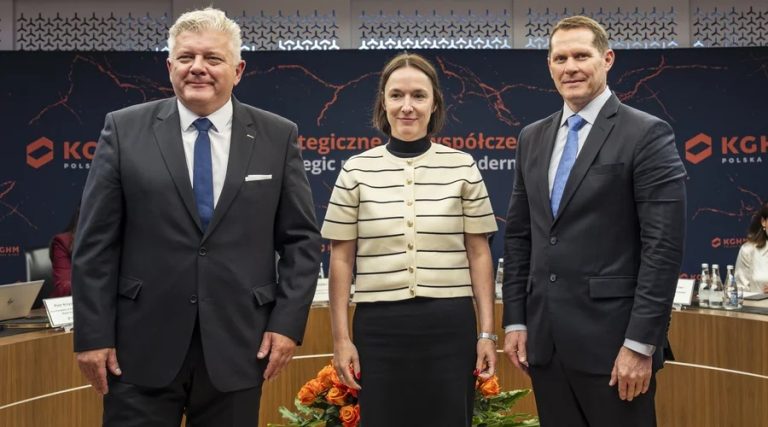
    Polish state-controlled copper and silver producer KGHM has unveiled its Strategy 2055+ plan committing more than 32 billion zlotys ($8.55 billion) in investment through the end of the decade, with targets for copper output of 730,000 tonnes, silver production of 1,290 tonnes and average annual adjusted EBITDA of 12 billion zlotys between 2026 and 2030.

    The strategy centres on securing ore supplies closer to KGHM’s Polish smelters to reduce logistics costs, with approximately 80% of planned copper output expected to come from domestic assets. Chief Executive Remigiusz Paszkiewicz said the company plans to build a new mine in Poland dubbed “KGHM 2.0,” with an ambition to transform the group into “a modern, multi-raw material industrial group” after 2035.

    Nearly 80% of planned investment will go to the core Polish business, with the remainder allocated to overseas assets in Chile, the US and Canada. Despite the domestic focus, KGHM’s foreign operations — led by the Sierra Gorda mine in Chile, in which the company holds a 55% stake, and the Robinson mine in Nevada — generated approximately 48% of group EBITDA in 2025. Deputy Chief Executive for foreign assets Anna Sobieraj-Kozakiewicz said the company intends to grow the contribution of overseas assets over time. “We want the position of our foreign assets to grow, because this builds the company’s global credibility and resilience to structural changes,” she said.

    KGHM’s strategy coincides with its recent letter of intent with Canada’s Lumina Metals for copper concentrate supply from the Nowa Sól project in Poland, which the company views as a processing opportunity for its Glogow smelter rather than a competitive threat.

  • Poland’s Coal Waste Heaps Could Become a Strategic Rare Earth Source — If the Country Moves Fast Enough

    Poland’s Coal Waste Heaps Could Become a Strategic Rare Earth Source — If the Country Moves Fast Enough

    Poland has no proven primary deposits of rare earth elements, yet researchers at the Polish Academy of Sciences argue the country may be sitting on millions of tonnes of material that could prove just as valuable: the vast coal mine waste heaps scattered across its industrial landscape, which contain germanium, gallium, cobalt, dysprosium and other critical elements essential for semiconductors, wind turbines and defence electronics.

    Dr Łukasz Kruszewski of the Institute of Geological Sciences makes a striking claim: Poland’s greatest potential for rare earths and associated critical elements lies not in new mines but in existing coal seams and the waste left behind by decades of extraction. Lublin coal co-occurs with germanium and gallium — both critical for semiconductors — alongside cobalt. Other promising sites include the Tajno massif, copper-polymetallic deposits near Legnica in Lower Silesia, and historic uranium fields around Kowary enriched in rare earths, particularly yttrium.

    The most significant opportunity may be the hałdy — the iconic black spoil heaps of Upper Silesia. More than 200 exist, some containing tens of millions of tonnes of material. Small concentrations do not necessarily preclude economic extraction at that scale, Kruszewski argues. Methods adapted from gold leaching — using carbonate solutions that rare earths readily bind to — could extract materials with minimal disturbance. Biological extraction using bacteria is also under study at the University of Warsaw. A US example from Virginia, where researchers developed a viable recovery process for rare earths and cobalt from coal waste within two years, demonstrates how quickly innovation can close the viability gap.

    Poland is transposing the EU’s Critical Raw Materials Act through draft national legislation and operates a National Critical Raw Materials Exploration Programme funded at 180 million zloty through 2032 — though rare earths sit in the programme’s third-tier priority group. By comparison, Spain’s equivalent programme is funded at over €180 million. A planned rare earth processing facility in Puławy, developed by Grupo Mkango with Grupa Azoty and designated as an EU strategic project, has operations targeted for 2027 to 2028.

    Systemic obstacles remain. Mining companies have shown limited interest in cooperation with researchers. Regional coordination within the Visegrad Group — essential given shared geological realities across borders — remains aspirational. And the window is narrowing as Western governments race to secure critical mineral supply chains and China maintains dominance across production and processing.

  • Canadian Private Equity Firm Kinterra Capital Rescues Poland’s €1.63 Billion Battery Materials Plant After Ascend Elements Bankruptcy

    Canadian Private Equity Firm Kinterra Capital Rescues Poland’s €1.63 Billion Battery Materials Plant After Ascend Elements Bankruptcy

    Canadian private equity firm Kinterra Capital has acquired the rights to a planned €1.63 billion precursor cathode active material plant near Opole in Poland, rescuing a project that had been thrown into doubt after its previous developer, US firm Ascend Elements, filed for bankruptcy in April 2026.

    The planned facility, scheduled for completion in 2031, will produce pCAM — a key component in the lithium-ion batteries used in electric vehicles, smartphones and other consumer electronics. The deal, finalised in May, includes intellectual property rights for lithium-ion battery processing, lithium recovery and pCAM production, as well as rights to a Polish government subsidy of 1.22 billion zloty (€285 million) — one of the largest state grants ever awarded in Poland, backed by an EU programme supporting the transition to a net-zero economy. Kinterra also signed a conditional agreement to purchase the land plot for the factory.

    Ascend Elements had announced the project in May 2025, citing Poland’s strategic position as Europe’s largest lithium-ion battery producer and its importance in reducing European dependence on Asian suppliers. The company subsequently cited “insurmountable” financial challenges in launching US bankruptcy proceedings, casting doubt over the future of the grant and the facility.

    Kinterra Capital, which manages approximately $1.5 billion in assets focused on critical minerals and infrastructure, said the project offered the strategic location, infrastructure access, public administration support and industrial base it requires. “This project has the key advantages we are looking for,” said Graeme Weeks, Kinterra’s global head of project execution. Laura Fernandez, a Kinterra partner, said the investment “addresses the most important challenges facing European industry today,” citing supply chain security and European independence from Asian suppliers.

    Poland is home to Europe’s largest EV battery plant, operated by LG Energy Solution in Wrocław, which accounted for approximately half of Europe’s EV battery production capacity in 2024. However, Poland’s position faces a potential challenge from forthcoming EU regulations incorporating battery carbon footprint requirements — measures that could penalise Poland given that coal still accounts for around half of its electricity production.

  • Lumina Metals Surges 46% on Warsaw Debut as Poland Eyes “Copper Valley” Strategy on Back of $6.4 Billion Development Plan

    Lumina Metals Surges 46% on Warsaw Debut as Poland Eyes “Copper Valley” Strategy on Back of $6.4 Billion Development Plan

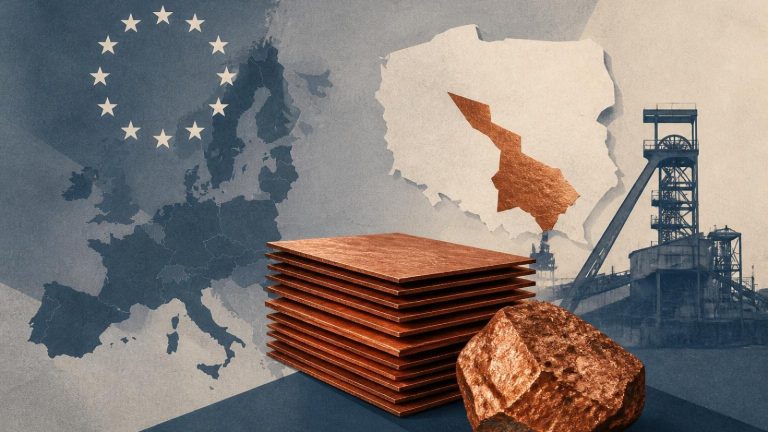
    Lumina Metals shares surged as much as 46% on their Warsaw Stock Exchange debut on Tuesday, reflecting strong domestic investor demand for a company that Poland’s prime minister says could more than double the country’s copper production capacity and underpin a broader national ambition to become a leading European supplier of the metal.

    Prime Minister Donald Tusk attended the Warsaw listing, describing Lumina’s projects as presenting “tremendous opportunities for Poland for a dramatic increase in copper and silver production capacity.” The stock’s strong performance in Warsaw followed a C$406.2 million initial public offering on the Toronto Stock Exchange in April, with Polish investors who could not participate in the Canadian offering driving significant demand at the local debut.

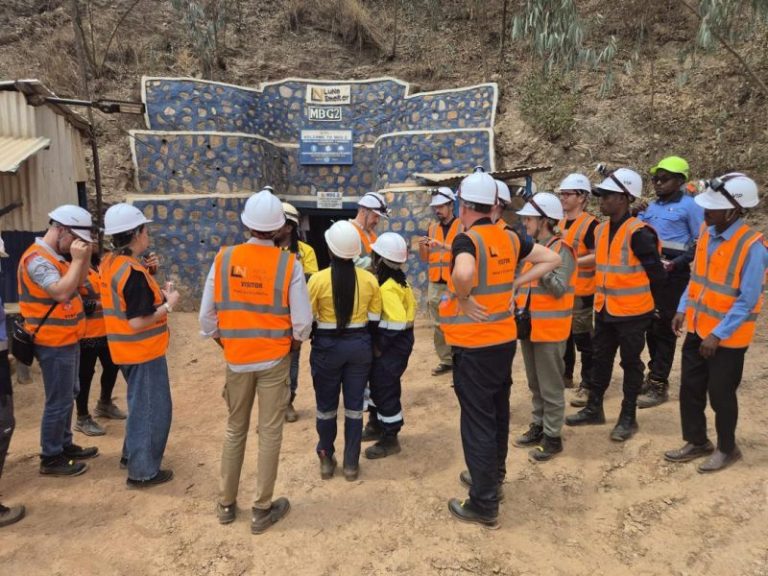
    The company’s Nowa Sól project in southwestern Poland covers 120 square kilometres of the Northern Copper Belt near KGHM’s existing mining and processing operations. Since the deposit’s discovery in 2014, Lumina has completed more than 51,000 metres of drilling and outlined a measured and indicated resource of 604 million tonnes grading 1.24% copper and 38 grams per tonne silver — one of the world’s largest undeveloped copper and silver deposits. In early May, Lumina signed a letter of intent with state-controlled KGHM Polska Miedz to discuss future copper concentrate supply from the project.

    Lumina plans to develop its projects near KGHM’s existing infrastructure, requiring a combined $6.4 billion investment. Average annual copper-equivalent production during the first decade of operation is projected at 390,000 tonnes — matching KGHM’s current entire annual copper output in Poland. Poland is already the EU’s largest copper producer through KGHM’s operations, and a successful Lumina buildout would effectively double national capacity.

    The developments support a government strategy to create a Polish “Copper Valley” extending the country’s role beyond mining into refining, manufacturing and broader value-added industries, reducing dependence on unprocessed metal exports and positioning Poland as a strategic supplier for Europe’s electrification agenda.

    Lumina CEO Jordan Pandoff welcomed the government dialogue but issued a direct challenge on fiscal policy. “At the same time, if you wish to see the next generation of greenfield mines developed in Poland, further progress will be required to ensure the fiscal framework becomes competitive,” he said, noting that the current copper tax regime continues to discourage higher production levels despite some recent relief measures.

  • US Startup Atana Elements Plans Lithium Exploration Beneath Volkswagen and BMW Factory Sites in Germany and Poland

    US Startup Atana Elements Plans Lithium Exploration Beneath Volkswagen and BMW Factory Sites in Germany and Poland

    American startup Atana Elements is targeting lithium exploration beneath industrial areas in Germany and Poland where Volkswagen and BMW operate manufacturing facilities, in a project backed by Chilean mining major Antofagasta that aims to reduce Europe’s dependence on Chinese critical mineral imports.

    The company has secured exploration licences covering approximately 1.5 million acres across regions around Salzgitter in Germany and Wrocław in Poland, according to the Financial Times. The fact that the exploration areas lie beneath facilities already consuming lithium in battery production is described as coincidental rather than by design.

    Atana Elements is combining historical geological data with artificial intelligence technologies to identify promising lithium deposits, working in cooperation with Antofagasta. The company estimates it could extract up to 26 million tonnes of lithium across the two sites over the next 20 years — a figure that, if realised, would represent a significant addition to European domestic critical mineral supply. However, analysts cited by the Financial Times cautioned that the project remains at an early stage and that any assessment of actual production volumes is premature.

    The initiative reflects growing interest in unconventional domestic lithium sources across Europe as governments and industries seek to reduce exposure to Chinese-dominated supply chains for battery materials essential to the electric vehicle transition.

  • KGHM Eyes African and European Acquisitions to Feed Polish Smelters as Copper Boom Fuels Expansion Ambitions

    KGHM Eyes African and European Acquisitions to Feed Polish Smelters as Copper Boom Fuels Expansion Ambitions

    KGHM Polska Miedz, the European Union’s largest copper producer, is pursuing an international expansion strategy focused on adding up to 100,000 tonnes of annual production through acquisitions in Europe and Africa while simultaneously evaluating takeover targets across the Americas, as record copper prices and surging demand from the energy transition drive the Polish miner’s most ambitious growth push in years.

    Chief executive Remigiusz Paszkiewicz said the company’s nearer-term expansion priority is securing long-term, stable raw material supplies for its Polish smelters — a strategic necessity given rising processing costs and the company’s deliberate policy of not over-exploiting its domestic deposits. A memorandum on potential investments in Morocco’s raw materials sector has already been signed, and several other locations are under consideration. “The plans for Morocco and several other locations are directly linked to the necessity of securing long-term, stable supplies for our smelters,” Paszkiewicz said.

    KGHM’s stock has surged 180% since the start of last year, lifting its market capitalisation to nearly $18 billion, as copper traded near record highs on demand from artificial intelligence infrastructure, electric vehicles and renewable energy deployment. The company has also benefited from its rare dual position as a significant producer of both copper and silver.

    In the Americas, the company is evaluating assets in Chile, Argentina, the US and Canada and expects to narrow its target list and make a final decision within several months. KGHM’s international operations, acquired primarily through its $2.84 billion purchase of Quadra FNX Mining in 2011, have only recently turned consistently profitable but now generate nearly half of group EBITDA despite accounting for just 20% of volumes. Its Sierra Gorda open-pit mine in Chile reported first-quarter C1 costs 47% lower than its Polish underground operations, underlining the financial rationale for further Americas exposure.

    Domestically, KGHM sees opportunity in Lumina Metals’ discovery of rich copper deposits near its existing Polish sites. Rather than viewing the Canadian company as a competitive threat, Paszkiewicz framed it as a processing opportunity. “There’s no better place for processing their raw materials than at our Glogow smelter,” he said, adding that Lumina’s investment could also provide impetus for reducing Poland’s copper extraction tax — a cost burden that weighs on domestic production economics.

  • Poland and US Sign Critical Raw Materials Agreement Covering Rare Earth Processing, Geological Mapping and Deep-Sea Mining Research

    Poland and US Sign Critical Raw Materials Agreement Covering Rare Earth Processing, Geological Mapping and Deep-Sea Mining Research

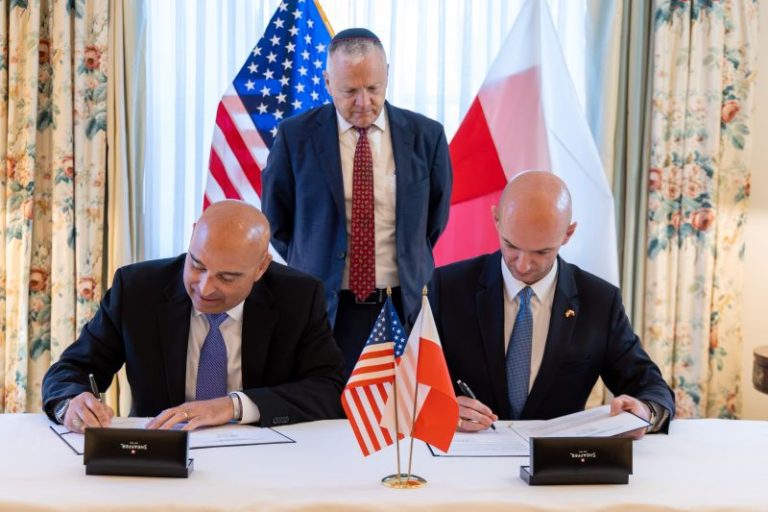
    Poland and the United States have signed a strategic memorandum of understanding on critical raw materials, committing both countries to deeper cooperation across the full mineral supply chain from extraction and processing through to recycling, as Washington continues to build out its allied network of mineral partnerships.

    The agreement was signed by Poland’s Chief National Geologist Krzysztof Galos and US Under Secretary of State Allison Hooker, according to the Polish Ministry of Climate and Environment. It covers rare earth metal processing, geological mapping of resources in both countries, investment mobilisation, permitting streamlining and technological innovation — including research into advanced separation techniques and environmentally friendly deep-sea mining methods.

    A central objective of the partnership is supply chain diversification, with both governments explicitly framing the agreement as a tool to prevent mineral access from being weaponised as a form of political pressure. The pact aims to build what the two sides describe as a transparent market and to reduce dependence on single-source suppliers — language that reflects shared concern over China’s dominant position across multiple critical mineral supply chains.

    The agreement also addresses the financial and regulatory barriers that have historically slowed mineral project development, with both governments pledging to mobilise investment support and streamline permitting processes. Beyond primary extraction, the two countries will invest in recycling technologies designed to recover valuable metals from scrap and waste streams, reflecting growing recognition that circular economy approaches must complement new mining in meeting long-term mineral demand.

    Poland’s government described strengthening cooperation with strategic partners as a key national priority, noting that the deal aligns with its national raw materials policy.

  • Lumina Metals Opens Copper Concentrate Supply Talks With KGHM After Raising C$406 Million in Toronto IPO

    Lumina Metals Opens Copper Concentrate Supply Talks With KGHM After Raising C$406 Million in Toronto IPO

    Newly listed Canadian miner Lumina Metals has signed a letter of intent with Polish mining giant KGHM to explore a future copper concentrate supply agreement from its Nowa Sól project in Poland, in a development that could link one of the world’s largest undeveloped copper deposits directly to Europe’s most significant copper processing infrastructure.

    The letter of intent, announced on Tuesday, initiates discussions on technical and commercial terms for the supply of copper concentrates from Nowa Sól to KGHM, whose existing copper-silver mine operations in Poland’s Northern copper belt are located in close proximity to the project and host one of Europe’s key copper processing facilities. KGHM is Poland’s only producer of copper and silver and ranked eighth globally in copper output last year.

    Nowa Sól covers 120 square kilometres of the Northern copper belt and hosts a measured and indicated resource of 604 million tonnes grading 1.24% copper and 38 grams per tonne silver — figures that place it among the world’s most significant undeveloped copper projects and one of the largest undeveloped silver deposits globally. Lumina has completed more than 51,000 metres of drilling at the project since its initial discovery in 2014.

    The announcement follows Lumina’s recent C$406.2 million ($297 million) initial public offering on the Toronto Stock Exchange, one of the larger recent copper-focused IPOs in the Canadian market. The company also plans to list on the Warsaw Stock Exchange. Shares were trading at approximately C$11.50 by midday Tuesday, around C$1 below the IPO price, giving the company a market capitalisation of approximately C$1.2 billion.

    Lumina CEO Jordan Pandoff described the KGHM letter of intent as “an important step in reinforcing the Polish metal mining industry” and in positioning Nowa Sól as a cornerstone of copper and silver supply within both Poland and the European Union.