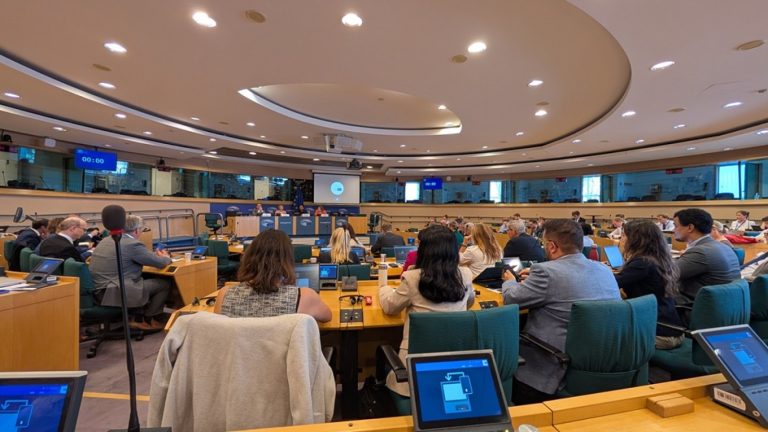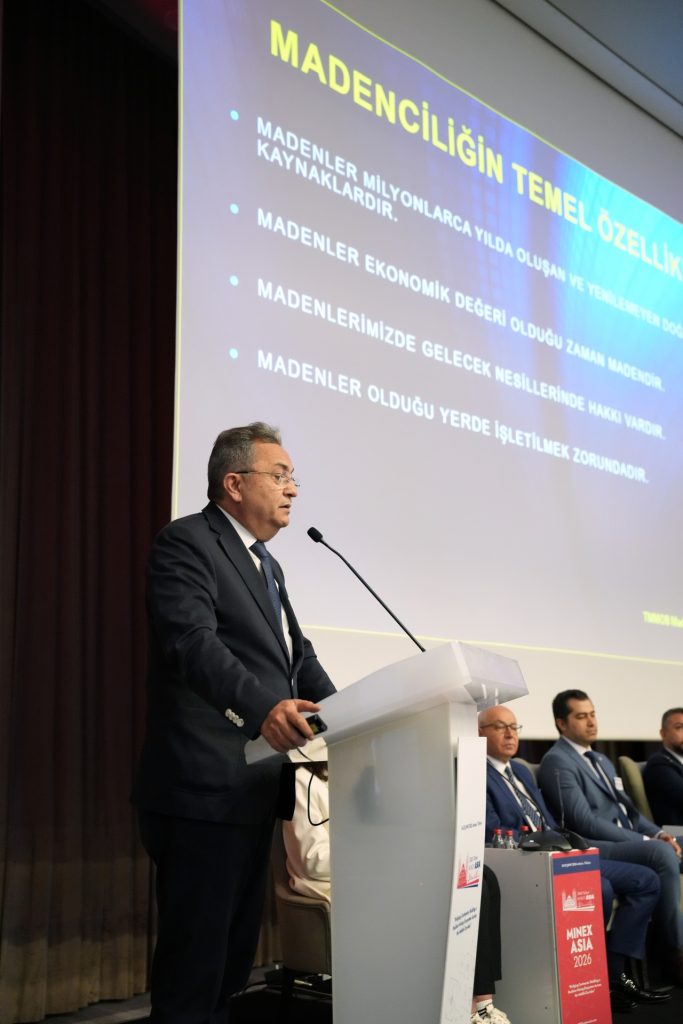
Ayhan Yüksel, representing Turkey’s Chamber of Mining Engineers, opened with foundational principles necessary to understand mining regulation: mines are non-renewable resources formed over millions of years; whether something qualifies as an economically or technologically viable “mineral” can change over time with shifting economic and technological conditions; minerals belong partly to future generations; and mining must be conducted where deposits are physically located, since they cannot be relocated.
He traced Turkey’s mining legislative history, starting with the original 1954 Mining Law (No. 6309), characterized by a strong statist framework with a licensing system under clear state authority. This was followed by Law No. 3213 in 1985, introduced during a period of globalization and liberal economic policy shifts, which refined the licensing system while maintaining core constitutional principles that minerals remain under state jurisdiction, alongside introducing indivisible mining rights and state oversight and royalty principles.
His central argument concerned the frequency of legislative change: the law remained unchanged for 31 years between 1954 and 1985, and unchanged again for 19 years between 1985 and 2004 — but since 2004, has undergone 31 amendments (including 9 major overhauls) in just 24 years. He walked through specific triggers for these changes: the 2004 reforms coincided with broader foreign investment liberalization across multiple sectors; a subsequent wave incorporated growing environmental regulation and protections; the 2014 Soma mine disaster prompted stronger occupational safety requirements and permanent on-site supervision; and 2019 brought UMREK, Turkey’s version of international reporting standards (comparable to JORC/NI 43-101), along with revised state royalty calculations and stricter technical/financial oversight — followed by further adjustments in subsequent years, including changes to site subdivision rules.
He argued that this constant legislative churn has genuinely undermined the sector — mining’s contribution to GDP has remained around just 1%, and public opposition to mining projects has persisted or intensified, suggesting frequent regulatory change hasn’t solved underlying problems, precisely because mining requires long-term (20-30+ year) planning horizons incompatible with regulatory instability.
He then outlined the Chamber’s proposed foundational principles for mining policy: the core objective should be national development and social welfare, not purely commercial mechanisms; mining must be grounded in scientific and technical planning given the non-renewable nature of resources; mining should be integrated with domestic industry rather than treated as pure ore extraction; domestic mineral resources should be prioritized in energy production to ensure supply security; exploration activity needs to increase since Turkey’s territory remains incompletely explored; technology and R&D investment must grow; human resources — particularly mining engineers — need continued development and employment support; both public and private sector management should be more efficient, transparent, and accountable; environmental opposition should be addressed by integrating environmental and mining considerations together rather than framing them as an either-or dilemma; and mining must be conducted in cooperation and peace with local communities, with transparency and multi-stakeholder collaboration across government, industry, and civil society. He closed by summarizing that national mining policy should ultimately be human-centered, scientifically grounded, environmentally compatible, supportive of domestic industry, and built on participatory planning.