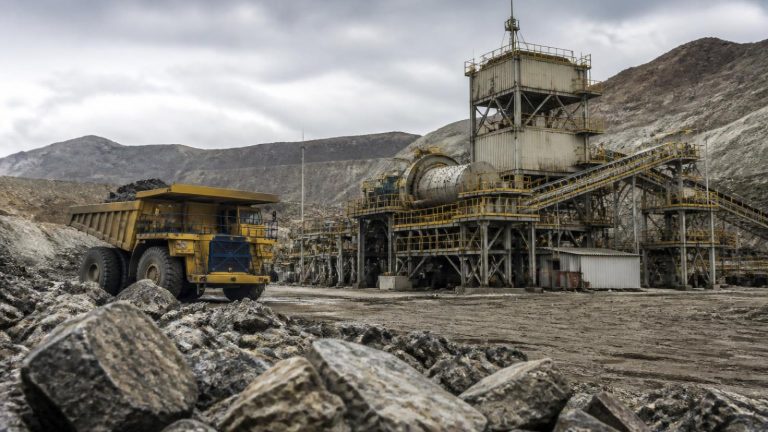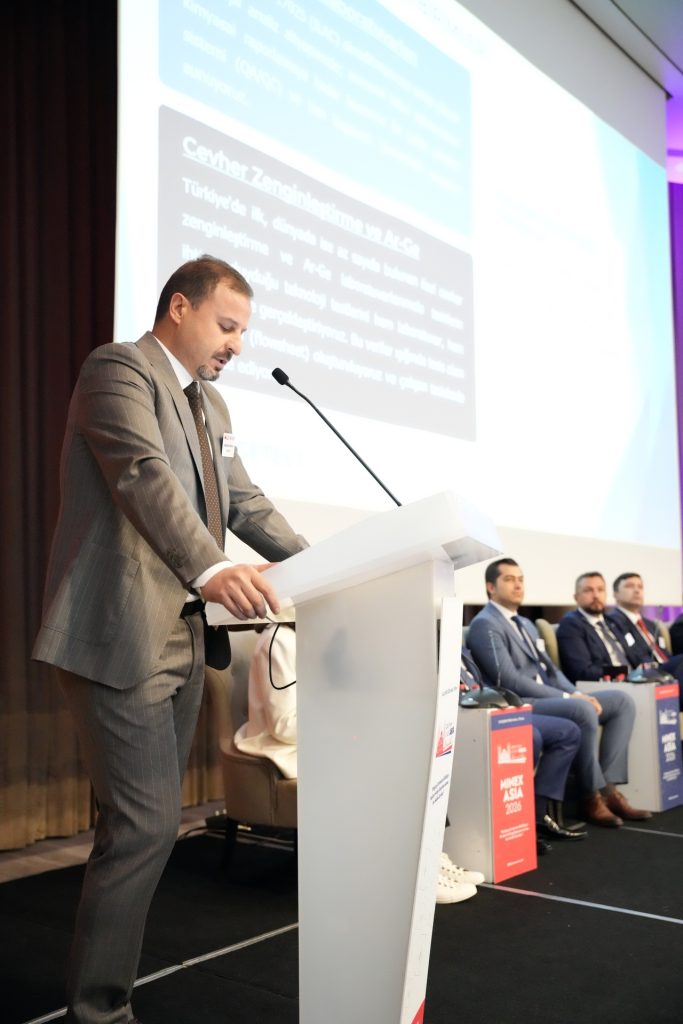
Abdullah Buhur opened by shifting focus away from the large machinery and infrastructure typically associated with mining, toward a less visible but critical component: data. He argued that modern mining requires precisely and thoroughly characterizing ore composition before extraction even begins, and positioned his talk around the role geochemical and metallurgical laboratories play in generating end-to-end data across the mining value chain.
He introduced ARGETEST, founded in Ankara in 2012 with the explicit goal of functioning not merely as a testing center but as a decision-support mechanism shaping the future of mining projects. He described the company as operating Turkey’s first, and among the world’s few, private ore beneficiation and R&D laboratories, capable of designing plant process flowsheets and optimizing existing operational facilities for greater efficiency and economic performance. He noted the company’s high-technology geochemical analysis labs offer full traceability from sample intake through reporting.
He emphasized that data credibility today is measured by international recognition, citing ARGETEST’s ISO 9001, 14001, and 45001 certifications alongside ISO/IEC 17025:2025 laboratory accreditation — framing these not as mere certifications but as guarantees recognized by international banks and stock exchanges that partner companies rely on.
Acknowledging that mining rarely happens in convenient urban locations, he described the company’s mobile, containerized field laboratories, which bring accredited testing infrastructure directly to remote mine sites, minimizing delays and allowing engineers to view results in near real-time. He noted this approach has already expanded internationally, with the company’s first overseas laboratory established in Tashkent, Uzbekistan, and plans underway to establish facilities in three additional countries.
Returning to the core theme of data value, he explained that mining involves enormous capital risk, and that a single flawed geological or chemical data point can lead to incorrect process design — potentially rendering an entire facility economically nonfunctional. He noted that international reporting standards (JORC, NI 43-101, UMREK) depend fundamentally on accredited, independent laboratories producing statistically repeatable, verifiable, and traceable analytical results.
He organized laboratory contributions across four project phases: exploration (identifying potential through geochemical analysis), feasibility (determining optimal ore recovery process flowsheets), production (continuous plant optimization via real-time data), and closure (environmental toxicology testing to fulfill environmental responsibilities). He detailed technical processes within each phase — including sample preparation standards, QA/QC protocols using blanks, duplicates, and certified reference materials, and metallurgical testing methods like comminution testing and predictive process modeling.
He reiterated the earlier point about the outsized financial impact of even small measurement errors in recovery rates, framing laboratory investment as one of the lowest-cost yet highest-impact investments relative to total project capital. He closed by discussing digital data integration — barcode-tracked samples, direct digital data transfer without manual handling, and continuous system interconnection — designed to minimize human error toward near-zero levels, and reaffirmed ARGETEST’s commitment to expanding its footprint from Turkey through Central Asia and beyond as a trusted partner across the mining value chain.