Region: Europe

  • Anglo American’s Woodsmith Project Contributes £127 Million to North Yorkshire Economy in 2025 as Workforce Approaches 1,000

    Anglo American’s Woodsmith Project Contributes £127 Million to North Yorkshire Economy in 2025 as Workforce Approaches 1,000

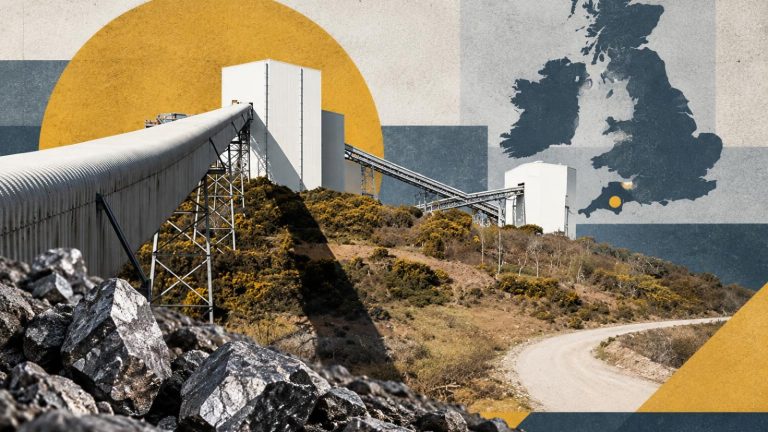
    Anglo American’s Woodsmith Project in North Yorkshire contributed £127 million to the regional economy in 2025 and has generated nearly £2 billion for the region since construction began in 2017, as the polyhalite mining development cements its position as one of the most significant long-term industrial investments in the north of England.

    The project currently employs 1,000 people, with 76% of its workforce drawn from the surrounding region. Employment is expected to peak at more than 2,500 during further construction phases, making Woodsmith one of the largest sources of skilled employment in the area.

    Polyhalite, the natural mineral fertiliser at the heart of the project, will be mined from deposits beneath the North York Moors and transported via a long tunnel to the Teesside coast for processing and export — a multi-billion-pound investment Anglo American says will drive exports and strengthen long-term regional prosperity.

    Beyond its economic footprint, the company has embedded a significant social investment programme in communities across Teesside and North Yorkshire. The Thriving Communities Programme focuses on livelihoods, education, health and community facilities, while the Woodsmith Foundation supports broader community development. The centrepiece of the education strand is the Achieve programme, delivered jointly with the Woodsmith Foundation, which works intensively with six pilot schools and extends careers guidance to all 17 state-funded secondary schools in Redcar and Cleveland and along the North Yorkshire Coast. Last year the programme generated over 9,000 student engagements. An independent study found that students reported higher confidence, improved motivation and a more positive outlook, alongside better behaviour and increased school attendance.

  • EU Research Project Maps Europe’s “Urban Mine” as 6 Million Tonnes of Critical Minerals Could Be Recovered Annually by 2050

    EU Research Project Maps Europe’s “Urban Mine” as 6 Million Tonnes of Critical Minerals Could Be Recovered Annually by 2050

    A major EU-funded research initiative has produced the first comprehensive map of Europe’s secondary critical raw materials potential, revealing that advanced recycling systems could recover between 4.5 and 6.2 million tonnes of critical raw materials annually by 2050 — enough, under a full circular economy scenario, to substitute up to 56% of Europe’s primary resource needs.

    The FutuRaM project mapped 42 critical raw materials across 31 European countries, tracking materials buried in discarded electronics, end-of-life vehicle batteries, demolished buildings and decommissioned wind turbines. Results are now accessible through a publicly available digital tool called the Urban Mine Platform.

    The findings expose a severe structural gap in Europe’s current industrial strategy. In 2022 alone, 5.2 million tonnes of critical raw materials were embedded in products entering the European market, yet only 1.4 million tonnes were recovered. The remainder was lost to illegal waste flows, misaligned recycling systems or exported abroad as second-hand goods — a leakage that researchers describe as a significant economic vulnerability at a time when Europe is almost entirely dependent on foreign suppliers for the building blocks of its clean energy and digital economies.

    The recovery potential by 2050 is substantial across specific materials. Annual lithium recovery could grow from less than 1,000 tonnes today to over 50,000 tonnes. Cobalt recycling could expand forty-fold. Nickel recovery could exceed 171,000 tonnes annually. The climate dividend is equally striking: replacing mining with recycling at scale could prevent up to 273 million tonnes of CO2 emissions per year by mid-century — roughly equivalent to eliminating Spain’s entire annual carbon footprint.

    Realising this potential requires addressing structural weaknesses in collection infrastructure, tracking systems and domestic refining capacity. Europe currently exports partially processed materials such as battery black mass, losing both the resource value and the processing jobs that come with it. The FutuRaM project has also developed a decision-making tool called SARA4UNFC, adapted from the UN Framework Classification for mining, to provide standardised evaluation of waste streams across technical, economic, social and environmental criteria — bringing the rigour of mining project assessment to recycling.

  • Critical Metals Corp Begins Investing in Ukraine’s Velta Titanium Assets as $250 Million Programme Advances

    Critical Metals Corp Begins Investing in Ukraine’s Velta Titanium Assets as $250 Million Programme Advances

    Critical Metals Corp executive director Tony Sage has visited the production assets of Ukrainian titanium holding Velta, confirming that the US-listed company has begun directing investment into the assets as it absorbs European Lithium in a deal valued at $835 million.

    The visit signals that the corporate restructuring — which originally envisaged Velta Holding being acquired by European Lithium before the transaction structure shifted to Critical Metals absorbing European Lithium instead — has not disrupted the strategic partnership or the agreed development plans for a critical raw materials cluster in Ukraine. According to Velta, the strategic content of the partnership and the development roadmap remain unchanged.

    First-stage financing has already been directed toward the rapid modernisation of the Birzulyvskyi mining and processing complex. The partnership is now moving to the next phase, involving capital re-equipment of the complex and preparation for the development of the Likarivskyi deposit, which will serve as the raw material base for the planned CRM cluster. The two sides are currently preparing the next stage of a four-year, $250 million investment programme.

    The longer-term objective is to build a vertically integrated production chain running from critical material extraction through to the manufacture of high-value-added end products for global industrial markets — positioning Ukraine as a contributor to Western critical minerals supply chains outside China.

  • Xi Jinping Visits Serbia as 35 New Agreements Set to Deepen €7.8 Billion Chinese Investment Relationship

    Xi Jinping Visits Serbia as 35 New Agreements Set to Deepen €7.8 Billion Chinese Investment Relationship

    Chinese President Xi Jinping is meeting Serbian President Aleksandar Vučić on the second day of a state visit to Belgrade, with 35 bilateral agreements expected to be signed covering new investments, infrastructure projects and expanded cooperation across sectors of strategic importance to Serbia.

    Vučić said the discussions would focus on the future of the relationship, including new investment commitments and the further strengthening of economic ties. Investment and the economy are at the centre of the talks.

    China has already invested approximately €7.8 billion in Serbia through 37 companies employing nearly 40,000 people — making it one of Serbia’s largest foreign investors. The dominant presence in that figure belongs to the mining sector. Zijin Mining has invested €2.2 billion in Serbia, primarily through its Čukaru Peki copper-gold mine near Bor, while Zijin Copper has committed a further €2.7 billion. Together, the two Zijin entities account for nearly half of total Chinese investment in the country.

    Other significant Chinese investors include tyre manufacturer Linglong International Europe at €800 million, automotive components producer Minth Automotive Europe at €516 million, steelmaker HBIS Group Serbia Iron and Steel at €166 million and automotive lighting systems firm Xingyu at €137 million.

    The visit comes at a moment of deepening Chinese economic engagement across the Western Balkans, with Serbia serving as the primary hub of Chinese industrial investment in the region.

  • EU Shortlists Four Brazilian Critical Mineral Projects as Hannover Deal Translates Into Concrete Investment Pipeline

    EU Shortlists Four Brazilian Critical Mineral Projects as Hannover Deal Translates Into Concrete Investment Pipeline

    The European Union has moved from political framework to project pipeline on Brazilian critical minerals, formally analysing four specific operations covering rare earths, lithium and nickel — the first tangible outcome of the cooperation agreement signed between President Luiz Inácio Lula da Silva and German Chancellor Friedrich Merz at Hannover Messe on 20 April.

    The four projects under EU review represent a cross-section of Brazil’s strategic mineral endowment. Serra Verde in Goiás, operated by the Singapore-based Energy Transition Minerals Fund, is already producing commercial volumes of neodymium, praseodymium, terbium and dysprosium — the four magnetic rare earths essential for EV motors and wind turbine generators — on track for roughly 6,500 tonnes of rare earth oxide output per year by 2027 and described as the first non-Chinese operation producing all four magnetic elements at scale. Viridis Mining and Minerals’ rare earth project in Poços de Caldas, Minas Gerais, is targeting first extraction by 2028 with partial financing from a French public development bank. Brazilian Nickel’s Piauí heap-leach facility is already producing battery-grade class-one nickel targeted at European cathode chemistries. AMG Lithium, part of Netherlands-headquartered AMG group, is operating and expanding lithium refining in Minas Gerais under a Germany-funded partnership.

    The Hannover agreement itself is a declaration of intent rather than a financing instrument, committing Brazil’s Ministry of Science, Technology and Innovation and Germany’s Federal Ministry of Research to joint R&D, scientist exchange and a bilateral direct-financing mechanism to be elaborated before year-end. What is new is the EU’s mapping of specific Brazilian projects to the Critical Raw Materials Act framework, which requires the bloc to source at least 10% of strategic materials domestically and no more than 65% from any single third country by 2030 — a ceiling mechanically breached by Chinese rare earth dominance without Brazilian supply.

    Spain’s Técnicas Reunidas has also signed a memorandum of understanding with St George Mining to test rare earth samples from the Araxá project. Técnicas Reunidas leads PERMANET, the EU-funded consortium building Europe’s first integrated permanent magnet value chain, and the agreement is designed to determine which intermediate or oxide product fits the European industrial processing route.

    Brazil’s geological case is compelling: the country holds 94% of global niobium reserves, 23% of rare earths, 26% of graphite and the world’s third-largest nickel reserves. The political dimension has also sharpened. Brazilian officials have consistently insisted on value-added processing inside Brazil rather than raw ore exports, and the Hannover financing structure is being designed around that constraint — a condition the EU framework, with its emphasis on processing partnerships, fits better than the US model adopted at the March Critical Minerals Ministerial.

    The next milestones to watch include the bilateral financing mechanism announcement expected before year-end, a committee vote on Brazil’s strategic minerals legislation PL 2.780, and whether the EU formally designates any of the four shortlisted projects as Strategic Projects under the Critical Raw Materials Act.

  • Bulgaria Backs Mining Industry as Essential to EU Industrial Leadership and Energy Transition, Deputy Minister Says

    Bulgaria Backs Mining Industry as Essential to EU Industrial Leadership and Energy Transition, Deputy Minister Says

    Bulgaria has a strategic advantage in sustainable metal extraction using modern methods that must be leveraged as Europe recalibrates its industrial and energy security strategy, Bulgaria’s Deputy Minister of Energy Lyubomira Gancheva said at a conference on the role of metals in EU independence and industrial leadership.

    Speaking at an event organised by the Bulgarian Association of the Metallurgical Industry in Sofia on Friday, Gancheva said the topic was timely given current geopolitical uncertainty and intensifying global competition for strategic resources. She argued that Europe had for too long operated under the assumption that clean technologies alone would deliver the necessary economic growth, but that emerging realities had exposed the need for a more balanced approach.

    “Sustainable development cannot be achieved without the mining industry achieving sustainable development,” she said, framing the extractive sector not as an obstacle to the green transition but as a prerequisite for it. The deputy minister acknowledged that the low-carbon economy remains a strategic goal but warned that achieving it poses serious challenges to the entire economic system, requiring a careful balance between environmental ambition and industrial necessity.

    The conference brought together stakeholders from Bulgaria’s metallurgical sector to discuss the country’s potential contribution to the EU’s broader push for strategic resource independence — a conversation taking on growing urgency as Brussels seeks to reduce dependence on Chinese processing dominance across critical metals supply chains.

  • Germany to Expand Raw Materials Fund by Up to €500 Million and Considers Sovereign Wealth Fund Conversion From 2028

    Germany to Expand Raw Materials Fund by Up to €500 Million and Considers Sovereign Wealth Fund Conversion From 2028

    Germany is planning to increase the firepower of its national raw materials fund by as much as 50% to €1.5 billion, as Chancellor Friedrich Merz’s government moves to accelerate the diversification of critical mineral supply chains away from Chinese dominance and expand the vehicle’s potential scope toward a broader sovereign wealth fund.

    Chancellor Merz’s coalition has agreed after months of internal wrangling to raise the fund’s cash resources by between €300 million and €500 million from 2027, according to people familiar with the matter. The fund, managed by state-owned lender KfW and forming part of Germany’s broader Germany Fund, takes equity stakes in and issues state guarantees for raw materials projects globally. Officials from both the finance and economy ministries confirmed the government intended to increase the fund’s capacity without providing further detail.

    The agreement resolved a dispute between the two ministries over how much risk the state should assume in projects that frequently carry high default probabilities. Officials ultimately agreed that increasing the capital base would allow risks to be spread across a broader portfolio and enable the issuance of more guarantees per investment.

    Coalition discussions also addressed the possibility of expanding the fund beyond commodities from 2028 onward to encompass domestic security, defence and infrastructure projects including power grids — or converting it into a full sovereign wealth fund. No agreement has been reached on that broader question and negotiations are continuing.

    The fund has so far supported only two projects: a €150 million commitment to Vulcan Energy’s lithium extraction venture in Germany, which helped unlock approximately €2.2 billion in total investment, and up to €50 million for Arafura Rare Earths’ rare earth project in Australia. At least two additional investments are expected before the end of the year.

    The additional funding requires parliamentary approval as part of the 2027 budget process in July and could still change. Officials considered exempting such investments from Germany’s constitutional borrowing cap on national security grounds, as has been done for defence spending, but that approach was shelved due to legal and constitutional obstacles. Fund resources are already treated outside the debt brake because they are booked through KfW as financial transactions.

    Questions remain about the fund’s adequacy relative to its ambitions. Support is currently capped at roughly €150 million per project, even as the broader aim is to catalyse as much as €100 billion in investment.

  • Türkiye Frames Energy Crises as Opportunity Under “New Energy Architecture” Strategy

    Türkiye Frames Energy Crises as Opportunity Under “New Energy Architecture” Strategy

    Türkiye is navigating successive global energy crises through a coordinated mix of policy planning, infrastructure investment, and strategic resource development, according to Energy and Natural Resources Minister Alparslan Bayraktar.

    In an article published in Turkish daily Sabah ahead of the second Istanbul Natural Resources Summit (INRES 2026), Bayraktar said the country has managed to transform recent geopolitical and market disruptions into opportunities under what he described as a long-term “new energy architecture.”

    He pointed to the last six years as a period defined by overlapping global energy shocks, including conflict-driven disruptions in key regions, arguing that Türkiye has been able to maintain stability through strong leadership, established infrastructure, and coordinated policy execution.

    Bayraktar highlighted milestones in Türkiye’s National Energy and Mining Policy, including the major 2020 natural gas discovery in the Black Sea region and subsequent development efforts that now supply domestic gas to millions of households. He also referenced oil production expansion in Şırnak’s Gabar region, where output has reached tens of thousands of barrels per day.

    The minister said Türkiye’s broader strategy is built on a “crisis-opportunity” framework, combining domestic resource development with international exploration efforts. These include ongoing drilling activities in Somalia and planned operations in Pakistan and Libya, alongside unconventional oil exploration projects within Türkiye.

    A key pillar of the strategy is the expansion of critical mineral production, particularly boron and rare earth elements. Bayraktar said Türkiye aims to strengthen its position as a global leader in boron exports while advancing refining capabilities in rare earths, with the goal of increasing value-added production and reducing reliance on raw material exports.

    He also outlined plans to diversify energy supply routes, strengthen infrastructure resilience, and expand international partnerships across natural gas, oil, and mining sectors. Electrification was described as a central element of Türkiye’s evolving energy system, intended to create a more flexible and integrated market structure.

    Bayraktar emphasized that the INRES 2026 summit will serve as a platform for international cooperation in energy diplomacy, bringing together officials and stakeholders from Europe, Asia, and Africa. The event is expected to focus on energy security, investment, and financing strategies amid ongoing geopolitical tensions.

    Türkiye continues to position itself as a regional energy hub through expanded infrastructure, cross-border cooperation, and increased domestic production across hydrocarbons and strategic minerals.

  • EU Warns Critical Raw Materials Race Is Becoming a Global Power Struggle

    EU Warns Critical Raw Materials Race Is Becoming a Global Power Struggle

    The global competition for critical raw materials is increasingly becoming a geopolitical battle for economic and industrial power, a senior European Commission official warned on Wednesday, as the European Union seeks to reduce its heavy dependence on China.

    Speaking at the EIT RawMaterials Summit in Brussels, Koen Doens, head of the European Commission’s department for international partnerships, said control over critical minerals now extends far beyond mining and includes refining, processing, transport, financing, and industrial manufacturing capacity.

    Doens argued that minerals such as lithium, cobalt, graphite, and rare earth elements now hold the same strategic importance that oil and gas carried during the 20th century. He described investment in secure supply chains as essential to Europe’s long-term economic resilience and strategic autonomy.

    The comments come as the EU continues efforts to diversify supplies of critical raw materials needed for clean technologies including batteries, solar panels, and wind turbines. Recent warnings from EU auditors suggested the bloc’s energy transition could be jeopardised by its continued dependence on China for key materials and processing capacity.

    Under legislation adopted in 2024, the EU set targets to meet 10% of its extraction, 40% of refining, and 15% of recycling needs domestically by 2030. However, the bloc still relies heavily on foreign partners for access to many strategic minerals, particularly rare earth elements not available within Europe.

    To reduce vulnerabilities, the EU has signed 16 international partnerships with countries including the Democratic Republic of Congo, South Africa, Zambia, and the United States through its Global Gateway initiative, which aims to strengthen Europe’s global infrastructure and resource ties while competing with China’s Belt and Road Initiative.

    Doens warned that Europe can no longer rely solely on market forces to guarantee secure access to raw materials and stressed that the bloc must also develop refining, processing, and manufacturing capabilities rather than focusing only on extraction.

    China currently dominates the global critical raw materials supply chain, accounting for around 60% of production and approximately 90% of refining capacity worldwide. According to European Parliament research, the EU depends on China for roughly 90% of its raw materials supply and 98% of its rare-earth magnets. Beijing has repeatedly imposed restrictions on rare earth exports in recent years, including in 2025.

    A recent paper by the European Union Institute for Security Studies proposed forming an “allied industrial bloc” with non-rival countries such as Malaysia, Brazil, Indonesia, India, and the Democratic Republic of Congo to reduce exposure to Chinese leverage. The study also called for major investment in European refining infrastructure and strategic mineral reserves similar to emergency oil stockpiles.

    The debate has intensified around proposals to speed up mining and processing approvals within Europe. The European Commission recently suggested reopening parts of the EU Water Framework Directive as part of a broader strategy to accelerate critical raw materials projects and reduce supply risks.

    The move triggered criticism from environmental groups and lawmakers concerned that weakening water protections could worsen water stress, environmental degradation, and climate-related risks. In a letter to Commission President Ursula von der Leyen, 27 lawmakers warned that reopening core environmental legislation could undermine public confidence and legal certainty.

    Despite the criticism, the Commission signalled it intends to continue simplifying regulations to boost industrial competitiveness and accelerate strategic projects across the bloc.

  • Europe Warned of New “China Shock” as Industrial Dependence Deepens

    Europe Warned of New “China Shock” as Industrial Dependence Deepens

    Europe is facing growing concerns over a new “China shock” that analysts warn could accelerate deindustrialisation across the continent, threaten local manufacturing, and deepen dependence on Chinese imports.

    Trade experts and industry representatives say the combination of heavily subsidised Chinese production, low-cost exports, and currency imbalances is placing severe pressure on European factories and supply chains. The concerns echo the original “China shock” experienced in the United States after China joined the World Trade Organization, a period linked to the loss of millions of industrial jobs due to rising imports.

    Jens Eskelund, president of the European Chamber of Commerce in Beijing, warned that the issue extends far beyond finished goods such as electric vehicles. According to Eskelund, Europe is becoming increasingly dependent on Chinese-made industrial components embedded throughout the continent’s manufacturing sector.

    The growing reliance on Chinese suppliers has prompted fresh discussions within the European Union over industrial resilience and supply chain security. European commissioners are expected to hold urgent talks later this month on possible measures to reduce strategic dependence, including proposals requiring companies to source critical components from multiple suppliers.

    Industry groups argue that Chinese state subsidies and exchange rate distortions are allowing Chinese products to undercut European competitors. German economist Jürgen Matthes suggested that the yuan may be significantly undervalued against the euro, making Chinese imports dramatically cheaper for European buyers.

    Oliver Richtberg, head of foreign trade at the European machinery and equipment manufacturing association VDMA, said European companies are increasingly choosing Chinese suppliers because they offer products at lower prices while approaching European quality standards. He warned that the trend is already damaging Europe’s industrial base and contributing to substantial job losses.

    Recent data cited by trade analysts highlights Europe’s growing dependence on Chinese chemical and industrial products. In sectors such as amino acids and polyhydric alcohols, Chinese imports account for the overwhelming majority of EU supply volumes, raising concerns that domestic production may eventually become economically unviable.

    Trade figures also show China’s surplus with the European Union continuing to expand. Analysts argue that tariffs imposed by the EU on Chinese electric vehicles in 2024 have been largely offset by exchange rate shifts and continued Chinese export growth.

    Germany has been particularly affected, with estimates suggesting that around 250,000 industrial jobs have disappeared since 2019. The automotive sector has experienced some of the sharpest declines, while China recently overtook the United States as Germany’s largest trading partner.

    Andrew Small, director of the Asia programme at the European Council on Foreign Relations, said existing EU measures are insufficient to address the scale of imports and industrial pressure facing Europe. He noted that while Brussels is preparing legislation such as the Industrial Accelerator Act and updates to cybersecurity rules aimed at limiting strategic dependence, most of the measures are unlikely to take effect before 2027.

    Analysts say the EU now faces mounting pressure to introduce faster support mechanisms for European industry while balancing concerns over trade retaliation from Beijing. Environmental, industrial, and geopolitical debates surrounding Europe’s economic relationship with China are expected to intensify in the coming months.