Region: Europe

  • Terra Balcanica Secures Viogor Polymetallic Licence in Bosnia Targeting Antimony and Silver as European Critical Minerals Demand Grows

    Terra Balcanica Secures Viogor Polymetallic Licence in Bosnia Targeting Antimony and Silver as European Critical Minerals Demand Grows

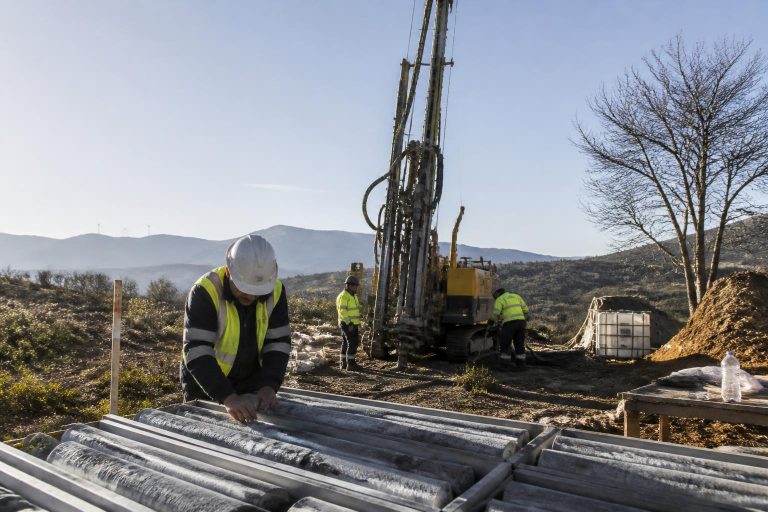
    Terra Balcanica Resources has secured a new mineral exploration licence for the Viogor polymetallic project in eastern Bosnia and Herzegovina, consolidating three previously drilled targets into a single 49 square kilometre tenure within the historically significant Srebrenica mining district.

    The licence, issued on 20 May 2026 by the Republic of Srpska Ministry of Energy and Mines to Terra’s wholly owned subsidiary Energetski minerali doo Banja Luka, is valid for three years with two potential two-year extensions providing up to seven years of continuous exploration tenure. It covers the Čumavići polymetallic corridor, the Kiseli Potok molybdenum porphyry and the two Brežani discoveries — all defined during Terra’s exploration work between 2020 and 2022.

    The Čumavići corridor is the flagship target, hosting a series of high-grade intermediate sulphidation epithermal silver-antimony-zinc-lead-gold vein systems across more than 7.2 kilometres of strike length. The Čumavići Ridge system has been tested across more than 28 drill holes along 180 metres of strike, returning an average grade of 485 grams per tonne silver equivalent over 4.0 metres. The mineralisation is characterised by sphalerite, stibnite and galena with silver-rich sulphosalts — making antimony, a metal subject to Chinese export controls since September 2024, a key strategic commodity within the project.

    The Brežani discovery hosts a large multidomain magmatic-hydrothermal system including a 650 by 400 metre gold-bearing skarn and a structurally controlled base metal epithermal zone at depth. A discovery hole intersected approximately 20 metres of fault-breccia hosted silver-antimony-zinc mineralisation at 480 metres depth grading above 436 grams per tonne silver equivalent. An electromagnetic conductor interpreted as the antimony-silver-zinc mineralisation extends 1.2 kilometres in length and up to 600 metres in width, offering potential for a large tonnage ore body.

    The project is strategically located approximately 80 kilometres east-northeast of Dundee Precious Metals’ Vareš silver-zinc mine and adjacent to the Mineco Sase mine, which produces approximately 330,000 tonnes of lead-zinc-silver-gold concentrate per year using processing infrastructure genetically compatible with Terra’s mineralised targets.

    Terra CEO Dr. Aleksandar Mišković said securing the licence removes tenure uncertainty and paves the way for a preliminary resource estimate in 2027, positioning the company as a potential supplier of critical metals — notably antimony — to neighbouring European markets.

  • Disinformation and Political Inertia Are Costing Bulgaria Billions as EU Critical Minerals Drive Opens a Window It Cannot Afford to Miss

    Disinformation and Political Inertia Are Costing Bulgaria Billions as EU Critical Minerals Drive Opens a Window It Cannot Afford to Miss

    Bulgaria possesses the geological endowment to make a meaningful contribution to Europe’s critical minerals security — tungsten, copper, gold, barite and other strategic materials sit in its subsoil — yet for 35 years the country has managed to bring only one significant new mining project to completion. Industry leaders say the primary obstacle is not geology, regulation or finance, but organised disinformation that has repeatedly killed projects with broad economic potential before they reach production.

    The analysis comes from two prominent voices in the Bulgarian mining sector, Assoc. Prof. Ivan Mitev of the Bulgarian Chamber of Mining and Geology and Vanya Deneva, Procurator and Board Member at Assarel-Investment, both of whom point to a recurring pattern: legitimate environmental concerns become intertwined with unfounded or exaggerated claims that embed themselves in public consciousness before expert corrections can take hold.

    Deneva is blunt about the mechanism. “Disinformation is key for stopping mining projects in Bulgaria,” she says, describing campaigns that routinely portray investors as entities willing to trade public health for profit and leave behind environmental destruction. The rhetoric — amplified by green NGOs, populist parties and mainstream media — exploits deep post-communist distrust of private enterprise. More troubling, she argues, is that foreign-funded civil society programmes nominally designed to strengthen democratic participation have been repurposed into instruments of organised opposition. “They post on Facebook false and misleading information about mining activities,” she notes.

    The Trun gold project provides the clearest case study. An initiative by Assarel-Medet in a region with a long mining history, the project initially attracted relatively positive local sentiment. That changed after externally supported activists launched door-to-door campaigns warning residents of an influx of migrants, the importation of communities from other regions, and even the blocking of cemetery access. A referendum in June 2017, conducted amid a heavy media smear campaign, produced a 93% vote against — effectively ending the project. Local authorities had stayed silent to avoid reputational risk.

    The tungsten deposit at Grancharitsa near Velingrad represents a similar impasse. Tungsten is a strategic material essential for high-performance alloys, electronics and defence. But local opposition, centred on fears that mining would destroy the region’s spa tourism and contaminate mineral water sources, has stalled the project indefinitely. Mitev describes the mineral water contamination claims as “scientifically nonsense” — but notes that once such narratives are established they become nearly impossible to dislodge.

    The economic cost of this pattern is measurable. A 2018 analysis by Bulgaria’s Ministry of Environment and Water estimated that project appeals and delays had already inflicted damages of approximately 1.35 billion euros over a decade. Accounting for inflation and projects blocked since then, the true cumulative figure is likely substantially higher. These losses translate directly into foregone jobs, reduced tax revenues and stalled development in depopulated rural areas where mining could provide stable, well-paid employment.

    Both Mitev and Deneva argue that the EU’s Critical Raw Materials Act — with its targets for domestic extraction, processing and recycling by 2030 — creates a genuine window of opportunity for Bulgaria. But realising it requires proactive state leadership rather than neutrality, greater transparency over NGO funding and activities, improved public communication that translates expert assessments into accessible language, and genuine community engagement modelled on successful European examples where benefit-sharing mechanisms have secured social licence.

    The only major new mining project to reach production in Bulgaria in 35 years is the Dundee Precious Metals gold mine in Krumovgrad, which opened in 2019 — the same company now facing criminal charges over lead contamination at its Vares mine in Bosnia.

  • JRC Report Finds EU Losing Thousands of Tonnes of Critical Raw Materials From Wind Turbines and EV Batteries as 2030 Recycling Wave Approaches

    JRC Report Finds EU Losing Thousands of Tonnes of Critical Raw Materials From Wind Turbines and EV Batteries as 2030 Recycling Wave Approaches

    A new report from the European Commission’s Joint Research Centre has identified significant gaps in EU waste treatment systems that are causing large-scale losses of critical and strategic raw materials — including from wind turbines, electric vehicle batteries and household electronics — with losses from wind turbine permanent magnets alone projected to surge more than twenty-fold by 2030.

    The report, developed in support of the Critical Raw Materials Act, establishes a priority list of products, components and waste streams with the highest circularity potential for critical and strategic materials. Key targets include permanent magnets from wind turbines, cobalt and lithium from EV batteries, and aluminium components from vehicles. The list is designed to help EU member states identify priority waste streams, spot gaps in existing recovery legislation and processes, and develop effective national circularity programmes as required under the CRMA.

    The scale of current losses is striking. In the small electrical and electronic equipment category, 46% of the total critical and strategic raw materials contained in products is lost at the collection stage alone. Common household items such as hard disk drives and cables could offer significant recovery potential if collected and treated properly, yet current systems fail to capture them.

    Critical raw materials embedded in EV batteries and wind turbines — the very technologies driving the shift to cleaner energy — are frequently not recovered sufficiently when products reach end of life. Permanent magnets from wind turbines are particularly at risk: they tend to be lost in bulk steel and aluminium waste flows rather than being separated for targeted recovery. Losses are projected to rise from 1,900 tonnes per year in 2022 to approximately 45,000 tonnes per year by 2030, when the first large wave of turbines installed during the early renewable energy buildout reaches the end of its operational life.

    The report supports the implementing act under Article 26 of the CRMA and provides governments with tools to identify legislative, process and data gaps. By retaining critical and strategic materials within the continent rather than allowing them to be dissipated in mixed waste streams or lost to export, the EU can reduce exposure to supply disruptions, lower dependence on third-country suppliers and strengthen the competitiveness of its circular economy.

  • Avrupa Minerals Confirms 6.5 Million Tonne Copper-Zinc Resource at Portugal’s Sesmarias Project

    Avrupa Minerals Confirms 6.5 Million Tonne Copper-Zinc Resource at Portugal’s Sesmarias Project

    Initial mineral resource estimate for the Iberian Pyrite Belt deposit grades 2.9% zinc and 0.6% copper, with exploration upside targeting a doubling of the resource through further drilling.

    4 June 2026TSX-V: AVUSource: Avrupa Minerals Ltd. press release, 3 June 2026

    Avrupa Minerals Ltd. has published its first NI 43-101-compliant mineral resource estimate (MRE) for the Sesmarias copper-zinc project in northern Portugal, reporting a total inferred resource of 6.5 million tonnes grading 2.9% zinc, 1.2% lead, 0.6% copper, and 35 grams per tonne silver — equivalent to a copper equivalent (CuEq) grade of 2.2%, or a zinc equivalent (ZnEq) of 6.2%. The estimate was compiled by SLR Consulting’s Frank Browning and carries an effective date of 1 May 2026.

    The project sits within the Iberian Pyrite Belt (IPB), one of the world’s most productive volcanic-hosted massive sulphide (VMS) districts, stretching across southern Spain and Portugal. Sesmarias lies in the northern portion of the belt and hosts polymetallic mineralisation within a synformal fold structure with a known strike length of at least 1,700 metres.

    “The study supports the vitality of the mineralisation and provides clear encouragement for prioritised drilling in all zones at Sesmarias to potentially increase the size of the deposit.” — Paul W. Kuhn, President & CEO, Avrupa Minerals

    The resource is classified entirely as inferred and is broken into four zones. The Central Zone, at 2.2 million tonnes grading 3.4% zinc and 0.9% copper, carries the highest average grades in the deposit and accounts for 76,000 tonnes of contained zinc metal. The North and South zones each contribute approximately 1.9–2.1 million tonnes at lower but still material grades.

    The resource is classified entirely as inferred and is broken into four zones. The Central Zone, at 2.2 million tonnes grading 3.4% zinc and 0.9% copper, carries the highest average grades in the deposit and accounts for 76,000 tonnes of contained zinc metal. The North and South zones each contribute approximately 1.9–2.1 million tonnes at lower but still material grades.

    Table: Sesmarias initial mineral resource estimate by zone (4.0% ZnEq cut-off grade)

    Zone Tonnage (Mt) Zn (%) Pb (%) Cu (%) Ag (g/t) ZnEq (%) CuEq (%)
    Central 2.2 3.4 1.6 0.9 48 8.1 3.0
    Upper Central 0.3 2.3 1.2 1.3 37 7.4 2.7
    North 1.9 2.5 1.0 0.4 33 5.0 1.8
    South 2.1 2.9 0.9 0.3 23 4.9 1.8
    Total 6.5 2.9 1.2 0.6 35 6.2 2.2

    Alongside the MRE, SLR completed an independent assessment of exploration potential identifying seven drill targets beyond the current resource footprint — two extensional (E1, E2) and five conceptual (C1–C5). The extensional targets pursue down-plunge continuations of the Central and South zones, while the conceptual targets test largely undrilled portions of the synform’s hinge and west limb, where structural models suggest additional massive sulphide lenses may exist. SLR’s sensitivity analysis shows that at a 3% ZnEq cut-off, the deposit could contain up to 10.6 million tonnes grading 5.1% ZnEq — though that figure is not a declared mineral resource.

    The company has initiated a mining licence application for the Sesmarias deposit and is seeking a joint-venture partner to fund the next drilling campaign and advance the project through pre-feasibility studies. First-priority drilling will target the Central Zone hinge and west limb between sections 275 S and 700 S, where moderate existing drill density has left the synform’s geometry incompletely characterised. Near-term exploration success in the Central and North zones is expected to inform the sequencing of work in the more geologically complex Southern Zone.

    Avrupa Minerals trades on the TSX Venture Exchange (AVU), the US OTC market (AVPMF), and the Frankfurt Stock Exchange (8AM). The company also holds the 100%-owned Alvalade VMS project in Portugal and a 49% stake in the Slivova gold project in Kosovo.

  • Ukraine’s Dobra Lithium Deposit Could Sustain Mining for 60 Years on Conservative Estimates, Geologists Say

    Ukraine’s Dobra Lithium Deposit Could Sustain Mining for 60 Years on Conservative Estimates, Geologists Say

    The Dobra lithium deposit in Ukraine’s Kirovohrad Region may contain between 60 and 100 million tonnes of ore, sufficient to sustain decades of production and potentially making it one of the most significant lithium assets in Europe, according to the geologists leading its development.

    Mykhailo Heichenko, CEO and Chief Geologist of UkrLithiumMining, estimates the deposit at around 60 million tonnes, while Bohdan Slobodian, a PhD candidate at the Institute of Geochemistry, Mineralogy and Ore Formation of the National Academy of Sciences of Ukraine, puts the figure closer to 100 million tonnes based on exploration data from Kirovgeology. At an extraction rate of one million tonnes per year, 60 million tonnes would support 60 years of operations; even scaling up to 1.5 to 2 million tonnes annually, the deposit would remain productive for decades. “With 100 million tonnes, our grandchildren could still be working here,” Heichenko said.

    Slobodian explained that the assessment draws on borehole data collected between 1989 and 1994, with lithium ore beginning at depths of 60 to 80 metres below surface sediments and extending to 500 metres across the 1,700-hectare licensed area.

    Lithium-bearing ores at the site were first identified in 1989 during gold exploration, with the discovery also revealing associated deposits of tantalum, niobium, rubidium, beryllium, tin, cesium and tungsten. In 2017, the Ukrainian State Commission on Mineral Resources consolidated the Nadiya and Stankuvata ore deposits into the unified Dobra zone. The deposit contains two key lithium minerals — petalite and spodumene — and is located in Novoukrainka district, stretching between the villages of Novostankuvata and Ternove.

    Ukraine’s Cabinet of Ministers has selected Dobra Lithium Holdings JV as the winner of a tender to develop the deposit under a production sharing agreement. The joint venture is backed by internationally recognised companies Techmet and The Rock Holdings, and the project is expected to attract at least $179 million in capital investment — $12 million for new geological exploration and international reserve audits, and $167 million for mining and processing operations subject to confirmation of industrial-scale reserves.

  • Romania Holds Three EU Strategic Projects Worth Over €1.3 Billion as Europe Races to End Critical Minerals Dependence on China

    Romania Holds Three EU Strategic Projects Worth Over €1.3 Billion as Europe Races to End Critical Minerals Dependence on China

    Europe is confronting a structural vulnerability in critical minerals supply chains that mirrors — and in some respects exceeds — its former dependence on Russian gas, as China’s dominance of rare earth refining, magnesium production and graphite processing leaves European manufacturers exposed to geopolitical leverage at the most fundamental level of their supply chains.

    The scale of dependence is striking. Approximately 97% of magnesium consumed in the EU comes from China, dependence on heavy rare earths is near absolute, and more than 90% of global rare earth refining capacity is concentrated in a single country. The consequences became concrete in April 2025, when Beijing imposed export restrictions on certain rare earth categories amid trade tensions with the United States: permanent magnet exports contracted sharply and several European car manufacturers temporarily suspended production lines.

    Europe’s legislative response is the Critical Raw Materials Act, which entered into force in May 2024. The regulation sets four targets for 2030: at least 10% of EU consumption to come from domestic extraction, 40% of processing to occur within the EU, 25% of demand to be covered through recycling, and no single third country to supply more than 65% of any critical material. Strategic project designation under the CRMA unlocks accelerated permitting capped at 27 months — compared with five to ten years in many member states — and priority access to financing from the European Investment Bank, EBRD and EU funds.

    Romania emerges as one of the most significant potential contributors to Europe’s mineral security, holding reserves of graphite, titanium, boron, germanium, magnesium and copper, all on the European Commission’s critical and strategic materials list. Three of the 47 projects on the Commission’s first strategic list are in Romania, with combined value exceeding €1.3 billion. Euro Sun Mining’s Rovina copper project in Hunedoara County, valued at €300 million, is the EU’s second-largest copper and gold deposit. SALROM’s Baia de Fier graphite project in Gorj County is state-owned. Verde Magnesium’s Bihor County project, valued at approximately $1 billion, could become both the EU’s first magnesium mine and its largest magnesium deposit — addressing the material for which European dependence on China is most acute.

    At national level, progress has been partial. Emergency Ordinance 61/2025 designated a single contact point for strategic project authorisation, but a more ambitious legislative proposal — L143/2026, which would have recognised critical minerals projects as public interest investments and introduced expedited judicial procedures — was rejected by the Senate, leaving a legislative gap that prolongs the competitiveness disadvantage.

    Writing in an opinion piece, Lorena Novac of IJDELEA & Associates frames Romania’s situation as a historic opportunity that risks being squandered. “The alternative is straightforward: leave resources underground and import from China materials that already exist within Romania’s own subsoil. Europe has learned its lesson on energy security. The question is whether Romania will learn the lesson on mineral security before it is too late.”

  • DPM Metals Strikes Major High-Grade Gold-Copper Porphyry Discovery in Bulgaria Adjacent to Chelopech Mine

    DPM Metals Strikes Major High-Grade Gold-Copper Porphyry Discovery in Bulgaria Adjacent to Chelopech Mine

    DPM Metals has announced a significant gold-copper porphyry discovery at its Brevene South Porphyry target in Bulgaria, with a single hole cutting 713 metres grading 1.31 grams per tonne gold and 1.16% copper — results that analysts say could distinguish the site as one of Europe’s most compelling new porphyry systems.

    Standout hole EX_BRESPO_03, drilled approximately one kilometre from the reserve footprint of the operating Chelopech underground mine, returned the 713-metre interval from 1,172 metres downhole, including a higher-grade core of 398 metres at 1.48 grams gold and 1.45% copper from 1,487 metres depth. The hole remains in progress. RBC Capital Markets analyst Harrison Reynolds described the results as distinguishing BSP as “a potentially very high-grade porphyry system,” adding that proximity to existing mine infrastructure materially de-risks the path to eventual economic extraction.

    DPM shares rose 1.6% to C$46.70 in Toronto on Wednesday, valuing the company at approximately C$10.3 billion ($7.5 billion).

    The BSP target sits within the southeastern portion of the Brevene exploration licence, contiguous with the Chelopech mine concession approximately 75 kilometres east of Sofia. The new mineralised zone lies within a hydrothermal alteration system measuring more than 1,000 by 1,500 metres and remains open for expansion. Additional holes released Wednesday include 95 metres at 0.43 grams gold and 0.48% copper from 1,250 metres, and 37 metres at 0.53 grams gold and 0.63% copper from 1,357 metres.

    DPM has mobilised five high-capacity drill rigs to the target and plans up to 15,000 additional metres of drilling by year-end. The company is targeting a Commercial Discovery Certificate after exploration work concludes in September, followed by a mining concession application and environmental permitting. The discovery is DPM’s fourth significant find since 2023, following Čoka Rakita, Dumitru Potok and Wedge Zone.

    Chelopech, one of Europe’s highest-grade operating gold-copper mines, had its operating life extended by four years to 2036 four months ago. DPM forecasts Chelopech will produce 150,000 to 170,000 ounces of gold and 29 to 34 million pounds of copper this year.

  • Central Asia Metals Acquires Canada’s Cygnus Metals for $166 Million to Add Quebec Copper-Gold Project to Kazakhstan and North Macedonia Portfolio

    Central Asia Metals Acquires Canada’s Cygnus Metals for $166 Million to Add Quebec Copper-Gold Project to Kazakhstan and North Macedonia Portfolio

    London-listed Central Asia Metals has agreed to acquire Canadian explorer Cygnus Metals for approximately A$232 million ($166 million) in an all-share deal, adding the Chibougamau copper-gold project in Quebec to a portfolio that already includes producing operations in Kazakhstan and North Macedonia.

    Under the terms of the agreement, CAML will issue 0.06 new shares for each Cygnus share, valuing each Cygnus share at A$0.176 — a 60% premium to the last closing price and a 40% premium to the 20-day volume-weighted average. Following completion, existing CAML shareholders will retain approximately 70% of the combined company, with Cygnus shareholders holding the remaining 30%. A Cygnus shareholder vote requiring 75% approval is expected in September, and CAML will hold its own shareholder meeting to approve the share issuance. CAML also intends to seek a listing on the Toronto Stock Exchange or TSX Venture Exchange to broaden its North American investor base.

    Chibougamau, located in central Quebec approximately 480 kilometres from Montreal and acquired by Cygnus in 2024, hosts indicated resources of approximately 149,000 tonnes of copper and 167,000 ounces of gold, alongside inferred resources of 182,000 tonnes of copper and 454,000 ounces of gold, based on a 2022 preliminary economic assessment by previous owner Doré Copper Mining. The site includes existing infrastructure and a historic copper processing plant with 900,000 tonne per year capacity. CAML plans to advance a full feasibility study using its own underground mining expertise.

    CAML’s existing operations — the Sasa zinc-lead underground mine in North Macedonia and the Kounrad copper heap leach operation in central Kazakhstan — are expected to produce 12,000 to 13,000 tonnes of copper cathode, 18,000 to 20,000 tonnes of zinc concentrate and 26,000 to 28,000 tonnes of lead concentrate in 2026. The Chibougamau acquisition follows CAML’s unsuccessful attempt last year to acquire Australia’s New World Resources and its Arizona copper project.

    Non-executive chairman Nick Clarke described Chibougamau as a high-quality copper-gold asset that fits well alongside CAML’s existing operations and provides a clear path to near-term growth. Cygnus also holds lithium exploration assets in Quebec’s world-class James Bay region and rare earth and base metal projects in Western Australia.

  • BHP-Backed Mundoro Advances Copper-Gold Exploration Across Five Targets in Serbia’s Timok Magmatic Complex

    BHP-Backed Mundoro Advances Copper-Gold Exploration Across Five Targets in Serbia’s Timok Magmatic Complex

    Canadian explorer Mundoro Capital and mining giant BHP are intensifying exploration across five targets in eastern Serbia’s Timok Magmatic Complex, one of Europe’s most prospective copper-gold belts, with drilling results from the flagship Skorusa project expected to provide a critical indicator of the programme’s potential by the end of summer.

    According to Mundoro’s first quarter 2026 report, exploration activity has focused on new drilling programmes, geophysical surveys and geological data integration across the Skorusa, Oblez, Borsko, Trstenik and South Timok Corridor projects near Bor. BHP is financing the majority of work under a stake acquisition agreement.

    Skorusa is drawing the most attention. Two exploration holes totalling nearly 1,300 metres were completed during spring, with one intersecting a wider zone of advanced argillic alteration than anticipated — a feature that may indicate a preserved hydrothermal system. Laboratory analysis of drill samples is expected in June and geological interpretation should be complete by end of summer.

    At the Borsko project, work to date has defined a large alteration zone measuring approximately 1.6 by 1.5 kilometres, which Mundoro believes could conceal a previously untested copper-gold porphyry system. Additional targeting and exploration preparation are planned. At the South Timok Corridor’s Lipovica area, two holes totalling approximately 1,278 metres have been completed alongside audio-magnetotelluric, gravimetric and passive seismic surveys across several licences. A new stratigraphic hole near Vitanovac is planned for the third quarter.

    Mundoro is also evaluating new prospect areas across the Timok and other igneous belts in Serbia, targeting copper-gold porphyry systems, skarn mineralisation and epithermal deposits.

  • Americas Uranium Secures Frankfurt Stock Exchange Listing to Expand European Investor Access

    Americas Uranium Secures Frankfurt Stock Exchange Listing to Expand European Investor Access

    Americas Uranium has received approval to list its shares on the Frankfurt Stock Exchange under the ticker symbol WA7, expanding the Canadian uranium explorer’s market presence to three continents as investor interest in nuclear energy grows.

    The Frankfurt listing follows the company’s existing trading on the Canadian Securities Exchange and quotation in the United States, giving Americas Uranium access to European institutional and retail investors at a moment when uranium and nuclear power are attracting renewed attention as components of the global energy transition.

    CEO Nicholas Luksha described the development as an important milestone in the company’s international expansion. “Being publicly listed in Canada and quoted in the US, and now Germany, represents an important milestone for the company as we continue to expand our international profile and connect with investors who recognise the growing importance of uranium and nuclear energy in the global energy transition,” he said.

    Americas Uranium focuses on acquiring, discovering and advancing uranium projects across prospective jurisdictions in the Americas.