Parliament’s industry committee wants a bigger war chest and tighter rules than the Commission proposed. For miners, the detail that matters is where critical raw materials sit.
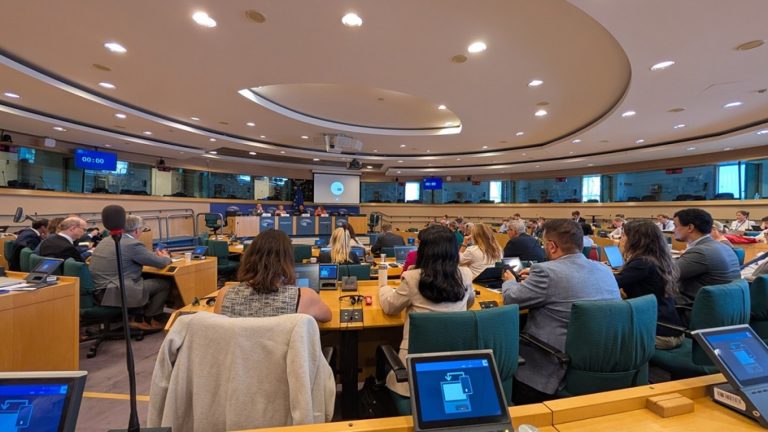
On 10 November 2206 the European Parliament’s industry committee took the first formal step towards shaping the EU’s next budget for industrial policy. It adopted its position on the European Competitiveness Fund by 61 votes to 13, with 12 abstentions, and then backed opening negotiations with governments by 56 votes to 26. The fund would run from 2028 to 2034. A plenary vote is expected during the 23–26 November sessions. That is later than first planned, since a Council paper had pencilled in October. The wider margin on the text than on the negotiating mandate suggests that some MEPs are uneasy about rushing into talks. www.europarl.europa.euwww.europarl.europa.eu
The Commission’s design folds 14 existing funding instruments into four policy windows. MEPs accept the architecture but want to tilt it. They propose €264.35bn, up from the Commission’s €234.3bn, an increase of about 13%. They would rename three of the windows to stress industrial and economic security. They would also add a €10.11bn flexibility reserve and binding minimum allocations for each window. They would replace the Commission’s single stakeholder board with several independent governance bodies, and double the maximum guarantee under the InvestEU instrument to €150bn from €70bn. Headline figures vary by source: some accounts of the draft cite €409bn, which presumably includes Horizon Europe. That reading is mine, not confirmed.
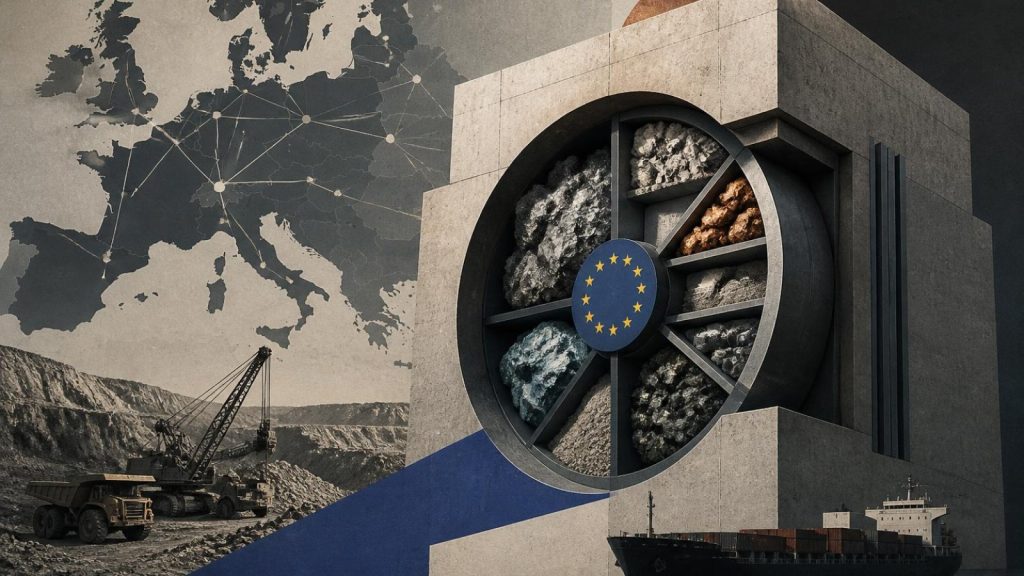
Critical raw materials sit in the middle of the changes. The position gives them a dedicated budget envelope and governance structure, next to a separate section for energy infrastructure and a specific programme for defence research. The release gives no figure for the raw materials envelope. A Science Business account of the rapporteurs’ draft lists a €10bn line, but it is not clear whose number that is. The logic of ring-fencing is clear. In a merged fund, a mining project competes with every other priority, and a protected envelope stops raw materials from being crowded out. www.europarl.europa.eu
The envelope lands in an already crowded landscape. On 20 October Parliament backed amendments to the Critical Raw Materials Act by 470 votes to 83, with 108 abstentions. They include a dedicated EU agency and a €2bn Critical Raw Materials Fund under the 2028–2034 budget. On 9 October the Commission picked 46 further strategic projects in 16 member states. A promoter now has to weigh strategic-project status, the €2bn fund and the competitiveness fund’s envelope. The raw materials rules are themselves in trilogue, and a version dated 28 October was prepared for talks on 4 November, so the two files will be settled in parallel. spglobal
The vote leaves several questions open. It is unclear whether the competitiveness fund’s raw materials money is additional to the €2bn fund or overlaps with it. The size of the envelope is unknown and will be pulled down in negotiation. A larger guarantee could pull in private capital for mines, but processing, recycling and manufacturing projects, with shorter permitting times, may absorb more of it. Whether any of it reaches projects outside the EU, in Armenia, Kazakhstan or Central Asia, is another open point, because the fund is aimed at European competitiveness and sourcing partnerships run through other instruments. Finally, independent governance bodies may improve accountability, but they could also add a layer between a promoter and its money.
Governments have not yet shown their hand. The Council reached a partial general approach in June, and talks will start only after Parliament’s plenary. For the mining industry, the practical message is to treat the committee vote as a signal of direction, not of money.
Sources: