Tag: Energy

  • Tajikistan and the US Strengthen Bilateral Cooperation in Energy and Mining Sectors

    Tajikistan and the US Strengthen Bilateral Cooperation in Energy and Mining Sectors

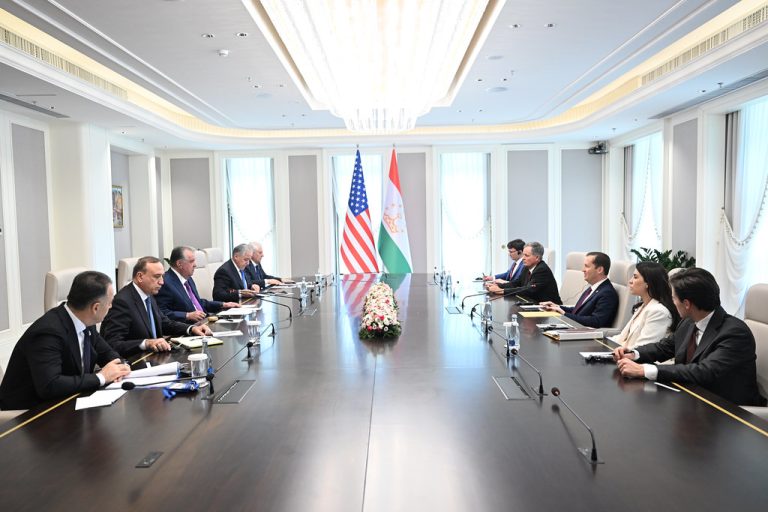
    In a significant diplomatic engagement, Tajikistan’s President Emomali Rahmon met with US Special Envoy for Central and South Asian Affairs, Sergio Gor, and US Senator Steve Daines in Bishkek to discuss the current state of bilateral cooperation. The meeting underscored the importance of the C5+1 mechanism, which facilitates regional dialogue and cooperation among Central Asian nations and the United States.

    During the discussions, President Rahmon highlighted Tajikistan’s commitment to enhancing trade and economic ties with the US, particularly in the energy, industrial, and mining sectors. The focus on these sectors reflects Tajikistan’s strategic intent to attract foreign investment, which is crucial for the country’s economic development and infrastructure improvement.

    The talks also addressed broader issues of security and stability in the region, with both sides recognising the need for political and diplomatic solutions to ongoing conflicts. This aspect of the dialogue illustrates the multifaceted nature of US-Tajik relations, which extend beyond economic interests to encompass regional security concerns.

    Additionally, the meeting provided a platform for both parties to exchange views on various mutual interests, reinforcing the collaborative spirit that characterises their bilateral relationship. As Tajikistan seeks to bolster its economic framework, the engagement with US officials signals a proactive approach to international partnerships, especially in sectors critical to its national development agenda.

  • Tungsten West Secures £71 Million Investment to Revive Hemerdon Mine

    Tungsten West Secures £71 Million Investment to Revive Hemerdon Mine

    Tungsten West (AIM:TUN) has announced a significant investment of up to $97 million (£71 million) from the UK Government to restart production at the historic Hemerdon tungsten and tin mine located in Devon. This funding, which encompasses both equity and debt, is sourced from the National Wealth Fund (NWF) and is aimed at revitalising the mine to achieve full production capacity, thereby establishing a secure domestic supply of tungsten—a critical mineral vital for high-technology supply chains, aerospace, energy, and defence sectors.

    The Hemerdon mine has a storied history, having supplied essential tungsten for military and defence efforts during both World Wars. Mining activities persisted intermittently until 1944, when operations ceased. The recent government investment is seen as a strategic move to bolster the UK’s mineral supply chain, particularly in the context of national security and economic growth. Chancellor of the Exchequer, John Healey, emphasised that this initiative will not only provide crucial minerals to British industries but also safeguard well-paid jobs across the UK, aligning with the government’s commitment to stimulate growth in all regions.

    In conjunction with the investment, Tungsten West and the NWF have established a shareholder relationship agreement, allowing the NWF to nominate a non-executive director to Tungsten West’s board. This partnership is expected to facilitate the resumption of full production at Hemerdon, which is projected to create approximately 350 direct jobs.

    Production at the Hemerdon site is set to commence soon, with tungsten and tin concentrates already being produced in the past month as final tests are conducted. The company is also in discussions with a major downstream tungsten refiner to enhance its operational capabilities. Jeff Court, CEO of Tungsten West, remarked on the significance of the Hemerdon resource, describing it as a world-class, low-cost, and long-life tungsten and tin asset that will support the UK’s national interests in the long term.

    Despite previous challenges in restarting the mine, including cost overruns and fluctuating prices, the recent investment has invigorated Tungsten West’s stock, which surged by approximately 17% to 50.25 pence per share, valuing the company at around £627 million ($855 million) as of midday trading in London. This positive market response indicates strong investor confidence in the future of the Hemerdon mine and its role in the UK’s critical minerals landscape.


  • Kazakhstan’s Uranium Production Surges by 9% in H1 2026, Reports Kazatomprom

    Kazakhstan’s Uranium Production Surges by 9% in H1 2026, Reports Kazatomprom

    Kazakhstan has reported a significant increase in its uranium production for the first half of 2026, with output rising by 9% compared to the same period last year. According to Kazatomprom, the world’s largest uranium producer, the country produced 13,291 tonnes of uranium in the first six months of 2026, up from 12,242 tonnes in the first half of 2025. This growth highlights Kazakhstan’s pivotal role in the global uranium market, particularly as demand for nuclear fuel continues to rise amid a global push for cleaner energy sources.

    Kazatomprom, which is majority-owned by the Kazakh State fund Samruk-Kazyna, primarily sells uranium oxide concentrate under long-term contracts, with only a small fraction of its production being sold on the spot market. This strategic approach allows the company to maintain stable revenue streams while managing market fluctuations. The increase in production is indicative of Kazakhstan’s commitment to enhancing its mining capabilities and meeting the growing international demand for uranium, especially as many countries look to nuclear energy as a viable alternative to fossil fuels.

    The rise in uranium output also reflects broader trends in the mining sector, where companies are increasingly focusing on sustainable practices and efficient production methods. As Kazakhstan continues to expand its uranium production, it reinforces its position as a key player in the global energy landscape, contributing to the transition towards more sustainable energy solutions. With Kazatomprom listed on the London Stock Exchange since 2019, the company’s performance is closely watched by investors and analysts alike, signalling the importance of uranium in the future energy mix.


  • China Eyes Coal Waste as New Source of Critical Minerals

    China Eyes Coal Waste as New Source of Critical Minerals

    China is exploring the recovery of critical minerals from coal waste, with researchers highlighting fly ash and coal gangue as potential sources of strategic metals including germanium, gallium, lithium and aluminum.

    According to a new report, China’s extensive coal mining and power generation infrastructure could be leveraged to recover valuable metals from by-products that have traditionally been treated as industrial waste.

    “The coal refuse contains a variety of metal elements and could become an important source of critical metal supply,” said Dai Shifeng, a member of the Chinese Academy of Sciences and professor at the China University of Mining and Technology-Beijing.

    Coal gangue refers to the rock separated from coal during mining, while fly ash is the fine mineral residue left after coal combustion. Although typically disposed of or used in construction materials such as cement, both materials can contain economically valuable concentrations of critical minerals and rare earth elements.

    Researchers argue that China’s integrated coal industry provides a strong foundation for resource recovery. Existing coal washing, chemical processing and power generation facilities could potentially be adapted to extract strategic metals from waste streams, reducing the need for additional mining.

    The approach could support China’s growing demand for critical minerals used in semiconductors, batteries, electric vehicles, renewable energy technologies and defence applications, while also improving resource efficiency and reducing industrial waste.

    However, the report notes that commercial recovery remains technically challenging. Metal concentrations vary significantly depending on the geological characteristics of individual coal deposits, and fly ash from different coal sources is often blended during power generation, resulting in inconsistent feedstock quality that can affect the economic viability of extraction.

    Researchers nevertheless believe rising demand for critical minerals will continue to improve the prospects for recovering metals from coal waste, building on China’s existing experience in extracting germanium from coal-related resources.

  • EU Faces Criticism Over Plans to Fast-Track Industrial and Energy Projects

    EU Faces Criticism Over Plans to Fast-Track Industrial and Energy Projects

    The European Commission is facing growing criticism after a new report by watchdog Corporate Europe Observatory (CEO) accused Brussels of weakening environmental protections in order to accelerate industrial and energy projects across Europe.

    Published on Tuesday, the report claims the EU is using the ongoing energy crisis to justify deregulation measures that could benefit fossil fuel companies, mining firms, hydrogen developers, and major technology corporations. According to CEO, proposed legislation would speed up approval processes for projects labelled as “strategic” or of “overriding public interest,” potentially allowing them to bypass environmental assessments and reducing opportunities for public scrutiny.

    The debate comes amid broader discussions in Brussels over balancing Europe’s industrial competitiveness and green transition goals with environmental safeguards and democratic oversight. The issue has gained further attention following the EU executive’s recent decision to increase free pollution allowances for energy-intensive industries under the bloc’s carbon market by nearly €4 billion.

    CEO researcher and campaigner Pascoe Sabido argued that while the energy crisis initially pushed Europe toward reducing dependence on fossil fuels, industry lobbying has transformed fast-track measures into tools for expanding polluting infrastructure.

    The report warns that the proposed reforms could weaken protections for local communities by limiting their ability to challenge projects affecting health, land, and livelihoods. Hydrogen transport systems, carbon dioxide pipelines, and large-scale data centres were identified as projects that could undermine environmental and social standards.

    Specific concerns were raised over mining developments in Sweden linked to critical raw materials for the energy transition, which campaigners say threaten Indigenous Sámi communities and local water systems. In Ireland, rapidly expanding data centres are reportedly placing additional pressure on the national electricity grid and increasing reliance on fossil fuel power generation.

    The report also highlights concerns over carbon dioxide transport pipelines associated with fossil gas infrastructure. CEO pointed to incidents in Yazoo County in the United States as evidence of potential health risks linked to pipeline leaks, including asphyxiation and long-term health impacts.

    According to the analysis, industry lobbying has influenced several upcoming EU legislative initiatives, including the Environmental Omnibus, the Grids Package, and the Industrial Accelerator Act. Campaigners argue these proposals could reduce environmental impact assessments, expand automatic permit approvals, and restrict access to legal appeals.

    Danish MEP Niels Fuglsang defended accelerated permitting procedures for renewable energy and grid projects, arguing that Europe must speed up clean energy deployment to strengthen energy independence, competitiveness, and the green transition. He also supported exemptions from certain EU water regulations for grid infrastructure projects, calling current procedures excessively time-consuming.

    The European Commission has defended its broader simplification agenda as necessary to accelerate the energy transition, improve industrial competitiveness, and reduce dependence on imported fossil fuels. Environmental groups, however, warn that easing restrictions for polluting infrastructure could lock Europe into long-term fossil fuel dependence rather than prioritising cleaner energy alternatives.

  • Erdoğan Says Türkiye and Syria Continue Joint Mining and Oil Operations

    Erdoğan Says Türkiye and Syria Continue Joint Mining and Oil Operations

    Turkish President Recep Tayyip Erdoğan announced that Türkiye is continuing joint mining and oil operations with Syria’s new government, describing the cooperation as part of Ankara’s broader strategy to strengthen energy independence and reinforce its position as a regional energy hub.

    Speaking at the second Istanbul Natural Resources Summit (INRES), Erdoğan said collaboration between Türkiye and neighboring Syria in the energy and mining sectors remains active. He emphasized that achieving full energy independence is one of Türkiye’s top strategic priorities and noted that the country aims to replicate in energy and mining the same level of success it has achieved in its defense industry.

    Erdoğan also highlighted Türkiye’s growing importance in global energy transit, stating that the country’s infrastructure currently enables natural gas imports from more than 50 companies across 39 countries. According to Erdoğan, upcoming investments will increase Türkiye’s daily LNG capacity from 161 million cubic meters to 200 million cubic meters, further strengthening its role as a key bridge between energy-producing and energy-consuming nations.

    The remarks came a day after Erdoğan reaffirmed during a phone call with U.S. President Donald Trump that Türkiye’s support for Syria remains ongoing, stressing that maintaining stability in the country is important for the wider region.

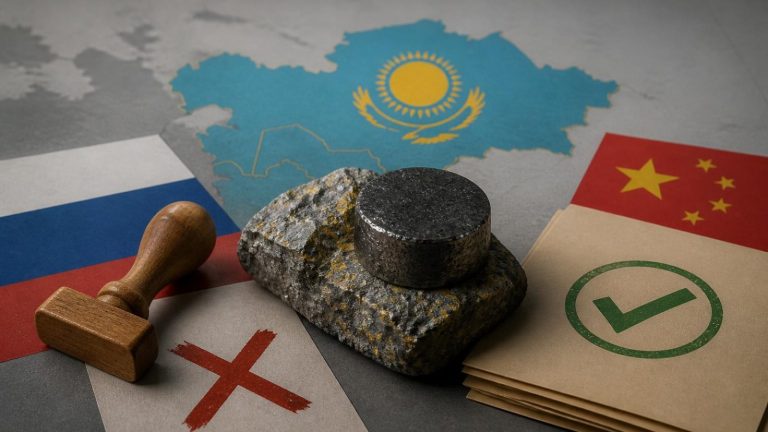
  • Kazakhstan to Spend ₸240 Billion on Geological Exploration: What and Where the State Plans to Explore

    Kazakhstan to Spend ₸240 Billion on Geological Exploration: What and Where the State Plans to Explore

    Kazakhstan’s government will allocate ₸240 billion to geological exploration, but the specific distribution of these funds and the rationale behind the chosen priorities have raised questions among industry experts. In response to an inquiry from inbusiness.kz, the Ministry of Industry and Construction detailed its plans for 2026–2028 via the eOtinish electronic platform.

    A central focus of the program will be regional geological mapping at a scale of 1:50,000. Preparatory work began in 2025, with 20 design-and-cost project documents developed, covering a total area of around 100,000 square kilometers. These projects предусматривают comprehensive analysis of Earth remote sensing data, airborne geophysical and geochemical surveys, as well as field geological work. The estimated cost of these 20 projects amounts to ₸110 billion.

    Another major spending area is 2D seismic exploration. Six projects are scheduled to begin in 2026 with a combined budget of ₸42.6 billion. The work is aimed at identifying structural traps for hydrocarbons and will cover two blocks in the Shu–Sarysu sedimentary basin and four blocks in the North Turgai basin. In total, 2D seismic surveys will span 25,300 line kilometers, with completion planned by the end of 2028.

    According to the ministry, seismic work will begin simultaneously in several regions. The North Turgai basin will be surveyed in Kostanay Region, while the Shu–Sarysu basin will cover parts of Ulytau, Turkestan and Zhambyl regions. Information on forecast resources will become available after completion of the surveys, and the resulting geological reports are expected to be published in open access on the minerals.e-qazyna.kz portal and the website of the Committee of Geology.

    The ministry stressed that these regional programs should not interfere with the normal operations of existing subsoil users. On the contrary, officials say the data generated by the state program can be used by private companies when planning and implementing their own exploration activities.

    However, industry specialists note that the ministry’s explanation leaves the strategic logic of the program insufficiently articulated. In their view, there is no publicly available document that systematically assesses the prospectivity of different regions and mineral types or sets out a long-term exploration roadmap.

    Experts have also questioned the choice of basins selected for state-funded seismic surveys. Both the Shu–Sarysu and North Turgai basins are already seeing strong interest from national and private companies, while other underexplored areas—such as the Irtysh, Balkhash and Teniz basins—remain largely outside the scope of large-scale government programs.

    Additional criticism relates to institutional bottlenecks, including lengthy procedures for accessing geological data and a five-year confidentiality period for submitted exploration results. Analysts argue that removing such constraints could deliver faster and more tangible benefits for the sector than large-scale mapping or seismic programs alone.

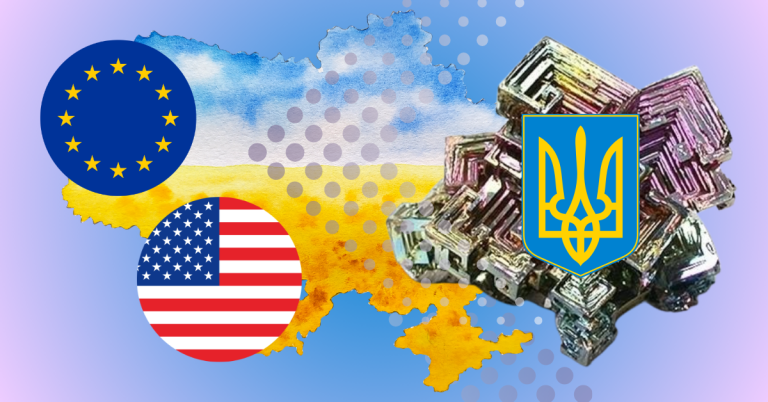
  • US-Ukraine Investment Agreement Faces Long Road to Mining and Energy Sector Boost

    US-Ukraine Investment Agreement Faces Long Road to Mining and Energy Sector Boost

    The recently ratified investment agreement between Ukraine and the United States, championed by US President Donald Trump, is not anticipated to deliver tangible results for at least a decade, experts told the Financial Times.

    The agreement, approved by Ukraine’s parliament on May 8, outlines the establishment of a joint “reconstruction investment fund” to support future mining and energy projects. Despite optimism, industry leaders warn that substantial challenges lie ahead, including Russia’s ongoing war on Ukraine, heavily damaged infrastructure, restricted Soviet-era geological data, corruption risks, and unexploded ordnance contamination.

    According to Eric Rasmussen, former head of natural resources at the European Bank for Reconstruction and Development, “It could be 10-15 years — that’s the sort of timeline we talk about.” Peter Bryant of the advisory group Clareo echoed these sentiments, stating that the deal “does little to de-risk the supply chain in the next 10 years.”

    Ukraine boasts significant natural resources, including iron ore, coal, lithium, graphite, and titanium-bearing ores. It is also Europe’s third-largest gas producer. While oil and gas fields may be quicker to develop, mining projects are expected to face lengthy geological exploration before reaching feasibility.

    Ukrainian Minister Yulia Svyrydenko mentioned that the reconstruction fund would be operational “within a few weeks,” although profits are expected to be reinvested for the first decade.

    US-backed TechMet, which aims to secure Ukrainian lithium, called the agreement promising but noted the long-term commitment required. DTEK, Ukraine’s largest private energy firm, expressed optimism, signaling that Ukraine was “open for business.”

    However, not all are convinced. One mining executive remarked skeptically, “This romantic idea that there’s lakes of lithium to be tapped is just not the case.”

  • U.S. and Ukraine Near Landmark Deal on Mineral Access and Reconstruction Fund

    U.S. and Ukraine Near Landmark Deal on Mineral Access and Reconstruction Fund

    The United States and Ukraine are poised to finalize a landmark strategic agreement that would grant Washington preferential access to future Ukrainian mineral and energy projects in exchange for continued military aid and investment, according to multiple media reports.

    A draft of the agreement, obtained by Reuters, outlines the creation of a joint U.S.-Ukrainian reconstruction fund. This fund would receive 50% of profits and royalties from newly issued resource permits. While the U.S. will not directly own Ukrainian assets or infrastructure, the deal secures American or U.S.-designated entities first-in-line access to new mineral and energy development licenses.

    The proposed agreement exempts existing contracts and drops earlier provisions that would have allowed U.S. influence over Ukraine’s gas infrastructure.

    Bloomberg reported that the deal covers a wide range of critical resources including graphite, aluminum, oil, and natural gas. With Ukraine holding an estimated $15 trillion in mineral reserves—among the largest in Europe—the agreement positions the country as a key supplier of strategic raw materials.

    Ukrainian Prime Minister Denys Shmyhal described the plan as a “strategic investment partnership” that will help rebuild Ukraine and secure its long-term development. Crucially, only future U.S. military aid will be counted as contributions to the fund—previous military support, amounting to tens of billions of dollars, will not be monetized under this framework.

    The deal requires ratification by Ukraine’s parliament. Economy Minister Yulia Svyrydenko is currently in Washington to finalize negotiations.

    The agreement aligns with U.S. President Donald Trump’s broader policy goals, including securing critical resources and promoting a negotiated ceasefire with Russia. Although peace talks remain stalled, recent backchannel diplomacy—including a private meeting between Presidents Trump and Zelensky at the Vatican—suggests renewed communication.

  • Kazakhstan Eyes Russian Participation in First Nuclear Power Plant Project

    Kazakhstan Eyes Russian Participation in First Nuclear Power Plant Project

    Kazakhstan’s Foreign Minister Murat Nurtleu has expressed hope that Russia will participate in building the country’s first nuclear power plant (NPP). The statement was made during his meeting with Russian Foreign Minister Sergey Lavrov, according to TASS.

    “We already have over 170 joint projects with Russian businesses, and the NPP construction is among the most strategic. I hope our respective ministries will move forward with the necessary work,” Nurtleu noted.

    The project has strong public support — a referendum held on October 6, 2024, showed 71.12% of Kazakhstani voters are in favor of building a nuclear power plant. Four international companies are currently under consideration to supply technology and lead construction:

    • Rosatom (Russia)

    • CNNC (China)

    • KHNP (South Korea)

    • EDF (France)

    According to Deputy Minister of Energy Sungat Yessimkhanov, the contractor selection will be completed by June 2025. President Kassym-Jomart Tokayev has previously confirmed that the NPP will be developed through an international consortium, should the public support it.

    The first NPP will be located in the village of Ulken, Almaty region. Preparatory work has already begun, with plans to create an industrial zone, social infrastructure, and to modernize local roads and water supply systems to support NPP operations.

    Speaking at the recent National Kurultai, a major national forum, President Tokayev revealed even more ambitious plans:

    “Kazakhstan will not stop at one NPP. We are preparing to establish three nuclear power plants, alongside the formation of a dedicated Nuclear Energy Agency.”

    The push for nuclear energy comes amid Kazakhstan’s broader strategy to diversify its energy mix, reduce emissions, and strengthen energy security in the region.