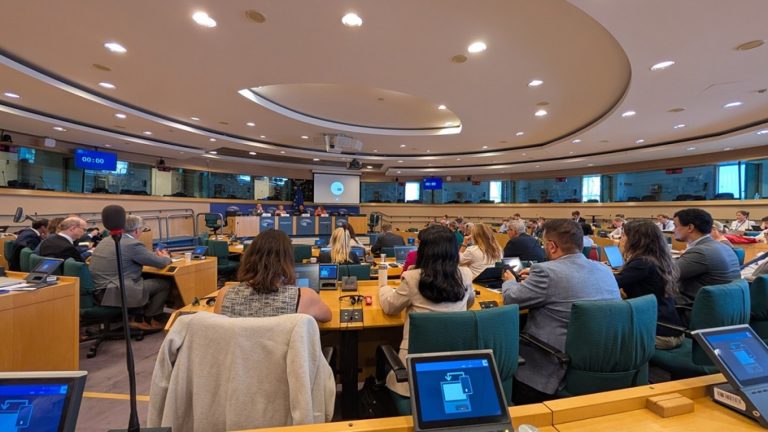
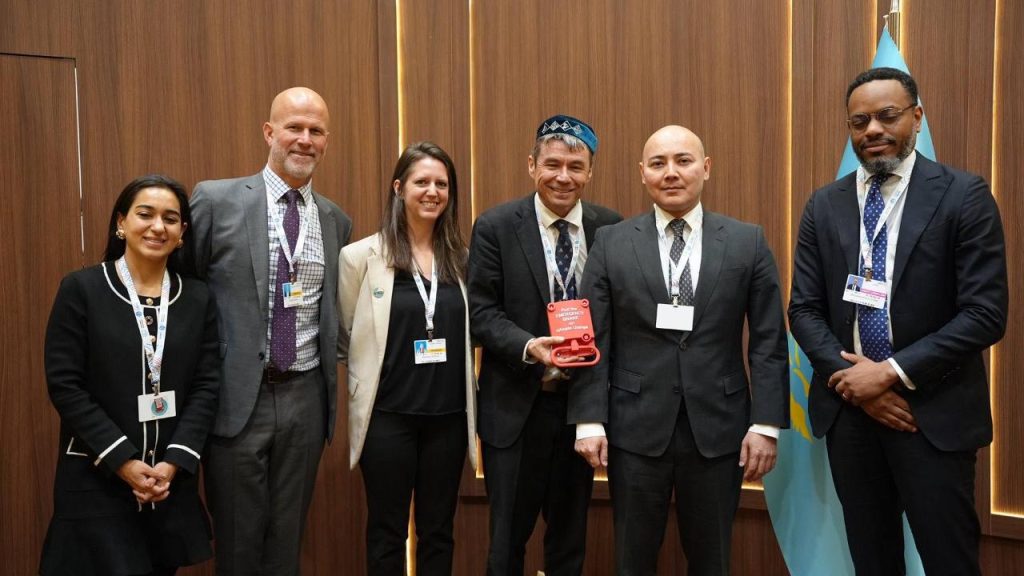
On 10 November 2026 Kazakhstan’s Minister of Ecology and Natural Resources, Alibek Kuantyrov, met Marcelo Mena, head of the Global Methane Hub, at the national pavilion at COP31 in Antalya. The talks reviewed progress on a memorandum of understanding signed in September 2025. That memorandum commits both sides to a first National Methane Action Plan, a National Methane Office and satellite-based monitoring of major emission events. The office has apparently not yet been established. The new element is scope: the parties discussed extending cooperation from oil and gas to waste, coal-mine methane and agriculture. globalmethanehub
Targets in context. The meeting also touched on Kazakhstan’s wider climate commitments. NDC 3.0 sets a 17% cut in greenhouse gas emissions below 1990 levels by 2035, rising to 25% with international support. These are economy-wide goals. The one explicitly methane-specific target is a 42% cut in fugitive oil and gas methane by 2035. The base year is about 385 Mt CO2e, so 17% implies roughly 320 Mt. Gross emissions were 348.8 Mt in 2022, which makes the unconditional goal modest (the two figures may use different accounting bases). Second NDC of Kazakhstan +2
The coal question. Coal is where the expansion is most consequential. Coal supplies 62% of electricity and 40% of national greenhouse gas emissions. The largest methane emissions come from underground mining, and the Karaganda basin is mostly underground. A methane office with no coal mandate would miss a major source. Capturing coal-mine methane needs investment, which a technical partnership cannot supply by itself. astanatimesbio-conferences
Constraints and incentives. The Global Methane Hub provides expertise and monitoring, not finance or regulatory authority. Regulatory pressure also matters. The EU took 77% of Kazakhstan’s crude exports in early 2024, and the EU Methane Regulation requires verified measurement and reporting across oil, gas and coal. Better data capacity therefore serves market access as well as climate goals. ihsmarkitsgs
Outlook. The meeting is best read as a signal of intent, one of many agreements Astana planned for COP31. The indicators to watch are the National Methane Office’s legal basis and budget, the introduction of coal-sector methane rules and the first financed capture projects in Karaganda.