Kazakhstan’s limited liability company, primarily engaged in mineral extraction services, has announced public hearings scheduled for October regarding the Jezdinskoye manganese deposit in the Ulytau region. The annual production capacity of Jezdinskoye is reported to be 334,165 tonnes of ore, containing 19.3% manganese, which could yield approximately 62,000 tonnes of pure metal annually.
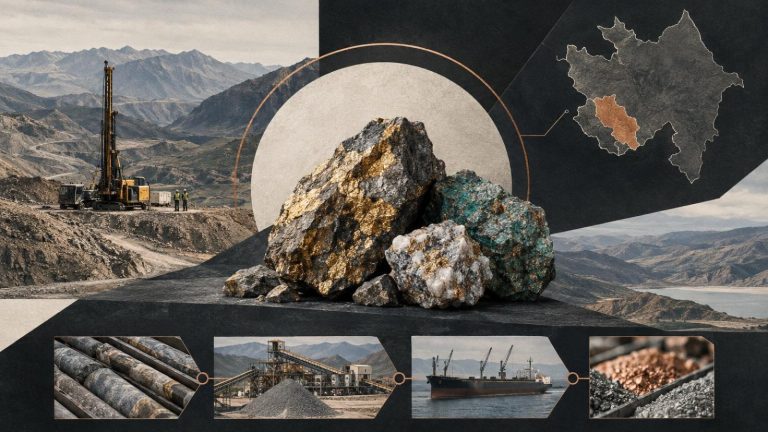
As reported by Inbusiness.kz, the majority of Kazakhstan’s manganese ore reserves are located in the Atasui and Jezdinskoye-Ulytau mining districts of Central Kazakhstan. The Jezdinskoye deposit is one of the oldest operational manganese mining sites in the country, with mineralisation discovered as early as the 1920s and exploration commencing at that time. However, geological studies of the Jezdinskoye group were halted by the early 1990s due to the depletion of the richest and most accessible ore sections.
Currently, the revival of exploration and extraction activities is being considered due to a significant increase in global demand, particularly from Russia’s defence industry. According to the analytical system ‘Indexbox’, global demand for metallic manganese is projected to increase by 30-50% by 2035, driven by the battery sector and special steels, with an expected annual growth rate of 3-4%.
Exploratory work at the Jezdinskoye deposit is scheduled to commence in 2027, with extraction planned to begin two years later. The mining plan anticipates extraction of 307,000 tonnes of ore annually, potentially lasting until 2051. Historically, the annual production at the mine was around 175,000 tonnes, with manganese content averaging 18-19%.
The new project will initiate operations at the southeast section of the deposit, specifically at shaft 6-bis. Access will be facilitated through vertical ventilation shafts, with ore transported via conveyor. The extraction of reserves is planned to reach depths of minus 200 metres.
Despite the moderate industrial development of Kazakhstan’s deposits, a significant portion of the explored ores is classified as non-balance due to high phosphorus and silica content or low manganese levels. Nevertheless, Kazakhstan ranks third globally in explored manganese reserves and second among CIS countries.