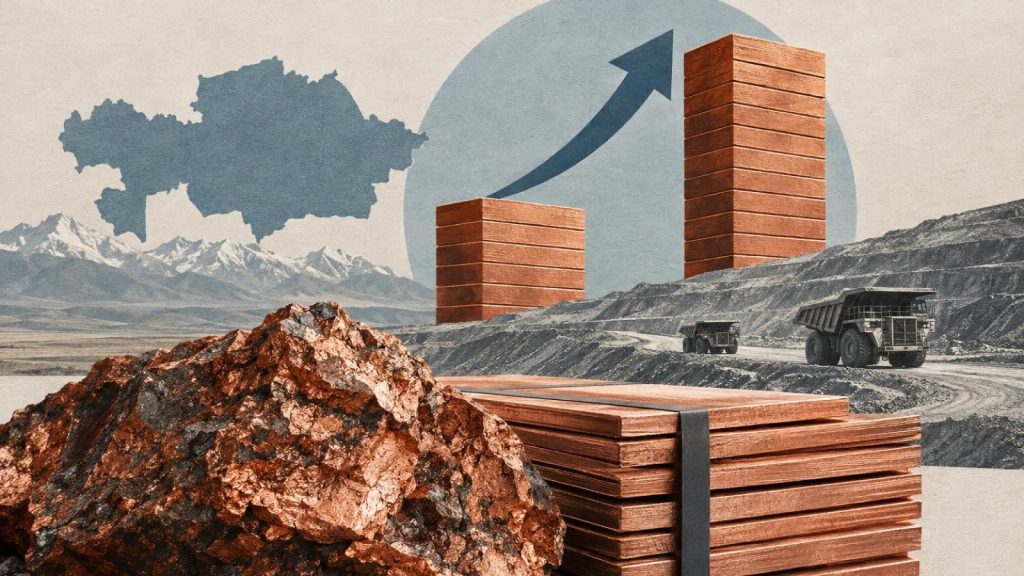
Kazakhstan has set an ambitious goal to double its copper production to 300 million tonnes per year by 2030, as announced by Aizhan Balabatyrova, the CEO of KazMineral Management, during the Astana Finance Day 2026. This increase is expected to be achieved through the exploration of new deposits and the enhancement of operational efficiency at existing facilities. The copper sector remains a critical component of Kazakhstan’s mining and metallurgy industry, and the planned production boost is aimed at strengthening the country’s position in the global market for critical minerals while also increasing the output of higher-value products such as cathode copper, cables, wires, and industrial components.
However, the expansion of the resource base poses significant challenges. Balabatyrova noted that only 14 new copper deposits have been discovered globally in the past decade, a stark contrast to approximately 200 found around 25 years ago. This highlights the necessity for Kazakhstan not only to have a robust resource base but also to utilise it as efficiently as possible.
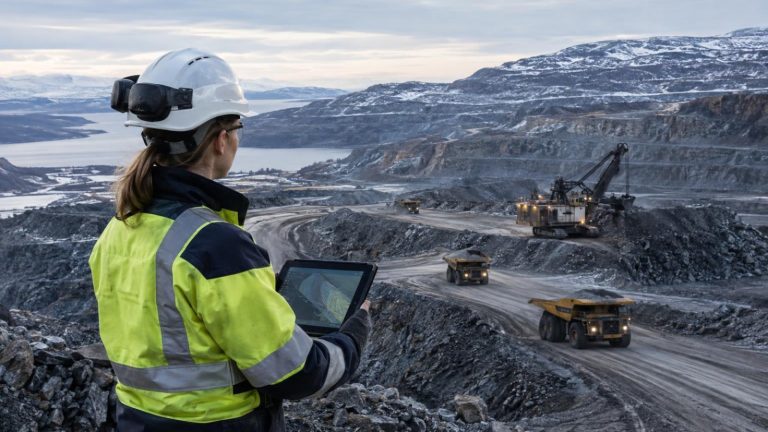
In this context, productivity has become a key growth factor. Companies are increasingly adopting artificial intelligence, big data analytics, and automation in their production processes. Balabatyrova emphasised that these technologies are no longer futuristic concepts but integral to daily operations, being used for safety assurance, mining, and processing.
AI is employed for monitoring production facilities, preventing accidents, optimising equipment performance, and enhancing ore processing efficiency. Such technologies enable data-driven decision-making and reduce reliance on human factors in production outcomes.
Concurrently, Kazakhstan is expanding its efforts to explore new copper assets, including projects at the Aydarly, Koksai, and Benkala deposits. There are also initiatives to expand existing enterprises, such as the development of the Ajak-Kodjan deposit in the Pavlodar region. The goal is not merely to increase raw material exports but to establish a comprehensive industrial chain within the country, encompassing everything from mining and processing to the production of cables, wires, and other high-value-added products.
Achieving this will require new processing capacities, the development of domestic machine engineering, engineering and service companies, and the training of specialists for high-tech mining operations. With copper becoming increasingly sought after amid the energy transition, transportation electrification, and the development of digital infrastructure, it is crucial for Kazakhstan to not only ramp up production volumes but also maintain the industry’s competitiveness through technology and deeper processing of raw materials. Ultimately, the efficient use of existing resources may be the key factor enabling the country to realise its production increase plans by 2030.