Tag: mining technology

  • Sandvik Unveils Enhanced Toro® TH663i I Gen2 Underground Truck

    Sandvik Unveils Enhanced Toro® TH663i I Gen2 Underground Truck

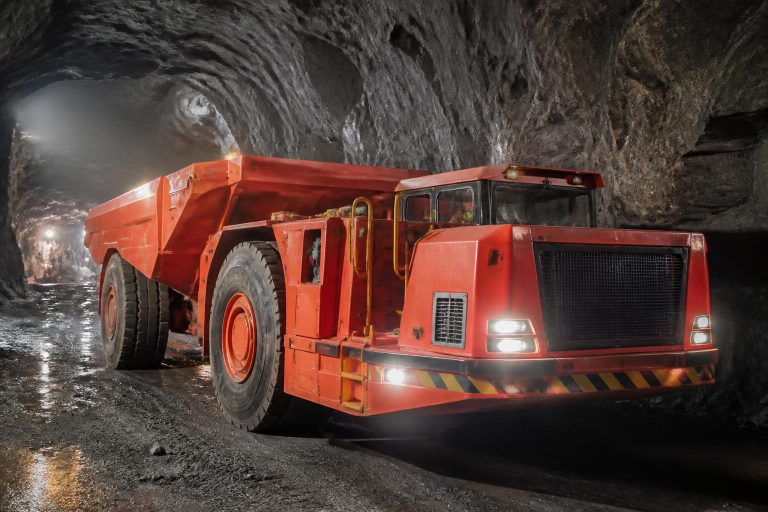
    Sandvik has launched the Toro® TH663i I Gen2 underground truck, marking a significant advancement in its 63-tonne haulage platform. This latest iteration incorporates over 30 enhancements aimed at boosting reliability, productivity, operator safety, and total cost of ownership for underground mining operations. The updates are a result of continuous improvement, operational experience, and valuable customer insights, ensuring that the truck meets the evolving needs of the mining industry.

    Performance data from existing underground operations indicates notable improvements when compared to earlier models of the Toro® TH663i. Specifically, the new truck boasts a 25% reduction in mean time to repair (MTTR) and a 12% increase in mean time between failures (MTBF). These enhancements translate to an impressive gain of over 170 additional operating hours per truck each year, providing operators with greater efficiency and productivity.

    Esa-Pekka Kantola, Product Line Manager for Load and Haul at Sandvik Mining, emphasised the importance of reliability in performance, stating, “Customers are looking for predictable performance they can rely on every shift.” The Toro® TH663i I Gen2 has been refined based on years of operational experience, ensuring that it not only meets but exceeds customer expectations in terms of productivity and cost management.

    Rather than undergoing a complete redesign, the Toro® TH663i I Gen2 builds on the established foundation of its predecessor, integrating accumulated improvements across various components, including the engine, electrical systems, powertrain, software, and structural systems. This strategic approach allows for a seamless transition for operators familiar with the previous model while enhancing the overall performance and durability of the truck.

    The comprehensive updates are designed to increase equipment availability, enhance durability, improve serviceability, and support lower costs per tonne throughout the equipment’s lifecycle. Additionally, the Toro® TH663i I Gen2 is compatible with Sandvik’s digital and automation technologies, such as My Sandvik Digital Services and AutoMine® solutions, and is backed by Sandvik’s extensive global parts, service, and training network, ensuring that operators have the support they need to maximise their investment.


  • IntelliSense.io Secures Major Investment to Enhance AI Solutions for Mining Operations

    IntelliSense.io Secures Major Investment to Enhance AI Solutions for Mining Operations

    IntelliSense.io, a leader in Industrial Decision Intelligence for the mining sector, has announced a significant investment led by SEP, with additional contributions from Mitsubishi Corporation and Hitachi Construction Machinery. This funding aims to accelerate product development, expand into new markets, and enhance go-to-market strategies. The investment comes at a pivotal time as the mining industry increasingly seeks advanced AI solutions to optimise operations and improve efficiency.

    The AI-native platform developed by IntelliSense.io is designed to help mining operators and asset owners identify and automate optimisation opportunities that have historically been challenging to capture. By integrating real-world physical process constraints with site-specific data, the platform enables real-time decision-making through autonomous execution agents across critical operational processes, including material tracking, stockpile management, and metal recovery. Notably, deployments of this technology have reported impressive outcomes, such as a 5% increase in throughput and an 8% reduction in reagent consumption.

    The company’s technology is currently operational across more than 24 deployments at Tier 1 mining companies in eight countries, covering a diverse range of commodities. To further bolster its strategic direction, IntelliSense.io has formed a Strategic Advisory Board that includes prominent figures from the mining industry, such as Mark Cutifani, former CEO of Anglo American, and Nev Power, former CEO of Fortescue Metals Group. Their extensive experience is expected to provide invaluable insights into the requirements for AI-enabled decision systems at an industrial scale.

    As demand for critical minerals rises, driven by geopolitical factors and the need for sustainable practices, IntelliSense.io positions itself as a key player in the sector. The company’s proprietary architecture, known as Owned Inference, differentiates it from competitors by focusing on domain-specific models that are rooted in the underlying science of industrial processes rather than merely statistical patterns. This approach ensures that all data and learnings remain within the customer’s infrastructure, enhancing data sovereignty and operational intelligence.

    The investment from SEP, which has a strong track record in supporting enterprise technology firms, aligns with the growing recognition of mining as a strategic infrastructure sector. As global supply chains for essential minerals like copper and lithium undergo transformation, IntelliSense.io’s platform is set to play a crucial role in helping governments and producers achieve both AI sovereignty and critical minerals security. The firm’s commitment to delivering measurable outcomes through its AI solutions positions it well for future growth in the mining industry.


  • Lydian Armenia’s Vision for a Digitally Integrated Amulsar Mine

    Lydian Armenia’s Vision for a Digitally Integrated Amulsar Mine

    In a recent interview, Connor Chard, General Manager of Lydian Armenia, outlined the ambitious digital strategy for the Amulsar gold mine, which is set to be Armenia’s first operational metal deposit since independence. Chard emphasised that the integration of digital technologies is crucial for modern mining operations, not merely the adoption of new tools. The company aims to establish Amulsar as a fully connected digital mining operation from the outset, leveraging the unique opportunity to design its digital infrastructure from scratch.

    Chard explained that the vision for Amulsar includes creating a comprehensive digital ecosystem that connects all aspects of the mining value chain—from equipment and field operations to management and decision-making. This holistic approach is intended to enhance operational efficiency and facilitate data-driven decisions. The strategy is built on four core principles: system integration, workflow automation, accountability, and the transformation of data into actionable insights. By adhering to these principles, Lydian Armenia aims to overcome common challenges faced by mining companies in their digital transformation journeys, such as inadequate infrastructure and siloed systems.

    Data management is at the heart of this digital initiative. Chard highlighted that data collection will commence at the source, whether from equipment, sensors, or personnel, and will be processed through a controlled platform to ensure reliability and accessibility. This foundational work is crucial for future advancements in analytics and artificial intelligence (AI), which Chard believes will play a significant role in the mining industry’s evolution. However, he cautioned that without a solid digital foundation, AI investments may not yield the expected benefits.

    As Amulsar approaches its operational phase, Chard envisions that the digitalisation efforts will lead to more efficient and predictable day-to-day operations. By ensuring timely access to reliable information and streamlining workflows, the mine will be better equipped to manage production and costs, respond to changing conditions, and improve overall decision-making quality. Ultimately, the goal is for Amulsar’s digital system to not only reflect past performance but also provide insights into current operations and future trends, unlocking the true potential of digital mining.


  • Kazakhstan’s Tau-Ken Samruk Utilises Drones for Geological Surveying in Ulytau Region

    Kazakhstan’s Tau-Ken Samruk Utilises Drones for Geological Surveying in Ulytau Region

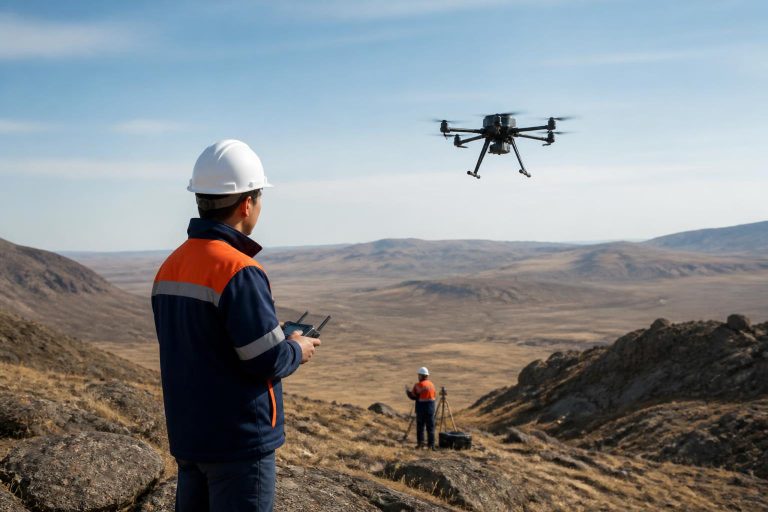
    The national mining company Tau-Ken Samruk has initiated the use of drone technology for state geological exploration in Kazakhstan’s Ulytau region. This project, which is part of a larger initiative by the Ministry of Industry and Infrastructure Development, aims to cover approximately 50,000 square kilometres with airborne geophysical studies. Currently, the company Kazgeologia is conducting these studies, as reported by the press service of the Samruk-Kazyna fund.

    The drones, equipped with geophysical sensors, are capable of conducting simultaneous magnetic, gamma-spectrometric, and gravimetric surveys. The measurement system includes devices from Medusa Radiometrics (Netherlands) for spectrometry, Geometrics (USA) for magnetometry, and iMAR Navigation (Germany) for inertial navigation. The positioning accuracy claimed is within a few centimetres, facilitated by RTK navigation technology combined with lidar systems that adjust flight trajectories, enabling the drones to operate effectively in complex terrain.

    Data processing at low altitudes provides sufficient resolution to detect small geological anomalies that might not be visible through traditional aerial surveys. This project aligns with a broader goal set by the Ministry of Industry and Infrastructure Development of Kazakhstan, which aims to conduct detailed geological mapping of the entire country at a scale of 1:50,000 by the end of 2026. To achieve this, modern technologies, including drone systems, will be integrated into the geological survey processes.

    In 2026, Kazakhstan allocated over 40.7 billion tenge from the government reserve to launch 20 geological survey projects at the 1:50,000 scale. The total area to be explored is around 100,000 square kilometres, with geological exploration expected to conclude by the end of 2028. This initiative is a significant step towards enhancing the country’s geological data and resource management, showcasing the integration of advanced technology in the mining sector.


  • Uzbekistan and KAIST Explore Collaborative Opportunities in Metallurgy and Education

    Uzbekistan and KAIST Explore Collaborative Opportunities in Metallurgy and Education

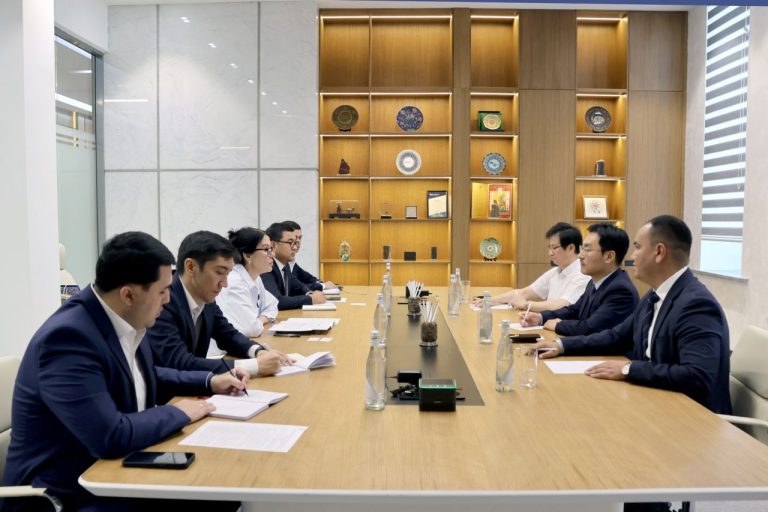
    On 31 July 2026, F. Khamidova, the First Deputy Minister of Mining Industry and Geology of Uzbekistan, met with a delegation from the Korea Advanced Institute of Science and Technology (KAIST), led by Professor Shin Byungha, the Head of the Department of Materials Science and Engineering. The meeting focused on enhancing scientific, technological, and academic cooperation between Uzbekistan and South Korea, particularly in the metallurgical sector.

    The discussions highlighted the potential for joint projects aimed at introducing advanced mineral processing technologies and promoting collaborative research initiatives. Both parties recognised the importance of integrating cutting-edge technology into Uzbekistan’s mining and metallurgy sectors to boost efficiency and sustainability. The meeting also underscored the significance of educational collaboration, with plans for academic exchange programmes and the training of highly qualified specialists to strengthen the workforce in both countries.

    As a result of the meeting, Uzbekistan and KAIST agreed to continue developing joint initiatives and to prepare proposals that would further enhance bilateral cooperation in science, education, and technology. This partnership is expected to foster innovation and drive growth in the mining and metallurgy sectors, positioning both nations as leaders in the field.


  • International Mining Forum Unites 30 Nations in Astana as Kazakhstan Targets Investment and Industrial Upgrade

    International Mining Forum Unites 30 Nations in Astana as Kazakhstan Targets Investment and Industrial Upgrade

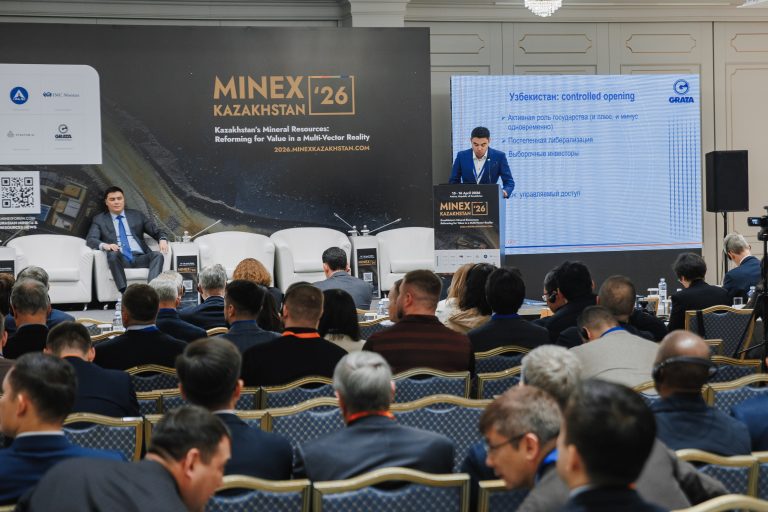
    An international mining forum bringing together representatives from 30 countries has opened in Kazakhstan’s capital Astana, with the Kazakhstani government signalling its ambitions to improve the efficiency of mineral resource development, increase processing capacity and attract greater foreign investment.

    The gathering has placed particular emphasis on the presentation of advanced technologies and the establishment of long-term investment partnerships. Experts attending the forum said that ongoing improvements to the country’s digitalisation agenda and licensing system would strengthen Kazakhstan’s appeal to international investors, marking the beginning of a new phase of industrial growth oriented toward sustainable development.

    Tulegyen Mukanov, adviser to the executive director of the Republican Association of Mining and Metallurgical Enterprises, highlighted the breadth of technology on display. “Look at how many companies are exhibiting at this congress — showcasing their technologies,” he said. “We don’t manufacture mining equipment ourselves. All our machinery comes from abroad — Sweden, Japan, America, China. But I’ve noticed some new companies starting up. In Karaganda, they have begun producing spare parts for heavy mining equipment — a kind of renovation sector is emerging.”

    The forum comes as Kazakhstan continues to position itself as a priority destination for critical minerals investment, backed by recent subsoil use reforms, the launch of a unified licensing portal and a tenfold increase in state geological exploration funding announced earlier this year.

  • Kazakhstan Mining and Energy Companies Deploy AI to Improve Safety and Efficiency

    Kazakhstan Mining and Energy Companies Deploy AI to Improve Safety and Efficiency

    Industrial enterprises in Kazakhstan are increasingly deploying artificial intelligence systems to improve operational safety and efficiency, according to the Ministry of Industry and Construction.

    Several large digital initiatives are currently being implemented at facilities operated by Solidcore Resources. Four major projects aimed at automating safety and production processes are underway across the company’s mining and processing sites.

    At the Bakyrchik mining operation in the Abai region, an automated employee health monitoring system has already been launched. The system uses AI algorithms to assess workers’ physical condition before each shift.

    If the system detects high blood pressure, signs of fatigue or alcohol intoxication, the employee is automatically prevented from performing hazardous tasks.

    Solidcore Resources plans to expand the use of intelligent technologies at its other facilities, including the Varvarinskoye hub in Kostanay region and the Ertis Hydrometallurgical Plant in Pavlodar region.

    One of the upcoming systems will provide real-time personnel positioning, allowing the company to track the location of employees across industrial sites. Workers entering hazardous zones will receive automatic alerts warning them about potential risks.

    Another tool under development is a digital operator assistant designed to support personnel in making operational decisions. The system will recommend optimal technological parameters and help prevent equipment failures.

    By the end of the year, the company also plans to introduce an AI-based flotation monitoring system. The technology is expected to reduce reagent consumption and minimize metal losses during processing.

    Artificial intelligence is also being adopted by other companies within the sovereign wealth fund Samruk-Kazyna.

    The national mining company Tau-Ken Samruk is using an intelligent core analysis system that automatically identifies signs of mineralization from photographs of drill core samples.

    Meanwhile, Samruk-Kazyna Ondeu is developing a digital twin of its sulfuric acid plant in Stepnogorsk. The virtual model will simulate equipment performance and is expected to reduce operating costs by 5–8%, lower downtime by about 5%, and decrease accident rates by 2–3%.

    KazMunayGas is also expanding the use of AI technologies through its ABAI digital platform. The company reported that an AI-based waterflood management module helped generate an additional 12000 tonnes of oil production in 2025, delivering an economic benefit of approximately 1.5 billion tenge.

    Officials say the growing use of artificial intelligence across Kazakhstan’s mining, metallurgy and energy sectors is part of a broader push to modernize industrial operations and improve productivity.

  • Binding Solutions and Mitsui Partner on Low-Carbon Iron Ore Pellets in Australia’s Pilbara

    Binding Solutions and Mitsui Partner on Low-Carbon Iron Ore Pellets in Australia’s Pilbara

    UK-based Binding Solutions has entered into an agreement with a subsidiary of Mitsui & Co to develop low-carbon iron ore pellets using material from Western Australia’s Pilbara region, one of the world’s largest iron ore hubs.

    Under a newly signed memorandum of understanding with Mitsui Iron Ore Development, Binding Solutions will apply its proprietary cold agglomeration technology to convert lower-grade iron ore fines into pellets. The company says the process significantly reduces energy use and carbon dioxide emissions compared with conventional pelletizing methods, which rely on high-temperature heat treatment.

    Binding Solutions chief executive Jon Stewart said the work already carried out with Mitsui’s unit demonstrates strong commercial potential. According to Stewart, the ability to upgrade Pilbara iron ore fines into premium pellets opens up a sizeable new market opportunity, particularly as steelmakers seek cleaner feedstock options.

    The preliminary agreement focuses on utilizing fines that would otherwise require sintering, a highly energy-intensive and polluting step, before they can be used in traditional blast furnaces. Pellets produced via Binding Solutions’ method can bypass this stage and are also suitable for electric arc furnaces, which are increasingly being adopted by steel producers aiming to lower emissions.

    Mitsui holds iron ore interests in the Pilbara through partnerships with major miners including BHP and Rio Tinto. In 2024, the Japanese trading house agreed to acquire a 40% stake in Rio Tinto’s Rhodes Ridge iron ore project in Western Australia for $5.34 billion.

    Binding Solutions has previously completed industrial trials of its technology with British Steel and Germany’s Salzgitter and is now working toward the development of a full-scale industrial plant to commercialize the process.

  • Navoi Mining and Metallurgical Combine Implements Bacterial Leaching Technology to Extract More Uranium

    Navoi Mining and Metallurgical Combine Implements Bacterial Leaching Technology to Extract More Uranium

    The Navoi Mining and Metallurgical Combine (NMMC), in collaboration with scientists, is introducing a new technology to extract additional uranium from previously depleted underground leaching blocks using bacterial solutions. This development was announced by Shavkat Madaminov, the head of NMMC’s Production, Technical, and Innovation Department.

    The combine has a long history of successful scientific research and industrial projects, particularly in the development and application of new technologies to increase uranium production. Madaminov emphasized that the new bacterial leaching technology, developed in partnership with scientists from the Institute of Microbiology of the Academy of Sciences of Uzbekistan, will enhance the extraction coefficient and uranium content in previously exploited wells. This advancement is expected to increase production, extend the lifespan of productive wells and blocks, and reduce the overall cost of production.

    Madaminov further explained that the technology could lead to the extraction of uranium from blocks that were previously 70% depleted, potentially increasing uranium yield by 2.4 times. He also highlighted the growing number of research and innovation projects at NMMC. In 2009, the combine implemented 55 projects worth 4.5 billion sums, while by the end of 2010, more than 90 projects were completed, totaling around 9 billion sums, doubling the achievements of the previous year.

    The key areas of focus include open-pit and underground mining, technology, geotechnology, and engineering. The economic impact of these innovations has, on average, exceeded the cost of the projects by twofold.