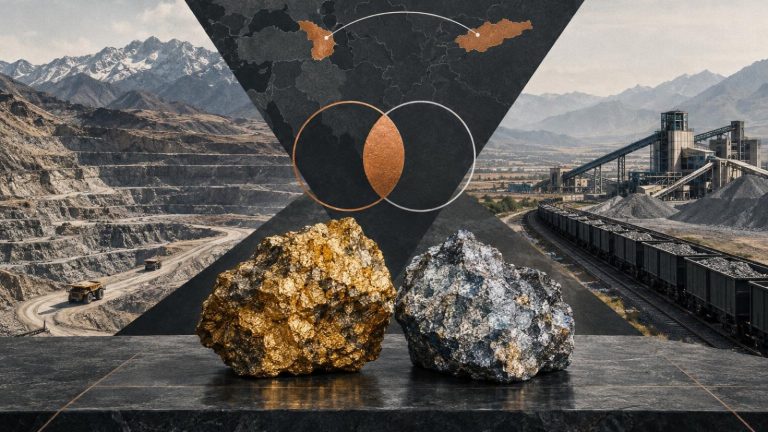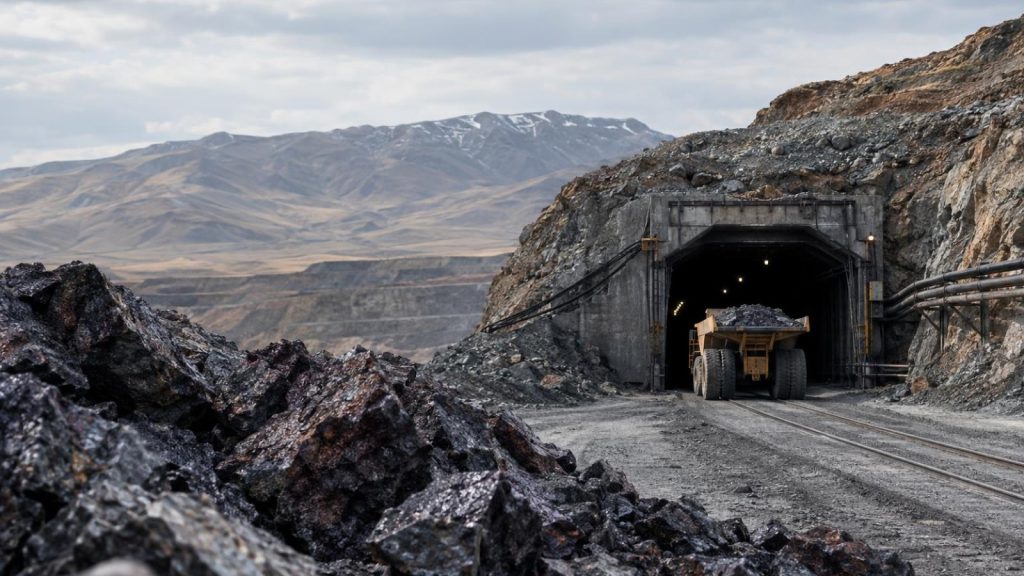
In the Ulytau region of Kazakhstan, the MaNova company plans to restart underground manganese mining at the Jezdynskoye deposit, according to documentation regarding public hearings scheduled for early October. The project outlines an annual production capacity of 334,165 tonnes of ore, confirmed by mining capabilities. The company intends to commence exploratory works next year, with mining operations set to begin in 2029. The mining plan suggests operations could last until 2051, extracting 307,000 tonnes of ore annually, potentially yielding approximately 1.4 million tonnes of manganese over the project’s lifespan, equating to over 62,000 tonnes per year. Historically, the Jezdynskoye mine produced around 175,000 tonnes annually with manganese content averaging 18-19%.
The Jezdynskoye deposit is one of the oldest manganese mining sites in Kazakhstan, with mineralisation first established in the 1920s. Systematic exploration began during that period, and by the early 1990s, geological studies of the Jezdynskoye group of deposits were completed. The mine commenced industrial operations during World War II, significantly contributing to the Soviet Union’s manganese needs for its metallurgical industry, highlighting its strategic importance during that era. The Jezdynskoye mine has operated for over 80 years, remaining one of the few continuously active manganese mines in Central Kazakhstan, although it was in a state of conservation at the time of the mining plan’s preparation.
The Ataisuy and Jezdynskoye-Ulytau mining districts contain the majority of Kazakhstan’s manganese reserves, positioning the country third globally and second among CIS nations for manganese deposits. However, the industrial exploitation of these deposits remains moderate, with many reserves classified as non-balance due to high levels of harmful impurities or low manganese content. The long-lived deposits, including Jezdynskoye, are facing depletion of the richest and most accessible ore sections, necessitating technically sound mining planning and the use of combined extraction systems to maximise recovery, including from technogenic raw materials.
The Jezdynskoye group comprises two separate ore bodies located approximately 70 km apart, with initial mining planned at the southeast section of the deposit, specifically at the 6-bis mine. The extraction will involve vertical ventilation shafts and conveyor systems for ore transportation, targeting depths of up to 200 metres. According to historical data, the balance reserves of manganese ore at Jezdynskoye were approved by the Soviet State Commission on Reserves in 1956, amounting to 9.2 million tonnes of ore. The reserves were later updated to 7,685.8 thousand tonnes with an average manganese content of 25% as of 1996.
The project documentation indicates that richer manganese ore reserves with concentrations of 40-45% are found in South Africa, Gabon, Australia, and Brazil, while Kazakhstan’s manganese ore is of average to low quality. Following the onset of the Russia-Ukraine conflict, imports of manganese ore to Russia, including from Kazakhstan, have surged due to increased demands from its defence industry. The founder of MaNova is Aldiyar Nurbekov, as per the adata.kz database.