Tag: exploration

  • Spain Accelerates Critical Minerals Strategy with €414 Million Investment

    Spain Accelerates Critical Minerals Strategy with €414 Million Investment

    Spain is strengthening its position in the European critical minerals supply chain through a new 2026-2030 Action Plan for the Sustainable Management of Mineral Raw Materials, backed by €414 million in public investment to support exploration, mining, processing and innovation.

    The initiative includes the launch of the National Mineral Exploration Program (PNEM), with €182 million allocated to mineral exploration aimed at unlocking the country’s resource potential and supporting exploration companies. The strategy also introduces 34 measures covering regulatory reform, institutional coordination, research, innovation and the development of the domestic mining value chain.

    The plan aligns with the EU Critical Raw Materials Act (CRMA), which seeks to increase domestic extraction, processing and recycling of strategic minerals to reduce Europe’s dependence on external suppliers.

    Tin project advances in Andalucía

    Among the projects expected to benefit is Elementos’ Oropesa Tin Project in the Andalucía region, Spain’s largest mining jurisdiction, which accounts for around 90% of the country’s metallic mining production.

    The project has been designated as being of “Overriding Public Interest” by the regional government and has been included in Andalucía’s Project Accelerator Unit, recognising its economic, environmental and social importance.

    Elementos believes Oropesa could eventually supply around 10% of the European Union’s tin demand, while a proposed domestic smelting facility would allow more than 10% of EU tin consumption to be processed within Spain. The company has signed an option agreement to acquire up to a 50% interest in the nearby Robledallano tin smelter, supporting downstream processing and reducing transport costs and emissions.

    The Oropesa project hosts an ore reserve of 15.9 million tonnes grading 0.36% tin and a mineral resource of 19.6 million tonnes at 0.39% tin, with a definitive feasibility study outlining a projected 12-year mine life.

    Tungsten production expands

    EQ Resources is also strengthening Spain’s strategic minerals sector through its Barruecopardo tungsten mine, one of the largest tungsten operations outside China, Russia and North Korea.

    The company produced approximately 1,680 tonnes of tungsten trioxide (WO₃) concentrate during FY2025 and aims to increase annual production to 3,000-3,500 tonnes across its operations in Spain and Australia.

    In June 2026, EQ Resources launched a 36-hole drilling programme at Barruecopardo to extend the mine’s life and evaluate deeper mineralisation. The project currently hosts a 22.9 million tonne resource grading 0.2% WO₃ with an estimated mine life of approximately nine years.

    With around 85% of global tungsten supply currently originating from China, Spain’s expanding production is expected to contribute to efforts to diversify global supply chains for this critical mineral.

    Spain’s new investment programme, together with ongoing permitting reforms and support for downstream processing, is expected to strengthen the country’s role as a strategic supplier of critical minerals within the European Union.

  • Kazatomprom to Invest up to 85 Billion Tenge in Uranium Exploration by 2030

    Kazatomprom to Invest up to 85 Billion Tenge in Uranium Exploration by 2030

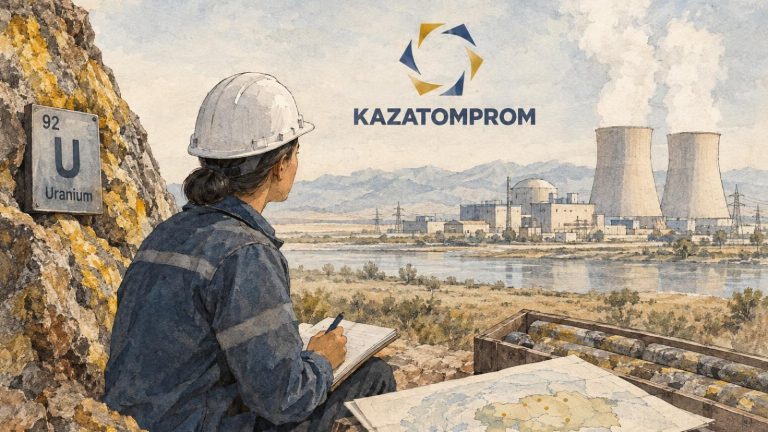
    Kazakhstan’s national atomic company Kazatomprom is accelerating its exploration activities and expanding its mineral resource base, with planned investments of 75 to 85 billion tenge in geological exploration by 2030.

    The announcement was made by CEO Meirzhan Yussupov during a meeting with President Kassym-Jomart Tokayev. According to the company, six uranium exploration areas have already been identified across Kazakhstan, covering a total area of more than 1000 square kilometres.

    Kazatomprom reported that its group enterprises produced 25.8 thousand tonnes of uranium in 2024, with 13.5 thousand tonnes attributable directly to the company. Sales volumes increased by 11% in 2025, reaching 18.5 thousand tonnes, reflecting steady demand growth in global markets.

    As part of its development strategy for 2025–2034, the company is actively expanding its international presence. Over the past year, Kazatomprom has signed supply agreements with major global energy players, including Switzerland’s AxpoPower AG, Czech utility ČEZ Group and Japan’s Kansai Electric Power. In addition, negotiations are underway for a long-term uranium concentrate supply agreement with India.

    The company is also prioritising technological innovation, with a dedicated strategy focused on improving operational efficiency, reducing environmental impact and implementation solutions across its production processes.

    Industry forecasts support the company’s long-term outlook. According to the World Nuclear Association, global nuclear generating capacity could reach 746 GW by 2040, while uranium demand may rise to 150 thousand tonnes annually.

    Against the backdrop of anticipated supply shortages and growing reliance on nuclear energy, Kazatomprom is focusing on expanding its resource base and securing long-term contracts to maintain its leading position in the global uranium market.

  • Strickland Delivers First Resource for Gradina at Rogozna

    Strickland Delivers First Resource for Gradina at Rogozna

    Strickland Metals has released the first Mineral Resource Estimate (MRE) for the Gradina deposit at its Rogozna project in Serbia, defining 12 million tonnes at 3.0 g/t gold, equivalent to 1.2 million ounces of contained gold. Gradina is one of four large-scale gold and base metals deposits identified at Rogozna and was the last to receive a formal resource.

    The Rogozna project also includes the Shanac (5.30 Moz AuEq), Medenovac (1.28 Moz AuEq), and Copper Canyon (0.81 Moz AuEq) deposits. Strickland said it plans to publish an updated resource for Shanac in the first quarter following its 2025 drilling campaign, which continues to indicate both bulk-tonnage and higher-grade mineralisation potential.

    During 2025, the company completed its largest drilling programme at Rogozna to date, with 79 holes for 46,737 metres. For 2026, Strickland plans to increase drilling to 60,000 metres, a 20% rise year-on-year. In parallel, the company is advancing internal scoping work and pre-feasibility study scenarios, targeting delivery of a pre-feasibility study in the first half of 2027.

    Strickland acquired Rogozna in July 2024 through the $37 million (€31.5 million) purchase of Betoota Holdings, which owns the project via its Serbian subsidiary Zlatna Reka Resources.

  • Kazakhstan Reports Significant Increase in Mineral Reserves Following Exploration Work

    Kazakhstan Reports Significant Increase in Mineral Reserves Following Exploration Work

    Kazakhstan has recorded a substantial increase in mineral reserves following recent geological exploration, Vice Minister of Industry and Construction Iran Sharkhan said at a government press conference on December 18. According to him, newly identified reserves include about 98 tons of gold, 36000 tons of copper, and more than 1.3 million tons of phosphorites.

    As a result of the exploration campaign, five new deposits have been placed on the state register for the first time. These include Kok-Zhon, Altyn-Shoko, Samombet, Studenchesky, and Takyr-Kaldzhir.

    Sharkhan said Kazakhstan continues to expand the scope of its geological and geophysical surveys. More than 2 million square kilometers of territory have already been studied, with this figure expected to rise to 2.2 million square kilometers by 2026. He also noted that a promising area containing rare earth metals has been identified in the Karaganda region.

    To support further exploration, the government has allocated 240 million tenge from its reserve to develop project documentation for a transition to detailed geological studies at a scale of 1:50 000. According to the Ministry of Industry, this new approach will make it possible to identify prospective areas at earlier stages of exploration.

    Between 2026 and 2028, detailed geological studies are planned across 100000 square kilometers. The work will be carried out by a consortium involving the National Geological Service and leading research institutes, using aerogeophysical technologies. The vice minister said these methods are expected to significantly improve the efficiency of geological exploration.

  • Mundoro Capital Grants BHP Option to Earn 100% Interest in Serbian Copper-Gold Licences

    Mundoro Capital Grants BHP Option to Earn 100% Interest in Serbian Copper-Gold Licences

    Canadian exploration and development company Mundoro Capital Inc. has granted an earn-in option to a subsidiary of BHP Group for seven copper and gold exploration licences within Serbia’s Timok Magmatic Complex, one of the most prolific mineral belts in the Tethyan region.

    Under the agreement, BHP can earn up to 100% ownership of the licences — which span 418 square kilometres — by funding US$35 million (€30 million) in exploration expenditures over ten years, the company announced on Monday.

    BHP will also make annual option payments beginning at $323,000, increasing by 2% annually, and milestone payments of $2 million each for specific resource declarations, up to a total of $10 million, or a single $10 million payment upon exercising the option if no resource is declared.

    Mundoro will initially operate the project, managing exploration activities and earning operating fees. Once BHP invests at least $20 million or completes 40,000 metres of drilling, it may assume operational control. Upon exercising the option, BHP will also start making annual advance royalty payments to Mundoro.

    To date, Mundoro and its partners have invested C$15.4 million ($11 million) into the project, which hosts multiple exploration targets. The most advanced prospects include:

    Skorusa copper-gold porphyry system, with an intercept of 201.2 metres grading 0.11% Cu and 0.11 g/t Au.

    Tilva Rosh prospect, where trenching returned 12 metres at 30.39 g/t Au and 171.27 g/t Ag.

    Other promising targets include Markov Kamen, Orlovo, D-vein, Prekostenski, Zlot 1–3, Bukova, Tilva Mare, Glavica, Bacevica North, Gorunov, Oblez SE, and Branik.

    The Timok Magmatic Complex is home to several major deposits and producing mines, including Cukaru Peki, Bor, Majdanpek, Veliki Krivelj, and Coka Rakita, positioning this partnership to further strengthen BHP’s exploration footprint in Europe’s key copper-gold corridor.

  • Kazatomprom Expands Exploration and Seeks International Ventures

    Kazatomprom Expands Exploration and Seeks International Ventures

    Kazatomprom, the world’s largest uranium producer, has announced plans to significantly increase its exploration activities both in Kazakhstan and internationally, as the company seeks to capitalise on growing global demand for uranium. The state-controlled giant revealed that it will triple its exploration efforts in Kazakhstan while also pursuing new ventures abroad, following recent agreements with Jordan and Mongolia.

    Currently, Kazatomprom produces all of its uranium domestically, but last week the company signed a landmark agreement with Jordan to develop the country’s uranium assets. Meirzhan Yussupov, the company’s CEO, addressed the World Nuclear Symposium in London, highlighting the company’s reputation in mining and its growing interest in international expansion. “We are acknowledged for our ability to do mining, and that’s why … we are also looking at opportunities abroad,” Yussupov said.

    Kazatomprom has also made strides beyond Kazakhstan’s borders in recent years. Last year, the company signed a cooperation agreement with Mongolia’s state nuclear company, Mon-Atom, and Yussupov hinted that further international opportunities are being explored, although he did not provide specific details.

    “We are trying to diversify our operations on a global scale geographically,” Yussupov explained, reinforcing the company’s strategy of global expansion.

    The push for greater international expansion comes amid rising demand for uranium. The World Nuclear Association’s report, released on Friday, warned that global uranium demand for nuclear reactors is expected to more than double by 2040, necessitating the development of new mining operations. To meet this demand, Kazatomprom has launched an ambitious exploration programme in Kazakhstan, increasing its exploration capacity threefold.

    The company, which supplies about 20% of the world’s primary uranium, has already seen growth in its output. In the first half of 2025, Kazatomprom boosted production by 13% and confirmed its production guidance for 2025. However, it also noted that it plans to scale back its output expansion in 2026 due to market conditions.

    Uranium prices have been on the rise, more than doubling over the past five years to $76 per pound. However, prices are still well below the February 2024 peak of $106 per pound, which was the highest level seen since November 2007.

    With increased exploration efforts and an eye on global diversification, Kazatomprom appears poised to strengthen its position as a key player in the uranium market, aligning with the long-term outlook of rising nuclear energy demand worldwide.

  • Avrupa Minerals Regains Full Control of Sesmarias Project in Portugal

    Avrupa Minerals Regains Full Control of Sesmarias Project in Portugal

    Avrupa Minerals is reaffirming its commitment to the Sesmarias project in Portugal, even as it continues to expand its Finnish exploration portfolio. Sesmarias, the company’s flagship discovery since 2014, has seen significant progress through multiple joint ventures and self-funded efforts. Most recently, Sandfire MATSA supported exploration from 2020 to 2025, yielding impressive high-grade intercepts and expanding the project’s geological understanding.

    Despite these advancements, the project did not meet Sandfire MATSA’s internal criteria, leading to Avrupa regaining 100% ownership. With complex geology and promising mineralization—including intercepts like 26.95 meters @ 2.18% Cu and 28.60 meters @ 1.68% Cu—the company is now focused on securing a new strategic partner to advance towards a potential mining decision.

  • Orbminco Commences Geophysical Surveys at Bronze Fox Copper-Gold Project in Mongolia

    Orbminco Commences Geophysical Surveys at Bronze Fox Copper-Gold Project in Mongolia

    Orbminco Limited (ASX: OB1) has commenced geophysical surveys at its Mongolian Bronze Fox Project, advancing exploration ahead of an upcoming drilling program.

    Key Highlights

    • Geophysical Surveys: IP and Gravity surveys now underway to refine the final hole design for Q3 2025 diamond core drilling.
    • Targeted Prospects: Drilling will focus on the high-grade copper-gold extension at West Kasulu and the undrilled Shuteen North prospect.
    • Strategic Position: Mongolia’s Southern Gobi region continues to attract global mining interest, positioning Orbminco as a key independent explorer in this world-class copper province.

    Orbminco’s Managing Director, Ralf Kriege, expressed enthusiasm, stating, “The team is eager to build on recent geological findings at a time when Mongolian projects in the Southern Gobi Copper-Gold Belt are gaining unprecedented attention.”

    For further details, visit Orbminco Limited.

  • Uzbekistan’s Mining Minister Meets Traxys North America to Boost Investment and Cooperation

    Uzbekistan’s Mining Minister Meets Traxys North America to Boost Investment and Cooperation

    The Minister of Mining Industry and Geology of Uzbekistan, B. Islamov, held a meeting with a delegation led by Mark Kristoff, President of Traxys North America LLC.


    During the discussions, the delegation was briefed on Uzbekistan’s ongoing reforms aimed at modernizing its mining and geological sectors. The meeting focused on opportunities to strengthen international cooperation, attract foreign investment into mineral exploration, and improve production processes.


    Both parties expressed mutual interest in expanding collaboration, with emphasis on leveraging Traxys’s global experience and capital in support of Uzbekistan’s resource development goals.

  • East Star Resources Discovers New Copper and Gold Deposits in Kazakhstan

    East Star Resources Discovers New Copper and Gold Deposits in Kazakhstan

    British company East Star Resources Plc has released interim results from its geological exploration at three sites in Kazakhstan—Verkh-Uba, Talovskoye, and Snezhnoye. Having operated in the country for over three years, the investor is searching for copper and gold, with Verkh-Uba being considered the most promising site.

    In early February, the company completed drilling three exploratory wells at Verkh-Uba, discovering new copper deposits beyond previously explored areas. A total of 238 core samples have been sent to the ALS KazLab laboratory in Karaganda for analysis. According to a preliminary JORC estimate, the deposit contains 20.3 million tonnes of ore with an average copper content of 1.16%, zinc at 1.54%, and lead at 0.27%.

    East Star Resources plans to continue exploration in 2025 to assess the site’s development potential. The company aims to start open-pit mining of non-ferrous metals in the coming years.

    In addition to copper deposits, the Snezhnoye site has also shown potential, with initial studies identifying a significant gold anomaly in an area previously used for small-scale artisanal mining.