Website: Asia.com

  • Four Decades On: How Turkish Mining Engineering Built Itself From Scratch

    Four Decades On: How Turkish Mining Engineering Built Itself From Scratch

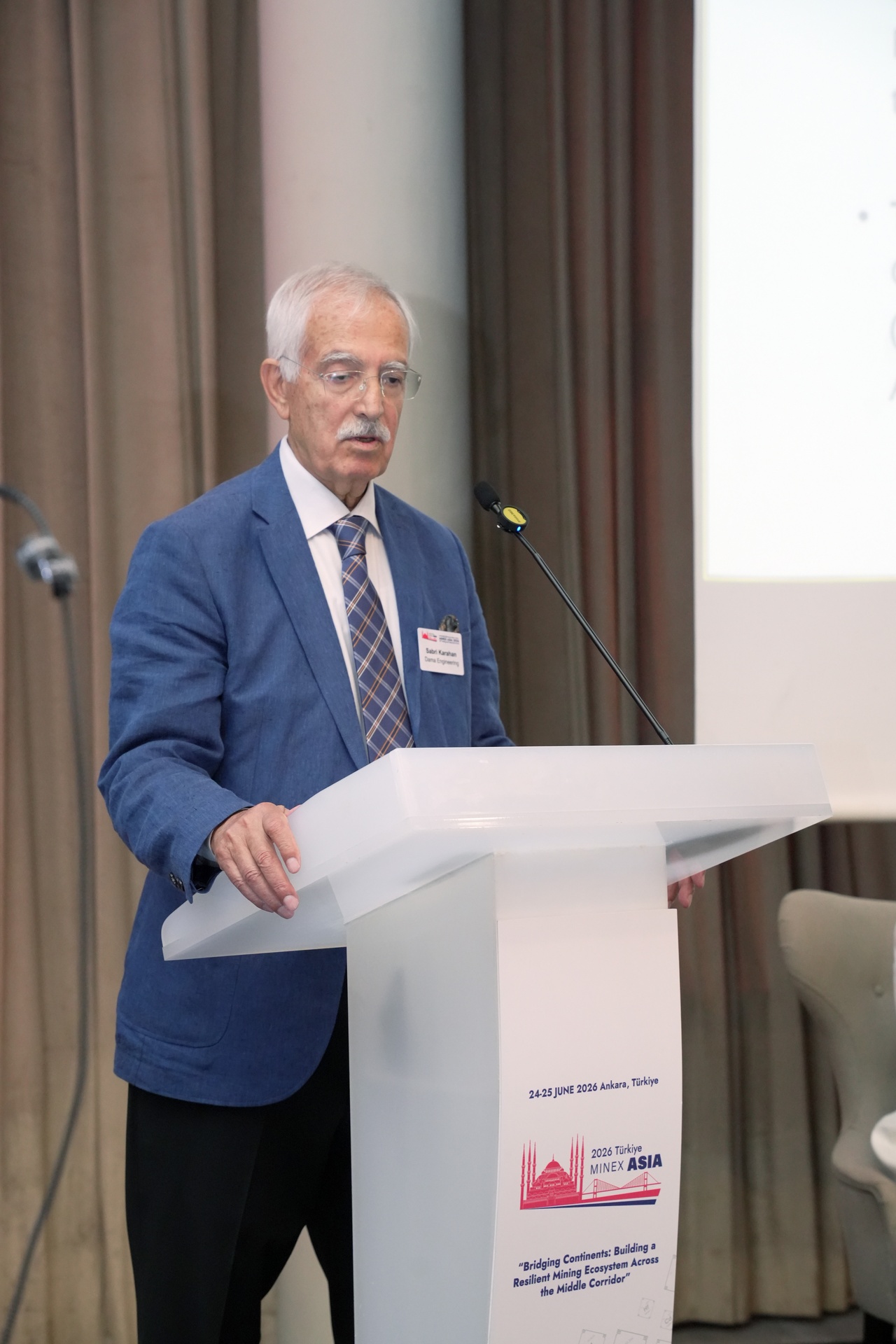
    Sabri Karahan — General Manager, DAMA Engineering

    Karahan delivers a historical account of how Turkish mining engineering developed from essentially nothing into a mature, exportable discipline. He starts with the Ottoman era (copper smelting using wind and water power in the Elazığ/Diyarbakır region) and traces the founding of MTA, Turkey’s exploration institute, established under Etibank in the 1930s, which drove early state-led mineral discoveries. He describes this as “high technology” for its time despite its primitive appearance by modern standards.

    The turning point, he argues, was the 2000 reform of Turkey’s mining law, which put international and domestic companies on equal legal footing — the same rights to staking, licensing, and fees. This single change shifted exploration from an MTA-only activity into a genuinely international one, and coincided with Turkey’s adoption of modern industry standards: chain-of-custody practices, JORC and NI 43-101 reporting codes (and later a Turkish national code), and stronger environmental, health, and safety frameworks. He’s candid about the earlier baseline — recalling that in the early 1970s, tailings were dumped directly into the Tigris River, a practice unthinkable today.

    He identifies the Bergama gold mine (2001) as a milestone — Turkey’s first cyanide heap-leach hydrometallurgical project and the origin of a still-controversial public narrative around cyanide, foreign companies, and gold mining, despite gold prices sitting near $250/oz at the time. From there, Turkish engineering firms built a working model: handle everything possible domestically, and bring in international partners specifically for identified gaps — first as co-designers, later purely as construction consultants, reflecting growing domestic capability.

    Today, he notes, Turkey operates around 18 active gold projects, most engineered predominantly by Turkish firms using largely Turkish-made equipment and materials, and Turkish engineering companies are now active in Azerbaijan, Kazakhstan, and Bulgaria. He points to slope-stability monitoring and safety-conscious practices (due diligence, HAZOP studies, site rehabilitation) as further signs of maturity. Looking ahead, he describes Turkish process-engineering firms actively diversifying into critical minerals — citing early joint ventures targeting electrolytic magnesium and nickel — and closes by offering to share Turkish technology and best practices through partnerships across Europe, the Balkans, Central Asia, and Africa.


  • Opportunities for Turkish mining businesses in Central Asia

    Opportunities for Turkish mining businesses in Central Asia

    Simon Glancy — Managing Partner, Strategic Solutions

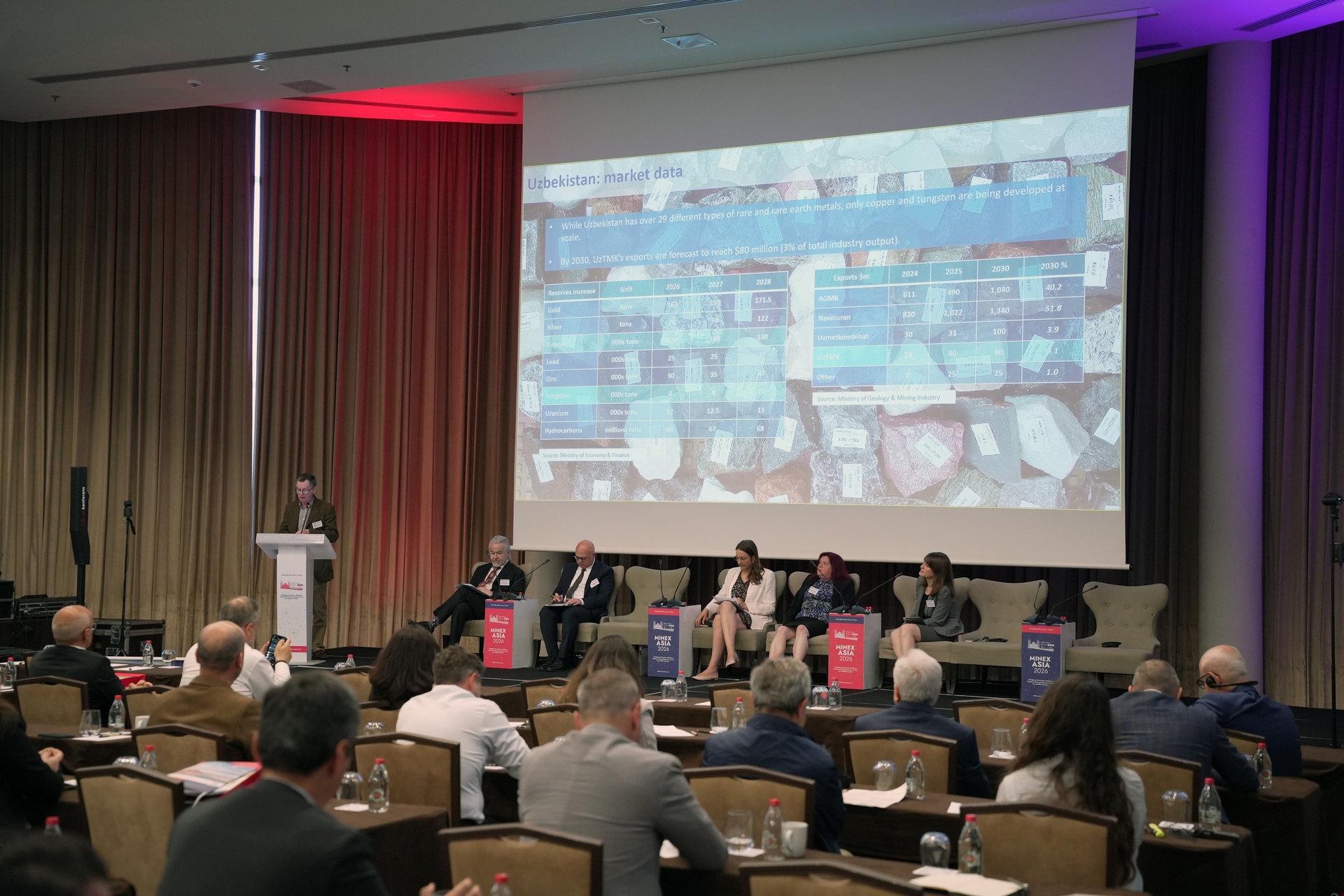
    Simon Glancy frames CRM not simply as a mine-to-market logistics problem but as an enabler of broad industrial transformation, warning against repeating the mistake of the 1990s oil and gas boom, where value-added processing happened abroad rather than regionally. He argues private investment remains scarce, so states must lead — underwriting risk while capturing a fair share of returns — and proposes a regional CRM ecosystem rather than each Central Asian state acting alone.

    He presents Uzbekistan as the most transparent data source: state copper concern AGMK is forecast to hit $1 billion in exports by 2030 (40% of Uzbekistan’s metal exports), while tungsten exports are forecast around $80 million. Deal activity is concentrated almost entirely in Kazakhstan and Uzbekistan, dominated by sovereign rather than private financing — he highlights the $1.4 billion Cove Capital/Kazakhstan/Sinohydro tungsten deal, backed by $1.1 billion in US state financing, as an outlier with no regional comparison. Citing BCG’s Andrea Nawrocki, he flags recurring execution problems: unrealistic timelines, overly complex decision-making, and weak feasibility-study preparation that discourages investors.

    He proposes regional hub clustering — Kazakhstan and Uzbekistan as processing hubs, with Kyrgyzstan, Tajikistan, and Turkmenistan supplying semi-processed inputs in the near term (2026–2030) and hosting satellite processing by 2030–2040. He closes by outlining four opportunity areas for Turkish involvement: mining investment/project-readiness expertise, integrated industrial solutions (technology transfer, logistics, recycling, renewable energy), building a regional knowledge/R&D economy, and helping architect a regional CRM ecosystem.


  • ADB’s Critical Minerals-to-Manufacturing (CMM) Value Chains Initiative

    ADB’s Critical Minerals-to-Manufacturing (CMM) Value Chains Initiative

    Claire Alidenes — Principal Investment Specialist, Asian Development Bank (ADB)

    Alidenes brings a mining-industry background (most recently at the Oyu Tolgoi copper-gold joint venture in Mongolia, between Rio Tinto and the Mongolian government) to her role building ADB’s critical-minerals-to-manufacturing portfolio. She frames ADB’s approach as holistic across two dimensions: the full value chain (extraction through processing, manufacturing, and recycling) and the full stakeholder set (governments and private sector together).

    On infrastructure, she stresses that supporting rail, ports, and energy systems matters alongside mineral development itself, and echoes the morning panel’s emphasis on regional cooperation and supply-chain diversification. On governance, ADB works with governments on regulatory policy, institutional capacity, and geological data, while applying rigorous ESG standards — she notes candidly that ADB avoided mining for decades following past environmental and social harms, but now recognizes minerals extraction is necessary to achieve energy-transition goals.

    She cites a widely referenced $270 billion investment gap required to meet net-zero goals in this sector, but pushes back on the idea that money itself is the primary blocker. Echoing a theme raised earlier in the day, she argues the real bottleneck is the shortage of well-prepared, bankable projects — ones that can clearly demonstrate risks and how they’re being mitigated, building the confidence institutions need to finance them.

    She introduces a new ADB financing facility, announced at the bank’s annual meeting in May and not yet deployed, with two components: $1–3 billion in financing (largely co-financed with Korean export-import and insurance institutions) and a smaller grant window specifically designed to help projects reach “bankability” — the point where they can credibly demonstrate investment quality. As an example of ADB’s work in the Tethyan belt, she points to the Reko Diq copper-gold project in Balochistan, Pakistan — a roughly $7–8 billion investment involving multiple institutions, currently slowed by regional security issues. She highlights that ADB’s role there included guaranteeing equity investment from a government entity, illustrating that multilateral banks add value not just through direct lending but by building the confidence needed to attract other investors.

  • Protecting Foreign Mining Investments from Political Risks in a Changing Geopolitical World

    Protecting Foreign Mining Investments from Political Risks in a Changing Geopolitical World

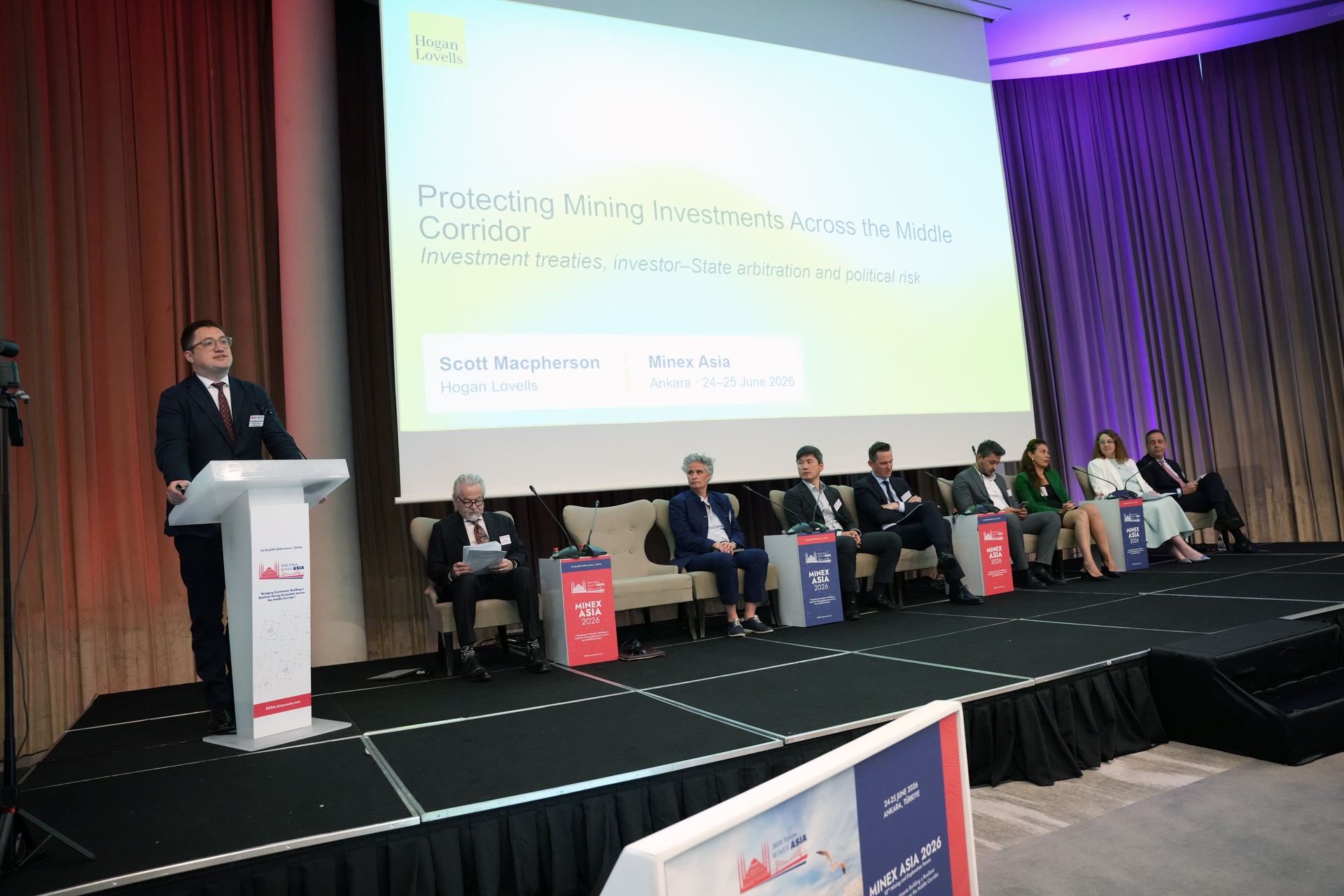
    McFersonen, an international disputes lawyer, opens by joking he has no checkbook to offer — only advice on how capital, once deployed, can be protected. His core argument: mining sits at the intersection of two tensions — strong long-term demand growth (driven by electrification, renewables, and energy storage) and increasingly assertive government policy shifts that can imperil long-life, capital-intensive projects. He describes a global rise in protectionist policy and resource nationalism, including license cancellations and other state conduct that interferes with mining investments, and stresses that political risk has become a genuine boardroom factor.

    His central message is aimed squarely at companies who assume strong government relationships make legal protection unnecessary. He argues this instinct, while understandable, can be an expensive mistake — relationships can falter with elections, leadership changes, or shifting political priorities, none of which the investor controls. His solution is investment treaties: agreements between states that protect investors from one treaty country operating in another, covering obligations like fair and equitable treatment, protection from unlawful expropriation, and non-discriminatory treatment relative to domestic or third-country investors. Breaches can include license revocations, retroactive taxation, unexplained permit delays, or project shutdowns based on unfounded environmental claims.

    Crucially, he explains that this protection isn’t a contract with the host state — it’s structural. An investor needs an entity incorporated in a treaty-partner state somewhere in its ownership chain (not necessarily at the top, and indirect holdings are generally permitted). He cautions that treaties, despite appearing similar, differ meaningfully in scope and coverage, making experienced legal counsel essential when structuring investments — and notes that restructuring to gain treaty protection is generally permissible as long as no dispute is already foreseeable.

    He highlights that mining now represents a growing share of investment treaty disputes, particularly at the exploration and development stage, when capital has been committed but cash flow remains distant — citing his own current work on a gold mine dispute in India. On accessibility, he notes many disputes are supported by third-party litigation funders who cover legal costs on a non-recourse basis in exchange for a share of any award, meaning a strong claim needn’t strain a company’s balance sheet. He closes by framing investment treaties as protection against a risk investors “cannot price and cannot control” — the conduct of the host government — and urges companies to seek advice before problems arise, not after.

  • Altai Resources Secures Subsoil Use Licence in Kazakhstan

    Altai Resources Secures Subsoil Use Licence in Kazakhstan

    Altai Resources Limited has announced a significant regulatory achievement with the receipt of a formal notification of intent from the Ministry of Industry and Construction of the Republic of Kazakhstan. This notification paves the way for the company to be granted a subsoil use licence adjacent to the Maksut South copper-nickel mine. This development is crucial for Altai Resources as it expands their exploration footprint within the highly prospective magmatic sulphide belt located in East Kazakhstan.

    The acquisition of this licence represents a strategic move for Altai Resources, allowing the company to enhance its exploration activities in a region known for its rich mineral deposits. The magmatic sulphide belt is particularly noted for its potential to yield significant copper and nickel resources, which are essential for various industries, including electric vehicle manufacturing and renewable energy technologies.

    As the demand for these metals continues to rise globally, particularly in the context of the green energy transition, Altai Resources is positioning itself to capitalize on the growing market. The expansion into this new area not only increases the company’s resource potential but also strengthens its overall portfolio in the mining sector.

    This milestone is expected to attract further investment and interest in the region, highlighting Kazakhstan’s role as a key player in the global mining industry. The company is now poised to advance its exploration initiatives, which could lead to new discoveries and contribute to the sustainable development of the local economy.

    Overall, the granting of the subsoil use licence marks a promising step forward for Altai Resources Limited, reinforcing its commitment to exploring and developing mineral resources in Kazakhstan’s rich mining landscape.


  • Uzbekistan’s Strategic Shift: Opening Mining Sector to International Capital Markets

    Uzbekistan’s Strategic Shift: Opening Mining Sector to International Capital Markets

    Uzbekistan is taking significant steps to modernise its mining sector by moving state-owned companies like NMMC and AMMC towards international capital markets. This initiative aims to attract global investors and incorporate international management practices, thereby partially opening its ownership of strategically important mineral assets. This shift is more than just an initial public offering (IPO); it represents a fundamental revaluation of Uzbekistan’s resource strategy.

    The potential advantages of this move are substantial. Firstly, by exchanging equity for capital, Uzbekistan can secure the necessary funding to develop critical minerals such as copper, lithium, and tungsten. These projects require vast investments, and access to global capital markets could alleviate the country’s reliance on government borrowing, facilitating faster investment in mining operations, smelting facilities, and downstream processing.

    Secondly, the influx of international capital could bring advanced technology and management expertise to Uzbekistan’s mining sector. This collaboration could enable the country to transition from merely exporting raw minerals to establishing a more integrated mine-to-metal value chain, enhancing its economic prospects.

    Moreover, the involvement of international shareholders is likely to improve corporate governance within Uzbekistan’s state-owned mining companies. Public listings typically introduce stricter disclosure, auditing, and environmental, social, and governance (ESG) requirements, which can drive these companies towards greater efficiency and transparency.

    Additionally, establishing partnerships with Western investors could create a more secure supply chain for Uzbekistan’s critical minerals. As these investors gain significant stakes in local projects, their interests will become intertwined with the country’s long-term political and economic stability.

    However, this strategy is not without its risks. Sharing equity means relinquishing a portion of future resource revenues and potentially compromising strategic control over mineral assets. If the anticipated benefits of international investment do not materialise—specifically, if technology and market access remain elusive—Uzbekistan may find itself merely exchanging the export of raw materials for the export of ownership.

    The central question remains: who will ultimately dictate the pace of resource development, the allocation of profits, and the direction of downstream industrial investment? The key metric is not merely the amount of equity sold but whether Uzbekistan can leverage minority stakes to gain capital, technology, and a stronger position in global supply chains. If successful, this approach could pave the way for a new model for resource-rich nations seeking to overcome the traditional ‘resource curse.’


  • Mundoro Capital Inc. Reports Positive Exploration Results and Financial Update for Q2 2026

    Mundoro Capital Inc. Reports Positive Exploration Results and Financial Update for Q2 2026

    Mundoro Capital Inc., a Vancouver-based mining company, has released an update on its exploration program results and financial performance for the second quarter and six-month period ending June 30, 2026. The company is focusing on generating new property opportunities, particularly in Serbia, while also reducing corporate expenses by 24%. CEO Teo Dechev highlighted the strategic shift towards their Arizona copper assets, with upcoming drill tests planned for the Vitanovac target and advancements in the Borsko drill target in Bulgaria.

    The exploration highlights include the completion of drilling at Skorusa East, with assays received for two significant drill holes, 26-SKO-08 and 26-SKO-09. The company has also initiated new hyperspectral core scanning and petrophysical sampling to enhance their geological understanding. Formal drill proposals have been established for three prospective areas: Borsko, Skoursa East, and Skorusa West, with a focus on refining targets and delineating potential porphyry sources.

    In terms of financial performance, Mundoro reported a fee income of $251,009 for Q2 2026, a significant increase compared to $120,497 in the same quarter of the previous year. Exploration expenditures rose to $2,513,992, reflecting the company’s commitment to advancing its exploration projects. Corporate expenses decreased to $281,162, contributing to a net loss of $325,340 for the quarter, which is an improvement from the previous year’s loss of $540,377.

    Mundoro’s exploration efforts are primarily concentrated in Eastern Serbia, particularly within the Timok Magmatic Complex, known for its copper-gold deposits. The company is also advancing its projects in Arizona, where it has identified several prospective intrusions. The ongoing generative work aims to create long-term royalty opportunities and further property payments through the optioning of mineral projects.

    The company remains focused on refining its geological models and establishing formal drill proposals for its various targets, including the Borsko, Trstenik, and South Timok Corridor projects. Despite facing delays in the permitting process for its EE1 Project in Bulgaria, Mundoro is committed to advancing its exploration initiatives and unlocking the potential of its mineral properties.


  • Turkey’s Strategic Role in the Global Critical Minerals Landscape

    Turkey’s Strategic Role in the Global Critical Minerals Landscape

    In the August 2026 issue of Ekonomi-Analiz, a new article titled “The New World’s Oil: Critical Minerals and Turkey’s Strategic Position” by Selçuk Bostancı, Corporate Communications Coordinator at MAPEG  explores the evolving significance of critical minerals in the global economy and Turkey’s potential to emerge as a key player in this arena. The article argues that critical minerals, including lithium, cobalt, nickel, graphite, and rare earth elements, have transcended their traditional roles as mere inputs for the mining sector. Instead, they are now viewed as essential components of energy security, industrial capacity, and national defence, positioning them at the forefront of global competition akin to oil and natural gas.

    Why these minerals matter so much

    The reasoning given is straightforward: nearly every piece of modern technology — from smartphones and electric vehicles to wind turbines, defense systems, space technology, and data centers — depends on these raw materials. Being “critical” isn’t just about scarcity; it’s about how essential a mineral is to the economy, energy, defense, or advanced technology, and how disruptive it would be if supply were interrupted. Lithium, nickel, cobalt, and graphite are singled out for battery technology; rare earths for electric motors and high-performance magnets; and copper for everything from power grids to electric vehicles. The piece frames this as a value chain running from mining through refining, advanced materials, and finished products — arguing that while advanced technology is the visible face of the energy and tech transition, mining is its invisible foundation.

    A global race is underway

    Citing the International Energy Agency’s 2026 projections under its “Stated Policies” scenario, the article notes that demand for critical minerals is expected to nearly double by 2040. But the bigger issue, it argues, isn’t rising demand itself — it’s that production and especially processing capacity are concentrated in a small number of countries, turning critical minerals into a matter of supply security. This is pushing the US, China, and the EU, among others, to pursue new mining investment, processing facilities, recycling, and strategic stockpiles. The EU’s Critical Raw Materials Act, for instance, sets 2030 targets for extraction, processing, and recycling. The underlying point: future competition won’t just be between countries that hold mineral resources, but between those that can actually process those resources into high-value products.

    Turkey’s strategic standing

    Turkey’s geological diversity is presented as a real opportunity in this new landscape. A Critical and Strategic Minerals Report published by the Ministry of Energy and Natural Resources identifies 37 mineral types considered critical or strategic for the country.

    One standout example cited is the rare earth element site at Eskişehir-Beylikova. More than 125,000 meters of drilling there identified an estimated resource of around 694 million tons of rare earth material, and a pilot production facility is already running. Work is now underway to build out full industrial-scale capacity, including separation and processing. The article uses Beylikova to make a broader point: strategic value today isn’t just about owning a deposit — it depends equally on extracting, separating, and processing the ore into high-value products that industry can actually use. It notes that Turkey’s mineral assets — boron chief among them — along with its rare earth work and other critical minerals initiatives, show mining increasingly being tied together with technology and industry.

    Giving back to nature while extracting

    Growing demand for critical minerals comes with a responsibility, the article argues: sustainable mining. Today’s approach to mining isn’t just about extracting economic value from the ground — it also means restoring sites back to nature and the community once operations end.

    It points to concrete evidence of this in Turkey through MAPEG’s (General Directorate of Mining and Petroleum Affairs) nationwide project tracking rehabilitated mining sites and mining-related social responsibility work, known as TÜRMES. As of August 2026, the project has documented 205 rehabilitated mining sites across 35 provinces, covering roughly 13,252 hectares of restored land, with close to 23.9 million trees and plants replanted, and 185 mining-related social responsibility projects recorded. This data is made publicly available and transparent through a TÜRMES information map on MAPEG’s website, letting anyone see how sites across different regions of Turkey have been returned to nature after mining activity. The article presents these figures as proof that a mining model which “produces while also giving back to nature” is achievable with the right planning and rehabilitation practices.

    Turning underground value into future value

    The closing section argues that as electrification, defense technology, digitalization, and AI continue to advance, mineral raw materials will only grow more strategically important. Turkey, with its mineral diversity, mining experience, industrial base, and geostrategic location, is well positioned for this shift. But the article stresses that future value in mining won’t be measured by reserve size alone — it will come from combining resources with science and technology, converting them into high-value products, and doing so sustainably. It suggests this is exactly why the “new world’s oil” comparison for critical minerals keeps gaining resonance: what will ultimately determine future wealth isn’t simply what lies underground, but what we’re able to turn that underground value into — above ground, and with nature in mind.
  • Kazakhstan’s Industrial Growth Highlights Diverging Trends in Manufacturing and Mining Sectors

    Kazakhstan’s Industrial Growth Highlights Diverging Trends in Manufacturing and Mining Sectors

    Kazakhstan’s industrial landscape is undergoing significant changes, as recent reports reveal a divergence in growth trajectories between the manufacturing and mining sectors. While the mining industry, a cornerstone of the Kazakh economy, continues to face challenges, the manufacturing sector is witnessing a robust expansion driven by increased domestic demand and foreign investment. This shift is indicative of broader economic trends in the region, where countries are increasingly focusing on diversifying their economies away from traditional resource dependence.

    The mining sector, which has historically been a major contributor to Kazakhstan’s GDP, is grappling with fluctuating global commodity prices and regulatory hurdles. Despite these challenges, the sector remains vital, particularly in the extraction of critical minerals essential for modern technologies. However, the lack of investment in infrastructure and technology has hindered its potential growth.

    In contrast, the manufacturing sector is thriving, bolstered by government initiatives aimed at fostering innovation and attracting foreign capital. This growth is evident in various industries, including machinery, food processing, and textiles, which are benefiting from improved supply chains and a skilled workforce. The government’s focus on industrialisation is expected to continue, with plans to enhance production capabilities and expand export markets.

    As Kazakhstan navigates these divergent paths, the interplay between mining and manufacturing will be crucial. Policymakers are urged to create a balanced approach that supports both sectors, ensuring sustainable economic growth. The future of Kazakhstan’s industrial landscape will depend on how effectively these sectors can adapt to changing global dynamics and local demands. Stakeholders in the mining industry are particularly encouraged to innovate and invest in sustainable practices to remain competitive in an evolving market.

    In conclusion, Kazakhstan’s industrial growth narrative is one of contrasts, with the mining sector needing to adapt to a rapidly changing environment while the manufacturing sector capitalises on new opportunities. This duality presents both challenges and opportunities for the nation’s economic future, highlighting the importance of strategic planning and investment in both areas.


  • Kazakhstan Aluminium Producer Faces Billions in Tax Adjustments

    Kazakhstan Aluminium Producer Faces Billions in Tax Adjustments

    Kazakhstan’s leading aluminium producer, the Kazakhstan Electrolysis Plant (KEZ), part of the Eurasian Resources Group (ERG), has been hit with substantial tax adjustments amounting to billions of tenge. This follows a thematic inspection by the Kazakh tax authorities concerning transfer pricing practices for transactions conducted between 2018 and 2021. The tax authorities concluded their investigation in February 2024, resulting in a demand for additional tax payments totalling 2.448 billion tenge, excluding penalties and interest. The company has contested these findings through the judicial system, but initial court decisions did not favour KEZ.

    As of February 2026, KEZ paid the additional taxes, alongside penalties and fines totalling approximately 5.5 billion tenge, which included 2.4 billion tenge in additional taxes, 1.4 billion tenge in penalties, and 1.7 billion tenge in fines. Despite these payments, KEZ maintains that its transfer pricing policies comply with Kazakh legislation and OECD guidelines, prompting further appeals in higher courts. A subsequent ruling from the cassation court supported KEZ’s position, declaring the tax authority’s notification illegal and ordering the return of the paid amounts.

    Transfer pricing in Kazakhstan typically involves setting prices for goods and services in international transactions that differ from market rates, often leading to profit redistribution to more favourable tax jurisdictions. This practice poses significant risks, particularly in sectors like aluminium production, where costs can vary greatly due to transportation and additional expenses.

    The KEZ produces approximately 265,000 tonnes of primary aluminium annually, sourced from bauxite mined in Kazakhstan’s Kostanay region. In 2024, ERG exported 180,000 tonnes of aluminium to the European Union and Turkey. For the fiscal year 2025, KEZ reported revenues nearing 360 billion tenge, with a profit of 79.4 billion tenge.

    In June 2025, ERG announced plans to issue three-year securities from KEZ worth up to $100 million, backed by the Development Bank of Kazakhstan. The company has also engaged in significant lending activities, providing short-term loans totalling over $313,000 in 2025. Additionally, KEZ has been active in debt operations, securing various credit lines and refinancing existing debts, indicating a robust financial strategy amidst regulatory challenges.

    The financial report underscores KEZ’s commitment to maintaining liquidity and generating sufficient cash flow to support its operations and obligations, even as it navigates the complexities of tax compliance and international trade dynamics.