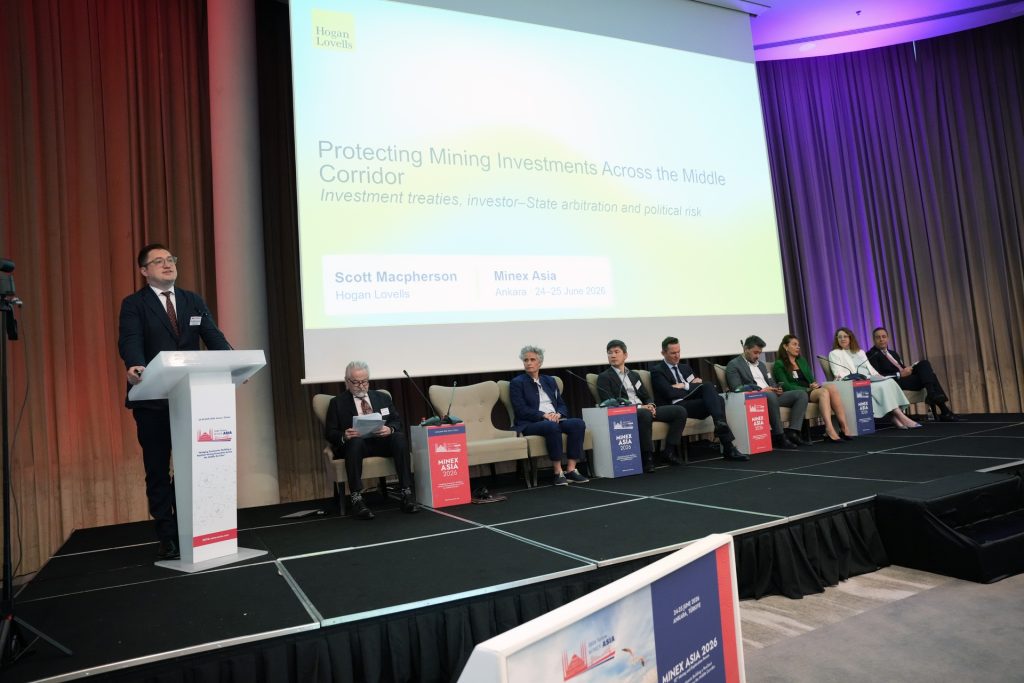
McFersonen, an international disputes lawyer, opens by joking he has no checkbook to offer — only advice on how capital, once deployed, can be protected. His core argument: mining sits at the intersection of two tensions — strong long-term demand growth (driven by electrification, renewables, and energy storage) and increasingly assertive government policy shifts that can imperil long-life, capital-intensive projects. He describes a global rise in protectionist policy and resource nationalism, including license cancellations and other state conduct that interferes with mining investments, and stresses that political risk has become a genuine boardroom factor.
His central message is aimed squarely at companies who assume strong government relationships make legal protection unnecessary. He argues this instinct, while understandable, can be an expensive mistake — relationships can falter with elections, leadership changes, or shifting political priorities, none of which the investor controls. His solution is investment treaties: agreements between states that protect investors from one treaty country operating in another, covering obligations like fair and equitable treatment, protection from unlawful expropriation, and non-discriminatory treatment relative to domestic or third-country investors. Breaches can include license revocations, retroactive taxation, unexplained permit delays, or project shutdowns based on unfounded environmental claims.
Crucially, he explains that this protection isn’t a contract with the host state — it’s structural. An investor needs an entity incorporated in a treaty-partner state somewhere in its ownership chain (not necessarily at the top, and indirect holdings are generally permitted). He cautions that treaties, despite appearing similar, differ meaningfully in scope and coverage, making experienced legal counsel essential when structuring investments — and notes that restructuring to gain treaty protection is generally permissible as long as no dispute is already foreseeable.
He highlights that mining now represents a growing share of investment treaty disputes, particularly at the exploration and development stage, when capital has been committed but cash flow remains distant — citing his own current work on a gold mine dispute in India. On accessibility, he notes many disputes are supported by third-party litigation funders who cover legal costs on a non-recourse basis in exchange for a share of any award, meaning a strong claim needn’t strain a company’s balance sheet. He closes by framing investment treaties as protection against a risk investors “cannot price and cannot control” — the conduct of the host government — and urges companies to seek advice before problems arise, not after.