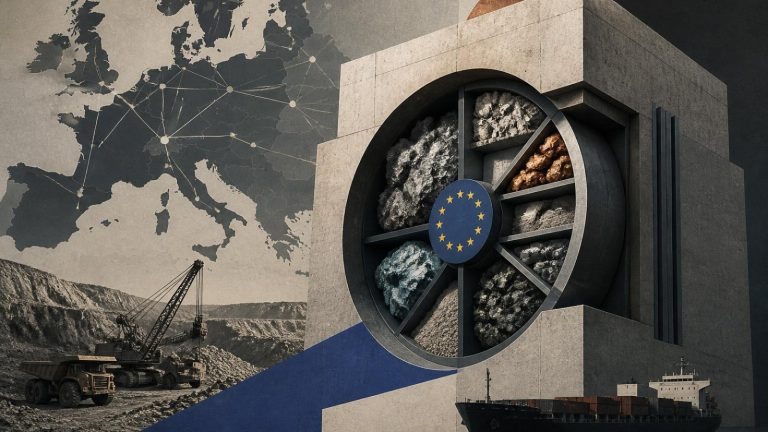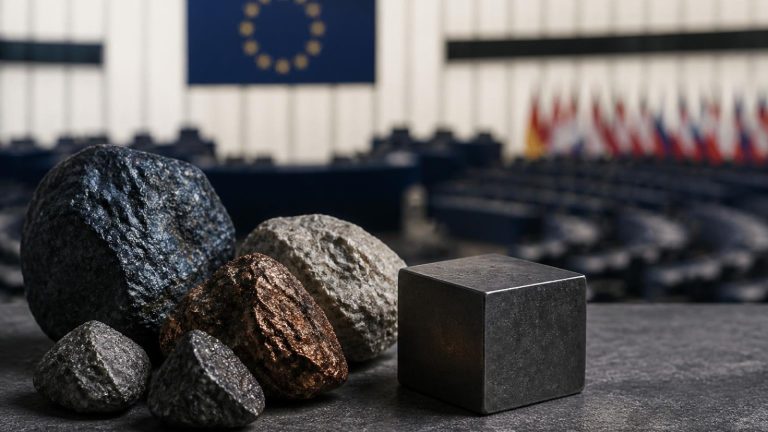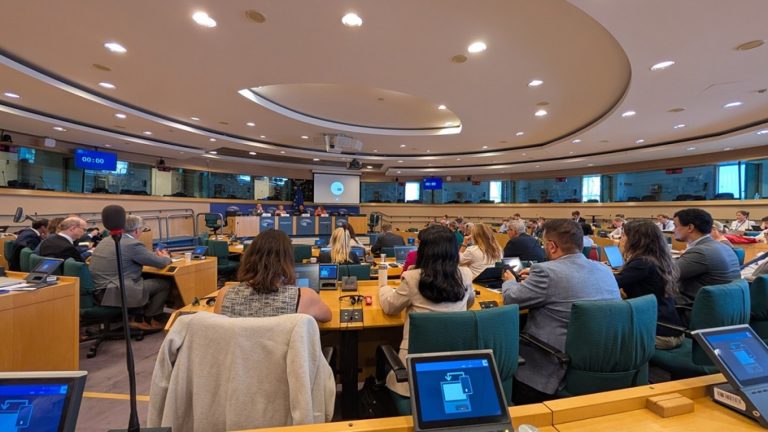
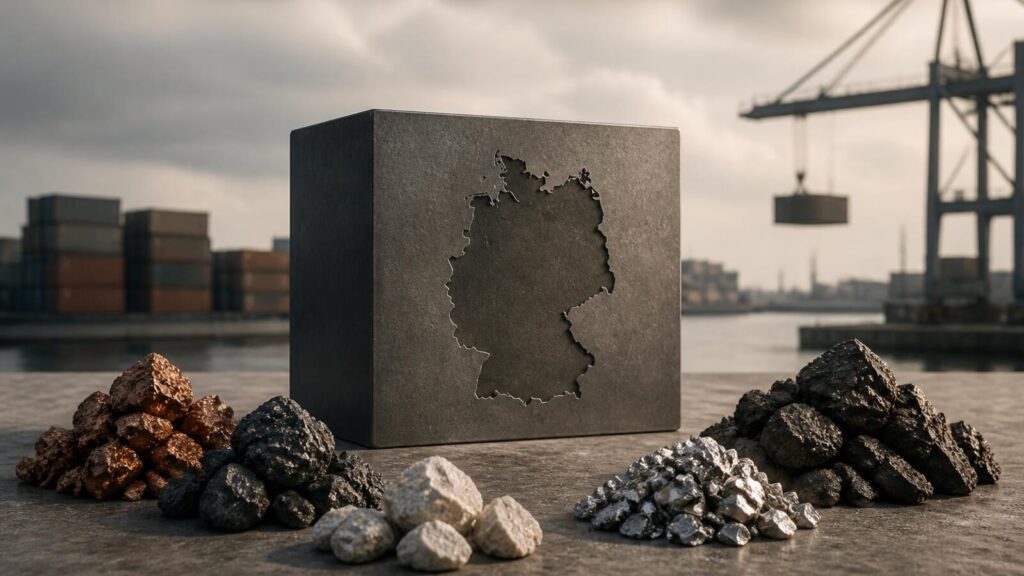
In a significant move to bolster its competitiveness, the German industry has initiated a collective approach to secure critical raw materials. Four prominent industry associations, including the VDA (German Association of the Automotive Industry), VDMA (German Engineering Federation), and ZVEI (German Electrical and Electronic Manufacturers’ Association), have joined forces with major companies such as BMW and Rheinmetall to sign a memorandum of understanding. This agreement aims to establish an industry-led raw materials trading house, a concept presented at the Federal Foreign Office in Berlin on 23 November 2023.
The initiative, dubbed “Zukunftsmodell Rohstoffsicherung” (Future Model for Raw Material Security), seeks to transition procurement from isolated company deals to a more collaborative structure, drawing inspiration from Japan’s successful model. The formal establishment of the Deutsches Rohstoffhandelshaus is slated for mid-2027, with a regular market launch expected in the autumn of that year. The framework is built on three key pillars: the trading house itself, enhanced coordination of state activities, and the introduction of financial hedging instruments. The goal is to achieve a 100% coverage ratio for critical raw materials by 2037.
The trading house will serve as a central entity to pool demand, procure and trade materials, build strategic stockpiles, and invest along supply chains. Notably, the German government will act as a backer rather than a shareholder, with a new Agency for Raw Material and Energy Security set to oversee financing and facilitate cooperation between the state, industry, and international partners. State Secretary Frank Wetzel announced an increase in the existing raw materials fund from €1 billion to €1.5 billion, highlighting the government’s commitment to supporting the initiative.
The Ministry for Economic Affairs and Energy has endorsed this plan, framing it as a step towards industry taking responsibility for creating broader and more resilient supply chains. Companies are urging the government to further address price risks, proposing various contract models that include state compensation and revenue-sharing mechanisms.
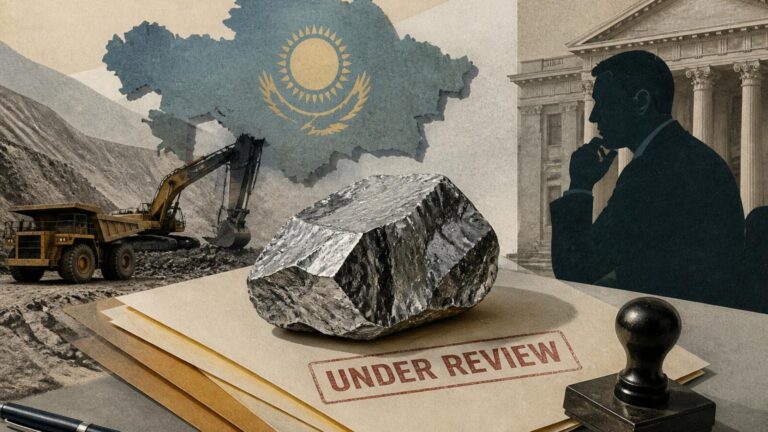
For producers outside Germany, this initiative presents a clear advantage: a single, creditworthy counterparty capable of purchasing on long-term contracts for the entire industrial base. This has been a missing element in European discussions regarding offtake agreements with Central Asia and the Caspian region. However, whether this ambitious multi-party joint venture, which spans sectors such as automotive, machinery, electronics, and defence, will materialise by autumn 2027 remains to be seen.