Tag: UK

  • UK Launches £50 Million Critical Minerals Accelerator Programme

    UK Launches £50 Million Critical Minerals Accelerator Programme

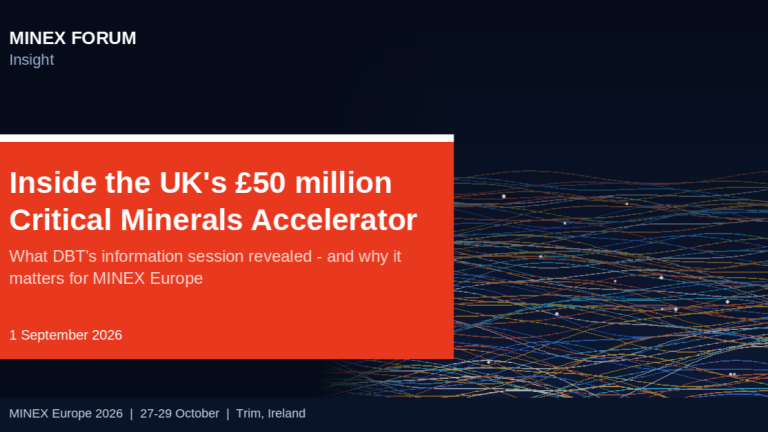
    The UK government has unveiled the Critical Minerals Accelerator, a £50 million initiative aimed at bolstering domestic production, processing, and recycling of critical minerals as part of its Vision 2035 strategy. On 1 September, the Department for Business and Trade (DBT) hosted an information session detailing the programme’s funding structure, eligibility criteria, and application process, chaired by Grace Humphries, Head of Critical Minerals (Strategy and Domestic).

    The programme allocates £25 million in competitive grants across two funding streams. Projects classified as Pilot to Pre-Commercial, which are at Technology Readiness Level (TRL) 6 and above, can receive between £1 million and £3 million over an 18 to 36-month period. Meanwhile, Demonstrator to Commercialisation projects, which are further along at TRL 8 and above, can secure grants ranging from £150,000 to £1 million over a shorter timeframe of 6 to 18 months. Importantly, applicants must be UK-registered companies, and even if extraction occurs overseas, the funded activities must take place within the UK.

    The application process is designed to be accessible, with match funding requirements varying based on company size—ranging from 50% for small firms to 70% for larger organisations. Notably, applicants are not required to have full funding secured at the application stage, only sufficient evidence to sustain project delivery for the first six months.

    During the session, Wilkie Briggs, Policy Advisor on the Critical Minerals Team, and Alice Kaiser, Scheme Delivery Manager, addressed various questions from potential applicants, clarifying aspects such as TRL definitions, project structuring, and funding intensity. The application window closes on 30 September 2026, with funding decisions expected by December and grant agreements signed by January 2027.

    The programme is framed around three strategic priorities: driving economic growth, enhancing economic security, and fostering domestic resilience. This aligns with broader UK and European goals concerning critical raw materials. The Accelerator particularly encourages projects that build on existing UK value chains and demonstrate commercial viability through partnerships and collaborations.

    The Q&A session revealed ongoing uncertainties among applicants regarding TRL thresholds, consortium structures, and grant funding limits. The DBT has indicated a willingness to assist applicants in navigating these complexities, emphasising the importance of aligning projects with the programme’s objectives.

    As the UK seeks to establish a robust critical minerals sector, the Critical Minerals Accelerator represents a significant step towards achieving self-sufficiency and sustainability in this vital industry. The conversation surrounding these initiatives will continue at the upcoming MINEX Europe Forum in Ireland, where industry stakeholders will discuss the intersection of UK and European critical minerals policies and the necessary investment frameworks to support them.


  • UK Unveils Critical Minerals Strategy to Curb Import Dependence and Boost Domestic Lithium Production

    UK Unveils Critical Minerals Strategy to Curb Import Dependence and Boost Domestic Lithium Production

    The UK government has launched a new Critical Minerals Strategy aimed at sharply reducing the country’s dependence on foreign supplies of vital materials used in everything from smartphones and fridges to electric vehicles and wind turbines.

    Announced by Prime Minister Keir Starmer on 22 November, the strategy sets a target for Britain to meet 10% of its critical mineral needs from domestic production and 20% from recycling by 2035. It also includes an ambition to produce at least 50,000 tonnes of lithium in the UK by that date — more than the weight of the Titanic.

    Backed by up to £50 million in new funding, the plan is designed to diversify supply chains and limit the UK’s exposure to geopolitical shocks, such as war or natural disasters. It responds to growing concern that China’s dominance in the sector — controlling about 70% of rare earth mining and 90% of refining — leaves Britain vulnerable as demand for clean energy and advanced technologies surges.

    Domestic demand is projected to rise sharply, with copper use expected to almost double and lithium demand forecast to increase by 1,100% by 2035. To counter this, the UK has set a goal that no more than 60% of its supply of any single critical mineral will come from one country by 2035.

    The government plans to capitalise on existing strengths across the UK, including Europe’s largest lithium deposit in Cornwall, significant tungsten resources, the Clydach nickel refinery in Swansea, and the only Western source of rare earth alloys used in high-performance magnets for wind turbines and F-35 fighter jets. More than 50 critical mineral projects are already based in the UK, and the sector currently contributes £1.79 billion to the economy and directly supports over 50,000 jobs.

    Prime Minister Starmer framed the strategy as central to both economic resilience and national security. “For too long, Britain has been dependent on a handful of overseas suppliers, leaving our economy and national security exposed to global shocks,” he said, adding that the government would “boost domestic production, ramp up recycling, and back British businesses with the investment they need to compete on the international stage.”

    Industry Minister Chris McDonald said the government was “taking the bold action needed to shore up our supply chains” and support new jobs and growth as part of its wider Plan for Change.

    Delivery of the strategy will be supported by up to £50 million in funding to help UK companies scale up extraction, processing, and recycling projects, alongside wider public finance tools such as the National Wealth Fund and UK Export Finance. In September, the National Wealth Fund committed £31 million to Cornish Lithium to advance the Trelavour Lithium Project and the Cross Lanes Geothermal Lithium Project.

    The government will also seek to cut industrial electricity costs through the British Industrial Competitiveness Scheme (BICS) and streamline permitting for innovative production and recycling projects via the Environment Agency’s priority tracked service. Skills development will be supported through collaboration with Skills England and the Department for Work and Pensions to build a workforce capable of delivering the strategy’s goals.

    The plan is closely tied to the UK’s modern Industrial Strategy, with critical minerals identified as a foundational sector underpinning advanced manufacturing, clean energy, defence, and high-tech innovation. Key regions such as the North East of England, Devon and Cornwall, Wales, Scotland and Northern Ireland are expected to benefit from new investment and jobs, leveraging local geology, industrial capacity and research expertise.

    Industry reactions have broadly welcomed the move. Cornish Lithium CEO Jamie Airnes said the framework would help “accelerate domestic capability, unlock investment, and build strategic partnerships” to deliver lithium at scale. The Critical Minerals Association described the strategy as a “timely step forward” that can secure the UK’s position as a trusted global partner if implemented with intent, while industry figures from Vale Base Metals, Ionic Rare Earths and Hypromag highlighted the UK’s strengths in midstream processing, magnet recycling and rare earth technologies.

    To further bolster resilience, the UK will examine stockpiling options, including through defence procurement, and continue to work with allies via initiatives such as NATO’s Critical Mineral Stockpiling Project. The government also plans to deepen partnerships with resource-rich and like-minded countries, using Britain’s academic, R&D and financial capabilities to expand opportunities for UK businesses at home and abroad.

  • Kazakhstan’s Critical Minerals in Focus at the BKS webinar

    Kazakhstan’s Critical Minerals in Focus at the BKS webinar

    Kazakhstan’s ambition to transform itself into a linchpin of the global critical minerals supply was in sharp focus at the British-Kazakh Society’s (BKS) latest webinar, “Critical Minerals – A Closer Look at Kazakhstan and the Resource Base.”

    Hosted online on 16 September, the event brought together government representatives, leading analysts, and industry insiders to scrutinise the nation’s mineral endowment, discuss its strategy for long-term sustainability, and evaluate opportunities for international partnership and investment.

    Geological Promise and Policy Drive
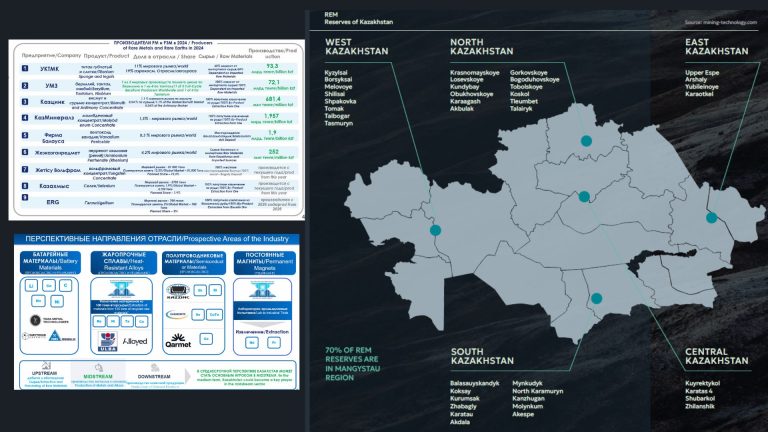
    In his welcome address, Yerlan Zeineshev, Economic Counsellor at the Kazakhstan Embassy in the UK, underscored the nation’s geological riches—including rare earths, lithium, copper, uranium, titanium, and vanadium—and signalled Kazakhstan’s determination to become “a key supplier for global critical mineral needs.” The country already produces 17 of the 34 critical minerals on the UK’s essential list, with potential to expand further given the right investment and technology.

    Mr Zeineshev highlighted March 2024’s UK-Kazakhstan critical minerals roadmap, emphasising mutual aims for research, private investment, and technology transfer. He pledged continued reform to ensure an open, investor-friendly environment—citing adoption of international best practice in mining codes, long-term investment agreements, and digitalisation of geological data.

    Supply Chain Resilience and Global Partnerships
    Speakers and panellists closely examined how Kazakhstan’s neutral geopolitical stance and its position on the Trans-Caspian International Transport Route position the country as a reliable partner for nations seeking to diversify supply chains. As Enzo Grazella, Senior Analyst at the Critical Minerals Association, noted, this offers both Europe and the UK an alternative source to mitigate risk and reduce overreliance on a handful of global producers.

    The UK government’s updated critical minerals strategy and increased focus on supply chain security were cited as drivers for stepped-up bilateral engagement, particularly in mining, refining, recycling, and advanced manufacturing. Initiatives backed by UK export finance, the European Bank for Reconstruction and Development (EBRD), and local reforms are fostering a more attractive investment climate.

    Resource Development and Value Addition
    Arkhat Kurmanbekov, Deputy Director General of Kazakhstan’s National Center for Technology Foresight, outlined the scale of Kazakhstan’s geological survey initiatives, with record levels of exploration funding and ambitious targets to increase the area surveyed to over 2.2 million km² by 2026. The nation aims not only to expand extraction but also to move up the value chain through domestic processing, production of battery materials, heat-resistant alloys, semiconductor materials, and recycling technologies. Industry success stories—such as providing titanium to Boeing and Airbus, or pioneering full-cycle beryllium plants—underline local expertise.

    Market Dynamics, Price Volatility, and Sustainability Challenges
    Caroline Messecar, Strategic Markets Editor at Fastmarkets Metals and Mining, discussed acute market vulnerability arising from concentrated global production—particularly for rare earth magnets vital to electric vehicles and wind turbines. China commands up to 89% of global magnet supply, and recent export controls have forced international markets to scramble for alternative sources, underscoring the strategic importance of new suppliers like Kazakhstan.

    The panel noted that establishing downstream industries (such as magnet manufacturing) requires more than raw materials: it needs multidisciplinary technical skills, transparent and sustainable production, and robust ESG standards. Both Kazakh and UK speakers reaffirmed their commitments to high environmental and social standards, clarifying that responsible development can coexist with commercial viability.

    Whatch the webinar recoding
    Video provided for the MINEX Forum readers by the British-Kazakh Society

  • Serbia to Retain Entire Gold Reserve on Home Soil, Snubbing Traditional Hubs

    Serbia to Retain Entire Gold Reserve on Home Soil, Snubbing Traditional Hubs

    Serbia’s central bank has revealed plans to relocate all of its gold reserves—valued at roughly £4.7 billion—back to its own territory, in a move aimed at safeguarding the stockpile during times of crisis.

    This would make Serbia the first country in Eastern Europe to entirely eschew established storage locations such as Switzerland, the United Kingdom, and the United States.

    “In bringing the gold back to Serbia, the National Bank sought to enhance both its accessibility and security during periods of instability,” the institution stated, noting that the repatriation effort had commenced in 2021 amid growing global uncertainty.

    Following the freezing of Russia’s foreign currency reserves in 2022, the rate of gold accumulation by central banks worldwide doubled, underscoring the political risk involved in holding reserves in US dollar and euro-denominated assets. Housing gold bars domestically reduces the threat of external interference.

    Between 2019 and the end of last year, Serbia acquired 17 tonnes of gold abroad and a further 19 tonnes from the local arm of Zijin Mining Group. This brought the total reserve to 50.5 tonnes, nearly all stored in Belgrade—except for five tonnes bought in 2024, which remain in Switzerland for now.

    Those final five tonnes will be brought back “as soon as possible,” according to Governor Jorgovanka Tabaković. Serbia’s neighbours hold differing proportions of their reserves domestically, ranging from 86% in Hungary to around 25% in Poland, as per data compiled by Bloomberg.

    The central bank said it had weighed the pros and cons before committing to full repatriation, admitting that while holding gold in global market hubs facilitates easier selling and lending, the risks outweighed those advantages.

    The Bank of England’s vault in London currently houses a significant portion of the world’s gold reserves—around £430 billion in value—cementing the UK’s position as the primary hub for precious metals trading. Similarly, the Federal Reserve in New York holds gold on behalf of nations including Germany and the Netherlands.

    Germany’s decision to bring gold back home over a decade ago sparked national debate and was driven by Cold War fears. Though the Soviet threat has since faded, the metal remained overseas until the repatriation effort was completed.

    Other countries, such as Poland and the Netherlands, have followed suit, while similar calls for domestic storage have echoed through Slovakia and Romania.

    The notion of storing gold within national borders has gained traction among rising populist movements, such as Germany’s Alternative für Deutschland, which regards it as a crucial safeguard against international political pressure.

  • Cornish Lithium to Launch £15m Demonstration Plant, Aims to Boost UK’s Clean Energy Transition

    Cornish Lithium to Launch £15m Demonstration Plant, Aims to Boost UK’s Clean Energy Transition

    A new lithium production demonstration plant is set to open in Cornwall, marking a significant step in the UK’s shift towards clean energy. Cornish Lithium announced that the £15m facility near St Austell will begin producing lithium hydroxide—a key component in electric vehicle (EV) batteries—from granite sourced from an old China clay pit. This initiative aims to reduce the UK’s reliance on importing carbon-intensive materials from countries like China.

    The unveiling ceremony will take place at the Trelavour Hard Rock project this Friday. The company plans to produce 10,000 tonnes of sustainable domestic lithium annually by 2027. According to CEO Jeremy Wrathall, lithium is essential for manufacturing EVs, grid-scale electricity storage, and rechargeable electronics. Currently, the UK imports 100% of its lithium, but by 2030, the demand is expected to reach 110,000 tonnes of lithium carbonate equivalent.

    Wrathall emphasized that Cornwall holds one of the largest lithium resources in Europe, with the potential to meet more than half of the UK’s EV industry needs. He noted that this resource is an untapped advantage, which could make UK industries more competitive and less vulnerable to global supply chain issues.

    The £15m demonstration plant was funded through the National Wealth Fund, alongside The Energy and Minerals Group, TechMet, and the UK Government’s Automotive Transformation Fund. Wrathall added that this project could benefit an area with a 4,000-year mining heritage and help tackle social deprivation. Business and Trade Secretary Jonathan Reynolds praised the project for supporting high-skilled jobs in the South West and bolstering the UK’s critical minerals supply chains.

  • Climate Groups Challenge UK’s First Deep Coal Mine in Three Decades

    Climate Groups Challenge UK’s First Deep Coal Mine in Three Decades

    In a significant legal battle, climate groups have branded the decision to open the UK’s first deep coal mine in over thirty years as unlawful, arguing that the approval overlooked the full extent of the harmful emissions it would generate. On Tuesday, lawyers representing Friends of the Earth and South Lakes Action on Climate Change contested the planning permission granted to the Woodhouse Colliery project in Whitehaven, northwest England, at the High Court.

    The UK government had greenlit the mine’s development in 2022, with West Cumbria Mining Ltd. planning to export coal primarily for steel production overseas. However, legal representatives claimed that the developer’s climate assessment failed to account for the emissions resulting from burning the coal, erroneously labeling the mine as net zero.

    “No reputable standard-setting or governance body involved in the voluntary carbon market endorsed West Cumbria Mining’s approach,” stated the lawyers for Friends of the Earth in their hearing documents, calling the net zero claim “pure greenwashing.”

    The case gained momentum last week when the UK’s new Labour government declared it would no longer defend the mine’s approval. This decision followed a Supreme Court ruling mandating that all emissions, whether produced on site or downstream, must be fully considered when approving new fossil fuel projects.

    In response, West Cumbria Mining‘s legal team vehemently denied the accusations, asserting that the development proposals, evidence, and official appraisals were all lawful and accurately represented.

  • Rolls-Royce Revises UK Nuclear Factory Plans Amid Government Delays

    Rolls-Royce Revises UK Nuclear Factory Plans Amid Government Delays

    Rolls-Royce has adjusted its strategy for constructing nuclear factories in the UK, citing prolonged delays in a government design competition for its small modular reactor (SMR) initiative. Initially proposing the establishment of two factories, the company has opted out of constructing a pressure vessel manufacturing facility due to time constraints, choosing instead to procure heavy pressure vessels from external suppliers. While plans for a second factory geared towards producing modular units for SMRs persist, this shift underscores the obstacles posed by the protracted design competition delay. Rolls-Royce has hinted at the potential reconsideration of its decision regarding the pressure vessel factory contingent upon the development of a robust order pipeline. In response, a Department of Energy Security and Net Zero spokesperson emphasized the UK’s commitment to expediting the SMR competition, aiming for swift investment inflow to bolster the nation’s energy infrastructure. Rolls-Royce SMR spokesperson echoed the sentiment, highlighting the prioritization of the Modules Assembly & Test Facility for component integration, essential for accelerating deployment. However, they emphasized the potential for future investment in additional factory infrastructure contingent upon fleet commitments both domestically and internationally.

  • Central Asia Metals Makes Conditional Investment in Aberdeen Minerals

    Central Asia Metals Makes Conditional Investment in Aberdeen Minerals

    Central Asia Metals unveiled a conditional investment of £3 million ($3.8m) in Aberdeen Minerals on Monday, securing a 28.7% equity stake in the company. The move comes as Central Asia Metals, known for its operations in Kazakhstan and North Macedonia, diversifies its portfolio by venturing into the UK’s raw battery materials exploration domain. Aberdeen Minerals, a privately-held exploration firm based in Scotland, boasts a significant land package and has already identified promising copper-nickel-cobalt deposits at its Arthrath project, initially explored by Rio Tinto in 1968. This investment aligns with the UK government’s critical minerals strategy, aimed at bolstering national resilience in critical mineral supply chains, particularly in light of the green energy transition. Central Asia Metals expressed optimism about the UK’s burgeoning mining sector, driven by environmental imperatives, deeming it an attractive destination for exploration investment. The financing structure includes a £3 million cornerstone investment at 8.5 pence per share, with provisions for additional investment through warrants, potentially raising CAML’s ownership to 37.8%. Aberdeen Minerals CEO Fraser Gardiner welcomed CAML’s investment, highlighting its validation of their projects and exploration plans, signaling a promising partnership for future success and local economic growth tied to the energy transition.

  • Kazakhstan’s Vice Minister Visits UK for Forum on Ore Processing and Circular Economy

    Kazakhstan’s Vice Minister Visits UK for Forum on Ore Processing and Circular Economy

    Iran Sharhan, Vice Minister of Industry and Infrastructure Development of the Republic of Kazakhstan, undertook a working visit to the United Kingdom to participate in the “Mineral Processing and Circular Economy” business forum from March 11 to 15, 2024. The primary purpose of the trip was to explore British opportunities in critical raw materials.

    During the forum, Kazakhstan and the UK signed a Roadmap for Strategic Partnership in Critical Minerals, marking a new chapter in their relationship in sustainable mineral resources.

    In a meeting with the UK’s Minister of Industry and Economic Security, Nusrat Ghani, Iran Sharhan emphasized Kazakhstan’s principles of exchanging raw materials for technology and integrating into the global value chain. He also invited British companies to participate in investment projects in Kazakhstan.

    Minister Nusrat Ghani praised the work of both countries in forming a long-term partnership and expressed confidence in the swift implementation of the signed Roadmap, considering it a significant event in the development of cooperation between London and Astana in the field of critical minerals.

    The event also included meetings between entrepreneurs from both countries to discuss the development of cooperation in the field of critical raw materials and to present specific projects.

    The visit also included familiarization trips to the production sites of British companies, where their production capacities and technologies were presented.

    All these activities were organized with the assistance of the Embassy of the Republic of Kazakhstan in the United Kingdom and Northern Ireland.

  • Coal: UK’s last opencast mine shuts after legal row

    Coal: UK’s last opencast mine shuts after legal row

    Documents seen by BBC News show concerns at the Welsh government and UK Coal Authority that Merthyr Tydfil’s Ffos-y-Fran mine may be abandoned.

    Estimated clean-up costs for the site – the size of 400 football pitches – have grown to between £120m and £175m.

    Site operator Merthyr (South Wales) Ltd said it was in “constructive dialogue” with Merthyr Tydfil council.

    Union Unite, which represents 115 workers being made redundant as coal mining stops, said it understood the company was “committed” to restoring the site in future and would not walk away.

    Welsh mountain pony breeder Roy Thomas, 80, who lives metres from the mine’s boundary, called it “a total blight” on his life for the past 16 years and described the mine as a “neighbour from hell”.

    The Welsh government allowed the controversial project to happen close to homes and businesses because it is a “land reclamation scheme” that requires the operator to return it to green hillside, with most of that work due to happen after mining had stopped.

    Today a giant pit – which is about 656ft (200m) deep – remains.

    Mr Thomas described the scene as “absolutely disgusting”, adding that the mounds of spoil material should go back in the hole as there is “millions of tonnes of material in there”.

    Ffos-y-Fran has produced nearly 11.25m tonnes of coal since opening in 2008, and is responsible for 86% of the UK’s total coal output.

    Since September 2022, its owners have been digging without planning permission – an application for more time was refused and the firm appealed an enforcement notice before announcing a closure date of 30 November.

    Negotiations between the firm and the council continue over what happens next.

    The company has admitted “insufficient funds” had been set aside to carry out the agreed restoration work.

    In a letter released under the Freedom of Information Act to campaign group Coal Action Network and shared with BBC News, the UK Coal Authority’s chief executive criticised the council’s approach.

    Writing to the Welsh government on 20 October, Lisa Pinney said there had been “very little visible progress” in preparing for the mine’s closure and “no agreed revised restoration plan or emergency response plan in place if the site should be abandoned”.

    How to manage rising water levels is one issue yet to be resolved, with Ms Pinney writing that, without a clear plan, “there is a clear risk to public safety and to the environment”.