Tag: uranium

  • C29 Metals Seeks New Exploration Licenses in Kazakhstan

    C29 Metals Seeks New Exploration Licenses in Kazakhstan

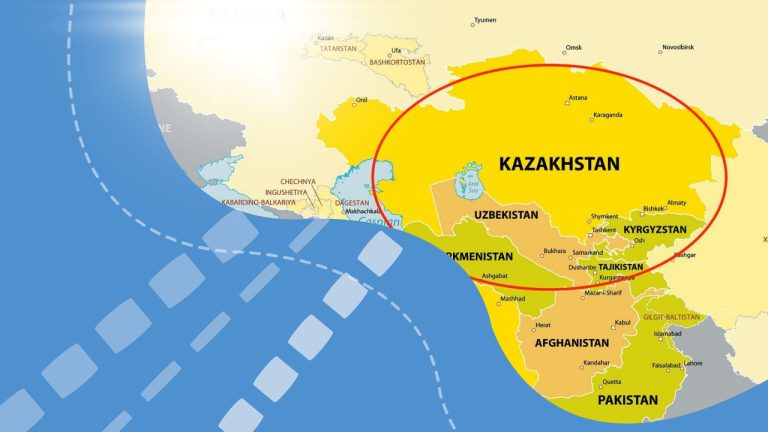
    In a recent development, the geological exploration company C29 Metals Limited has submitted applications for new exploration licenses in Kazakhstan. The areas of interest are situated to the south and north of the company’s current exploration site, according to inbusiness.kz. C29 Metals is looking to secure rights to study two sections of land: one covering 213 km² near the Ulutau Uranium Project and another 39 km² site close to the Botaburum mine. The company considers these zones promising based on historical drilling data and satellite imagery. It is estimated that the subsurface may contain 3,800 tonnes of uranium oxide. Currently, the Australian company holds full ownership of the Ulutau project. However, it remains unclear how they plan to proceed with extraction, as current legislation stipulates that mining of this metal must involve organizations with a majority stake held by Kazatomprom.

  • Kazatomprom Begins Geological Exploration at the Eastern Section of Zhalpak Deposit

    Kazatomprom Begins Geological Exploration at the Eastern Section of Zhalpak Deposit

    Kazatomprom, the leading uranium company in Kazakhstan, has received permission to conduct geological exploration at the Eastern section of the Zhalpak deposit. This authorization will enable the company to investigate and refine the uranium reserves in this area. Previously, exploration funded by Kazatomprom discovered uranium deposits of categories P1 and P2. The potential reserves at the Zhalpak deposit are preliminarily estimated at 30 thousand tons of uranium. The new geological exploration aims to convert these resources into reserves of categories C2 and C1 and to determine more accurate uranium reserves. The exploration project is planned for six years, after which the calculated reserves will be recorded on the state balance sheet. Currently, Kazatomprom is extracting uranium from 26 deposits and accounted for about 20% of the world’s primary uranium production in 2023.


  • Changes in Uranium Mining Tax Rates Announced for 2025

    Changes in Uranium Mining Tax Rates Announced for 2025

    In 2025, the Republic of Kazakhstan will see a change in the mineral extraction tax (MET) rate on radioactive metals, according to the press center of the atomic company Kazatomprom. Starting from the first day of the new year, the tax on the extraction of valuable minerals will be set at 9%. From 2026, a differentiated tax will be introduced, allowing the MET rate to vary between 4% and 18%.

    The rate will depend on the actual amount of uranium extracted under each specific contract, as well as the cost of natural uranium concentrate. If the annual extracted volume is up to 500 tons, the enterprise will be taxed at 4%. For annual production levels up to 1,000 tons, the rate will rise to 6%, up to 2,000 tons9%, up to 3,000 tons12%, and up to 4,000 tons15%. If more than 4,000 tons of uranium is mined in a year, the MET will reach 18%.

    It is important to note that if a certain weighted average price of uranium is exceeded, the tax rate will increase. For example, if the average cost exceeds $70 per pound of concentrate, the tax rate will increase by 0.5%. If the price surpasses $110 per pound, an additional 2.5% will be added to the existing rate.

    Until the end of 2024, uranium companies will continue with the current taxation procedure. Since January 1 of last year, the MET has been 6%. The management of Kazatomprom expects that in 2026, all subsidiaries and joint ventures of the national company will be able to benefit from the differentiated tax calculation approach.

  • Kazatomprom Signs New Contract for Mining Operations at Inkai Deposit

    Kazatomprom Signs New Contract for Mining Operations at Inkai Deposit

    Kazatomprom JSC has signed another mining contract. The agreement involves extracting radioactive metal from the subsurface of site No. 3 at the Inkai deposit. The relevant documents were signed following negotiations with the Ministry of Energy of Kazakhstan. This contract is crucial for the national company as it will significantly increase its mineral resource base, according to the operator’s press center.

    According to Kazatomprom, obtaining the license will allow the extraction of 701 tons of metal over the next four years. It is noteworthy that Inkai holds significant uranium reserves and is one of the main uranium deposits in the country. Experts estimate the reserves at the site to exceed 83,000 tons. Furthermore, developing these resources will positively impact the Turkestan region.

    Additionally, the company believes that in the future, the contract for the right to develop this area will go to Kazatomprom-SaUran LLP, a subsidiary of the current operator.

  • Kyrgyzstan Budget Committee Approves Concept of Uranium and Thorium Mining Law

    Kyrgyzstan Budget Committee Approves Concept of Uranium and Thorium Mining Law

    The Committee on Budget, Economic, and Fiscal Policy of the Jogorku Kenesh (Parliament) of the Kyrgyz Republic today, May 27, considered and approved the draft law “On Amendments to Certain Legislative Acts of the Kyrgyz Republic (to the Code of the Kyrgyz Republic on Administrative Offenses, the Law of the Kyrgyz Republic “On Subsoil”) and the recognition of the Law of the Kyrgyz Republic “On Prohibition of Activities Related to Geological Exploration of Subsoil for the Purpose of Uranium and Thorium Deposits Exploration and Development in the Kyrgyz Republic” as no longer in force in the first reading.

    The Minister of Natural Resources, Ecology, and Technical Supervision, Melis Turgunbaev presented the information about the draft law. The Minister noted that the draft law proposes to declare the Law of the Kyrgyz Republic “On Prohibition of Activities Related to Geological Exploration of Subsoil for Uranium and Thorium Deposits Exploration and Development in the Kyrgyz Republic” dated December 14, 2019, No. 139, which prohibits activities related to geological exploration of subsoil for uranium and thorium deposits, as no longer in force. The adoption of the Law will be accompanied by monitoring by state bodies of modern technologies for uranium and thorium extraction, which will contribute to minimizing the negative impact of mineral extraction on the environment. If such technologies are identified, state bodies will introduce requirements for their implementation by subsoil users.

    During the discussion, deputies Azamat Isirailov, Aisarakan Abdybaeva, and Nadira Narmatova raised questions about mechanisms and procedures for ensuring environmental safety and protecting public health. The Minister emphasised that adopting the draft law will be accompanied by introducing and enforcing environmental protection standards by subsoil users, including minimising emissions of harmful substances, ensuring workplace safety, and compliance with norms regarding the permissible impact on water and soil resources.

    The lifting of the ban would enable the extraction of valuable minerals at 83 deposits highly demanded in the global market. Turgunbayev highlighted the Kyzyl-Ompol deposit, which holds significant reserves of titanomagnetite, with mining operations to be conducted by state-owned companies.

  • Uranium Deposit Discovered in Southern Poland’s Świętokrzyskie Region

    Uranium Deposit Discovered in Southern Poland’s Świętokrzyskie Region

    Świętokrzyska Industrial Group Industria (ŚGP Industria) has confirmed the presence of uranium in a deposit located within the Świętokrzyskie Region in southern Poland. The company intends to conduct further exploratory work to ascertain the size of the deposit and suitable extraction methods. While the exact location remains undisclosed, detailed assessments in the coming months will focus on determining the deposit’s magnitude and optimal exploitation techniques.

    According to estimates by the International Atomic Energy Agency, Poland harbors around 100,000 tons of natural uranium, with only 7,000 tons confirmed thus far. ŚGP Industria secured an exploratory concession from the Ministry of Climate and Environment for a polymetallic deposit containing uranium in the region.

    The verification of uranium presence in the deposit follows extensive efforts by the company. Subsequent exploration endeavors will aim to precisely delineate the composition of various elements within the deposit, its dimensions, and potential extraction methodologies.

    Szczepan Ruman, president of the Board of ŚGP Industria, expressed satisfaction with the progress, emphasizing the significance of the discovery for mining development in the Świętokrzyskie Region and Poland’s access to critical raw materials, particularly uranium for the nuclear sector. Ruman highlighted the discovery’s importance in fostering cooperation with Rolls-Royce for the implementation of small modular reactors (SMRs) in Poland.

    The company’s research drew upon documents from the National Geological Archive of the State Geological Institute in Warsaw, incorporating data from the Soviet atomic program and uranium exploration activities in the Świętokrzyskie Mountains during the 1950s.

  • Kazatomprom Successfully Completes Uranium Concentrate Delivery to Romanian Energy Company

    Kazatomprom Successfully Completes Uranium Concentrate Delivery to Romanian Energy Company

    The National Atomic Company “Kazatomprom” (hereinafter referred to as “Kazatomprom” or the “Company”) announces the successful completion of uranium concentrate deliveries to the energy company Societatea Natională “Nuclearelectrica” S.A. (“SNN”). SNN is Romania’s state-owned company in the field of electricity and heat supply, engaged in nuclear fuel production, and operates the Cernavodă Nuclear Power Plant, which accounts for approximately 20% of the country’s energy production.

    In December 2022, Kazatomprom was declared the winner of an open tender by SNN for the supply of uranium dioxide for Romania’s nuclear energy needs. In accordance with the contract terms, the Company delivered natural uranium to the SNN plant. Kazatomprom exported its product through the Trans-Caspian International Transport Route (TCITR), which the Company has actively utilized since 2018.

    Recognized as a reliable and preferred supplier in the global nuclear fuel market, Kazatomprom will continue diversifying its supply geography and exploring new sales markets.

  • Kazakhstan Boosting Supply of Natural Uranium to American Energy Companies

    Kazakhstan Boosting Supply of Natural Uranium to American Energy Companies

    Kazakhstan is actively working to increase the supply of Kazakh natural uranium to American energy firms, stated Almasadam Satkaliyev, Kazakhstan’s Minister of Energy, during a meeting with US Senator Steve Daines in Astana.

    “As noted by A. Satkaliyev, there is active effort to enhance the share of natural uranium supply to American energy companies,” the ministry’s press service reported after the meeting, without specifying the potential increase in shipments.

    According to the head of the Ministry of Energy, there are existing contracts for uranium deliveries until 2032 with American companies, “such as Southern Company, Constellation, Duke Energy, and others.”

    Kazakhstan is the world’s largest uranium producer, accounting for 22% of global production. In 2022, the national company “Kazatomprom” sold uranium to over 24 buyers in 11 countries. The primary buyer of Kazakh uranium is China.

  • Analysts View Kazatomprom’s Financial Report Positively Despite Uranium Sales Dip

    Analysts View Kazatomprom’s Financial Report Positively Despite Uranium Sales Dip

    Financial analysts from Freedom Broker and Halyk Finance have lauded the financial report of the uranium company “Kazatomprom,” particularly noting a positive growth trajectory in revenue. According to Freedom Broker’s assessment, while an increase in production costs and a decrease in uranium sales are anticipated, they recommend purchasing Kazatomprom’s shares, anticipating the company’s ability to rebound to its target metrics. Similarly, Halyk Finance acknowledges that Kazatomprom hasn’t fully capitalized on the surging uranium prices, yet they advise investors to buy the company’s stocks based on the record-breaking financial results, as reported by broker reviews.

    Freedom Broker highlights potential production challenges due to sulfuric acid procurement issues, projecting them to be temporary and affirming Kazatomprom’s capability to regain previous production and sales targets. Additionally, experts underscore the company’s record revenue of 1.43 trillion tenge, marking a 43% year-on-year increase, driven by a 39% surge in natural uranium sales in 2023 and the initiation of enriched uranium sales, yielding 91 billion tenge in revenue.

    Despite a marginal 2% decline in uranium production in 2023, Kazatomprom managed to sell 10% more uranium compared to 2022, amidst a 22% increase in the average uranium selling price. While operational profitability surged by 49%, net profits grew by 23%, with the company’s assets expanding to 2.59 trillion tenge by the end of 2023.

    Looking forward, analysts foresee a potential 27% increase in Kazatomprom’s stock value, reaching 23.3 thousand tenge, alongside an estimated dividend of at least 1,188 tenge per share for 2023. Halyk Finance maintains its target price at 22.8 thousand tenge, emphasizing the company’s potential to capitalize on uranium sales amid high market prices.

  • Peninsula seals uranium supply deal with European buyer

    Peninsula seals uranium supply deal with European buyer

    ASX-listed Peninsula Energy has announced a new sales agreement for the supply of 1.2-million pounds uranium yellowcake from its Lance projects, in Wyoming, to European nuclear fuel buyer Synatom.

    The agreement runs over six years, starting in 2028.

    “The strength of the uranium market dynamics in recent months has allowed Peninsula to consider adding sales commitments with improved pricing structures to our sales portfolio,” states MD and CEO Wayne Heili.

    The pricing structure is a blended approach, including both base price and market-priced components. The resulting pricing is projected to be well above the forecast production costs at Lance, as reported in the August 2023 life-of-mine model.

    The new contract is estimated to generate gross revenue of between $88-million and $117-million over the term.

    This new sales agreement brings the company’s total contractual sales obligation over the upcoming ten-year period to six-million pounds. The Lance project is projected to produce about 14.8-million pounds of uranium over the same six-year period