Tag: underground mining

  • Sandvik Unveils Enhanced Toro® TH663i I Gen2 Underground Truck

    Sandvik Unveils Enhanced Toro® TH663i I Gen2 Underground Truck

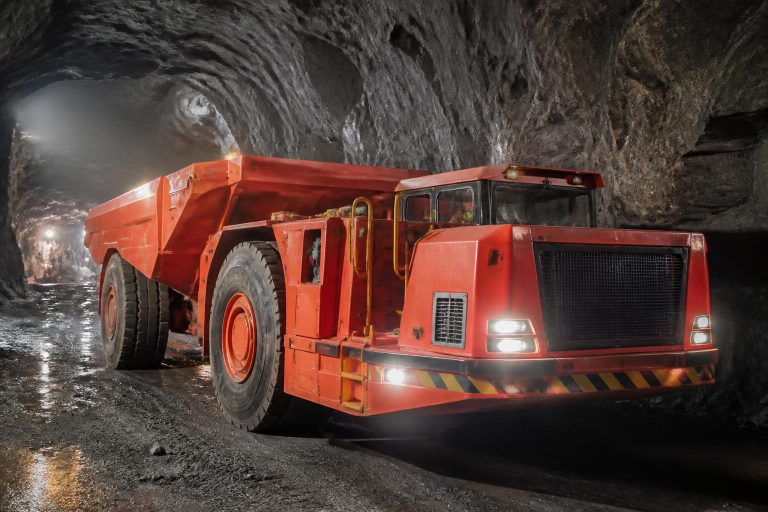
    Sandvik has launched the Toro® TH663i I Gen2 underground truck, marking a significant advancement in its 63-tonne haulage platform. This latest iteration incorporates over 30 enhancements aimed at boosting reliability, productivity, operator safety, and total cost of ownership for underground mining operations. The updates are a result of continuous improvement, operational experience, and valuable customer insights, ensuring that the truck meets the evolving needs of the mining industry.

    Performance data from existing underground operations indicates notable improvements when compared to earlier models of the Toro® TH663i. Specifically, the new truck boasts a 25% reduction in mean time to repair (MTTR) and a 12% increase in mean time between failures (MTBF). These enhancements translate to an impressive gain of over 170 additional operating hours per truck each year, providing operators with greater efficiency and productivity.

    Esa-Pekka Kantola, Product Line Manager for Load and Haul at Sandvik Mining, emphasised the importance of reliability in performance, stating, “Customers are looking for predictable performance they can rely on every shift.” The Toro® TH663i I Gen2 has been refined based on years of operational experience, ensuring that it not only meets but exceeds customer expectations in terms of productivity and cost management.

    Rather than undergoing a complete redesign, the Toro® TH663i I Gen2 builds on the established foundation of its predecessor, integrating accumulated improvements across various components, including the engine, electrical systems, powertrain, software, and structural systems. This strategic approach allows for a seamless transition for operators familiar with the previous model while enhancing the overall performance and durability of the truck.

    The comprehensive updates are designed to increase equipment availability, enhance durability, improve serviceability, and support lower costs per tonne throughout the equipment’s lifecycle. Additionally, the Toro® TH663i I Gen2 is compatible with Sandvik’s digital and automation technologies, such as My Sandvik Digital Services and AutoMine® solutions, and is backed by Sandvik’s extensive global parts, service, and training network, ensuring that operators have the support they need to maximise their investment.


  • Aramin Launches Aramak: A New Era in Underground Mining Equipment

    Aramin Launches Aramak: A New Era in Underground Mining Equipment

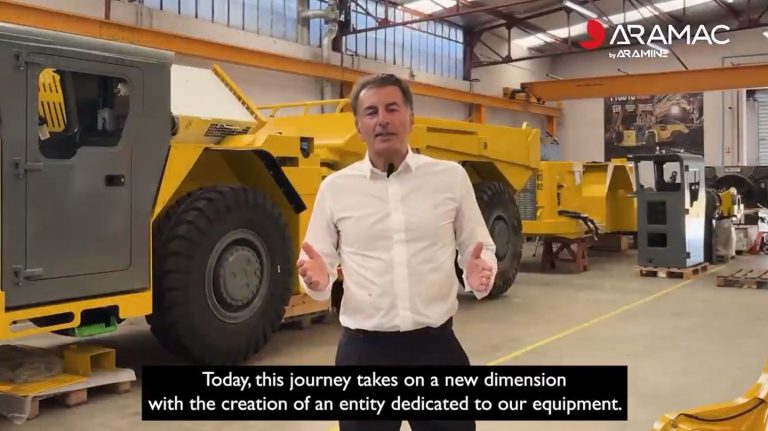
    Aramin, a company with over 50 years of experience in supporting underground mines globally, has announced the launch of a new entity, Aramak, dedicated to the development of innovative mining equipment. This venture builds on Aramin’s extensive expertise in spare parts and after-sales service, providing a unique understanding of the needs of underground mining operations worldwide.

    Initially focused on narrow vein mining, Aramin’s journey began with the introduction of the L130A machine in 2008, which aimed to revolutionise the industry with its innovative cable electric technology. Since then, the company has successfully manufactured and delivered over 500 machines across five continents, continuously expanding its product range to meet the evolving demands of its customers. Today, Aramin offers a comprehensive selection of equipment for underground mines, capable of operating in spaces as narrow as 16 metres.

    Innovation remains at the core of Aramin’s operations. In 2016, the company launched its first battery-powered machine, the L140B, which marked a significant milestone in the electrification of underground mining equipment. The current battery-powered range includes three loaders with capacities ranging from 1.3 to 6.2 tons, and the company is set to introduce a new 16-ton capacity battery-powered truck soon. Furthermore, Aramin has already deployed autonomous machines for several clients, showcasing its commitment to leading the future of mining technology.

    The company’s vision extends beyond just equipment manufacturing; it aims to redefine the underground mining landscape with reliable, competitive, and innovative solutions. To support this ambition, Aramin has begun constructing a new headquarters that will integrate offices, a warehouse, and a production facility, significantly increasing its manufacturing capacity. This facility is strategically located on a former mine shaft in Gardan, symbolising a deep-rooted connection to the mining industry.

    As Aramak positions itself as a leader in the narrow vein mining sector, it aspires to become an essential partner for the mines of the future, driving advancements in technology and operational efficiency. With a clear focus on innovation and customer support, Aramin is poised to shape the next generation of underground mining.


  • Altyntau Kokshetau Transitions to Underground Mining, Extending Mine Life Until 2047

    Altyntau Kokshetau Transitions to Underground Mining, Extending Mine Life Until 2047

    Altyntau Kokshetau, a prominent gold mining company in Kazakhstan, has announced a strategic shift to underground mining operations at its gold deposit in the Akmolinsk region, effectively extending the mine’s operational life until 2047. This transition marks a significant milestone in the company’s history, which spans over 60 years. The regional akimat reported that underground drilling and blasting works have already commenced, signalling the start of a new phase in resource extraction.

    The decision to move to underground mining is not only a technical advancement but also a vital economic strategy for the region. The company has expanded its mining territory by acquiring an additional 1,057 hectares of land, which is essential for developing the necessary underground infrastructure. This transition is expected to bolster the local economy significantly, as Altyntau Kokshetau is one of the major employers in the area, providing jobs for over 1,700 individuals. The mine contributes 17% to the region’s total industrial output and 23% to its manufacturing sector.

    The sustainability of the mine is crucial for the social stability of the Akmolinsk region. By maintaining operations at this key enterprise, the company is not only preserving jobs but also providing a long-term planning horizon for the local community. The transition to underground mining is projected to create approximately 600 new jobs and generate over 3 billion tenge in annual tax contributions to the local budget.

    In terms of financial investment, Altyntau Kokshetau has committed to investing more than $700 million into the development of the deposit. The planned hybrid approach includes underground mining of three ore zones with an annual capacity of 2 million tonnes, alongside deepening the open pit from its current depth of 540 metres to 680 metres, which will allow for an additional 6 million tonnes of production per year. This comprehensive development strategy underscores the company’s commitment to sustainable mining practices and its role in the regional economy.

  • Underground Mining Planned for Belogorsk Rare Metal Deposit in East Kazakhstan

    Underground Mining Planned for Belogorsk Rare Metal Deposit in East Kazakhstan

    The Belogorsk rare metal deposit, located in the Ulansky district of East Kazakhstan, is set to be mined underground over a ten-year period. According to announcements regarding the project’s hearings, the planned production capacity of the facility is 350,000 tonnes of ore per year. Over the course of the ten-year license period, it is anticipated that approximately 3.312 million tonnes of ore will be extracted.

    Operations are scheduled to commence in 2026, with the underground mine expected to reach its design capacity by the third year of operation. This production level will be maintained for eight years, within an overall operational lifespan of 11 years. The area designated for underground mining covers 2 square kilometres.

    The nearest settlement to the mine is the eponymous village, located just 50 metres from the deposit. Other nearby settlements include Kalaitapkan, 2.7 km away, Tomenge Taiynty at 3.6 km, Asu-Bulak at 27 km, and Ognyevka at 45 km. The regional centre, Ust-Kamenogorsk, is situated 112 km from the site.

    Exploration of the Belogorsk deposit dates back to the 1930s, with various assessments and approvals of reserves occurring over the decades, the last of which was in 1985. To evaluate the deposit’s potential, exploratory works were conducted on the flanks and deep horizons of the site by the Ust-Kamenogorsk geological exploration expedition during 1985-86, primarily involving core drilling. The project concluded that resources could be significantly increased through further exploration of the flanks and deeper horizons.

    Historical data from 1985 indicates that the deposit contains reserves of beryllium, tin, tantalum, and niobium. Besides tin, the other three metals can be processed at the Ulba Metallurgical Plant (UMP) of Kazatomprom in Ust-Kamenogorsk. Reserves of beryllium in category C1 were estimated at 1,358 tonnes from 2.8 million tonnes of ore, with tantalum at 243 tonnes, niobium at 224 tonnes, and tin at 604 tonnes from 2.7 million tonnes of ore. In category C2, reserves of these metals were calculated at 341 tonnes for beryllium, 42 tonnes for tantalum, 57 tonnes for niobium, and 157 tonnes for tin from 528,000 tonnes of ore. Additionally, inferred reserves were projected at 6.2 million tonnes, including 2,816 tonnes of beryllium, 299 tonnes of tantalum, and 502 tonnes of tin.

    In 2023, media reports cited industry experts questioning the existence of large reserves at the Belogorsk deposit, noting that it had been mined underground until 1993. The mining rights for the Belogorsk deposit were awarded to Sinoinvest Group Ltd following a Ministry of Industry auction in 2025. The hearings were initiated by Asia United Resources Group Corporation Ltd, led by Du Cunfeng, who is also a founder of Sinoinvest Group, alongside Teliewuhabuli Akemubayi, according to data from adata.kz. Notably, Akemubayi has been identified as a university employee in Xinjiang. Earlier in June, Qazba.kz reported on Sinoinvest Group’s iron ore mining project in the Karaganda region, associated with the same ownership.


  • CoreX Holding Plans to Double Manka Gold Resources to 400,000 Ounces and Begin Mining in East Kazakhstan in 2026

    CoreX Holding Plans to Double Manka Gold Resources to 400,000 Ounces and Begin Mining in East Kazakhstan in 2026

    Turkish-Dutch mining group CoreX Holding is targeting a significant expansion of the resource base at its Manka gold deposit in East Kazakhstan, with plans to more than double confirmed resources from 195,000 ounces to over 400,000 ounces through a second phase of exploration drilling, while beginning underground mining operations this year.

    According to the company’s 2025 annual report, CoreX completed a comprehensive underground drilling programme at Manka including 10 additional holes totalling 2,000 metres in 2025, bringing the total drilling since acquiring exploration rights to approximately 5,000 metres. The programme identified approximately 340,000 ounces of potential resources, with 195,000 ounces confirmed through adit clearance and reserve definition in the first exploration phase. A second phase planned for 2026 will include 6,000 additional metres of drilling, expected to push total project resources beyond 400,000 ounces.

    Mining is scheduled to begin in 2026 using underground methods including sublevel stoping and cut-and-fill mining, with production planned to continue for nine years. Annual output is targeted at up to 187,000 ounces of gold — a significant scale for a single underground operation.

    The Manka deposit has a century-long history, having been discovered in 1925. Soviet-era mining between its discovery and 1954 extracted 300,000 tonnes of ore at an average grade of 12.24 grams per tonne, yielding 3.6 tonnes of gold. The deposit is located in a geographically sensitive border area near the intersection of Russia, Mongolia and China.

    CoreX Holding’s Kazakhstan portfolio also includes the Voskhod Chrome operation in Aktobe Region, Altay Polymetals in Karaganda Region and the planned Qazaq Soda ash plant in Taraz.

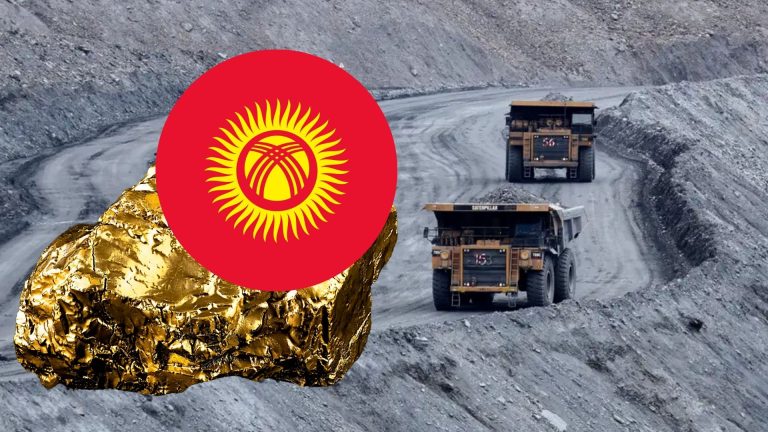
  • Kyrgyzstan Launches Underground Gold Mining at Kumtor, Prioritizing Sustainability and State Control

    Kyrgyzstan Launches Underground Gold Mining at Kumtor, Prioritizing Sustainability and State Control

    BISHKEK, Kyrgyzstan — President Sadyr Zhaparov officially launched an underground gold mining project at the Kumtor Gold Company during a working visit to the Issyk-Kul region on Wednesday, marking a significant shift in the country’s mining strategy and environmental approach.

    The project, which builds on over 1,600 meters of developed tunnels, is set to tap into high-grade ore deposits containing over 5 grams of gold per ton. The underground operation is expected to last 17 years and has added 147 tonnes of gold to Kyrgyzstan’s state reserve balance.

    President Zhaparov hailed the move as both an economic and environmental milestone.

    “This marks a new chapter for Kumtor — one that aligns with our goals of sustainable development and environmental protection, especially in preserving our glaciers,” he said.

    The president underscored the importance of the Kumtor deposit’s return to state ownership, calling it a historic achievement. Under domestic management since May 2021, Kumtor has generated $3.45 billion in revenue, of which $891.6 million has gone to the state budget. Over 54 tonnes of gold have been produced in that time, with $441 million in dividends transferred to the state — a dramatic increase compared to just $100 million during the previous 28 years of foreign operation.

    The project is being executed entirely by local specialists, with underground mining chosen for its lower environmental impact compared to open-pit methods. While open-pit operations will continue, the strategic focus will increasingly shift underground.

    Zhaparov also revealed plans to process gold-rich tailings and develop new sites, including the Togolok deposit and the Jangart exploration area, as part of Kyrgyzstan’s broader efforts to maximize national resource benefits.

  • Tascara Resumes Precious Metal Mining in East Kazakhstan

    Tascara Resumes Precious Metal Mining in East Kazakhstan

    The mining company Tascara LLP has announced plans to resume precious metal extraction at the Tascara deposit in East Kazakhstan, a site that has remained dormant for several years. Initially developed during the Soviet era, the deposit is now the focus of a new project submitted to Kazakhstan’s Unified Environmental Portal for regulatory review.

    The original development plan, crafted by the GINalmazzoloto Institute in 1990, involved mining through sublevel drifts and ore extraction via upward drilling fans. The current plan continues with underground mining methods, reflecting the limited remaining reserves at the site. Mining operations are projected to run from 2027 to 2029, preceded by two years of preparatory works.

    To date, Zone I of the deposit has been mined to a depth of 190 meters, while Zone III reaches 84 meters. Remaining reserves include 93,863 tons of ore, with an average gold content of 6.2 g/t and silver content of 3.9 g/t. The company plans to extract over 31,000 tons of ore annually.

    Additionally, Tascara intends to submit a separate proposal for constructing a gold extraction plant to process the mined material, marking a significant step toward expanding its operations in the region.

  • Underground gold mining at Kumtor can provide hundreds of millions of additional dollars to the Kyrgyzstan’s budget

    Underground gold mining at Kumtor can provide hundreds of millions of additional dollars to the Kyrgyzstan’s budget

    The Kumtor deposit is one of the ten largest gold deposits in the world. The mine is located in the Issyk-Kol region in the permafrost zone at an altitude of 4,000 meters above sea level. Revenues from Kumtor account for roughly one-third of the state budget in Kyrgyzstan, with the mine producing about 17 tons of gold per year.

    “The feasibility study of the underground gold mining project developed by specialists speaks about its economic efficiency. According to preliminary data, with the help of an underground mining method, it will be possible to get 115 tons of gold. Taking into account the precious metal mined at the [site] by the open-pit method, this is a big step forward,” said Almazbek Baryktabasov, President of the Kumtor Gold Company. Mining underground will help the company reach gold of a higher-grade ore, he said, and as a result, the company will be able to increase its tax payments.

    Until its nationalization in 2021, the Kumtor mine was owned by Canadian company, Centerra Gold. Earlier, the Canadian owners tried to extract gold through shafts. However, gold prices did not render this profitable, as the shaft method is much more expensive than the open-pit mining. Over the past ten years, however, the price of an ounce of gold has risen by more than $700 and is currently trading at just over $2,000. Before Kumtor was expropriated, Centerra Gold spent approximately  $180 million dollars on research related to underground mining.

    Today, the authorities have allocated an additional mining site next to the one where gold ore is already being extracted. According to some reports, the new site contains a denser concentration of the precious metal per unit of ore. Currently, at Kumtor’s open-pit mine, it takes one ton of processed ore and more than 40 tons of extracted waste rock to produce 5-7 grams of gold. Underground mining could double that yield. Furthermore, underground mining is not as environmentally damaging as open-pit mining. For example, one of Kumtor’s main environmental concerns is the destruction of glaciers which literally hang over the edge of the open pit.