Tag: Tau-Ken Samruk

  • Kazakhstan to Import Zinc Ore from Afghanistan Under New Supply Agreement

    Kazakhstan to Import Zinc Ore from Afghanistan Under New Supply Agreement

    Kazakhstan has signed a significant trade agreement to import zinc ore from Afghanistan, marking an expansion of the country’s raw material sourcing strategy. The agreement was formalised during the opening of Kazakhstan’s Trade House in Kabul, where Shalkiya Zinc LTD, a subsidiary of the National Mining Company Tau-Ken Samruk, entered into a contract with Afghan German Bakhtar Company for the supply of zinc ore.

    Under the terms of the contract, Shalkiya Zinc LTD will purchase up to 30,000 tonnes of zinc ore annually, with a total contract value of $18.88 million. The ore will be shipped to Kazakhstan under DAP (Delivered at Place) conditions, meaning Afghan German Bakhtar Company will assume all transportation costs and associated risks, whilst Shalkiya Zinc LTD will handle customs duties and unloading operations. This arrangement provides a clear division of responsibilities and ensures efficient logistics for the supply chain.

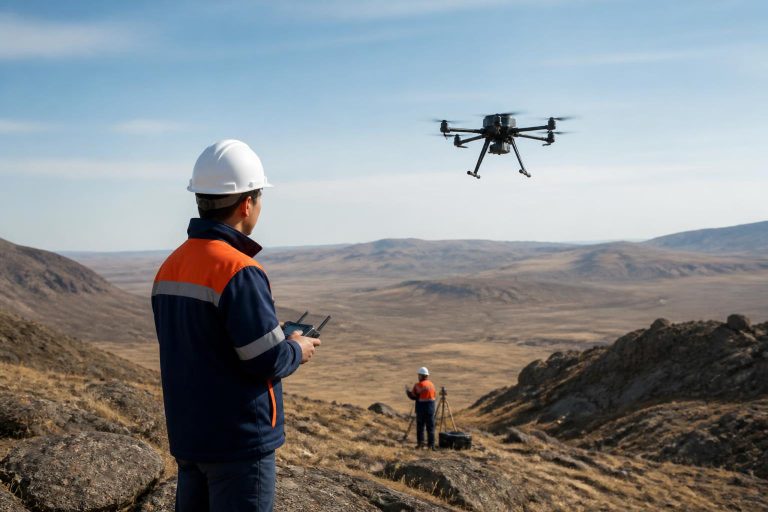
    The initiative builds on previous exploratory work conducted by Tau-Ken Samruk, which collected samples from the Pami-Kakrak deposit in Bamian Province during autumn 2025. Laboratory analysis conducted by Kazzinc confirmed that the imported mineral raw material can be integrated into the existing technological processes of Kazakhstan’s mining and processing plants. This validation demonstrates the compatibility of Afghan ore with Kazakhstan’s current production infrastructure, making the partnership commercially viable.

    The new supply channel arrives at a critical time for Kazakhstan’s zinc sector. According to the Bureau of National Statistics, zinc production declined during the first five months of 2026, with copper-zinc ore output falling 18.8 per cent year-on-year to 2.2 million tonnes, and refined zinc production dropping 12.9 per cent to 93,000 tonnes. The Afghan ore imports are expected to help stabilise and support these production figures. Additionally, other Kazakhstani companies, including ERG, are exploring similar opportunities for mineral resource development in Afghanistan, with ERG considering chrome mining ventures potentially structured as joint enterprises.


  • Kazakh PM Orders New Measures to Accelerate Metallurgical Sector Growth

    Kazakh PM Orders New Measures to Accelerate Metallurgical Sector Growth

    Prime Minister Olzhas Bektenov has directed Kazakhstan’s Ministry of Industry and Construction to formulate additional stimulus measures for the country’s metallurgical sector within the next month, signaling a renewed push to boost industrial output and investment. The directive was announced during a government meeting reviewing Kazakhstan’s socio-economic performance in the first half of 2026. Bektenov tasked the ministry, alongside state mining company Tau-Ken Samruk, with ensuring full utilization of non-ferrous metallurgical enterprises, including by supplying imported gold for domestic refining. In the ferrous metallurgy segment, the Prime Minister highlighted the need for Qarmet, under its modernization program, to expand its product range to include items most in demand in both domestic and international markets. Bektenov stressed that the pace of growth in the manufacturing sector depends on the timely implementation of investment projects. He instructed the ministry and regional administrations to review all investment projects within one week to identify challenges and outline specific remedial measures. Additionally, the Prime Minister ordered the submission of draft amendments within one month to introduce new mechanisms aimed at improving the efficiency of Kazakhstan’s special economic zones. Bektenov also emphasized the importance of maintaining current construction activity levels, calling for continuous monitoring of housing commissioning and swift resolution of emerging issues. He recalled President Kassym-Jomart Tokayev’s directive to begin a large-scale program for building social and infrastructure facilities, with a particular focus on modern healthcare institutions. The announcement follows earlier reports that Kazakhstan plans to launch eight non-ferrous metallurgy projects in 2026, expected to create over 1,500 jobs, underscoring the government’s commitment to expanding the mining and metals sector as a key driver of economic growth.

  • Kazakhstan’s Ädilet Party Business Council Calls for Deep Processing Push to Convert Mineral Wealth Into Domestic Economic Value

    Kazakhstan’s Ädilet Party Business Council Calls for Deep Processing Push to Convert Mineral Wealth Into Domestic Economic Value

    Kazakhstan’s political party Ädilet has convened a Business Council meeting bringing together representatives of major mining and metallurgical companies, industry associations and state bodies to debate how the country can retain more value from its mineral wealth domestically rather than exporting raw materials.

    The meeting concluded that deep processing, enterprise modernisation and production of high value-added goods must become the central priorities for Kazakhstan’s mining and metallurgical complex. The sector already accounts for approximately 8% of GDP, with production exceeding 14 trillion tenge and exports reaching $21.4 billion last year, according to figures presented by national mining holding Tau-Ken Samruk — but participants agreed the industry’s potential is substantially higher.

    Ädilet party chairman Aibek Dadebay framed the transition to deep processing as both an economic and a social justice issue. “This is not only an economic question. It is a question of fairness. The wealth of the land must be converted into the wealth of the people. That is why Ädilet fully supports the president’s strategic course toward deep processing, construction of new facilities and increasing output of higher value-added products,” he said.

    Discussion moved from strategic priorities to practical barriers: railway freight tariffs, enterprise modernisation costs, engineering workforce shortages and geological exploration funding. Tau-Ken Samruk chairman Nariman Absametov highlighted the growing strategic importance of rare and rare earth metals. “Access to rare and rare earth minerals is becoming one of the most important factors in the country’s global competitiveness. Kazakhstan possesses a unique mineral resource base, and its effective development will strengthen the country’s position in world markets,” he said.

    Dadebay said proposals from businesses, industry associations and experts would be systematised into a unified package of Ädilet initiatives on mining and metallurgical sector development. “Our task is to ensure that dialogue between business and the state continues on a daily basis,” he said.

  • Qazgeology Retains Mailyshat Gold JV With CoreX as Four Failed Exploration Ventures Close and Return Licences to State

    Qazgeology Retains Mailyshat Gold JV With CoreX as Four Failed Exploration Ventures Close and Return Licences to State

    Kazakhstan’s state geological company Qazgeology will continue its joint venture with Turkish-Dutch holding CoreX — formerly known as Yildirim — at the Mailyshat licence area within the Bakanas exploration block in East Kazakhstan Region, while four other CoreX joint ventures with Qazgeology are being wound up after failing to identify commercially significant mineral resources.

    Tau-Ken Samruk, the state mining holding that owns Qazgeology, confirmed in a response to Qazba.kz that the contract extension for Mailyshat Resources LLP is currently under consideration by the Ministry of Industry and Construction. Work at the 152 square kilometre gold exploration area continues in accordance with subsoil use legislation pending a decision. Qazgeology holds a 25% stake in Mailyshat Resources LLP, with the remaining interest held by CoreX subsidiary DTK Metals and Mining B.V. Exploration investment at the Mailyshat licence from 2016 to 2021 totalled 481 million tenge.

    The four joint ventures being closed are Surovsky Resources LLP (platinum group elements and gold), Tekturmas Resources LLP (chrome), Charsky Resources LLP (chrome) and Shiderty-Ekibastuz Resources LLP (chrome). Tau-Ken Samruk confirmed that all contractual geological exploration work at these four sites was completed but did not result in the identification of mineral reserves of industrial or economic significance. The licence areas have been returned to the state in accordance with Kazakhstani legislation and the joint ventures are now undergoing statutory liquidation procedures.

    Importantly, all exploration at the four closed projects was financed by the Turkish partner on a free-carry basis, meaning Qazgeology bore no costs and suffered no financial losses from the closures.

  • US Ambassador Reaffirms Critical Minerals Partnership With Kazakhstan at MINEX as Joint Tungsten Processing Deal Takes Shape

    US Ambassador Reaffirms Critical Minerals Partnership With Kazakhstan at MINEX as Joint Tungsten Processing Deal Takes Shape

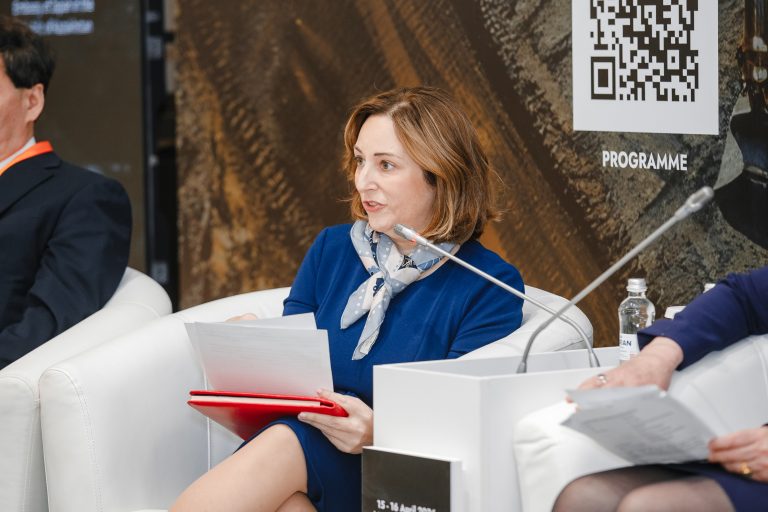
    The United States intends to deepen its critical minerals partnership with Kazakhstan, with the two countries moving from diplomatic agreements to concrete industrial projects, US Ambassador to Kazakhstan Julie Stufft told the MINEX mining and geology forum in Astana.

    “Kazakhstan is a key player in the global market and an important partner for the United States,” Stufft said, pointing to the country’s role as a producer of multiple strategic minerals and its growing significance in global supply chains. She recalled that in November 2025, during President Kassym-Jomart Tokayev’s visit to the United States, the two countries signed a memorandum of cooperation on critical minerals. In February 2026, Kazakhstan’s foreign minister Yermek Kosherbayev attended the first critical minerals ministerial conference in Washington, where he outlined Kazakhstan’s mineral potential and the country’s readiness to contribute to reliable and resilient global supply chains.

    Stufft emphasised that Kazakhstan retains full sovereignty over how it works with and sells its critical minerals, and that the US respects the country’s multi-vector approach to bilateral and multilateral engagements in the sector. “Kazakhstan independently chooses how to work and how to sell its critical minerals. The US is pleased to be Kazakhstan’s partner,” she said.

    On the practical side, the US Geological Survey is actively working with its Kazakhstani counterpart, and American company representatives make regular visits to Kazakhstan to expand industrial cooperation. A concrete example of the partnership advancing to project level came this year, when Kazakhstan’s national mining company Tau-Ken Samruk and US investment company Cove Capital signed documents on a project envisaging deep processing of tungsten at the North Katpar and Upper Kairakty deposits in Karaganda Region — a deal Stufft described as an important step in strengthening Kazakhstan’s position in the global critical minerals supply chain.

  • Tau-Ken Samruk and Rwanda’s Ngali Holdings Sign Agreement to Develop Rare Earth Deposits

    Tau-Ken Samruk and Rwanda’s Ngali Holdings Sign Agreement to Develop Rare Earth Deposits

    Kazakhstan’s national mining company Tau-Ken Samruk, a subsidiary of the sovereign wealth fund Samruk-Kazyna, has signed an agreement to jointly develop rare and rare-earth metal deposits in Rwanda in partnership with local investment group Ngali Holdings.

    The agreement was formalised during meetings in Kigali between Samruk-Kazyna chief executive Nurlan Zhakupov and representatives of Rwanda’s mining authorities and investment institutions. Participants included Jean-Guy Afrika, CEO of the Rwanda Development Board, Alice Uwase, CEO of the Rwanda Mines, Petroleum and Gas Board, and Joseph Butera, CEO of Ngali Holdings.

    According to Samruk-Kazyna, the parties signed a Term Sheet outlining plans for joint exploration and development of rare and rare-earth metal deposits in Rwanda. The cooperation will focus on geological exploration and potential mining projects aimed at unlocking the country’s mineral resources.

    Officials from both countries also discussed broader opportunities for collaboration in the mining sector, including the expansion of geological exploration activities and technology exchange.

    Zhakupov noted that relations between Kazakhstan and Rwanda have strengthened following the visit of Rwandan President Paul Kagame to Kazakhstan in 2025, which helped open new avenues for economic cooperation.

    The planned projects highlight growing international interest in rare-earth minerals, which are critical for modern technologies including electronics, renewable energy systems and defence applications. Through the partnership, Tau-Ken Samruk aims to expand its international mining footprint while contributing technical expertise to the development of Rwanda’s mineral sector.

  • Tau-Ken Samruk Increases Gold Resources at Zhosabay Deposit in Akmola Region

    Tau-Ken Samruk Increases Gold Resources at Zhosabay Deposit in Akmola Region

    Tau-Ken Samruk has expanded gold resources at the Zhosabay site in Kazakhstan’s Akmola region following the results of its 2025 exploration campaign.

    According to updated geological data, total gold resources at the deposit have increased to 8.2 tonnes, representing a 68% rise compared with previous state balance figures. Of this, 787 kilograms were upgraded to the Measured category, Indicated resources rose by 1,338 kilograms, an increase of 30%, and Inferred resources expanded to 1,677 kilograms, marking a 248% increase.

    During 2025, the company completed 7.3 kilometres of drilling and updated the 3D geological model of the deposit.

    For 2026, Tau-Ken Samruk has planned 8.6 kilometres of additional drilling, of which 1.16 kilometres have already been completed. The exploration licence is held by Akmolit LLP, a subsidiary of Tau-Ken Samruk.

    The company intends to continue further exploration to improve the resource classification and submit updated resource and reserve data for inclusion in the state balance by the end of 2027.

  • White & Case Advises on $1.6 Billion-Backed Tungsten JV Between Cove Kaz and Tau-Ken Samruk

    White & Case Advises on $1.6 Billion-Backed Tungsten JV Between Cove Kaz and Tau-Ken Samruk

    Global law firm White & Case LLP has advised Cove Kaz Capital Group, a portfolio company of Cove Capital LLC, on the signing of definitive agreements with Tau-Ken Samruk National Mining Company to advance the Northern Katpar and Upper Kairakty tungsten projects in Kazakhstan.

    The transaction includes a share purchase agreement and shareholders’ agreement establishing a joint venture structure in which Cove Kaz will hold a 70 percent stake and Tau-Ken Samruk will retain 30 percent ownership in Severniy Katpar LLP.

    The two projects are described as the largest undeveloped tungsten resource globally, with a planned combined annual production target of 12,000 metric tons, equivalent to approximately 15 percent of current global output.

    Following execution of the agreements, Cove Kaz will proceed with a definitive feasibility study and downstream refining plans. The development is expected to create around 2,000 jobs and enhance Kazakhstan’s position in the global critical minerals supply chain.

    The project has received backing from both the US and Kazakh governments. Letters of interest have been issued for up to $1.6 billion in potential financing from the Export-Import Bank of the United States and the US International Development Finance Corporation.

    The White & Case advisory team was led by partners Carolyn Lamm in Washington, DC and Maxim Telemtayev in Astana, alongside partners Martin Menski, John Vetterli, Keith Hallam and Morgan Hollins.

  • Tau-Ken Samruk and Cove Capital Sign Agreements on Northern Katpar and Verkhneye Kairakty Tungsten Projects

    Tau-Ken Samruk and Cove Capital Sign Agreements on Northern Katpar and Verkhneye Kairakty Tungsten Projects

    Kazakhstan’s state mining company Tau-Ken Samruk has signed a series of agreements with US-based Cove Capital for the joint development of the Northern Katpar and Verkhneye Kairakty deposits, according to a press release from Samruk-Kazyna.

    The projects are expected to form the raw-material base for establishing deep tungsten processing in Kazakhstan. As part of the Northern Katpar project, the partners plan to produce ammonium paratungstate, a key intermediate product used in high-tech and industrial applications.

    To implement the projects, Cove Capital will secure no less than $1.1 billion in financing. Of this amount, $900 million is expected to be provided by the Export-Import Bank of the United States. In addition to financing, the American side will provide technological support for mining, processing, and beneficiation operations. The US will also facilitate exports to global markets, including arranging offtake contracts with US authorities.

    The two deposits contain an estimated 410,000 tonnes of tungsten. According to the mine development plan presented this week by Northern Katpar, sales of tungsten trioxide, molybdenum, copper, and bismuth are projected to generate more than 1 trillion tenge (approximately $2 billion) in revenue between 2030 and 2048.

    The parties initially agreed on joint development of the deposits in November last year. According to Reuters, Cove Capital will hold a 70 percent stake in the joint venture, while Tau-Ken Samruk will retain 30 percent.

  • Tau-Ken Samruk Begins Exploration of Rare and Rare-Earth Metals in Rwanda and Afghanistan

    Tau-Ken Samruk Begins Exploration of Rare and Rare-Earth Metals in Rwanda and Afghanistan

    Kazakhstan’s state-owned mining company Tau-Ken Samruk has launched geological exploration efforts for rare and rare-earth metals in Rwanda and Afghanistan, according to Nurlan Zhakupov, Chairman of the Board of Samruk-Kazyna. The initiatives are viewed as strategically important for strengthening Kazakhstan’s resource security and expanding its processing capabilities.

    In Rwanda, the national company has already signed a cooperation agreement that will pave the way for establishing a joint venture with the country’s state enterprise. Once the joint company is formed, exploration activities will begin, eventually leading to the extraction of strategic minerals.

    Work in Afghanistan remains at an early evaluation stage. Specialists collected and analyzed geological samples in July and reported promising results. However, joint mining is not yet under consideration, as licensing and resource assessment procedures still need to be resolved.

    Zhakupov noted that these international exploration projects will help Kazakhstan develop deeper processing of raw materials sourced from third countries. The government has declared its intention to process rare and rare-earth metals domestically, and the Ministry of Industry and Construction has prepared a development program for the sector covering 2024–2028.

    Tau-Ken Samruk continues to focus on gold, copper, and lead-zinc deposits while also identifying strong potential in the extraction of strategic resources, including rare and rare-earth elements.