Tag: sustainable mining

  • The U.S. Cobalt Mine Struggles Amidst Chinese Market Dominance

    The U.S. Cobalt Mine Struggles Amidst Chinese Market Dominance

    The only cobalt mine in the United States, located in northern Idaho, remains dormant as Chinese competitors flood global markets with cheap cobalt supplies. Jervois Global, which owns the mine, watched cobalt prices plummet last year after China’s CMOC Group opened the Kisanfu mine in the Democratic Republic of Congo, driving global production to an all-time high. The Idaho site, acquired by Jervois in 2019, was idled in June 2023, just weeks before its planned opening, resulting in over 250 job losses. A minimal crew now maintains the site’s equipment to prevent deterioration.

    Site manager Matthew Lengerich stated that the decision was purely economic, with cobalt prices needing to reach at least $20 per pound to justify reopening, while current prices hover around $12.17. Western mining companies like Jervois and Albemarle face significant challenges competing with Chinese companies, which benefit from lower costs, including the use of coal-generated electricity and child labor, practices not tolerated by many Western governments and manufacturers.

    The disparity has led to calls for a two-tier pricing system, which would impose a premium on metals produced sustainably. This system could change traditional metal trading practices and create varying definitions of “green metal.” Western mining leaders have sought government intervention, including tariffs or supply chain transparency requirements, to level the playing field. US and EU officials have shown some understanding but have been reluctant to intervene directly in market pricing.

    Automakers and other industry customers are increasingly concerned about securing diverse and sustainable metal supplies. By 2027, the European Union will require EV manufacturers to disclose the origin and carbon footprint of the metals they use, potentially driving demand for premium-priced, sustainably sourced metals. Some companies, like Northern Graphite and Teck Resources, are already capitalizing on this trend by selling sustainably sourced materials at a premium.

  • World Bank Report Highlights Critical Mineral Demand Surge for Net-Zero Goals

    World Bank Report Highlights Critical Mineral Demand Surge for Net-Zero Goals

    A recent report by the World Bank’s International Finance Corporation reveals that by 2050, the annual supply of nickelwill need to increase by 208% and copper by 156% compared to 2020 production levels to meet global net-zero emissions targets. Additionally, at least 15 other minerals and metals must be extracted at similar rates to achieve climate goals, a monumental task that some analysts doubt is feasible. Concerns about the sustainability of this increased extraction are also prevalent.

    UN Secretary-General Antonio Guterres emphasized in April that the transition to net-zero emissions must not replicate the negative impacts of current extractive industries on marginalized communities. In line with these concerns, the EU’s Corporate Sustainability Due Diligence Directive, effective from 2029, mandates European companies to demonstrate their environmental and human rights efforts across supply chains.

    In July, EU companies BASF and Eramet withdrew from the $2.6 billion Sonic Bay nickel-and-cobalt refinery project in Indonesia. The decision followed criticisms regarding the project’s environmental impact, particularly its threat to the forest home of an Indigenous tribe. This withdrawal highlights the tension between the need for critical minerals and sustainable practices.

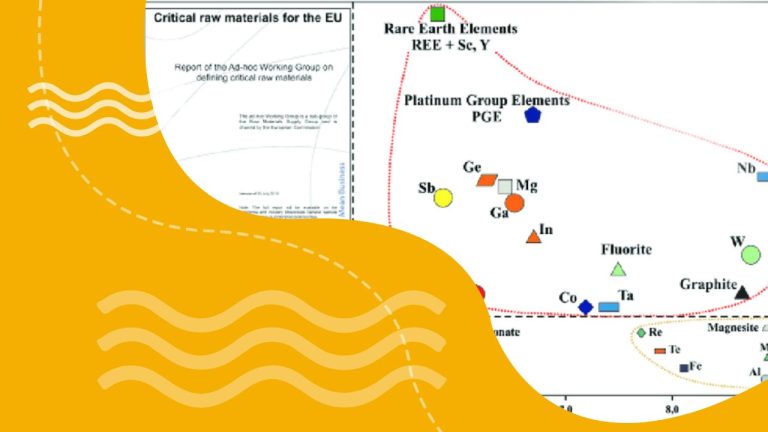
    The EU’s Critical Raw Materials Act, adopted in April, lists 34 critical and 17 strategic minerals essential for the green transition, facilitating easier sourcing through deals with “friendly third countries.” However, the environmental toll of nickel mining, especially in Indonesia, remains a pressing issue, with deforestation and water pollution linked to the practice.

    Frederick Kliem, a research fellow at the S. Rajaratnam School of International Studies, noted that while the EU firms avoid unsustainable mining practices, companies from countries like China are more willing to engage in environmentally damaging activities. This paradox is evident in the EU’s Green Deal, which relies heavily on third-party industries willing to subsidize and sustain environmental damage.

    Outgoing Indonesian President Joko Widodo aims to position Indonesia as a global hub for electric vehicle (EV) battery production by boosting nickel mining capacity. Since a 2014 ban on exporting unprocessed nickel, China has invested over $30 billion in Indonesia’s nickel supply chain, underscoring the strategic importance of this resource in the global energy transition.

  • Serbia Initiates Development of Mineral Resource Management Strategy for 2025-2040

    Serbia Initiates Development of Mineral Resource Management Strategy for 2025-2040

    Serbia has commenced the formulation of a comprehensive Strategy spanning from 2025 to 2040 aimed at managing the nation’s mineral and geological resources. Dubravka Djedovic Handanovic, the Minister of Energy, led the inaugural meeting in Belgrade, engaging with representatives from the Geology faculty to kickstart this pivotal initiative, as reported by the “Beta” press agency. Minister Djedovic Handanovic emphasized the necessity for the forthcoming document to conduct a thorough analysis of the current state of all mineral resources, outlining a trajectory from present circumstances towards future aspirations. The objective is to propose measures that enhance control and management of mineral development, ensuring maximal economic benefits while minimizing environmental damage.

    According to the minister, the Strategy is slated for completion “in the next nine months,” signifying a commitment to expedited progress in this critical area. Djedovic Handanovic highlighted Serbia’s historical reliance on mining for development, noting the absence of a coherent contemporary strategy in this domain. To address this gap, the drafting process will engage 50 professors and collaborators from the Faculty of Geology, tasked with integrating global best practices and cutting-edge technological solutions to foster sustainable mining practices.

    Minister Djedovic Handanovic stressed the importance of empowering professionals throughout this process, emphasizing their expertise and pivotal role in shaping the Strategy’s outcomes.

  • Shagarshinskoye iron ore deposit to be developed in Aktobe region

    Shagarshinskoye iron ore deposit to be developed in Aktobe region

    Qazaqstan Mining Company plans to start mining iron ore at the Shagarshinskoye deposit, located in the Aitekebi district of the Aktobe region of the Republic of Kazakhstan. The company published the project on the Unified Ecological Portal of Kazakhstan.

    The subsoil user carried out exploration work at the site in 2019–2021. The reserves of Shagarshinsky were put on the state balance sheet in February 2023. The project documentation of the company states that 1,642 thousand tons of iron ore (742 thousand tons of iron with an average metal content in the ore of 45.2%) were classified as probable reserves, 118 thousand tons of ore (52 thousand tons iron with an average metal content of 44.07%).

    Qazaqstan Mining Company has calculated a mining plan for 2024-2031. The quarry area at the end of mining will be 7.79 hectares, depth – 77 m, bottom horizon – +180 m. The manufacturer is going to process raw materials at his own crushing and screening complex.

    In the first two years of operation of the enterprise, it is planned to build an evaporation pond on the site for the accumulation of quarry waters and their technological maintenance.

  • Europe Is Embarking on a Mining Renaissance. Winning Over Locals Is Proving a Challenge.

    Europe Is Embarking on a Mining Renaissance. Winning Over Locals Is Proving a Challenge.

    COVAS DO BARROSO, Portugal—Tucked away in the mountains of northern Portugal, about two hours northeast from the country’s second-largest city of Porto, sits this idyllic farming village. It is home to under 200 people, most over the age of 60, with the surrounding region most famous for its Barrosão cattle, a protected species prized for its meat. The nearest town, Boticas, is a 20-minute drive away, and if you stand on the hilltop, the only sounds you hear are the cattle, song birds and insects.

    Covas, however, is set to play host to the green-energy transition in its rawest form. Just a third of a mile away from the houses of Covas do Barroso is one of Europe’s richest lithium deposits—the silvery metal used in electric-vehicle batteries—and a planned mining operation to dig out the mineral.

    Europe’s Mining Boom

    With demand for critical minerals surging, European governments want to exploit resources closer to home.

    Locals are worried about the environmental impact as well as the blight on the village presented by the mine. Speaking to locals, the word “mina” often draws a cringe, and a protest is scheduled later this month. “Our biggest opposition to the mine is that they want to destroy us,” said Nelson Gomes, president of Associação Unidosem defesa de Covas do Barroso, the local protest group. “The intensity of what they want to destroy, but also the proximity. It’s basically inside the village.”

    Governments and companies around the world are scrambling to find new sources of critical materials—and in doing so they are easing the approval process for projects that once took years or sometimes more than a decade to get off the ground. Additional supplies of metals like copper, nickel and lithium are going to be crucial to meet the growing demand for the energy transition—with the wiring, magnets, motors and battery cells used in green technologies such as electric vehicles, wind turbines and batteries for storage all requiring mined minerals.

    “No doubt there is a real demand story,” said Alex Gorman,mining analyst at U.K. investment bank Peel Hunt. “We are talking about a 35-fold increase in lithium demand and we do not have any large-scale lithium mines in Europe. It’s a massive problem.”

    But as governments fast-track approvals on such projects and struggle to convey the importance of efforts to secure materials for the green-energy transition, resistance is growing among locals like the Covas residents who stand to feel an impact and environmentalists who urge caution when moving forward with projects in sensitive ecosystems.

    Left: A stream dug by Nelson Gomes to manage the flow of water from the river over his farmland. Right: Nelson Gomes’s Barrosão cattle, a protected species.YUSUF KHAN/THE WALL STREET JOURNAL

    Race for resources

    The proposed Covas site is one of the nearly 50 mines now expected to open across Europe by 2030.In Germany, Vulcan Energy Resources is looking to open a lithium mine, harnessing a new technology for extracting the battery metal from brine. In Sweden, Copperstone Resources is hoping to reopen a brownfield mine site to extract the red metal, while Adriatic Metals has just started mining for silver and zinc in Bosnia, with more projects planned from Finland to Greece.

    “It’s definitely a [mining] renaissance,” said Rebecca Campbell, global mining and metals lead at law firm White & Case.“For many of us who have been working in the sector, it’s the first time we are seeing primary projects in Europe during our careers.”

    “We’re starting to now see material that’s on its way through the supply chain from European mine[s],” she added.

    The situation in Europe and the U.S. isstrikingly similar, according to Jayni Hein, of counsel at law firm Covington & Burling and former senior director for clean energy, infrastructure and the National Environmental Policy Act at the White House Council on Environmental Quality.

    “There’s an uptick in interest in domestic manufacturing and production in the U.S.,” driven by the passage of the climate law known as the Inflation Reduction Act in 2022, said HeinShe said the IRA and other acts have increased funds available for federal agencies to accelerate and improve permitting but noted that working with individual states and their legislatures remains a challenge. “We’re trying to foster a permitting landscape that is both efficient and responsible.”

    In Europe, the mining renaissance comes after years of nearly no new mining activity on the continent. Usually, opening a new mine takes 10 to 15 years, often because permitting can take years, according to Peel Hunt’s Gorman. She said a lack of staff with field knowledge has been an issue as well as negative attitudes toward mining in general.

    The Covas deposit

    In 2017 Savannah Resources, a London-listed mining company, identified the Covas deposit as a possible area to mine, hoping to cash in on green demand. Geological studies of the area stretching back to the 1980s had found possible lithium reserves. The project, however, seemed to have stalled after failing to get the backing of Portugal’s environmental agency.

    That changed this year. In May, Savannah Resources received permitting approval from the environmental agency allowing the company to move forward with pre-feasibility studies that include mining one small site to show how it would proceed with a full-scale operation. The approval happened to coincide with the European Union’s proposing critical-minerals legislation to speed up mine approvals across the bloc with various measures, including limiting environmental approval review times to two years.

    Left: A layer of spodumene within the host rock that Savannah Resources intends to mine. Right: Savannah Resources sample shed.YUSUF KHAN/THE WALL STREET JOURNAL

    For Savannah Resources, mining in the Portuguese hills for spodumene, the base rock recovered for lithium extraction, has become more attractive since the government updated its mining laws in 2021 to be more open to exploitation. The companyaims to dig four mine sites in the valley, with the largest 1,600 feet across, about the length of five football fields. Currently, Savannah Resources is mining the smallest of those sites, with some of the proceeds used in the local ceramics industry because the company hasn’t yet won approval to process lithium.

    “Some of the rock that’s being mined for spodumene—that is currently being mined for ceramics. Well, what we are doing instead of using it all for ceramics, is we’re taking the spodumene out and turning that into lithium hydroxide,” said Dale Ferguson, chief executive of Savannah Resources.Lithium hydroxide is used to make cathode materials for lithium-ion batteries.

    Locals worry the Covas river will be used by the mine. Savannah Resources, which has set up two offices in the municipality, has said it would strictly avoid that and instead build reservoirs to store rain water. But Gomes, the local opposition leader, is doubtful. Savannah Resources “will not take water from the river but they need to take it from somewhere. The river Covas springs 20 kilometers away, so they will take it before the river starts, even if not actually using the river.”

    Shifting sentiment?

    Local backlash against new mines isn’t uncommon. The industry has a long history of environmental destruction, poor relations with local communities and deadly disasters. In 2021, local opposition derailed Rio Tinto’s lithium project in Serbia, though the company is still confident the mine will open in some capacity at some point.

    However, governments want and need a secure supply chain of metals and minerals. Most critical minerals are processed in a relatively small number of countries with the threat made more apparent last month after China said it would introduce export restrictions to germanium and gallium—two critical minerals used to make semiconductors. Prices skyrocketed as consumers were suddenly unsure if they would have the raw materials needed to make chips for cars, phones and other tech.

    “There are minerals that are needed with the new green transition, resources that you did not need or have any use for before, which are now important for society, for nations, to have. It’s so much needed,” said Jessica Polfjärd, member of the European Parliament and Sweden’s Moderate Party.

    Polfjärd said that in Europe, attitudes in governments are starting to shift toward mining, adding that it is up to those lawmakers to help explain the benefits and need for exploiting mineral resources at home.

    Left: Local villagers have been protesting the opening of the mine. Right: The village of Covas do Barroso within the Serra de Dornela river valley.YUSUF KHAN/THE WALL STREET JOURNAL

    “There is always more public response when you start something new,” she said. “There is no difference if you want to have a mine or a shopping mall. To put something new in place—it’s harder than existing ones.”

    Despite the strong local opposition, Portugal still wants to mine its resources. “We have a responsibility to do so since we have the highest lithium resource [in Europe],” said Ana Fontoura Gouveia, Portugal’s secretary of state for energy and climate.

    Fontoura said that there is a possibility that the land for the mine, which is owned largely by the community and private owners, could be expropriated but she hoped an agreement would be reached instead. That view is echoed by Savannah Resources.

    “Portugal is a front-runner with adapting laws for environmental and social standards,” Fontoura said. “Critical raw materials have economic value and social value and we can fulfill that by high environmental and social standards. It’s important to convince [people] this is the way forward.”