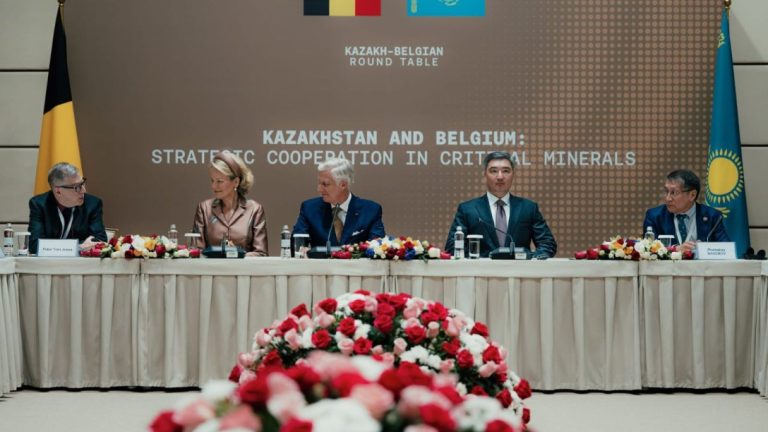
As the European Union accelerates its green and industrial transitions, securing reliable access to critical raw materials has become a strategic imperative. The continent faces significant supply chain vulnerabilities, with China controlling approximately 70% of global mineral processing and refining capacity. Global demand for lithium alone is projected to surge by more than 350% by 2040, intensifying competition among major economies for secure sources. The European Critical Raw Materials Act represents the EU’s comprehensive response to these challenges, with Africa emerging as a central pillar of the bloc’s diversification strategy.
The EU has already established critical minerals partnerships with several African nations, including South Africa, Rwanda, Namibia, the Democratic Republic of the Congo, and Zambia, backed by substantial financing commitments through the Global Gateway initiative, which aims to mobilise €300 billion in public and private investments. However, current cooperation frameworks remain heavily focused on extraction rather than value-added activities such as processing and manufacturing. This approach creates tension with sustainability objectives and fails to deliver the mutual economic benefits that African governments increasingly demand. Mining operations risk driving deforestation, water and soil pollution, whilst their substantial energy requirements may divert critical resources from domestic electrification in a region where approximately 600 million people lack access to affordable energy.
To achieve genuine supply chain diversification and ensure commercially viable partnerships, the EU must fundamentally reshape its approach. This requires closing coordination gaps across fragmented EU and member state initiatives, introducing demand aggregation and non-price public procurement criteria, and expanding circular economy cooperation including battery recycling and mine tailings reprocessing. Critically, the EU should adopt phased public-private partnership models that combine upfront infrastructure investment with binding commitments to mining, processing and refining activities. Development cooperation must be aligned with critical mineral initiatives to strengthen local infrastructure, skills and regulatory capacity. Long-term purchasing and offtake agreements for processed or refined minerals, coupled with robust environmental, social and governance safeguards and meaningful community engagement, are essential to prevent the perpetuation of the resource curse and ensure that African countries derive tangible, lasting benefits from their mineral wealth.
As the world pivots towards renewable energy and electric vehicles, one critical material has emerged as the linchpin of this transformation: lithium. This soft, silvery metal powers the batteries that drive electric cars, store renewable energy, and fuel the technologies of tomorrow. Yet Europe – the continent that ignited the green energy revolution – finds itself in an unexpected position: dangerously dependent on distant suppliers for a resource it urgently needs. The stakes are high, and Europe’s response could reshape global supply chains for decades to come.
The Lithium Imperative: Why This Element Matters
Clean technologies are revolutionising global economies. Solar panels harness the sun’s energy, wind turbines spin on hillsides, and electric vehicles replace combustion engines on roads worldwide. Behind each of these innovations lies lithium, the critical raw material that makes energy storage possible.
The scale of Europe’s ambition is staggering. The continent has committed to becoming carbon neutral by 2050 – a target that requires unprecedented quantities of lithium. According to projections, Europe’s demand for lithium could increase more than 20-fold by mid-century compared to current levels. This surge in demand reflects the sheer volume of batteries needed for electric vehicles, renewable energy storage systems, and grid stabilisation.
However, this explosive growth in demand has created a crisis of supply. Global prices for lithium have become highly volatile, swinging wildly with market sentiment and geopolitical tensions. For Europe to achieve its climate goals, it must solve a fundamental challenge: how to secure access to lithium when other countries have already locked in their supply chains?
Understanding Critical Raw Materials
The concept of “critical raw materials” emerged gradually in European policy circles. In 2011, the European Commission adopted its first list of 14 materials and material groups that merited close monitoring. Every three years, regulators revisited this list as global circumstances shifted.
The turning point came around 2019. Critical raw materials – once relegated to technical spreadsheets in Brussels – suddenly became a political priority of the highest order. The timing was significant: by 2020, lithium was added to the critical raw materials list just as Europe was launching its most ambitious climate initiative yet.
Modern economies run on raw materials. But some resources are so essential to maintain and so risky to secure that their absence could cripple entire industries. These are the materials that now define strategic competition in the 21st century.
The European Green Deal: Ambition Meets Reality
The European Green Deal represented a transformative vision: to reconcile Europe’s economy with its planet. Launched with the promise of turning the transition to a climate-neutral economy into Europe’s “next engine of growth,” the initiative encompassed everything from renewable energy investments to algorithmic innovations.
But the Green Deal revealed an uncomfortable truth: building clean technology at scale requires enormous quantities of raw materials. To power the continent’s clean energy future, Europe needs substantial amounts of lithium, copper, cobalt, and rare earth elements. The irony became starkly apparent – Europe, the champion of climate action, barely produces most of these materials itself.
Lithium exemplifies this predicament. While Europe excels in many sectors, lithium mining and processing remain almost entirely absent from the continent. Currently, Europe accounts for less than 0.1% of global lithium mine production, making it almost entirely dependent on imports.
The Global Lithium Landscape: Who Holds the Power?
Understanding Europe’s vulnerability requires examining the global lithium supply chain. Three countries dominate upstream production, each controlling different segments of the market.
Australia leads in hard rock mining, shipping most of the world’s spodumene concentrate – concentrated lithium extracted from mining ore. Chile dominates the production of lithium carbonate through massive evaporation ponds in the Atacama Desert, where vast salt flats are transformed into lithium repositories. And China, perhaps most significantly, controls approximately 70% of global battery-grade lithium hydroxide refining – the processed form essential for electric vehicle batteries and energy storage systems.
This concentration creates dangerous dependencies. When one country controls such a large portion of a critical supply chain, geopolitical risks multiply. Supply disruptions, trade disputes, or policy changes in any one nation can reverberate across the entire global economy.
For years, Europe overlooked an obvious solution: its own lithium deposits. Deep beneath European soil lie resources that were long considered economically unviable or technically challenging to extract. But as competition for lithium intensified, Europe began reconsidering these deposits. New extraction methods and new mine projects – ones that experts believe could cut Europe’s lithium imports by half – suddenly moved from the margins to the centre of strategic planning.
In December 2025, Cris Moreno, Managing Director and CEO of Vulcan Energy, announced a historic moment for the continent: comprehensive financing to fully fund the construction of Project Lionheart. This facility represents more than just another mining project – it embodies Europe’s determination to reshape its relationship with critical raw materials.
Located in Germany’s Palatinate region, Lionheart sits atop Europe’s largest lithium resource: a vast underground reservoir of lithium-rich, hot geothermal brine. The project’s brilliance lies not merely in the resource beneath the ground, but in how it extracts that resource.
Innovation in Extraction
The Lionheart process represents a significant leap forward in sustainable lithium production. Rather than simply pumping brine and abandoning it, Vulcan Energy operates an elegant closed-loop system:
Geothermal Energy Extraction: Hot brine is pumped to the surface, and the thermal energy is harvested as a renewable energy product.
Heat Distribution: This renewable heat feeds into local district heating grids, providing genuine utility beyond lithium extraction.
Lithium Concentration: Only after energy extraction does the lithium separation process begin. The brine passes through extraction columns where lithium is concentrated into a 40% lithium chloride concentrate.
Brine Reinjection: Crucially, the brine is re-injected into the reservoir, creating a closed-loop system with minimal waste.
Final Processing: The lithium chloride concentrate travels to downstream facilities where green power converts it into battery-quality lithium hydroxide suitable for electric vehicle batteries.
This process is revolutionary because it achieves dual benefits: generating renewable energy while extracting lithium, all with a minimal environmental footprint. When fully operational by 2028, Lionheart will produce 24,000 tonnes of battery-grade lithium annually – enough to power approximately half a million electric vehicles per year.
Europe’s Broader Resilience Strategy
Project Lionheart represents one crucial piece of Europe’s larger strategic puzzle. The continent’s approach to critical raw materials extends far beyond a single project or even domestic extraction.
Regional Cooperation
The financing structure of Lionheart exemplifies European cooperation. Germany’s raw materials fund acted as a minority investor, attracting additional equity investors to the project. Simultaneously, the European Investment Bank provided a substantial debt portion, demonstrating how public and private capital can align around strategic objectives.
Industrial Partnerships
Companies like Umicore, a Belgian battery materials leader and one of Europe’s largest battery players, have become off-takers for Lionheart’s lithium. Umicore’s commitment reflects three compelling reasons for a European supply chain:
Cost Competitiveness: Local sourcing reduces transportation costs and improves margin efficiency in the battery supply chain.
Geopolitical Risk Reduction: Diversified, local supply chains insulate Europe from political disruptions in distant suppliers.
Sustainable Sourcing: A European supply chain enables transparent oversight of environmental and labor standards, ensuring low-carbon, responsibly sourced lithium.
International Partnerships
Europe also recognizes that complete autonomy in raw materials is neither achievable nor necessary. Instead, the strategy emphasizes risk management through diversification. The European Investment Bank, for example, provides technical assistance to a lithium mining project in Namibia, creating secured supply chains for European manufacturers while supporting development in Africa.
The Critical Raw Materials Act: Policy Framework for Action
The turning point in European policy came with the Critical Raw Materials Act, which entered into force in 2024. Built on decades of analysis starting with the original 14-material list from 2011, this legislation translates strategic thinking into legal reality.
The Act’s core principle is straightforward yet powerful: reduce dependency to build resilience and competitiveness. Specifically, the regulation states that Europe should not rely on any single supplier for more than 65% of any critical raw material.
To operationalise this vision, the European Commission designated 47 strategic projects across the EU, with 18 specifically focused on lithium. These projects receive concrete benefits:
Accelerated Permitting: Regulatory timelines are compressed, allowing faster project development.
Improved Financing Access: Projects gain preferential access to European investment capital.
Comprehensive Scope: Initiatives span the entire value chain – extraction, processing, recycling and substitution technologies.
Project Lionheart stands as one of these designated strategic projects, recognized as “the first green mine in Europe.” The European Commission has committed to ramping up support for critical raw materials to €2 billion annually, with additional funding rounds already underway.
Impact on Europe’s Electric Vehicle Revolution
The timing of Lionheart’s development aligns perfectly with Europe’s electric vehicle boom. In 2025 alone, close to 1.9 million fully electric cars were sold across the EU—a figure that reflects the continent’s genuine shift away from internal combustion engines.
Each of these vehicles requires a battery, and each battery requires lithium. Without securing domestic or closely-partnered sources of lithium, Europe risks becoming a captive consumer, dependent on suppliers who may not prioritize European interests.
By providing 24,000 tonnes of battery-grade lithium annually, Lionheart removes this vulnerability. The lithium produced can be woven directly into European battery supply chains, powering the next generation of electric vehicles manufactured in German, French and Swedish factories.
Lessons in Strategic Resilience
Europe’s approach to lithium offers important lessons in strategic thinking for the 21st century:
First, diversification matters. Rather than seeking 100% autonomy – an impossible goal – Europe embraces multiple sources: domestic extraction, international partnerships and investments in processing capabilities.
Second, policy must align with industrial realities. The Critical Raw Materials Act did not emerge from theoretical exercises; it reflected genuine business needs articulated by manufacturers and investors. Government policy created conditions that entrepreneurs could seize.
Third, innovation becomes strategic. Lionheart’s success depends on novel extraction technologies that previous generations dismissed as uneconomical. As climate urgency mounts, what was once marginal becomes central.
Fourth, finance follows frameworks. Once the European Commission established strategic designations and committed public capital, private investors followed. The project attracted equity investors, bank financing and international development partners because policy created certainty.
Looking Forward: Momentum Building
The momentum is undeniable. Projects are breaking ground across the continent. Financing deals are taking shape. The second call for critical raw materials projects has closed, with the pipeline full of new initiatives spanning extraction, processing, and recycling.
Recycling deserves particular attention as an emerging opportunity. As electric vehicles reach end-of-life, their batteries represent not waste but resources. Recovering lithium, cobalt, and other materials from spent batteries can significantly reduce dependence on virgin extraction while creating new industrial capabilities within Europe.
Conclusion: The Green Supply Chain Revolution
The clean energy transition requires more than renewable power and efficient vehicles. It requires secure, sustainable supply chains for the materials that make this transition possible. For decades, Europe outsourced this responsibility, concentrating on technology and consumer markets while others controlled raw materials.
The lithium story represents Europe’s course correction. Through Project Lionheart and initiatives like it, Europe is building a different future: one where clean technology and responsible sourcing go hand in hand, where geopolitical resilience aligns with climate commitments, and where a continent leads not just in environmental vision but in strategic execution.
With €2 billion annually supporting critical raw materials development, with the first green mine in Europe approaching completion, and with companies like Umicore securing local supply for their batteries, Europe is gaining genuine momentum. The clean tech era will be built on critical raw materials, and increasingly, those materials will have a European origin.
This is not just about lithium. It is about whether Europe can translate its climate ambitions into economic reality – and whether it can build the resilient, sustainable supply chains that future generations will depend upon.
About This Documentary
This article is based on a documentary-style video produced by the European Investment Bank Group (EIB Group) as part of a new series exploring the topics driving Europe’s biggest conversations. The EIB Group is actively supporting Europe’s transition to a competitive, resource-secure future through strategic investments in critical raw materials and clean technology infrastructure.
To stay competitive globally and strengthen its tech leadership, Europe is investing in the resources needed for the technologies of tomorrow. Critical raw materials, especially lithium, are key to powering this transition. The documentary features interviews with key industry and policy leaders shaping Europe’s lithium strategy.
Featured Contributors
The video includes insights from industry and policy experts who are driving Europe’s critical raw materials agenda:
Cris Moreno, Managing Director and Chief Executive Officer of Vulcan Energy, discussing the innovative geothermal extraction methods at Project Lionheart
Francis Wedin, Founder and Executive Chair of Vulcan Energy, sharing the strategic vision behind Europe’s first green lithium mine
Dr. Jan Klasen, Director of the KfW German Raw Materials Fund, explaining how public investment catalyses private sector participation in strategic projects
Stephan Jannis, Chief Operating Officer of Battery Cathode Materials at Umicore, detailing why European battery manufacturers are prioritising local lithium supply chains
These contributions highlight the collaborative effort between private enterprises, government institutions and development banks working to secure Europe’s raw materials future.
More episodes in this documentary series are available on the EIB Group’s YouTube channel, exploring additional topics central to Europe’s economic and environmental transformation.
The XXVIII Session of the Intergovernmental Council in Astana marked another step in ongoing efforts to strengthen cooperation among CIS countries in the field of geology and subsoil use. With delegates from Armenia, Belarus, Kazakhstan, Kyrgyzstan, Russia, Tajikistan, Uzbekistan and the CIS Executive Committee, the event reflected the region’s interest in consolidating expertise and maintaining a coordinated approach to mineral resource governance.
The agenda addressed a broad range of issues, from modern methods of geological mapping and digitalisation of exploration processes to youth involvement and the preservation of geological heritage. This breadth indicates an awareness of the multiple challenges facing the sector, not only in economic terms but also in social and environmental dimensions.
The 28th session of the Intergovernmental Council on Exploration, Use and Conservation of Mineral Resources (Межправительственного совета по разведке, использованию и охране недр) took place in Astana, Kazakhstan on 25September 2025, with representatives from seven post-Soviet states in attendance. The council’s primary objective is to promote cooperation and coordination among its member states in the field of mineral exploration, use, and conservation. However, the session’s proceedings also highlighted the challenges and tensions that arise from the extraction of Kazakhstan’s vast mineral resources.
The council’s Chairman, Yerlan Esenaliuly Akbarov, emphasised the importance of strengthening cooperation and partnerships among member states to address the complex geological challenges facing the region. Marat Mammbetovich Jusupbekov, the Director of the Kyrgyz Geological Service, presented a report on the activities of the council during the 2024-2025 period, highlighting the progress made in implementing joint projects and promoting the development of modern geoscientific methods.
While the council’s focus on cooperation and technology transfer is a positive step, concerns remain regarding the environmental and social impact of mineral extraction in Kazakhstan. The country’s extractive industries have faced criticism for their environmental record, and local communities have raised concerns about the lack of transparency and accountability in the decision-making process.
The council’s discussion on modern methods and approaches to geological research and exploration suggests that the member states are aware of the need to balance economic development with environmental protection. However, the lack of concrete measures to address these concerns raises questions about the council’s commitment to sustainability.
In southeastern Bulgaria, near the borders with Turkey and Greece, the Ada Tepe gold mine in Krumovgrad has become a showcase for how modern technology and strict environmental standards can align mining with community development. Operated by Canada’s Dundee Precious Metals, the mine is located within the Natura 2000 Protected Area — an unusual setting for industrial activity — but is widely recognized in Europe as one of the region’s most environmentally responsible mining projects.
Local officials say the mine has revitalized the Krumovgrad area, creating jobs, supporting small businesses, and financing local infrastructure. “At first we faced protests from green activists,” explained Mayor Sebihan Mehmed. “But we clarified the question: do we not want a mine at all, or do we want one with the most advanced technology? Instead of cyanide, which would have meant 95% ore recovery, the company uses flotation with 75%, reducing environmental risk.” The mine also applies parallel reclamation methods for tailings and provides real-time water quality data online from multiple monitoring points.
Beyond mining, Dundee has established a development fund for small businesses, offering a mix of grants and soft loans. More than 70 projects have been approved, including a local canning factory to process the region’s abundant peppers. Investments have also been directed toward healthcare, education, and municipal infrastructure.
The Ada Tepe mine is expected to close in 2026, after which Dundee plans to hand over the land to Krumovgrad for transformation into a tourist zone by 2032. Plans include camping facilities, eco-trails, sports grounds, and educational areas.
For Bulgaria’s neighbors, including North Macedonia, the project is an important case study. A Macedonian delegation of officials, engineers, and journalists recently visited the site to learn best practices for sustainable mining. “This mine is recognized in Europe as one of the most environmentally friendly,” said Filip Petrovski, Macedonia’s State Secretary for Mining. “We want to learn how responsible cooperation with local communities and clear regulations can build a sustainable sector.”
Debates over mining remain heated in Macedonia, particularly regarding cyanide use, which will soon be prohibited under new regulations. Activists in Strumica have long opposed concessions for gold mines in fertile farmland, citing environmental and health concerns.
The example of Ada Tepe suggests that with strong regulation, advanced technology, and community engagement, mining can deliver economic and social benefits while laying the groundwork for sustainable post-mining development.
Central Asia Metals PLC, during its recent ShareSoc Seminar investor presentation, outlined a solid financial and operational performance for 2024, underpinned by exceptional profitability from its primary mining assets in Kazakhstan (Kunrad) and North Macedonia (Sasa). The company reported EBITDA margins of 47%, notably higher than industry averages, with Kunrad achieving margins as high as 73% owing to its unique low-cost copper recovery process. CAML closed the year with $67.6 million in cash and generated nearly $66 million of free cash flow, positioning itself firmly as a low-debt, cash-strong operator.
Shareholders have benefited from a consistent dividend policy, with payouts between 30% and 50% of free cash flow, although the latest 18p annual dividend actually represented a payout of 63% of cash flow, reflecting the board’s commitment to return surplus capital to investors. Since its 2010 IPO, CAML’s dividend returns have exceeded funds raised, exemplifying its prudent capital management.
Operationally, the Kunrad copper operation stands out for its innovative in-situ leaching method, extracting copper from historic waste dumps without traditional mining, resulting in first-quartile cost performance and a reliable output profile. Sasa, in North Macedonia, remains a stable but higher-cost asset due to conventional underground mining, recent capital investment in new mining methods and infrastructure, and inflationary pressures closer to Europe.
CAML’s growth strategy pivots on selective expansion of its asset base. In 2024, the management evaluated 37 potential acquisitions, focusing on base metal properties in familiar jurisdictions such as Kazakhstan, the wider European time zone, and parts of Africa. The criteria for new investment emphasise accretive deals that bolster shareholder earnings and leverage CAML’s strong borrowing ability. The company also maintains minority stakes in exploration ventures such as the Arthra project in Scotland and the Camel X JV in Kazakhstan, aiming for scalable, affordable copper projects to support future production.
Sustainability and community engagement remain core to CAML’s ethos, with significant investments in solar energy reducing greenhouse gas emissions and philanthropic initiatives supporting local health, education, and disaster relief. Both Kunrad and Sasa have active programmes to minimise environmental footprint, including innovative tailings management and local entrepreneurship support.
Looking ahead to 2025 and beyond, CAML expects continued steady production, further asset optimisation, and sustained shareholder returns, maintaining its reputation as a defensive stock with a strong balance sheet. The company continues to operate debt-free, with ongoing efforts to extend mine life and pursue disciplined expansion in base metals.
BISHKEK, Kyrgyzstan — President Sadyr Zhaparov officially launched an underground gold mining project at the Kumtor Gold Company during a working visit to the Issyk-Kul region on Wednesday, marking a significant shift in the country’s mining strategy and environmental approach.
The project, which builds on over 1,600 meters of developed tunnels, is set to tap into high-grade ore deposits containing over 5 grams of gold per ton. The underground operation is expected to last 17 years and has added 147 tonnes of gold to Kyrgyzstan’s state reserve balance.
President Zhaparov hailed the move as both an economic and environmental milestone.
“This marks a new chapter for Kumtor — one that aligns with our goals of sustainable development and environmental protection, especially in preserving our glaciers,” he said.
The president underscored the importance of the Kumtor deposit’s return to state ownership, calling it a historic achievement. Under domestic management since May 2021, Kumtor has generated $3.45 billion in revenue, of which $891.6 million has gone to the state budget. Over 54 tonnes of gold have been produced in that time, with $441 million in dividends transferred to the state — a dramatic increase compared to just $100 million during the previous 28 years of foreign operation.
The project is being executed entirely by local specialists, with underground mining chosen for its lower environmental impact compared to open-pit methods. While open-pit operations will continue, the strategic focus will increasingly shift underground.
Zhaparov also revealed plans to process gold-rich tailings and develop new sites, including the Togolok deposit and the Jangart exploration area, as part of Kyrgyzstan’s broader efforts to maximize national resource benefits.
Uzbekistan is accelerating its efforts to become a key player in the global energy transition supply chain by expanding exports of uranium, copper, and rare earth elements. The Central Asian country is adopting cleaner mining methods and forging international partnerships to position itself as a reliable and responsible supplier of critical raw materials.
A standout initiative is underway in the Navoi region, where a French-Uzbek-Japanese joint venture — involving France’s Orano and Uzbekistan’s state-owned Navoiyuran — is deploying in-situ leaching. This method offers an environmentally friendlier alternative to traditional open-pit mining and is expected to yield 10,000 tonnes of uranium.
The move comes as global demand soars for strategic materials essential to renewable energy, electric vehicles, and other green technologies. Uzbek officials are aligning their practices with OECD standards and international environmental benchmarks to boost transparency and win the confidence of Western investors.
By integrating greener extraction techniques and international oversight, Uzbekistan is not only increasing its export potential but also improving its standing in the global raw materials market. The country is actively seeking to deepen ties with European partners and attract foreign capital to scale up sustainable mining operations.
The EU must prioritize Environmental, Social, and Governance (ESG) principles in its dealings with Central Asia to secure its access to crucial raw materials, commentators warn.
The bloc arrived in Samarkand this April with a hefty €13.2 billion Global Gateway package, signaling a desire to move beyond merely buying raw materials from the region. A significant portion, €2.5 billion, is earmarked for new mining and processing projects in Kazakhstan, Uzbekistan, and beyond. This drive is born out of necessity: the EU still relies entirely on China for its heavy rare-earth imports and faces the growing risk of vulnerability.
While geographically late to the game, Europe has a unique advantage: a reputation for robust ESG practices. Local executives cite European partners as “a sign of quality” due to their unwavering adherence to these standards, something often lacking in Chinese or Russian counterparts. However, this edge relies on Brussels consistently embedding ESG into every euro invested. This means robust monitoring and auditing of remediation plans, transparent royalty structures, and genuine upfront consultation with local communities.
The EU’s Critical Raw Materials Act (CRMA) sets ambitious goals: attaining 10 percent mining, 40 percent processing, and 25 percent recycling of Europe’s annual CRM demand domestically or in trusted partner states by 2030.
Realising these goals in Central Asia necessitates investment in sustainable technologies. This includes financing water-efficient processing plants, closed-loop waste systems, and solar-powered smelters, rather than simply opening more exploitative mines.
The EU’s efforts are beginning to take shape, with the spotlight falling on graphite. Kazakhstan’s Sarytogan deposit has been placed on the EU Commission’s list of “strategic projects” eligible for expedited permits and loan guarantees under the CRMA. Meanwhile, the European Bank for Reconstruction and Development has taken a significant stake in the mine operator, marking a direct investment in the region’s CRM sector. The EU is now actively seeking downstream investors to refine indigenous graphite into anode-grade product, capturing added value that historically flowed to Chinese refiners.
Lithium development is following a similar trajectory. A partnership between HMS Bergbau and Kazakhstan’s Creada Corporation aims to unlock the potential of Kazakh spodumene through extraction, processing, and refining into battery-ready lithium hydroxide. This would be a direct response to the EU’s new battery-passport regulations, which require materials of a certain purity.
However, Europe faces a formidable competitor: China. The PRC Mineral Resources Law mandates environmental remediation planning before mining commences, setting a new baseline for responsible resource extraction. While welcomed, the application details remain vague, lacking guarantees on local community engagement and enforcement mechanisms, potentially creating loopholes for exploitation.
Adding to the pressure, Chinese capital is expanding downstream. East Hope Group’s landmark $12 billion investment in Kazakh non-ferrous metals signifies a vertical integration approach—from mining and smelting to fabrication and renewable power generation. This $12 billion vertical integration project in Kazakhstan showcases China’s willingness to build a fully controllable supply chain.
Europe must act strategically to counter these challenges.
Firstly, financial aid should be contingent on stringent ESG benchmarks. EU financing must go hand-in-hand with clear, enforceable standards – ISO-compliant tailings dams, methane monitoring, gender-balanced workforce plans, and robust penalties for non-compliance.
Secondly, the EU should focus on fostering value-adding industries beyond mining. This means investing in processing plants and recycling facilities, not just mines. By creating domestic processing hubs for cathode powders or rare-earth magnets, the CRMA’s 40 percent processing target can be achieved, generating jobs, technology transfer, and increased tax revenue for beneficiary countries.
Finally, the EU must simplify visa requirements for Central Asian technical personnel. A targeted visa-facilitation agreement could allow them to train in Europe and return, strengthening the region’s skilled workforce.
Securing a stable and sustainable supply of raw materials is a critical challenge for the EU. While China’s economic clout is undeniable, Europe has the opportunity to win this race by leveraging its commitment to ESG principles and building a truly sustainable, transparent, and trust-based partnership with Central Asia.
Time is of the essence. The next 18 months, before China’s revised mining law takes full effect and East Hope’s megaproject begins construction, provide a crucial window for the EU to demonstrate its commitment to ESG beyond rhetoric. The stakes are high, as the fate of Europe’s essential raw materials supply hangs in the balance.
A new documentary, Europe’s Lithium Paradox, produced by Storyrunner and SIM² KU Leuven and distributed by Journeyman Pictures, delves into the European Union’s struggle to secure a sustainable and self-sufficient supply of lithium—a metal essential for electric vehicle batteries and renewable energy storage.
Despite possessing significant lithium reserves, Europe lacks operational mines and remains heavily dependent on imports, particularly from China.The film investigates the challenges hindering the development of domestic lithium mining, including slow permitting processes and opposition from environmental groups.
Featuring insights from policymakers, industry experts, and civil society representatives, the documentary examines key projects across the continent, such as Serbia’s Jadar mine and Portugal’s Mina do Barroso.It also addresses the broader implications of Europe’s reliance on external sources for critical raw materials and explores potential pathways toward a more resilient and environmentally conscious supply chain.
The UK’s ESG Working Group, under the Competition and Markets Authority (CMA), has launched a comprehensive new paper focused on advancing a responsible and sustainable lithium supply chain within the country. This initiative comes as lithium, a mineral deemed “critical” by the UK and many international partners, becomes increasingly vital for clean energy generation and storage technologies.
The paper, developed in collaboration with Minviro and other prominent ESG experts, academics, and industry representatives, outlines a strategic roadmap for the UK to lead by example in responsible lithium sourcing and lithium-ion battery manufacturing.
The report features a foreword from Noah Law MP, Chair of the UK All-Party Parliamentary Group (APPG) for Critical Minerals, highlighting governmental support for sustainable mineral sourcing. It also examines recent policy developments, such as the UK Critical Minerals Strategy, Invest 2035, the EU Battery Regulation, and the Critical Raw Materials Act, emphasizing the UK’s commitment to sustainable growth in critical mineral supply.
A core focus of the report is on life cycle assessments (LCAs) and other validation tools designed to mitigate environmental and social risks throughout the lithium supply chain. From extraction and processing to cathode material production and battery recycling, the report provides a detailed examination of ESG risks and opportunities at every stage.
The paper concludes with multi-stakeholder recommendations aimed at bolstering the UK’s capacity to secure a sustainable and responsible domestic lithium supply, ensuring alignment with international ESG standards and long-term environmental goals.