Tag: supply chain

  • EU Faces Challenges in Critical Raw Material Strategy Amid Global Race for Supply Chain Resilience

    EU Faces Challenges in Critical Raw Material Strategy Amid Global Race for Supply Chain Resilience

    While the Brussels Effect has driven strict regulatory standards for Critical and Strategic Raw Materials (CSRM), Europe may risk falling behind other global players in building a resilient supply base. An analysis by the French Institute of International Relations (Ifri), a Paris-based think tank, evaluates European de-risking policies in the context of international concerns over reliance on a few key suppliers, particularly China.

    China’s export controls on materials like germanium, gallium, and rare earths underscore the risk of critical dependencies as a geopolitical tool. In response, OECD countries are emphasizing national security, strategic autonomy, and the governance of CRM supplies. The EU and the United States have taken steps to diversify their supply chains. The EU’s Critical Raw Materials Act (CRMA), part of the Green Deal, emphasizes sustainability and autonomy, while the US focuses on national security through investments like the Development Finance Corporation (DFC). Japan began addressing CRM dependencies as early as 2010.

    To counterbalance China’s Belt and Road Initiative, the EU and US have increased CRM partnerships since 2021. However, Ifri’s analysis stresses the need for these partnerships to yield immediate, tangible results. Countries in the Middle East are also integrating into CRM value chains, while resource-rich developing nations seek to retain more local value through processing and manufacturing.

    Despite progress, the EU faces financial constraints and public opposition, threatening its strategic CRM goals. According to Ifri, without external financing, Europe risks lagging behind global players such as the US, Japan, and the Middle East in developing a secure CRM base. The race for lithium, nickel, and rare earth elements (REEs), crucial for green energy goals, is reshaping geopolitics and intensifying international competition.

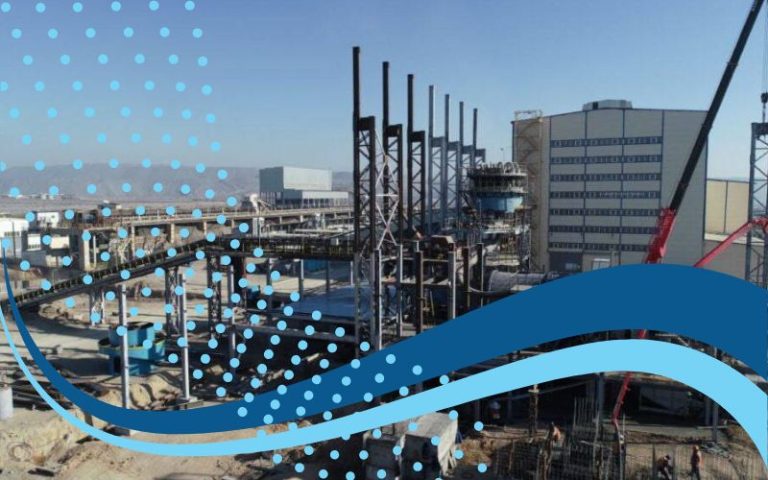
    To meet its target of extracting 10% of annual CRM demand by 2030, the EU must expand its mining and refiningcapabilities. The bloc requires at least ten new mines, 15 processing plants, and 15 recycling facilities by 2030, according to EIT RawMaterials. Public opposition, however, remains a significant obstacle. Sustainable mining expert Peter Tom Jones calls for public education to support modern, eco-friendly mining practices that prioritize environmental, social, and governance (ESG) standards. Nordic countries are seen as a model, with Jones stressing the importance of local CRM mining to reduce reliance on less sustainable sources abroad.

    Jones envisions a future where mining is safe, climate-neutral, and engages local communities as stakeholders. He describes a modern mine worker as one who operates high-tech machinery remotely, symbolizing the shift toward automated, climate-conscious mining that reduces traditional environmental impacts.

  • Europe’s Aerospace Industry Faces Titanium Dependency Challenge Amid Sanctions

    Europe’s Aerospace Industry Faces Titanium Dependency Challenge Amid Sanctions

    Fans of Apple’s titanium-cased iPhones need not worry about a material shortage. Although Russian President Vladimir Putin has suggested capping exports of titanium in response to Western sanctions, China remains Apple’smain supplier, ensuring that the company will not need to switch back to stainless steel. However, the European aerospace sector faces more significant challenges. VSMPO-AVISMA, the world’s largest titanium producer, supplies a considerable portion of the European market, and while Europe has restricted imports of many Russian metals, titaniumhas remained largely unaffected by these sanctions.

    In February, when Canada imposed sanctions on VSMPO-AVISMA, French President Emmanuel Macronpersonally intervened to secure waivers for Airbus and other aerospace companies, illustrating the deep reliance on Russian titanium. This dependency is difficult to break because titanium is a critical component in aircraft manufacturing due to its strength, light weight, and corrosion resistance.

    Europe’s problem is compounded by the fact that it lacks significant domestic capacity for producing aviation-grade titanium, which requires extremely high purity levels and specialized accreditation from aircraft manufacturers like Airbus and Boeing. As a result, Europe risks replacing its dependence on Russia with a reliance on U.S. titanium suppliers, especially since the U.S. receives nearly 70% of Europe’s titanium scrap.

    Breaking this transatlantic loop is crucial as the European Union’s Critical Raw Materials Act sets ambitious goals for domestic extraction and recycling by 2030. While Ukraine may offer a potential future supply of titanium, European recycling capabilities must be expanded to meet the short-term demand. Government-level negotiations between Europeand the U.S. are likely needed to reshape the titanium supply chain.

  • EU’s Corporate Sustainability Directive: Far-Reaching Effects on Global Supply Chains and Africa

    EU’s Corporate Sustainability Directive: Far-Reaching Effects on Global Supply Chains and Africa

    The European Union’s newly enacted Corporate Sustainability Due Diligence Directive (CSDDD) imposes stringent requirements on large corporations to address and mitigate human rights and environmental impacts throughout their supply chains. Effective from May 24, the directive targets businesses with more than 1,000 employees and a net turnover exceeding €450 million, including non-EU companies with substantial EU operations. This initiative, driven by France, focuses heavily on sectors like mining. However, it has faced criticism for excluding financial institutions and specific products, which some argue weakens its overall impact, especially from the perspective of African stakeholders who see continuous investments in fossil fuel projects on the continent.

    For instance, in South Africa, the controversy surrounding Shell’s offshore gas exploration underscores the environmental challenges that the directive aims to tackle. Despite these intentions, the development process of the CSDDD has been criticized for insufficient engagement with stakeholders from the Global South, raising concerns about the directive’s fairness and effectiveness in ensuring accountability and equitable governance within global supply chains. The directive’s broad scope emphasizes the need for comprehensive international frameworks to support sustainable business practices globally.

  • EU to Launch Critical Minerals Initiative for Green Transition

    EU to Launch Critical Minerals Initiative for Green Transition

    The European Commission is poised to issue calls for projects aimed at enhancing the EU’s supply of critical minerals within the coming days, according to a senior official. This initiative is part of a broader strategy to secure essential materials like lithium and copper, which are vital for the EU’s green and digital transformations. The EU Critical Raw Materials Act, which becomes effective on May 23, is at the heart of this effort, ensuring that the EU can independently produce electric vehicles and wind turbines, thereby reducing reliance on China.

    Maros Sefcovic, the Commission Vice-President, announced that the first meeting of the board overseeing the act, comprising EU member representatives, will be convened soon. “Shortly after this meeting, we aim to launch the first call for strategic projects,” Sefcovic stated during the EU Raw Materials Summit in Brussels.

    Projects focused on processing, recycling, or mining that are deemed strategic will benefit from an expedited permitting process, receiving approvals within 15-27 months, significantly faster than the usual timeframe. Sweden’s Eurobattery Minerals AB has already indicated its intention to apply for a strategic project designation for a mine in Finland.

    Additionally, the Commission is planning joint EU purchases of approximately 30 critical materials, leveraging its experience with joint gas purchases. Sefcovic emphasized the need for swift action, although he acknowledged the necessity of garnering support from EU member states, which had been a challenge with gas.

    The existing platform for gas procurement could serve as a model for these mineral purchases, despite the increased complexity of managing multiple materials. This system is expected to enhance the EU’s ability to forecast future demand more accurately. The Commission is also exploring the potential for stockpiling key minerals, drawing inspiration from Japan’s approach to rare earth reserves.

  • Germany’s Dependence on Rare Earths and Critical Metals Threatens Economic Stability

    Germany’s Dependence on Rare Earths and Critical Metals Threatens Economic Stability

    A recent study by IW Consult at the German Economic Institute and Fraunhofer Systems and Innovation Research (ISI) has highlighted Germany’s reliance on imports of rare earths, copper, and lithium and their significance to the economy.

    The study reveals that nearly one-third of the added value in Germany’s manufacturing sector is linked to goods containing copper, while lithium-containing goods contribute to one-tenth, and those containing rare earths make up over a fifth.

    Industries such as automotive and electronics heavily rely on these raw materials, with car manufacturers and suppliers being particularly vulnerable.

    China currently dominates the rare-earth market, with other potential sources like Greenland, Canada, and Sweden remaining underexplored. Despite efforts to diversify supply chains, over 80% of the market is controlled by the top three suppliers.

    A substantial portion of Germany’s imports of these critical materials comes from China, posing a significant risk due to potential trade restrictions and export controls imposed by the Chinese government.

    The study also underscores the importance of Russia and Chile as key suppliers of copper and lithium, respectively, highlighting the diverse range of countries involved in Germany’s supply chain.

    Matthias Wachter from the Federation of German Industries (BDI) warns that dependence on Chinese raw materials surpasses that of Russian gas, emphasizing the vulnerability of supply chains to geopolitical tensions and export regulations.

    Cornelius Bähr of the German Economic Institute (IW Köln) emphasizes the need for diversification, domestic production, and recycling to mitigate supply chain risks and ensure resilience.

    Fritzi Köhler-Geib, chief economist at KfW, stresses the importance of securing the entire supply chain to support Germany’s green and digital transformation, despite initial costs.

    In the face of looming threats to industrial production and climate ambitions, Wachter calls for urgent action to safeguard supply security and prevent potential economic setbacks.

    Bähr warns that failure to address these vulnerabilities could jeopardize Germany’s industrial prowess and hinder progress towards a sustainable future, highlighting the urgent need for strategic planning and investment.

  • Global Efforts to Reduce Dependence on China’s Rare Earth Elements Dominance

    Global Efforts to Reduce Dependence on China’s Rare Earth Elements Dominance

    The article underscores the global reliance on China for rare earth elements (REEs), essential components in various high-tech applications, particularly amid the burgeoning shift towards green energy technologies. China’s stranglehold on REE production and its monopoly over the entire supply chain have sparked apprehensions regarding supply chain vulnerabilities and geopolitical ramifications for other nations.

    China’s dominance in the REE market is fueled by factors such as its control over critical materials for electric vehicle (EV) batteries and its vertically integrated production chain. Nevertheless, concerns over the environmental repercussions of REE extraction and processing, coupled with geopolitical risks associated with overreliance on a single supplier, have prompted Western nations to explore alternatives and diminish their dependence on China.

    The article delves into initiatives by the United States, Europe, and other regions to diversify their sources of REEs. Tesla’s strategy to incorporate rare earths-free magnets in next-gen motors and collaborative efforts between US and European rare earth companies exemplify these endeavors. Furthermore, the US Department of Defense’s agreement with Australia’s Lynas Rare Earths to establish a heavy rare earths separation facility in Texas is perceived as a stride towards bolstering domestic industrial capabilities and reducing dependency on China.

    Japan’s strategic maneuver to lessen its rare earth dependency on China by increasing investments in Lynas underscores a broader trend of nations endeavoring to secure their rare earth supply chains.

    The article accentuates the imperative for China to embrace more sustainable and environmentally responsible practices in REE mining and processing. It advocates for transparency in supply chains and a commitment to social and environmental responsibility to sustain China’s dominance in the carbon market and REEs sector.

    In conclusion, Western concerns, driven by environmental and geopolitical apprehensions, are propelling nations to explore alternatives and diminish reliance on China for rare earth elements. Collaborative ventures, investments, and technological advancements are being pursued to diversify supply chains and ensure a more secure and sustainable future for the global REE market.

  • Teako Minerals announces strategic pivot with Norway as key focus

    Teako Minerals announces strategic pivot with Norway as key focus

    TEAKO MINERALS CORP. (the “Company” or “Teako“) announces that following a recent Norwegian parliament meeting and the various developments in mineral exploration in Fennoscandia in recent years, the Company has decided to pause exploration efforts in British Columbia, to primarily concentrate on Norway, while also maintaining a minor focus on Finland. The majority of the Company’s projects in British Columbia are in good standing for 2-3 years, allowing the Company the strategic flexibility to explore various alternatives, including the potential of partnering with other parties or selling the projects, as part of its ongoing commitment to maximizing shareholder value. Investors will be regularly informed of developments, ensuring transparency and continuous engagement with our valued stakeholders.

    The primary targeted metals in Norway will be copper, cobalt, and base metals, as well as gold and rare earth minerals (or “REE”), while in Finland, the focus will be on gold.

    The Rationale Behind the Pivot

    Access to critical and battery metals is crucial to establishing a robust value chain in Europe and carrying out the green shift. Today, most of the battery metals, such as nickel, cobalt, and lithium, are produced outside Europe, often in countries with low ESG standards. The EU has introduced a goal that 10% of all critical minerals consumed in the EU in 2030 will need to be produced in the EU by 2030. This means that the production of battery metals within the EU must be dramatically increased to attain this goal.

    Oil and gas have been the primary contributors to Norway’s recent sovereign wealth. However, in alignment with the green shift and rising commodity prices, the mineral exploration industry and Government are keen on reviving the mining and exploration sector, which became dormant in the 1970s due to low commodity prices and the discovery of oil and gas.

    The bedrock in Norway is promising for discoveries of new occurrences of battery and critical metals with its rich history of mining copper, nickel, and cobalt. Only a handful of exploration companies have carried out systematic exploration since the late 1980s; however, multiple major mines are about to open/reopen very shortly, namely the REE mines of Engebø and Fensfelt, as well as the copper mine in Finnmark by Nussir.

    Norway is currently also a world leader in renewable energy production, with an estimated 92% of the country’s energy supply being derived from hydroelectric plants and a further 6% from wind energy and other renewable sources.

    More recently, the Company was invited to attend and contribute to an event at the Norwegian Parliament held on January 16, 2024. The event focussed on sustainable exploration and extraction of critical metals, bringing together a diverse group of experts and industry leaders to discuss establishing Norway’s pivotal role in the European battery and critical minerals supply chain.

    The event surrounded a cross-political specialist seminar with representatives and advisors in the energy and environment committee, the finance committee, the industry committee, mining companies, politicians, and various organizations. The event was followed by a networking gathering where Teako and another Service Alliance partner, Kuniko Limited, and Norsk Bergindustri, met.

    The Company would like to express its profound gratitude to the Norwegian Parliament for the opportunity to contribute to the discussions on the development of Norway’s critical mineral infrastructure. We also sincerely thank Norsk Bergindustri and our Service Alliance partner, Kuniko Limited, for hosting the networking gathering.

  • Resilience Can’t be Imported: European Steel Makes the EU Stronger

    Resilience Can’t be Imported: European Steel Makes the EU Stronger

    Policymakers know that the stakes are high at this moment of transition in Europe. Will they realise how important it will be for that growth to ‘come from within’? Prioritising European-made steel will help ensure resilient EU clean tech value chains.

    Axel Eggert is the Director General of the European Steel Association (EUROFER).

    In a local shop the other day, I saw one of those decorative quote boards. It read, “Resilience comes from within”. While I most definitely was not in the market for such an object, the word ‘resilience’ caught my eye because recently we’ve been hearing that term a lot around Brussels. Resilient and secure EU clean tech value chains are key to cutting CO2 emissions and achieving carbon neutrality.

    But the conversation also must focus on what it will take to build a clean energy supply chain for the EU. Steel is, quite literally, the foundation of Europe. To ensure that the EU meets its ambitious Green Deal climate goals and remains prosperous and autonomous, the steel that builds the backbone of Europe’s growth must ‘come from within’ – and be made in Europe.

    As they consider impending policies, European policymakers need to know what’s at stake. Simply put, prioritising European-made steel will make the EU clean tech value chains more resilient.

    With more than 60 decarbonisation projects underway, and with its first breakthrough technologies to implemented at industrial scale already in 2025 and 2026, the European steel industry is paving the way for a truly net-zero emissions economy. If implemented successfully in Europe, these projects will deliver dual benefits: 1) they will create demand for clean hydrogen and electricity, and 2) they will supply the green steel that is needed to build windmills, electrical vehicles, modern buildings and  infrastructure.

    However, this successful transition cannot – and should not – be taken for granted. Production costs for EU steel companies are increasingly uncompetitive compared to those in third countries, where energy costs are 2-4 times lower than in the EU. Global overcapacities, often fuelled by state subsidies, result in unfair trade practices that undermine the economic sustainability required for the decarbonisation investments.

    In the last decade alone, Europe has lost 26 million tonnes of steel production capacity and a quarter of its workforce. Thus the EU has become a net importer of cheaper and highly carbon-intensive steel from China and other countries. In fact, imports into the EU have reached a historical record of 28% market share.

    This time things are different. As other strategic clean tech sectors, such as wind and electric vehicles, start experiencing the same vicious circle, there is a growing understanding that the EU must change course.

    We face two game-changing factors. First, the geopolitical and economic system we have relied on since the end of the Second World War is now under question. Second, Europe is losing its competitive edge to the US, China and other countries. Commenting recently on the EU’s eroding global competitiveness, former president of the European Central Bank and former Italian prime minister Mario Draghi said the EU should be very worried about competitiveness, and cited high energy costs as a key issue to be addressed.

    If the global race for clean technologies is now the new engine of Europe’s prosperity, we must lead it. We need to thrive, not just survive. The EU can no longer rely on systemic dependencies, whether they are with friends, frenemies or rivals.

    Today, open strategic autonomy lies at the heart of the clean tech value chain. What does this mean in practice? As European Commission President Ursula von der Leyen rightly stated in her 2023 State of the Union Address‘from wind to steel, from batteries to electric vehicles, our ambition is crystal clear: the future of our clean tech industry has to be made in Europe.’ Without a clean tech value chain in Europe – that is, without windmills, solar panels, electrolysers, batteries, and electric vehicles – we risk losing our prosperity and our autonomy.

    And each one of those technologies, and so many more, are forged with steel. Steel forms the backbone of the entire clean tech value chain, and the material has underpinned the EU’s economy since the Schuman Declaration in 1950. Today, nearly 75 years later, steel accounts for 2.5 million jobs (direct, indirect and induced) and generates €143 billion in Gross Value Added annually across sectors. Steel and other industries that are essential for clean tech value chains must be at the top of the EU agenda today and after the 2024 elections.

    So, how to put von der Leyen’s words into practice and ensure the transition to a sustainable European steel industry? EU policymakers should focus on five priority areas, as outlined in the Manifesto of the European Steel Industry:

    • Industrial policy: streamline a joint green industrial policy across all policy areas to spur investments and create lead markets for green products, under the coordination of a Commission Executive Vice-President.
    • Energy: urgently deliver internationally competitive energy prices for the industry, while accelerating the production of clean electricity and hydrogen as well as prioritising its use in sectors with the highest CO2 abatement potential.
    • Trade: establish an effective EU-US Global Arrangement on Sustainable Steel to tackle global emissions and address excess capacity, while enforcing a robust trade policy as well as implementing an effective Carbon Border Adjustment Mechanism (CBAM).
    • Raw materials: ensure access to both primary and secondary raw materials including steel scrap, which are essential for the green transition, while saving natural resources and emissions.
    • Skills: attract young talent to support the sector’s transition, and upskill and reskill the workforce to ensure a just transition.

    Resilience is key, and it comes from within our borders. Europe’s future can only be stronger with European steel.

  • Belgium leads the way in rare earth metals recycling

    Belgium leads the way in rare earth metals recycling

    Belgium is a European leader in recycling, one of the few nations to meet recycling targets set out by the EU. Other than household and commercial waste, Belgian recycling plants are now helping to reduce Europe’s dependence on foreign minerals.

    Rare earth metals, commonly used in the production of high-tech goods, are desperately needed for the European economy. China has a monopoly on the supply of these metals, producing up to 97% of the world’s supply.

    In July, China placed export restrictions on gallium and germanium metals, which are indispensable for the production of advanced chips.

    China accounts for about 80% of the global production of gallium, which is used in integrated circuits, LEDs and solar panels, among others. The country also dominates the production of germanium, which is used in the production of fibre-optic cables and infrared applications.

    The European Commission is concerned that restrictions on exports of certain rare earth metals will impact EU supply chains, especially within the context of growing demand for these metals for the green transition. It wants to reduce dependence on third countries such as China to 65% for imports of 18 critical resources.


    Rare metals from scrap

    Belgian companies want to play a role in the transition away from reliance on rare earth metals imports. Even if Europe is not well-suited for the extraction of these precious metals, it can play a role in reducing imports, notably through recycling.

    One factory in Liège is one of the very few places in Europe to process metallurgy-related waste and recover the valuable rare earth metals. Hydrometal has been extracting gallium and germanium from waste for nearly 20 years. However, this is no simple process.

    “It’s very precise, difficult to make profitable, very competitive, and you can’t find a lot of raw materials on the market. It really requires specific knowledge and specific chemistry. Our factory is the only one in Wallonia. Today, there are two actors in Belgium who can do it, and only two actors in Europe too,” Phillipe Henry, administrator of Hydrometal, told RTL Info.

    Recent Chinese export restrictions have caused prices on the market to skyrocket. The current market price for gallium is $614 per kg, and $2,716 per kg for germanium. Faced with these rising prices, recycling has become a more profitable endeavour.

    “We are contacted almost every day to be able to respond to these challenges. They will not be easy, because we have to remain competitive, answer also have to see if it can be maintained in the long-term,” Henry noted.

    For now, Belgian companies are focused on the extraction of rare earth minerals from waste in the metallurgy industry. Granted, much of our tech and smartphones contain highly sought after rare earth metals, but these amounts are still too small to be profitable for major recycling companies.

    The amounts contained in phones amount to just a few grams per tonne, and it is not currently viable to extract gallium, germanium, or indium from them, at least in Belgium.

    While recycling plays an important role in reducing dependence on Chinese exports, Europe may soon switch to encouraging their extraction from European soil. Currently, no rare earth metals are mined in Europe.

    But new studies have revealed massive deposits of valuable rare earth metals, which could feasibly be extracted. In Sweden, mineral group LKAB discovered an untapped reserve of more than 10 million tonnes of oxides, the largest known deposit of its kind in Europe.

    The EU will reflect on the possibility of the opening of new rare earth metal mines in Europe, but will likely still face resistance from locals due to environmental concerns. The largest potential extraction site for Europe is at Kvanefjeld in Greenland, but extraction has been prevented by indigenous groups and local residents.

    The need to find new solutions is growing. Last year, European Commission President Ursula von der Leyen predicted that “Lithium and rare earth metals will soon be more important than oil and gas.”