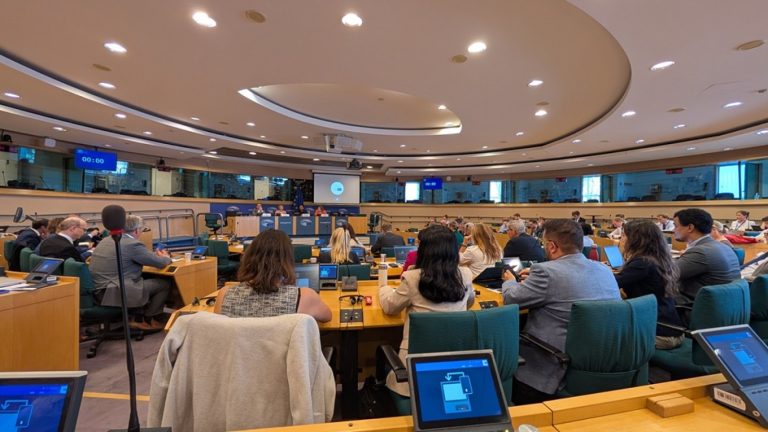
New Chinese restrictions on rare earth metal exports could severely impact Europe’s automotive industry, warned Roberto Vavassori, chairman of Italy’s auto parts association ANFIA, during the ForumAutoMotive conference in Milan on Tuesday.
Despite a July agreement intended to streamline shipments to Europe, China has continued to maintain tight control over rare earth exports, recently expanding its export curbs even further. The country currently refines and processes the majority of the world’s rare earths, materials essential to key sectors including automotive manufacturing, semiconductors, and defence.
Vavassori noted that while European manufacturers had so far managed to sustain production despite previous supply cuts, reserves of rare earth metals are now nearly exhausted.
“That reserves’ buffer is not there anymore,” he said, warning that further disruptions could quickly ripple through Europe’s automotive supply chain.
Rare earth elements are critical for producing electric motors and other advanced vehicle components, making them indispensable to Europe’s electric vehicle ambitions.
Although the global rare earth industry is relatively small — valued at less than $5 billion — Vavassori emphasized that its strategic importance far outweighs its market size.
“This small industry is capable of slowing down the entire global auto sector,” he cautioned.