Tag: rare earth metals

  • Bulgaria and University of North Dakota to Research Rare Earth Metals

    Bulgaria and University of North Dakota to Research Rare Earth Metals

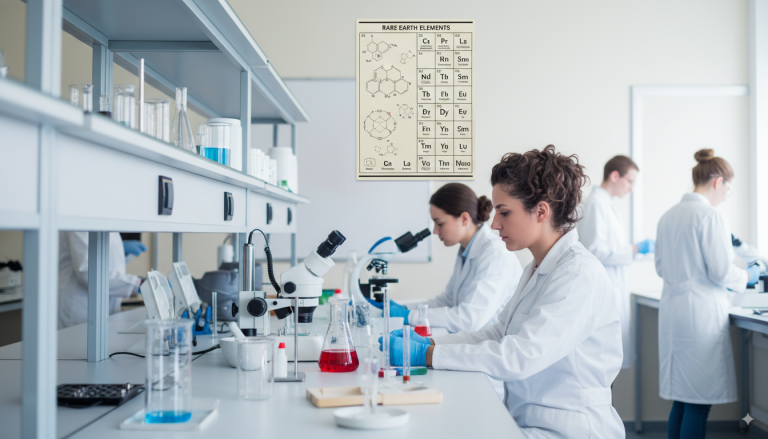
    The Bulgarian Energy Holding has signed a Memorandum of Understanding (MoU) with the University of North Dakota, USA, to conduct joint research on rare earth metals in Bulgaria. The agreement was formalized during Prime Minister Rosen Zhelyazkov’s visit to the United States for the 80th session of the UN General Assembly.

    “Today’s signing is extremely important for the development not only of the Bulgarian mining industry, but also for the technological progress of Bulgaria and the USA,” said Zhelyazkov. He emphasized that by leveraging the scientific potential of the University of North Dakota, Bulgaria can unlock new opportunities offered by its natural resources.

    The government press service noted that the collaboration marks a significant step in strengthening ties between the two countries in science, mining, and technology.

  • Kazakhstan to Open Internationally Accredited Rare-Earth Laboratory

    Kazakhstan to Open Internationally Accredited Rare-Earth Laboratory

    Kazakhstan is set to establish an internationally accredited geo-analytical laboratory in Astana to support its growing role in global supply chains for rare-earth metals (REEs).

    Minister of Industry and Construction Yersayin Nagaspayev confirmed that agreements have been reached with global laboratory brands RCI Inspection and PARAGON to certify the new geo-analytical center, which is scheduled to open by mid-2026 under the National Geological Service. The laboratory will house core storage and archival repositories, providing transparent and reliable data to researchers and potential investors.

    The initiative follows President Tokayev’s 8 September address to Parliament, in which he stressed the strategic significance of rare-earth elements for Kazakhstan’s long-term economic future. He directed the government to launch at least three high-tech production facilities for rare-earth metals within the next three years, underscoring their growing importance in global technology and trade.

    The government’s plan outlines four strategic priorities for domestic processing: producing battery materials, recycling, manufacturing heat-resistant alloys for jet turbines, and producing semiconductor materials. To achieve these goals, Kazakhstan is actively forging partnerships with the European Union, the United States, Japan, South Korea, and China.

    Planned projects include a gallium plant, the production of high-purity manganese sulfate and graphite for batteries, and the manufacturing of nickel-based superalloys. Additionally, pilot programs for recycling permanent magnets are set to begin next year, in collaboration with European partners, marking a concrete step towards a more sustainable and value-added rare-earth industry.

  • Kazakhstan Targets Economic Growth with Rare-Earth Expansion and SEZ Reforms

    Kazakhstan Targets Economic Growth with Rare-Earth Expansion and SEZ Reforms

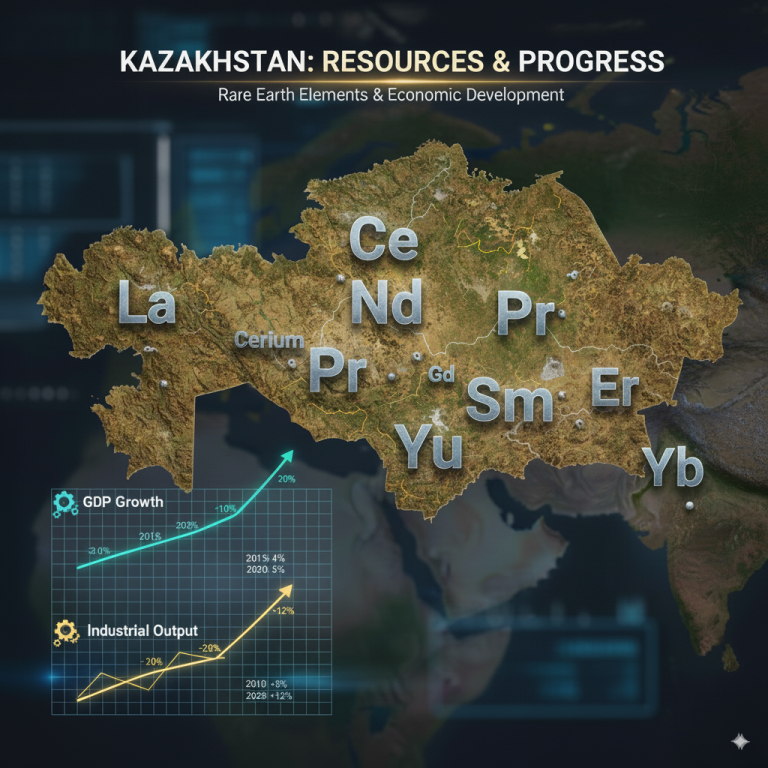
    Kazakhstan is launching a comprehensive strategy to boost economic growth by strengthening special economic zones (SEZs) and expanding rare-earth metal production, as announced by Industry and Construction Minister Yersayin Nagaspayev during a government meeting chaired by Prime Minister Olzhas Bektenov

    To improve SEZ efficiency, the government will conduct a comprehensive review of their performance and strengthen monitoring mechanisms to ensure investors fulfill their obligations. The country also plans to introduce a framework for foreign companies to manage certain SEZs, while local authorities will intensify efforts to attract new investors.

    In addition to SEZs, the government has identified rare-earth metal production as a key area for development. Kazakhstan plans to implement at least three major projects in this field, focusing on the production of battery materials, recycling and manufacturing heat-resistant alloys for jet engines, developing semiconductor components, and reprocessing permanent magnets.

    The country has already established strategic partnerships with leading players from the European Union, the United States, Japan, South Korea, and China. Upcoming projects include the launch of gallium production with an annual capacity of 15 tons, the manufacturing of high-purity manganese sulfate, and the production of graphite for battery components.

    Kazakhstan is also taking significant steps to modernize its geological exploration and mapping. A next-generation geological map will be developed using advanced digital tools, with project preparations already underway and fieldwork scheduled to begin in 2026. The government has allocated funding for new surveying methods, including aerogeophysics, geochemistry, spectral imaging, and high-resolution satellite data analysis.

    Furthermore, the country is introducing a unified digital platform to consolidate all processes related to construction and housing management. The platform will be introduced by the end of 2025 and is expected to enhance efficiency and transparency in the sector.

    The reforms are part of Kazakhstan’s efforts to diversify its economy and reduce its dependence on oil exports. The country aims to become a major player in the global rare-earth market and to attract foreign investment in its SEZs.

  • Kazakhstan Unveils 38 Major New Mineral Deposits

    Kazakhstan Unveils 38 Major New Mineral Deposits

    Kazakhstan has announced the discovery of 38 new deposits of copper, nickel, coal, gold, and rare earth metals in the first quarter of 2025, according to an official government statement.

    The discoveries were made following extensive geological studies, including aerial photograph analysis, route surveys, drilling, geochemical testing, radiation and water sampling, and desk research.

    The newly identified deposits are estimated to contain:

    • 2.6 million tonnes of rare earth metals
    • 1.1 billion tonnes of brown coal
    • 3.7 million tonnes of copper and nickel
    • 19 tonnes of gold

    The total area of geological and geophysical exploration in Kazakhstan is expected to expand to 2.2 million square kilometres by 2026, up from just 2,000 square kilometres in 2024. This initiative follows a directive from President Kassym-Jomart Tokayev, who has instructed the cabinet to prioritise mineral exploration.

    To support this effort, the government has allocated $44.4 million for geological exploration between 2024 and 2026, with $14.8 million designated for 2025.

    Between 2018 and 2024, mining companies invested approximately $827.3 million in Kazakhstan’s mineral sector. In 2025 alone, exploration investments are expected to reach $206.8 million. A streamlined licensing process—requiring only reporting rather than predefined work volumes—has made the market more accessible to investors.

    Earlier this month, Eurasian Resources Group announced the discovery of a new copper deposit with projected reserves of 250,000 tonnes.

  • US-Ukraine Mineral Extraction Deal Faces Serious Setbacks

    US-Ukraine Mineral Extraction Deal Faces Serious Setbacks

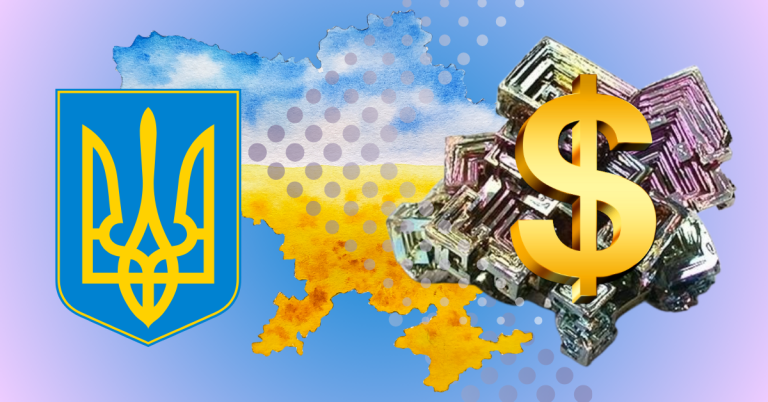
    The much-publicized US-Ukraine mineral extraction agreement, once hailed as a breakthrough in strategic partnership, is now facing significant hurdles due to outdated geological data, geopolitical risks from the ongoing war, and weaker-than-expected rare earth reserves, according to industry experts cited by the Washington Post on May 3.

    US President Donald Trump has been urging Ukraine to initiate negotiations with Russia amid the ongoing conflict. He also advocated for an initial version of the mineral deal that would have granted the US exclusive control over profits, imposed a 4% interest rate, and retroactively converted past US aid into debt. While Ukraine signed what is reportedly a more balanced version, the final documents remain unpublished and still require parliamentary approval.

    The agreement includes US rights to extract Ukraine’s mineral, oil, and gas resources as part of a broader strategy to repay future US military aid to Kyiv and support the country’s reconstruction. However, analysts suggest that shipments of crucial materials such as titanium, lithium, and graphite are unlikely to begin for at least another decade.

    “This absolutely is not a solution to these immediate problems,” stated Reed Blakemore of the Atlantic Council Global Energy Center, highlighting the US’s continued dependence on China for metals crucial to weapons, electronics, and battery production.

    Ukraine’s mining sector has seen minimal investment over the past few decades, with most geological data still based on Soviet-era surveys. CDM Engineering Ukraine teams have only recently begun conducting groundwater testing at sites like the Polokhivske lithium deposit in Kirovohrad Oblast.

    Despite Trump-era claims estimating Ukraine’s rare earth value at $500 billion, experts have called these figures largely unfounded. Moreover, the country lacks confirmed reserves of the 17 rare earth metals vital to defense and electronics. Key oil and gas fields remain in conflict zones, while significant infrastructure damage continues to pose logistical challenges and deter investors.

    Former Biden administration official Zumwalt-Forbes and SAFE minerals expert Abigail Hunter both emphasized that even Ukraine’s confirmed lithium reserves are modest and predominantly located in Russian-occupied territories. Hunter added that infrastructure damage further undermines potential investor returns.

    Despite these substantial setbacks, some analysts maintain that the deal holds political value. “It signals that the US is engaged in Ukraine’s economy as a strategic partner,” said Jay Truesdale of TD International, acknowledging the possibility of long-term investment benefits.

  • Kazakhstan to Auction 50 Gold and Rare Metal Deposits in June 2025

    Kazakhstan to Auction 50 Gold and Rare Metal Deposits in June 2025

    Kazakhstan’s Ministry of Industry and Construction has announced that 50 deposits containing gold and rare metals will be made available for exploration and production rights via an electronic auction set for June 2025.

    Almas Kushumov, Director of the Ministry’s Department of Subsoil Use, revealed the plans during the MINEX Kazakhstan forum. According to Kushumov, the auction will include deposits with confirmed balance reserves of gold, coal, rare metals, and polymetals.

    The auction will take place through the Unified Subsoil Use Platform (minerals.e-qazyna.kz), and all procedures — including document submission — will be handled online. Licenses granted through this process will cover both exploration and production, with the latter valid for 25 years.

    Companies from the United States, European Union, and China have already expressed interest and submitted applications. The Ministry expects to publish the full list of 50 available deposits in the coming days.

    Between 2023 and 2024, Kazakhstan successfully awarded 117 deposits through similar electronic auctions, raising more than KZT29 billion (approximately $55.9 million) in signing bonuses.

    Kazakhstan currently has over 9,000 registered deposits, including 987 solid mineral sites. Due to outdated geological data—some of it over 30 years old—the government is putting strong emphasis on both exploration and production.

    The 2018 introduction of the Code on Subsoil and Subsoil Use has notably improved the investment environment, reportedly tripling private capital inflow into the sector.

    The state mining firm Tau-Ken Samruk is also pushing forward with exploration at the Kuirektykol rare earth site, where recent studies suggest the potential for significant new reserves that could elevate Kazakhstan’s standing as a global rare earth leader.

  • Kazakhstan Leads Central Asia in Industrial Output

    Kazakhstan Leads Central Asia in Industrial Output

    In 2024, Kazakhstan emerged as the industrial leader of Central Asia, with total industrial output reaching $106.8 billion, according to the Ministry of Industry. This figure surpasses Uzbekistan’s output by 1.5 times, Kyrgyzstan’s by 16 times, and Turkmenistan’s by nearly 22 times.

    Kazakhstan ranked second in the region for processing volume at $52.2 billion, trailing only Uzbekistan. The country also placed second in the CIS, following Russia, which recorded $1.3 trillion in industrial output, including $896.5 billion from manufacturing. Other notable CIS figures include:

    • Uzbekistan: $68.3B (processing: $58B)

    • Belarus: $62.4B (processing: $56B)

    • Azerbaijan: $37.7B (processing: $11.2B)

    • Armenia: $7.6B (processing: $5.5B)

    • Moldova: $7.6B (processing: $4.6B)

    • Kyrgyzstan: $6.7B (processing: $5.2B)

    • Tajikistan: $4.9B

    • Turkmenistan: $0.5B (processing only)

    In 2024, Kazakhstan launched 180 industrial projects worth 1.3 trillion tenge, generating 14,400 permanent jobs. Key highlights include:

    • KamLitKZ Foundry (Kostanay): 45K tons of cast iron parts annually, 500 jobs

    • Boguty Tungsten Mining (Almaty): 3.3M tons of ore/year, 10K tons of concentrate, 350 jobs

    • Kyzyl Aray Copper: 30K tons of cathode copper/year, 780 jobs

    • Ulytau Gold: Producing 1.78 tons of gold and 1.98 tons of silver/year, 300 jobs

    • KZTA Valve Factory: 45K units/year, 200 jobs

    • TechnoNICOL Insulation Plant (Almaty): 1.4M m³ of stone wool/year, 220 jobs

    In 2025, 190 projects valued at 1.5 trillion tenge are expected to create 20,000 new jobs. Notable plans include:

    • Astana Motors Auto Plant (Almaty): $182B tenge, 2.2K jobs, capacity: 90K vehicles/year

    • KIA Plant (Kostanay): $90B tenge, 1.5K jobs, 70K vehicles/year

    • Liman Field Development (Aktobe): $241.4B tenge, 460 jobs, 1.2M tons of ore/year

    • Ekibastuz FerroAlloys Plant (Pavlodar): $92.4B tenge, 800 jobs, 240K tons of ferrosilicon/year

    • PZTM Rail Welding Plant (Aktobe): $21.4B tenge, 297 jobs, 825 km of rails and 290K sleepers/year

    • TEMPO Kazakhstan Steel Pipe Plant (Karaganda): $15B tenge, 400 jobs, 250K tons/year

    • QazAlPack Aluminum Packaging Modernization (Shymkent): $21.7B tenge, 112 jobs, 1.15B cans/year

    • Silumin of Qazaqstan Radiator Plant (Karaganda): $18.6B tenge, 183 jobs, 3.7M units/year

    President Kassym-Jomart Tokayev continues to emphasize the strategic importance of manufacturing, which experts say reflects a structural transformation of the economy, rising value-added production, and increased investment appeal.

    Meanwhile, S&P Global Ratings reaffirmed Kazakhstan’s sovereign credit rating at ‘BBB-/A-3’ with a stable outlook, citing strong fiscal and external buffers as key factors supporting resilience to external shocks.

  • US Investor James Cameron Offers $5B to Acquire Eurasian Resources Group Amid Kazakhstan’s Rare Earth Push

    US Investor James Cameron Offers $5B to Acquire Eurasian Resources Group Amid Kazakhstan’s Rare Earth Push

    US businessman James Cameron has made a $5 billion offer to acquire Eurasian Resources Group (ERG), according to a letter sent to the company’s board, as the Kazakh mining giant prepares to play a central role in Kazakhstan’s rare earths expansion.

    ERG, headquartered in Luxembourg and 40% owned by the Kazakh government, is a key global producer of copper, cobalt, aluminum, and iron ore. Last year, the company launched a task force to explore Kazakhstan’s reserves of rare earth and rare metals—a strategic move gaining momentum amid geopolitical tensions and a global race to secure critical minerals.

    Talks between ERG and Cameron—not related to the film director of the same name—have reportedly been ongoing since late 2024, according to sources familiar with the matter. Cameron previously served as chairman of FTSE 250 mining firm Petropavlovsk.

    While ERG, the Kazakh government, and Cameron have not publicly commented, the letter seen by Reuters states that Goldman Sachs is in early discussions to advise on the potential acquisition. Financing would be secured through a mix of Cameron’s own capital and equity from investors in the US, Australia, and the Middle East.

    The move comes at a critical time, as Kazakhstan announced a rare earth discovery exceeding 20 million metric tons—a find that could position the country among the top three rare earth holders globally, behind China and Brazil. Prime Minister Olzhas Bektenov has confirmed that previously classified Soviet-era geological data is being declassified to support exploration and investment.

    ERG is poised to play a pivotal role in the country’s plan to increase rare earth production by 40% by 2028. The group once produced one-fifth of the world’s gallium, a strategic metal in semiconductor production, until Chinese output caused a price collapse in 2012. China has since banned gallium exports to the US, further driving American interest in alternative sources.

    The deal could mark a new chapter for ERG, following the death of board chairman and co-founder Alexander Mashkevich last month. With only Patokh Chodiev remaining from the original founding trio, Cameron’s bid could reshape the company’s leadership and strategic direction.

  • Kazakhstan Targets Nearly ₸12 Billion Investment in Rare Earth Metal Development

    Kazakhstan Targets Nearly ₸12 Billion Investment in Rare Earth Metal Development

    Kazakhstan is set to attract nearly ₸11.79 billion (approx. $26 million) in investments for the exploration and development of rare earth metal deposits over the next four years, according to the Ministry of Industry and Construction.

    Currently, Kazakhstan does not produce rare earth raw materials. However, it already extracts several critical metals recognized by the EU, UK, and US, including beryllium, tantalum, niobium, fluorspar, titanium, rhenium, vanadium, antimony, bismuth, scandium, phosphorus, coking coal, bauxite, barite, copper, magnesium, tellurium, and manganese.

    The government has identified cobalt, tungsten, lithium, and other metals used in batteries and magnet production as key priorities. The national mineral reserve includes 56 cobalt deposits, 21 tungsten deposits, and 7 lithium fields. Exploration and production initiatives for lithium are already underway, including partnerships with German investors, potentially totaling $500 million if reserves are confirmed.

    As part of its 2024–2028 strategic plan, Kazakhstan aims to:

    • Expand its resource base,

    • Implement advanced extraction technologies,

    • Modernize production,

    • Develop new standards for critical minerals.

    The state budget and alternative funding sources will support this effort. In addition, Kazakhstan seeks to become a key player in the battery material supply chain. In 2024, it began manganese sulfate processing, capturing 5% of the global market.

    Several mid-term projects are also in development, including:

    • Cobalt, lithium, tin, and tungsten processing facilities,

    • A UK-Kazakh project in Zhezkazgan processing imported heat-resistant nickel alloys to extract rhenium,

    • A Chinese investment in tungsten trioxide production.

    The Ministry of Industry believes these initiatives will significantly strengthen Kazakhstan’s position in rare and critical metal production within three years. Kazakhstan is already a leading global producer of titanium, beryllium, and tantalum, and aims to attract new partners through technology transfer agreements.

    These moves align with Kazakhstan’s broader strategic partnership with the United States, particularly in energy and critical minerals. President Kassym-Jomart Tokayev has emphasized the importance of developing what he called the country’s “new oil” — critical minerals vital for the global energy transition.

  • Kazakhstan Proposes Rare Earth Research Center in Astana Amid EU Cooperation Push

    Kazakhstan Proposes Rare Earth Research Center in Astana Amid EU Cooperation Push

    President Kassym-Jomart Tokayev has proposed the creation of a Regional Research Center for Rare Earth Metals in Astana, aiming to deepen strategic cooperation between Central Asia and the European Union. The announcement came during the “Central Asia – European Union” summit held in Samarkand. According to the president, rare earth elements represent a key area of partnership as Kazakhstan currently produces 19 out of 34 raw materials deemed critical for the EU economy, including uranium, titanium, copper, lithium, cobalt, and tungsten.

    Kazakhstan, in collaboration with the European Bank for Reconstruction and Development (EBRD), is already advancing exploration projects and integrating modern, sustainable practices in the mining sector. The proposed research center would provide companies and investors with up-to-date information on available deposits, technologies, and development prospects.

    During the summit, Tokayev also declared Kazakhstan’s readiness to boost exports to the European Union by $2 billion. This follows recent news of the discovery of a rare earth deposit in the Karaganda region, estimated to contain around one million tons of resources.