Tag: mining

  • Kazakhstan Launches Northern Katpar Tungsten Project to Boost Local Economy

    Kazakhstan Launches Northern Katpar Tungsten Project to Boost Local Economy

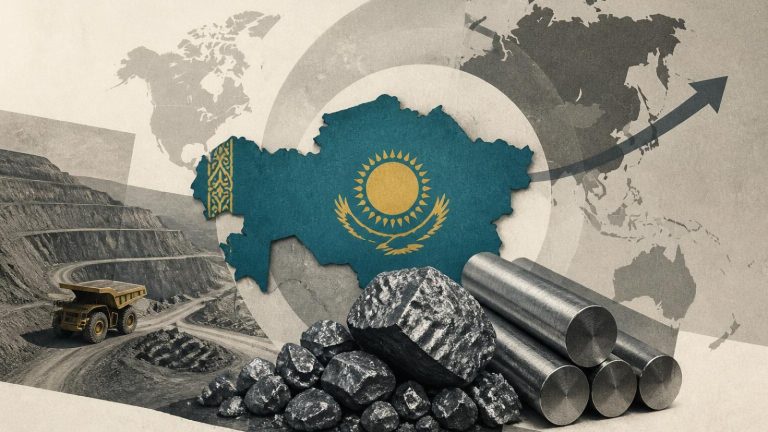
    Kazakhstan has officially commenced the practical implementation of the Northern Katpar tungsten project, located in the Karaganda Region, as announced by the regional akimat. This significant initiative is part of a broader strategy to develop one of the world’s largest tungsten deposits, alongside the Verkhne-Kairakty deposit. Preparatory work has been ongoing for the past two months, focusing on the establishment of production sites, access roads, and essential field infrastructure, complemented by geodetic surveys. A comprehensive feasibility study is currently in progress and is anticipated to be completed by the end of 2027.

    Deputy Akim of Karaganda Region, Shyngys Suyunbayev, highlighted the project’s importance, stating that it will not only attract foreign investment but also provide a substantial economic boost to the Shet District. The project is projected to create approximately 1,200 new jobs upon commissioning. Dominic Heaton, CEO of Cove Kaz Capital Group, emphasized that the investor’s vision extends beyond mere deposit development; it aims to establish a modern, internationally competitive tungsten mining and processing industry within Kazakhstan.

    The Northern Katpar project is set to foster domestic value addition through processing, alongside skills development and enhanced participation of Kazakh companies in the supply chain. Daniyar Idrisov, Chief Investment and Strategy Officer at Tau-Ken Samruk, noted that the partners are committed to creating a full production cycle, encompassing everything from ore extraction to metallurgical processing and the production of high-value tungsten products.

    Total investment in the development of both deposits and the necessary mining and processing infrastructure is estimated at around $1.1 billion. The project is expected to yield approximately 12,000 tons of tungsten products annually, which would account for about 15% of current global tungsten production, according to the regional akimat. The initiative not only focuses on ore extraction and beneficiation but also aims for deep processing within Kazakhstan, thereby establishing a new production chain in the critical minerals sector.

    According to the current timeline, major construction activities are projected to commence in 2028, with commissioning works slated for 2029. This ambitious project is poised to significantly enhance Kazakhstan’s position in the global tungsten market while providing economic opportunities for the local population.

  • Tajikistan and the US Strengthen Bilateral Cooperation in Energy and Mining Sectors

    Tajikistan and the US Strengthen Bilateral Cooperation in Energy and Mining Sectors

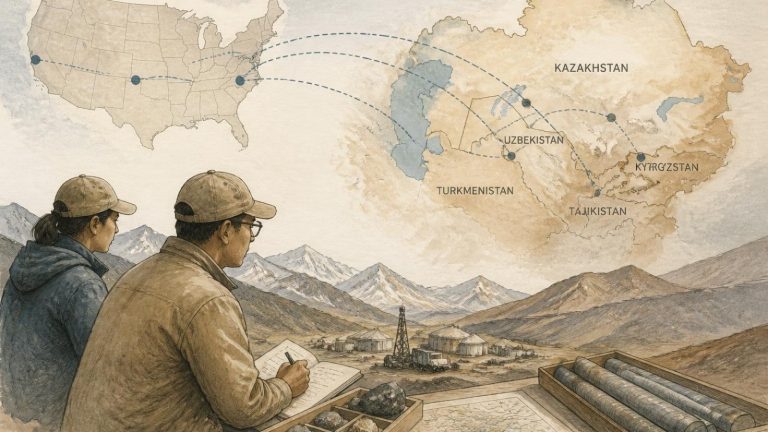
    In a significant diplomatic engagement, Tajikistan’s President Emomali Rahmon met with US Special Envoy for Central and South Asian Affairs, Sergio Gor, and US Senator Steve Daines in Bishkek to discuss the current state of bilateral cooperation. The meeting underscored the importance of the C5+1 mechanism, which facilitates regional dialogue and cooperation among Central Asian nations and the United States.

    During the discussions, President Rahmon highlighted Tajikistan’s commitment to enhancing trade and economic ties with the US, particularly in the energy, industrial, and mining sectors. The focus on these sectors reflects Tajikistan’s strategic intent to attract foreign investment, which is crucial for the country’s economic development and infrastructure improvement.

    The talks also addressed broader issues of security and stability in the region, with both sides recognising the need for political and diplomatic solutions to ongoing conflicts. This aspect of the dialogue illustrates the multifaceted nature of US-Tajik relations, which extend beyond economic interests to encompass regional security concerns.

    Additionally, the meeting provided a platform for both parties to exchange views on various mutual interests, reinforcing the collaborative spirit that characterises their bilateral relationship. As Tajikistan seeks to bolster its economic framework, the engagement with US officials signals a proactive approach to international partnerships, especially in sectors critical to its national development agenda.

  • UK Government Integrates Trelavour Lithium Project into National Infrastructure Programme

    UK Government Integrates Trelavour Lithium Project into National Infrastructure Programme

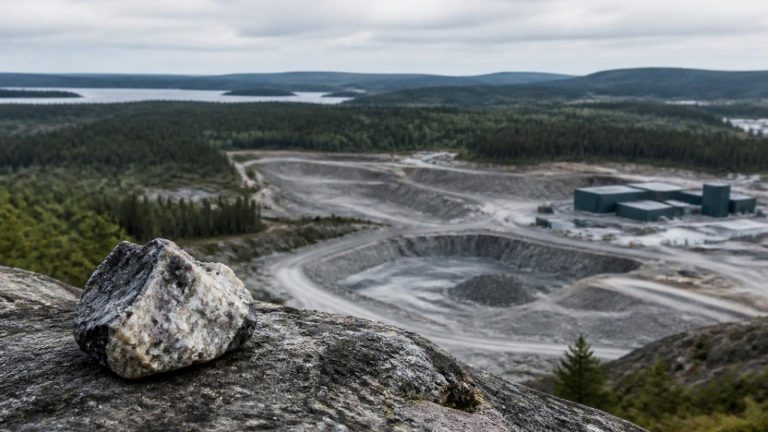
    In a significant move for the UK mining sector, the Government has included the Trelavour Lithium Project in its Lead Environmental Regulator pilot programme. This initiative places the project alongside other major infrastructure undertakings such as Sizewell C, East West Rail, and the Lower Thames Crossing, marking a pivotal moment for the Cornish Lithium initiative. Previously, the notion of a lithium project in Cornwall being recognised alongside nuclear energy and national grid developments would have seemed implausible. However, the Trelavour project is now the only critical minerals project featured in this prestigious list, highlighting its importance to the UK’s energy future.

    The inclusion in the pilot programme provides a streamlined regulatory process, as the Environment Agency will serve as the single point of contact for environmental regulation. This coordination aims to facilitate quicker decision-making and enhance communication between various regulatory bodies. The government’s commitment to improving the efficiency of the regulatory framework is crucial, as it allows projects like Trelavour to progress without unnecessary delays. The expectation is that while standards remain unchanged, the time taken to reach decisions will be significantly reduced.

    This shift in perspective reflects a broader recognition of domestic lithium as a vital component of national infrastructure. As the UK seeks to bolster its battery and clean energy supply chains, the Trelavour Lithium Project is increasingly seen as essential rather than merely a niche mining operation. The government’s approach underscores the importance of better coordination in delivering national ambitions and ensuring that critical minerals projects are realised.

    The Trelavour project represents a key step in the UK’s reindustrialisation efforts, demonstrating how strategic planning and regulatory support can facilitate the development of critical mineral resources. The focus on lithium is not just about mining; it is about laying the groundwork for a sustainable energy future, where domestic resources are harnessed to support the transition to clean energy technologies. As the UK continues to navigate its energy landscape, the successful implementation of projects like Trelavour will be instrumental in achieving its long-term sustainability goals.

  • Kazatomprom Signals End of ‘Cheap’ Uranium Era Amid Rising Demand

    Kazatomprom Signals End of ‘Cheap’ Uranium Era Amid Rising Demand

    Kazatomprom’s CEO, Meirzhan Yusupov, announced during a financial results conference that the era of ‘cheap’ uranium is coming to an end, as global demand for nuclear energy accelerates. This shift is backed by a commitment from 38 countries, accounting for over 70% of the world’s GDP, to triple nuclear energy capacity by 2050. Yusupov noted that the demand surge is occurring within a disciplined commercial environment, with long-term uranium price indicators remaining stable and reaching an 18-year high. This creates a solid foundation for future long-term contracts, as market dynamics shift towards producers with confirmed large uranium reserves.

    Kazatomprom’s consolidated revenue for the first half of the year rose by 9% year-on-year to nearly 718 billion tenge (approximately $1.57 billion), reflecting financial discipline and a favourable uranium market. However, the industry faces rising production costs, and Yusupov acknowledged that the days of ‘cheap’ uranium are over. The fundamental need for reliable, low-carbon energy remains strong, and global energy companies are aware of this shift, ensuring robust long-term demand for uranium.

    In addition to its financial results, Kazatomprom announced agreements with China’s State Nuclear Uranium Resource Development Company Limited (SNURDC) for spot contracts for natural uranium concentrates, and with Uranium One Group JSC for the sale of uranium concentrates to the Siberian Chemical Combine in Russia. The details of these contracts are confidential but align with current market conditions.

    Recent amendments to Kazakhstan’s Subsoil Code, effective from September, will impact uranium mining licenses, requiring a minimum participation share for Kazatomprom in any organization receiving such licenses. Another amendment shifts the legal framework for uranium exploration from a licensing regime to a contractual one, allowing for a maximum combined term of 11 years for exploration agreements.

    Kazatomprom also reported a new processing plant with a capacity of 500 tonnes per year at the Zhalpak deposit, with plans to expand to 900 tonnes by 2027. However, the construction of a significant sulphuric acid plant is facing delays due to the discovery of potential paleontological finds at the site. Construction has been paused pending regulatory approval for excavation and analysis of the finds.

    The sulphuric acid plant is crucial for Kazatomprom’s uranium extraction operations, and uncertainties regarding its supply have impacted production plans. The total investment in the sulphuric acid plant project is estimated at approximately 113 billion tenge ($2.6 million). The expected commissioning date for the plant has been pushed back to between Q3 2027 and Q1 2028, a delay of 6-12 months, although Kazatomprom anticipates that this will not significantly affect its uranium production operations.


  • Revival of the Lomonosov Iron Ore Deposit in Kazakhstan: New Mining Plans Unveiled

    Revival of the Lomonosov Iron Ore Deposit in Kazakhstan: New Mining Plans Unveiled

    The Lomonosov iron ore deposit in Kazakhstan’s Kostanay region, initially discovered in 1949, is set to undergo a significant revival after years of inactivity. According to financial reports from Lomonosov LLP for the year 2025, the company has announced plans to commence industrial mining operations. A supplementary agreement to the subsoil use contract is soon to be finalised, which will include a working programme extending until the end of 2046, the construction of a processing plant, and commitments to supply concentrate to Kazakh enterprises.

    This project, which received approval from the Ministry of Industry and Infrastructure Development’s working group in May 2026, is centred around a processing facility with a capacity of 16 million tonnes of ore per year. Preparatory work for the site is expected to take place by the end of 2026, with stripping operations scheduled between 2026 and 2028. The extraction phase is slated to begin in 2029, according to the development schedule.

    As of the end of 2015, the state commission approved the deposit’s reserves at 177 million tonnes. However, a 2014 report by Mining Associates estimated that the measured and inferred resources are significantly higher, at 507.8 million tonnes. The mining plan outlines that a total of 275.3 million tonnes of ore will be extracted over the project’s lifespan, yielding 73.5 million tonnes of concentrate with a 67% iron content. The project’s capacity is expected to increase gradually, peaking at 22 million tonnes of ore per year during the final stages of operation.

    Additionally, the Lomonosov ores contain vanadium, enhancing the project’s strategic value. The financial projections are based on a concentrate price of $100 per tonne, indicating a potentially lucrative venture for stakeholders involved in this revitalisation effort.


  • Oman Delegation Visits Solidcore Resources in Kazakhstan to Explore Investment Opportunities

    Oman Delegation Visits Solidcore Resources in Kazakhstan to Explore Investment Opportunities

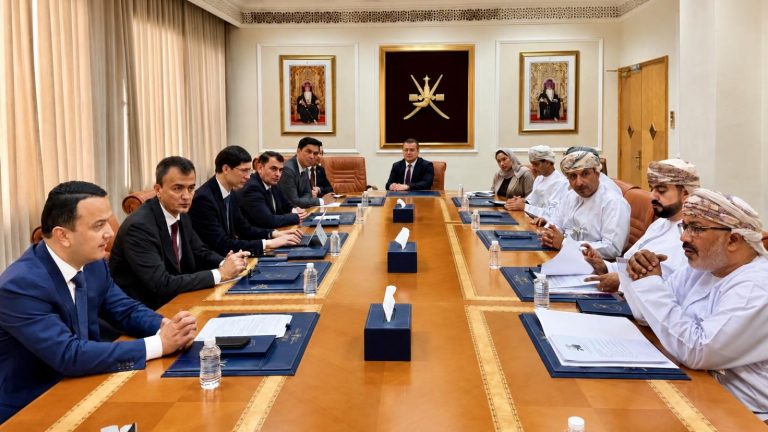
    A delegation from the Sultanate of Oman, led by His Excellency Abdul Salam Al Murshidi, President of the Oman Investment Authority (OIA) and Chairman of the Board of Solidcore Resources, recently visited Kazakhstan to engage with the leadership of Solidcore and tour the Kyzyl mine and processing complex. The visit underscores Oman’s commitment to strengthening its investment ties with Kazakhstan, particularly through Solidcore, where Maaden International Investment, a wholly-owned fund of the Omani government, holds a significant 31.7% stake.

    Accompanying the delegation were key figures from Minerals Development Oman (MDO), including Chairman Hamid Al Naamani and CEO Mattar Al Badi. MDO is a partner in a joint venture with Solidcore on the Khabiyat copper-gold project, which marks the first international geological exploration project in Oman, with an agreement signed earlier this year.

    During their meeting with Solidcore’s management, the delegation was briefed on the company’s operations and the progress of the Ertis hydrometallurgical plant (EGMK). His Excellency Al Murshidi highlighted Solidcore as a flagship investment project for Oman in Kazakhstan, emphasising the importance of a predictable regulatory environment in the country. He stated, “We view Kazakhstan as a long-term strategic partner. The stable and predictable investment climate established under the President’s leadership, along with the government’s efforts to protect sovereign investments, forms the basis for long-term cooperation. We intend to continue supporting the growth of Solidcore and expand our investments in the country. The recently signed Investment Cooperation Agreement between our countries is a significant step in defining new investment opportunities between Oman and Kazakhstan.”

    The Omani delegation also visited the Kyzyl mine, Solidcore’s largest operation, which produces approximately 350,000 ounces of gold annually at a grade of 5 g/t. His Excellency Al Murshidi concluded by noting that Solidcore’s deep expertise in ore processing and responsible mining provides a solid foundation for prospective joint projects in Oman, the Gulf region, and potentially Africa. These opportunities will contribute to Solidcore’s evolution into an international mining company, leveraging its technical competencies, quality assets, robust corporate governance, and experienced team.


  • New Uranium Complex Launched at Zhalpak Mine in Kazakhstan

    New Uranium Complex Launched at Zhalpak Mine in Kazakhstan

    The mining company ‘Ortalyk’ has officially launched a new uranium processing complex at the Zhalpak mine, with an initial capacity of 500 tonnes of uranium per year. This development is part of a broader project aimed at enhancing the production infrastructure, ultimately targeting a project capacity of 900 tonnes annually.

    Gumar Sergazin, Deputy Chairman of the Atomic Energy Agency, highlighted the significance of developing uranium mining enterprises and exploring new deposits to strengthen Kazakhstan’s mineral resource base. He expressed confidence that this new phase of the Zhalpak mine’s development will not only boost the company’s production capabilities but also contribute to the growth of the nuclear sector in Kazakhstan. Additionally, it was reported that Kazatomprom has added six new promising uranium sites to its portfolio, indicating a strategic move towards expanding the country’s uranium mining operations. This initiative aligns with Kazakhstan’s goals to enhance its position in the global uranium market, given its status as one of the leading producers of uranium worldwide.

  • Shugyla Gold to Commence Gold Production at Akdingek Deposit in 2027

    Shugyla Gold to Commence Gold Production at Akdingek Deposit in 2027

    Shugyla Gold LLP is set to begin gold extraction at the Akdingek deposit in the Zharminsky district of the Abai region, with production slated to start in 2027. The company plans to extract 100,000 tonnes of gold-bearing ore annually, utilising open-pit mining techniques and employing blasting operations. The mine is expected to operate for five years, from 2027 to 2031, with a daily production capacity of 137 tonnes.

    The geological structure of the Akdingek deposit allows for open-pit mining to a depth of 40 metres. While the specific gold content in the ore has not been disclosed, the project documentation indicates that mining operations will be conducted in shifts, with a continuous work schedule throughout the year. The site will be powered by a diesel-electric station.

    In January 2025, Shugyla Gold announced plans to extract placer gold from the valleys of the Büyük and Colorado rivers, also located in the Zharminsky district. This area is part of the Boko-Vasilyevsky ore field, with confirmed reserves estimated at 905,100 cubic metres of ore, containing 202.4 tonnes of pure gold at an average concentration of 0.224 grams per cubic metre.

    The company aims to mine 392,700 cubic metres of ore from this site between 2026 and 2028. However, financial reports for 2024 indicate that Shugyla Gold incurred a loss of 4.8 billion tenge, a significant increase from a loss of 200.1 million tenge in 2023. Despite these losses, the company reported its first revenue of 281.1 million tenge in 2024, marking a shift from its previous focus solely on mineral exploration.

    Shugyla Gold is owned by Shugyla Kent LLP, both of which are registered at the same address in the Akzhal village of the Zharminsky district. Shugyla Kent also owns KST Production, based in Ust-Kamenogorsk, which is managed by Tazlime Sarsebaeva and Abzal Nuriyev.


  • Challenges Facing Ferrexpo and Metinvest Amid Black Sea Port Blockade

    Challenges Facing Ferrexpo and Metinvest Amid Black Sea Port Blockade

    The ongoing blockade of the Black Sea ports has severely impacted Ukraine’s mining and metallurgy sectors, particularly affecting major players like Ferrexpo and Metinvest. The closure of these ports has not only disrupted agricultural exports but has also halted the maritime export of iron ore, which is crucial for the economy. Ferrexpo has been forced to suspend production at its Poltava mining and processing plant, while Metinvest has temporarily halted operations at its Southern Mining and Processing Plant (Southern GOK).

    Before the war, Ukraine produced a record 81.2 million tonnes of iron ore in 2021, with a significant portion exported to China. However, the onset of the conflict led to a drastic decline in production and exports, dropping nearly 2.5 times due to the loss of key domestic buyers and the blockade of maritime routes. The only alternative has been to redirect iron ore exports via rail to the European Union, but this has proven economically unfeasible due to high logistics costs.

    The situation briefly improved in late 2023 when a maritime corridor reopened, allowing for a resurgence in exports. However, this recovery was short-lived, as Russian attacks on energy infrastructure led to rising electricity costs, which account for a significant portion of production expenses. The combination of low global iron ore prices and high transportation costs has made it difficult for Ukrainian companies to compete with Australian and Brazilian producers.

    As of early 2026, the situation remains dire, with exports dropping by 27.3% in the first half of the year. Ferrexpo, lacking its own steel production facilities in Ukraine, is particularly vulnerable, relying entirely on exports. The company has warned that without additional funding and the resumption of full-scale shipments, it may only have enough resources to operate until mid-September. Meanwhile, Metinvest, which has its own steel mills, is also facing challenges, including a significant reduction in production and increased transportation costs due to the blockade.

    Experts warn that the continued closure of maritime routes threatens the macroeconomic stability of Ukraine, with the potential for widespread plant shutdowns if the situation does not improve soon. The reliance on European markets is not a viable long-term solution, as the logistics and costs associated with land transport are prohibitive. The Ukrainian mining sector is at a critical juncture, with the need for government intervention and support to mitigate the impact of these challenges on the industry and the economy as a whole.


  • Azerbaijan’s Mining Sector: A New Catalyst for Non-Oil Exports

    Azerbaijan’s Mining Sector: A New Catalyst for Non-Oil Exports

    Azerbaijan’s mining sector is increasingly becoming a significant contributor to the country’s non-oil exports, as evidenced by the latest trade data from the first half of 2026. The country reported a remarkable $202.2 million in primary non-oil gold exports, alongside substantial figures for raw copper concentrate at $135.9 million and aluminum products at $58.9 million. However, a crucial detail in the trade report indicates that the gold exports exclude monetary gold, which has led to some misconceptions regarding the relationship between gold imports by the State Oil Fund of the Republic of Azerbaijan (SOFAZ) and the country’s export figures.

    The distinction between monetary and non-monetary gold is vital for understanding Azerbaijan’s economic landscape. Monetary gold, held as a reserve by central banks and sovereign wealth funds, does not impact the current account but rather the financial account of the balance of payments. In contrast, non-monetary gold, which is mined and sold on international markets, is reflected in the trade statistics. The $202.2 million in gold exports is attributed to local mining operations rather than SOFAZ’s reserve strategies.

    Key players in this burgeoning mining sector include Anglo Asian Mining PLC and AzerGold CJSC. Anglo Asian Mining has been active in Azerbaijan since the mid-2000s, expanding its operations in the Gadabay and Gosha fields, while AzerGold focuses on the Chovdar mine and other extraction sites. The increase in copper exports, which surged from $12.3 million in H1 2025 to $135.9 million in H1 2026, underscores the growth of the domestic mining industry, driven by enhanced production capabilities and favourable international prices.

    The implications of these developments extend beyond mere export figures. Traditionally reliant on agricultural exports, Azerbaijan is witnessing a shift as mining gains prominence in its non-oil export strategy. The combined revenue from gold, copper, and aluminum reached $397 million in just six months, signalling a potential transformation in the country’s economic focus.

    Furthermore, the geographic aspect of mining development aligns with Azerbaijan’s broader reconstruction strategy, particularly in areas bordering the liberated territories. As geological surveys and mining activities expand into these regions, the contribution of the mining sector to non-oil exports is expected to grow even further in the coming years, despite fluctuations in global commodity prices.