Tag: Mining industry

  • 14th MINEX Kazakhstan Forum in Astana: Sustainable Development in Mining Industry Takes Center Stage

    14th MINEX Kazakhstan Forum in Astana: Sustainable Development in Mining Industry Takes Center Stage

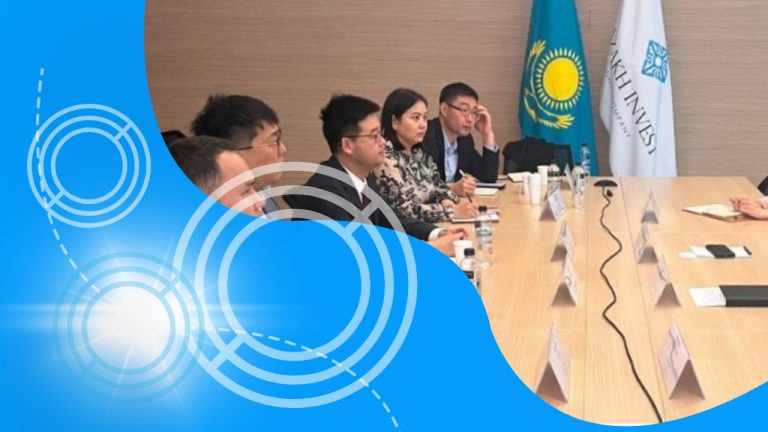
    Astana, Kazakhstan – The 14th Mountain Geological Forum, MINEX Kazakhstan, commenced its proceedings, focusing on the theme of “Sustainable Development of the Mining Industry for the Benefit of Society and the Environment.” Over 450 specialists from 235 companies and organizations spanning Kazakhstan and 32 countries across Europe, Central Asia, North and Latin America, Africa, Southeast Asia, the Middle East, and Australia are participating in the event.

    More than 50 Kazakhstani and international companies are showcasing cutting-edge technologies for prospecting, extraction, and processing of mineral resources at the forum’s exhibition. Attendance by approximately 1000 specialists from Kazakhstan and abroad is anticipated.

    Of notable significance this year is the record participation of foreign investors at the forum, demonstrating keen interest in exploring and developing deposits of precious metals, copper, coal, lithium, uranium, as well as rare and rare-earth metals.

    During the plenary session, the Executive Director of AGMP, Nikolai Radostovets, addressed the key directions for the development of the mining and metallurgical industry in Kazakhstan. He emphasized crucial tasks such as replenishing the mineral resource base, enhancing domestic value, and raw material processing.

    With the depletion of the mineral resource base and the decline in the content of useful components in ore, there is a pressing need to increase geological exploration activities and provide incentives for investments in geological exploration. In this regard, the association’s leader proposed revising the algorithm for accounting and taxing expenditures on geological exploration. Specifically, he suggested refining the Tax Code to allow deductions for all expenses on geological exploration regardless of the allocation of individual sites into new contracts, as well as establishing deductions for corporate income tax on expenditures for geological exploration of solid minerals through existing extraction contracts.

    To incentivize involvement in raw material processing, he proposed enshrining several provisions in legislation. These include exempting subsoil users’ non-extractive mineral resources from the mineral extraction tax (MET) and not levying fees for their re-placement after processing. Regarding non-state-owned mineral resources, extraction should proceed as per current regulations, with a reduced MET rate applied to stimulate their processing.

    Addressing tasks related to enhancing domestic value, Radostovets highlighted AGMP’s comprehensive approach aimed at satisfying the needs of domestic manufacturers and mitigating risks for subsoil users in procurement.

    “We plan to convene with domestic manufacturers at the NPP platform shortly and propose that for the products that Kazakhstani enterprises can produce, we will enter into off-take contracts,” he specified. “We are prepared to compile and approve a list containing the range of goods manufactured in Kazakhstan or those that can be produced in the medium term. For other types of products, we should have open procurement under standard conditions, possibly from a single source, as these are goods not produced in Kazakhstan.”

    The Executive Director of AGMP also underscored the development of raw material processing in Kazakhstan, recalling legislative amendments enacted for licensing metal exports. These amendments, effective from October of the current year, will only grant export licenses if metallurgical enterprises fulfill certain obligations and meet domestic market demands. He noted the association’s preference for stimulating enterprises to process natural resources within the country to foster the development of metal processing and the establishment of metallurgical clusters.

    “Investment agreements, processing agreements have not yet kicked off,” expressed R. Baimishev. “There hasn’t been a single agreement with an investment volume of $50 million. Yet, there are proposals to increase them by 10 times – up to $500 million. We believe these are premature steps. Furthermore, we believe it is necessary to stimulate the development of deeper horizons. Mine construction requires substantial investments and government support,” he observed.

    In turn, the Chairman of the Board of AO “National Mining Company “Tau-Ken Samruk” Bakyt Chirchikbayev provided an update on the completion of the transfer process of 100% of the shares of AO “NGC “Kazgeology” to “Tau-Ken Samruk” in September of the previous year. He outlined steps taken to optimize management processes, reduce costs, and eliminate duplicate functions, such as merging functions related to geological exploration and joint project implementation with foreign partners. Following the consolidation of these functions, their asset portfolio comprises 53 geological exploration projects, with collaboration involving more than 15 participants.

    “It can be noted that we have become a sort of unified window for investors in the geological exploration sector for developing joint projects, and we see ourselves as minority participants in the development of these projects to avoid burdening quasi-state companies with such requirements and to manage companies more flexibly,” he remarked.

    Chirchikbayev emphasized that the company’s geologists are currently exploring promising directions and have already identified several prospective sites. “Tau-Ken Samruk” is open to partners, including junior companies, for the development of these projects.

  • Joint Venture “Kogodai” Plans to Resume Copper Exploration in Eastern Kazakhstan

    Joint Venture “Kogodai” Plans to Resume Copper Exploration in Eastern Kazakhstan

    The joint venture “Kogodai,” holding a license since 2013 for the exploration of copper and associated metals in the Kogodai area of the Kurchum district of the East Kazakhstan region, intends to resume copper exploration in the region. Between 2014 and 2023, the company conducted geological exploration, resulting in the estimation of mineral resources categorized as inferred. Now, “Kogodai” plans to conduct geological exploration in all previously established and assumed 10 mineralization zones of the Kogodai site, the Lotoshnoye site, two geophysical anomalies, and continue the exploration of the Kogodai deposit. This information was disclosed in materials for public hearings scheduled in the Maraldy village of the Kurchum district on April 12.

    The geological exploration area covers 52.2 square kilometers. Search routes on foot will be executed within the contractual territory. Drilling is planned to be carried out using mobile drilling rigs of the SKB-5/LF-90 type with the use of Boart Longyear drill bits, which will require 59.6 thousand liters of diesel fuel in 2024.

    For the power supply of the field camp, three gasoline generators FPG 9800E FORZA will be used. The fuel consumption of one generator will be 2.78 tons per year.

    Coring drilling of exploration wells is envisaged for exploring ore bodies at depth. Most of the planned wells will be drilled to a depth of 200-250 meters. The total volume of coring drilling will include 20 wells with a total volume of 3000 linear meters.

    Cores extracted from core barrels (samples in the form of cylindrical columns) will be washed and placed in core boxes. As the wells progress, a label indicating the depth will be attached after each run.

    The participants of the JV “Kogodai” are the social entrepreneurship corporation “Yertis” (belongs to the financial management of the akimat of the East Kazakhstan region) and the company “Orsu Metals Kazakhstan,” a subsidiary of Harrsin Management B.V., whose ultimate beneficiaries are not disclosed.

    In the 2010s, the copper projects Kogodai and Karchiga in the East Kazakhstan region were developed by the British company Orsu Metals, registered on AIM (one of the platforms of the London Stock Exchange). The company faced difficulties in financing projects and delisted its shares from AIM in 2016.

    Earlier this year, Citibank forecasted that an increase in green energy targets would increase copper demand by an additional 4.2 million tons by the end of the decade. In this case, copper prices could reach $15,000 per ton by 2025, which is 75% higher than the price of copper at the beginning of January. On April 9th, investment bank analysts noted that the price of copper on the London Metal Exchange approached $9,500 per ton, trading near 15-month highs.

    Last summer, the village of Maraldy was often mentioned in the headlines due to the dissatisfaction of the local population with the plans of the company “VSAM Production” to build a gold mining plant for 250 thousand tons of ore per year. Near the village, geological exploration companies Maralicha and Maralicha-Gold were searching for gold. Gold mining was planned to be conducted by open-pit mining – local residents feared the contamination of springs and the river by harmful substances, as well as other possible issues due to mining activities.

  • llegal Gold Trafficking Cases in Kazakhstan Result in Over 1.5 Billion Tenge Loss

    llegal Gold Trafficking Cases in Kazakhstan Result in Over 1.5 Billion Tenge Loss

    In a recent report, it has been revealed that Kazakhstan has seen a surge in illegal gold trafficking cases between 2020 and 2023. Senator Andrey Lukin disclosed that during this period, authorities investigated seven criminal cases related to the illegal circulation of gold, with four cases being forwarded to court. The financial losses incurred from these activities have surpassed 1.5 billion Tenge. Lukin further elaborated that the General Prosecutor’s Office registered 133 criminal offenses associated with illegal gold trading, extraction, and embezzlement over the past four years. Currently, the country hosts 42 gold mining enterprises. Lukin cited a case from November 2023, wherein law enforcement dismantled a criminal group involved in purchasing illegally mined gold from “black miners.” The seized gold was later used to produce counterfeit products resembling renowned brands, which were then sold in Astana and Shymkent. The operation resulted in the confiscation of over 1 kg of gold and 100 counterfeit items. Lukin emphasized the need for stricter surveillance at gold mines to combat such violations. He estimated that for every three tons of legally mined gold, there is one ton mined illegally, accounting for approximately 25 tons of illegally sourced gold annually nationwide. Lukin proposed bolstering security measures at mining sites, including installing additional surveillance cameras, equipping mine shafts with fiber optic channels, implementing access control systems, utilizing screening complexes, erecting dual fencing, deploying automatic detection sensors, and other safety measures.

  • Kazakhstan’s Iron Ore Production Surges in February 2024

    Kazakhstan’s Iron Ore Production Surges in February 2024

    Kazakhstan’s iron ore extraction witnessed a significant surge in the second month of this year, with over 4.187 million tons extracted, marking a 37.5% increase compared to February 2023, according to data provided by the National Statistics Bureau. Production of iron ore agglomerate also experienced a notable uptick, growing by 44.8% for the month. However, in comparison to January 2024, it declined from 475.5 to 456.1 thousand tons. Positive dynamics were also observed in the production of iron ore concentrates, reaching 5.699 million tons in February, marking a 15.9% and 12.3% increase compared to the same month last year and the preceding month of this year, respectively. Additionally, Kazakh mining plants saw a significant rise in the production of non-agglomerated iron ore, with 2.661 million tons processed in February, a 44.9% surge compared to the previous year. The production of iron ore pellets also intensified, reaching 474.8 thousand tons, a 38.8% increase compared to 2023, albeit failing to surpass January’s figures, showing a 2.2% decline. Anticipation is high for a noticeable increase in iron ore extraction following the commencement of operations at the Lomonosovskoye deposit in the Kostanay region, slated for 2025.

  • Potential Gold and Silver Reserves Found in Hungary’s Börzsöny Mountains

    Potential Gold and Silver Reserves Found in Hungary’s Börzsöny Mountains

    Recent calculations by Hun-Mining Research, Development, and Innovation Ltd. reveal a promising discovery in northern Hungary’s Börzsöny mountains, estimating approximately 1,000 tons of gold and silver deposits at a depth of about 150 meters, as reported by Origo. This discovery surpasses the gold reserves held by the Hungarian National Bank, standing at 100 tons, with potential gold values reaching around EUR 59 billion. The envisioned concession mining rights could potentially unlock 9,000 tons of gold and an equivalent amount of silver over an estimated operational span of 42.5 years, providing employment for 1,200 individuals and establishing Hungary’s most lucrative gold and silver mines. After five years of meticulous research and technical preparation, including documentation for mining authorities, plans for the new gold mine are underway. Utilizing washing technology based on deep drilling results aims to eliminate the use of cyanide, adhering to EU regulations following past environmental incidents. The process of awarding concession mining rights will involve an international tender, with operations projected to commence within five years. With significant resources identified in the Nagyírtáspuszta-Rózsabánya region, this project holds the potential to transform into one of the world’s largest gold deposits, promising substantial social and economic benefits for the area.

  • Revised Agreement for Gold and Silver Sale Approved by Kyrgyz Government

    Revised Agreement for Gold and Silver Sale Approved by Kyrgyz Government

    The Kyrgyz government, under the leadership of Prime Minister Akylbek Japarov, has signed a resolution (No. 117, dated March 15, 2024) approving a revised contract for the sale of gold and silver between Kumtor Gold Company, Kyrgyzaltyn, and the government. The decision aims to ensure the uninterrupted and efficient operation of the Kumtor mine following Centerra Gold Inc.’s exit from the Kumtor project. The approved resolution includes provisions for the revised contract, rendering previous agreements obsolete. Additionally, the resolution advises relevant entities such as Kumtor Gold Company, Kumtor Operating Company, Kyrgyzaltyn, and the National Bank of the Kyrgyz Republic to take necessary actions as per the resolution. Ministries and administrative bodies are instructed to organize and execute tasks in line with the resolution. The administration of the Kyrgyz President will oversee the implementation of the resolution, which comes into effect immediately upon signing and will be officially published.

  • Kazakhstan Senate Committee Discusses Geological Exploration Challenges

    Kazakhstan Senate Committee Discusses Geological Exploration Challenges

    Members of the Senate Parliament’s Committee on Economic Policy, Innovative Development, and Entrepreneurship convened for an off-site session in Eastern Kazakhstan to address pressing issues in geological exploration. Prominent heads of geological companies and representatives from authorized bodies participated in the session.

    Senator Shakarym Bukutgutov highlighted the historical significance of mining activities in the eastern region of the country, historically focused on tin, copper, lead, and other metals. However, reserves from previously explored deposits are dwindling. President Kassym-Jomart Tokayev has set a directive to expand geological surveys to 2.2 million square kilometers by 2026.

    Notably, the export value of minerals in 2023 was six times higher than the industry’s investments, reflecting concerning statistics. Currently, Kazakhstan allocates a mere eight dollars per square kilometer for geological exploration, significantly lower than comparable countries like Russia, Uzbekistan, and the UK.

    The industry requires substantial funding for modernization and development. Efforts are underway to digitize processes, with online portals facilitating licensing and reporting. Additionally, modern research methods such as remote sensing and spectral analysis are being employed to enhance exploration efficiency.

    However, the sector grapples with severe staffing shortages, necessitating investment in training programs to equip the workforce with advanced skills. Collaboration with German universities aims to address these challenges and foster innovation in the field.

    While the need for foreign investment is acknowledged, there is a call to increase state funding and restore the profession’s attractiveness through social incentives and recognition.

  • Kazakhmys Faces Ministry Notice Over Contract Violations

    Kazakhmys Faces Ministry Notice Over Contract Violations

    Kazakhmys has been notified by the Ministry of Industry and Infrastructure Development regarding breaches of obligations under multiple contracts for exploration and extraction of copper and other metals, reports Exclusive.kz citing “Kursiv.”

    The ministry directed a notification to the company, signed by Deputy Minister of Industry and Infrastructure Development Iran Sharkhan, concerning violations of obligations under the contract for the extraction of copper-containing ores from the Zhilandy group deposits in the Karaganda region. The breaches include failure to meet investment plans, taxes, financing for research and development, and extraction.

    The penalty for 2020 amounted to 71.2 million tenge, and for 2021, it was 27.3 million tenge.

    In addition to the non-payment of research and development investments, the ministry identified serious violations under contracts for gold-copper-poly-metallic ore exploration, copper exploration, and extraction in various regions, including the Karaganda region.

    Another company, Kazakhmys Coal, created in 2018 by spinning off coal companies “Razrez Molodezhny” and “Razrez Kuu-Chekinsky” from Kazakhmys, was also subject to inspection. It was found to have violated its contract for coal mining at the Borly deposit in the Karaganda region.

    In total, violations totaling over 260 million tenge for 2020-2022 were identified, along with non-compliance with investments totaling over 300 million tenge. All violations were found in the Karaganda region. The company is required to rectify the violations within a month, otherwise, the ministry may take measures, including unilaterally terminating the contract.

    The Ministry and the company have not commented on the information at this time. However, two weeks ago, the Ministry officially threatened to terminate a coal mining contract due to investment breaches by Shubarkol Premium, owned by Timur Kulibaev, the son-in-law of Nazarbayev, and Shubarkol Komir, owned by Alexander Mashkevich.

    99.1% of Kazakhmys Corporation is owned by Kazakhmys Copper. The ultimate parent company is Kazakhmys Holding Limited, registered in the Astana International Financial Centre. Vladimir Kim, who owns 70% of the group, is Kazakhstan’s wealthiest businessman, with a fortune of $4.6 billion according to Forbes 2023. Eduard Ogay holds the 11th position among the richest Kazakhstani citizens, with a fortune of $750 million.

    Exclusive.kz previously reported on the problem of underpayment by subsoil users for research and development in January 2023.

  • Adriatic Metals BiH successfully produces first ore concentrate in Bosnia and Herzegovina’s Vares project

    Adriatic Metals BiH successfully produces first ore concentrate in Bosnia and Herzegovina’s Vares project

    Adriatic Metals BiH proudly announced on February 27th, 2024, the successful production of the inaugural ore concentrate within the Vares project in Bosnia and Herzegovina. The Vares ore processing facility is poised to incrementally enhance its capacity in the following months, with a target processing capacity of around 65,000 tons per month expected by the fourth quarter of 2024.

    Paul Cronin, the general manager of Adriatic Metals BiH, expressed his satisfaction with the achievement, stating, “I am delighted to announce another significant milestone in the production of the first concentrate within the Vares Project.” He emphasized the utilization of advanced technology in designing and constructing the ore processing plant, with a strong commitment to adhering to the highest health and safety standards. Cronin extended his appreciation to the dedicated team for their diligent efforts.

    This milestone signifies a notable success for Adriatic Metals BiH and holds significance for the local community in Vares and the wider state of Bosnia and Herzegovina. The Vares project emerges as one of the most substantial post-war investments in the country, offering considerable economic and social benefits.

    Throughout the project, Adriatic Metals BiH has prioritized local employment, collaboration with regional suppliers, engagement with authorities at all levels, and the adoption of state-of-the-art mining technology. This holistic approach not only drives economic growth but also ensures enduring advantages for the Vares community well beyond the mine’s operational lifespan.

    Looking to the future, the company aims to further optimize the processing plant and expand underground operations in the ensuing months to achieve the targeted nominal production capacity by the fourth quarter of 2024.

    Excerpt: Adriatic Metals BiH celebrates the successful production of the inaugural ore concentrate at the Vares project, marking a significant milestone in Bosnia and Herzegovina’s mining industry.


  • Kumtor Gold Company Exceeds Gold Production Targets in 2023, Boosting Revenue and Profit

    Kumtor Gold Company Exceeds Gold Production Targets in 2023, Boosting Revenue and Profit

    Kumtor Gold Company, based in Kyrgyzstan, achieved remarkable milestones in 2023, surpassing its gold production targets and recording significant revenue and profit growth. The company’s production output totaled 15.567 tons of gold, slightly higher than the amount sold, which stood at 15.577 tons, reflecting robust operational efficiency and market demand. With revenue from production activities soaring to $849 million, Kumtor Gold exceeded its planned revenue of $734.2 million, driving a net profit of $302.4 million, well beyond the projected $194 million. Tax contributions to the republican budget further underscored the company’s substantial economic impact, amounting to 17.241 billion soms ($192.787 million).

    In a strategic move to optimize workflow and modernize equipment, Kumtor Gold implemented measures resulting in savings exceeding $30 million, demonstrating its commitment to operational excellence. Despite a reduction in capital investment volume to $111.5 million compared to the previous year, the company’s focus on efficiency enhancements yielded impressive financial outcomes.

    Moreover, Kumtor Gold reaffirmed its commitment to regional development by allocating significant funds to various initiatives. Notably, $8.389 million was directed towards the development of the Issyk-Kul region, while $5.033 million was allocated to the Naryn region development fund. Additionally, contributions to the Regional Development Partnership Fund and the Nature Development Fund further underscored the company’s dedication to environmental sustainability and community welfare.

    Kumtor Gold Company remains a cornerstone of the mining industry in Kyrgyzstan, spearheading the operation of the Kumtor project, the country’s largest gold mining enterprise. With a commitment to excellence, responsible production practices, and community engagement, Kumtor Gold continues to drive economic growth and social development in the region.