Tag: Mining industry

  • Kazakhstan Rises to Third Place in Global Tungsten Production Amid Price Surge

    Kazakhstan Rises to Third Place in Global Tungsten Production Amid Price Surge

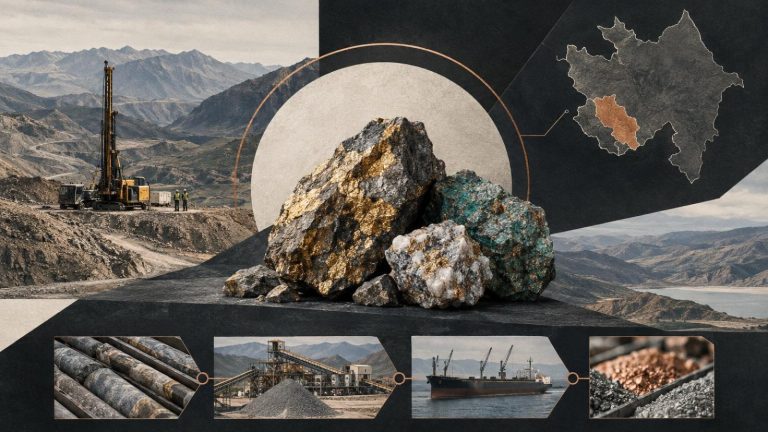
    Kazakhstan has emerged as the world’s third-largest tungsten producer following the launch of the Bogutinskoye deposit, marking a significant shift in global supply dynamics. The development comes amid a sharp increase in tungsten prices, which surged by 557% by early March 2026 after China imposed export restrictions on the metal in February 2025.

    According to recent analysis by Kursiv Research, tungsten concentrates entered Kazakhstan’s export portfolio for the first time in 2025. The country exported 3.7 thousand tonnes of tungsten ore and concentrates, generating $71 million in revenue, with all shipments directed to China. Despite its relatively modest ranking at 71st place in Kazakhstan’s export structure, tungsten has quickly become a strategically important commodity.

    The Bogutinskoye project, operated by Zhetysu Tungsten and backed by Hong Kong-based Jiaxin International Resources Investment, has played a central role in this development. The processing plant produces a 65% concentrate, with total investment commitments reaching $450 million. Plans are also underway to develop downstream processing capacity, including a $100 million project to produce ammonium paratungstate, a higher-value tungsten product.

    Data from the US Geological Survey confirms Kazakhstan’s rapid ascent in the sector. In 2025, the country produced approximately 2.4 thousand tonnes of tungsten (in metal equivalent), placing it behind China and Vietnam. The expansion of production capacity and ongoing investment projects are expected to further strengthen Kazakhstan’s position in the global market.

    Tungsten’s strategic importance has grown significantly in recent years, particularly in the context of geopolitical tensions. The metal remains on the US list of critical minerals, essential for defence, construction, and high-tech manufacturing. China continues to dominate global supply, accounting for nearly 79% of production in 2025, while also tightening export controls in response to trade measures from the United States.

    In response, the US has intensified efforts to diversify supply chains through international partnerships. A key development is the joint venture between Kazakhstan’s Tau-Ken Samruk and US-based Cove Capital to develop the Upper Kairakty and Northern Katpar deposits. The project, with an estimated investment of $1.1 billion, is expected to significantly boost Kazakhstan’s production of ammonium paratungstate and could position the country as the world’s second-largest producer of this material.

    The agreement reflects broader geopolitical competition over critical minerals, with both Western and Chinese companies seeking access to Kazakhstan’s resource base. Analysts note that rising prices and supply restrictions have accelerated investment activity and heightened strategic interest in the region.

    In parallel, Kazakhstan is strengthening state control over critical mineral resources, with legislative changes expected in 2026 to grant priority extraction rights to the national mining company. Private sector players are also advancing new projects, including the development of the Drozhilovskoye deposit with financing from the US Export-Import Bank.

    As global demand for critical minerals continues to rise, Kazakhstan is positioning itself as a key supplier in an increasingly competitive and politically sensitive market.

  • Kazakhstan Plans Launch of New Metallurgical Plants Under Multi-Year Industry Expansion

    Kazakhstan Plans Launch of New Metallurgical Plants Under Multi-Year Industry Expansion

    Kazakhstan is set to accelerate development of its metallurgical sector, with seven new metallurgical enterprises scheduled to begin operations in 2026, according to the Ministry of Industry.

    The total investment in the first phase of projects is estimated at KZT 154 billion. By the end of the year, the country expects to commission new production facilities manufacturing ferrosilicon, longitudinal welded and galvanised pipes, as well as reinforcing steel products of various diameters. The projects are expected to create more than 1,100 jobs across several regions.

    A further seven metallurgical plants are planned for launch within the following two years, supported by investments exceeding KZT 2 trillion. These facilities will focus on the production of ferroalloys, profile and strip steel, steel billets, large-diameter pipes and industrial wire products.

    The Ministry projects that expansion in the ferrous metallurgy sector will generate approximately 3,500 additional jobs between 2027 and 2028, including around 1,200 positions in rural areas.

    In parallel, another 16 industrial projects are currently at the design and approval stage. Planned developments include production of high-purity manganese, hot-briquetted and sponge iron, premium-grade steel, grinding balls and other materials required by Kazakhstan’s mining and metallurgical complex.

    Potential investment in these longer-term initiatives could reach KZT 2.8 trillion and is expected to create up to 5,500 additional jobs nationwide.

    Despite strong investment momentum, early-year production indicators in the sector showed mixed performance. Steel output declined by 5.7 percent to 339,500 tonnes, while rolled steel production increased by 11.1 percent to 292,400 tonnes, reflecting shifting demand dynamics within domestic and export markets.

  • Sibanye Stillwater Reaffirms Battery Metals Strategy Despite Keliber Impairment

    Sibanye Stillwater Reaffirms Battery Metals Strategy Despite Keliber Impairment

    South African mining group Sibanye Stillwater remains committed to its battery metals strategy despite recording an additional 2.46 billion rand ($152.6 million) impairment on its Keliber lithium project in Finland, CEO Richard Stewart said during a results call.

    The company, which began in 2013 with three gold mines before expanding into platinum group metals, has in recent years diversified into lithium, nickel and zinc as part of a strategic shift toward metals used in renewable energy and decarbonization technologies.

    In 2025, Sibanye booked total impairments of 7.8 billion rand on Keliber, reflecting a weaker long-term price outlook for lithium hydroxide. The asset is currently valued at approximately 9 billion rand. Earlier in February 2025, the company also withdrew plans to invest in the Rhyolite Ridge lithium project in the United States after lithium prices declined sharply.

    Stewart said the group’s long-term strategy remains focused on supplying critical metals that support the global energy transition. At Keliber, Sibanye has opted for a phased production approach, beginning with spodumene concentrate while deferring potential production of battery-grade lithium hydroxide until market conditions improve.

    He added that policy initiatives by the European Union and the United States to reduce reliance on Chinese battery metals could improve the long-term pricing environment for projects such as Keliber.

    Financially, Sibanye reported headline earnings of 2.44 rand per share in 2025, compared with 0.64 rand the previous year. The improvement was driven by stronger commodity prices, including a 39% increase in the average rand gold price and a 28% rise in the average South African platinum group metals basket price.

    The stronger performance enabled the diversified miner to declare its first dividend since 2023.

  • Atameken Committee Reviews Constitutional Reform, Mining Roadmap and Rail Tariff Risks

    Atameken Committee Reviews Constitutional Reform, Mining Roadmap and Rail Tariff Risks

    Kazakhstan’s Committee for Geology, Mining, Coal and Metallurgical Industry under the Presidium of the National Chamber of Entrepreneurs “Atameken” convened to review key policy issues, including constitutional reform, implementation of the Mining and Metallurgical Complex (MMC) Roadmap, and risks linked to a proposed new rail tariff model. The meeting was chaired by Committee Head Nikolai Radostovets and attended by Atameken Presidium Chairman Kanat Sharlapayev and Deputy Chair of the Management Board Gulnara Bizhanova.

    Outlining priorities for 2026, Sharlapayev said the Committee’s agenda was shaped through consultations with industry associations and businesses and would be refined as sector challenges evolve. Among the top priorities is resolving legal inconsistencies between subsoil use and land use rights, an issue affecting companies of all sizes. He also stressed the need to consolidate the MMC’s position in discussions around the new Tax Code, including royalty mechanisms, and to preserve export potential through predictable customs regulation.

    Sharlapayev emphasized that Atameken remains the principal platform for dialogue between business and government and called for greater industry unity. He urged companies to avoid fragmentation into parallel negotiation platforms, highlighting the importance of presenting a consolidated position during a period of political transformation.

    Radostovets described the constitutional reform as part of broader state modernization aimed at strengthening institutions and building a competitive economy. He noted that Kazakhstan’s economy has grown at around 6% annually and underlined the importance of reinforcing rule of law, property rights and predictable conditions for long-term investment.

    The Committee also examined progress on the MMC Development Roadmap prepared by the Ministry of Industry and Construction. According to Rustam Shuntukov, Managing Director of Atameken’s MMC Department, the roadmap includes 15 measures, though only about five of 42 business proposals were reflected in the final document. Positive elements include support for processing technogenic mineral formations, SME development, improved subsoil liquidation procedures, and preparation of a Critical Minerals Strategy to 2030.

    Participants further discussed concerns regarding a new rail tariff methodology being developed for Kazakhstan Temir Zholy. Business representatives warned that key proposals from Atameken had not been incorporated and supported commissioning an independent expert review.

    The Committee concluded the meeting by approving its 2026 work plan.

  • Glencore Shifts Focus to Asset Sales After Failed Merger Talks With Rio Tinto

    Glencore Shifts Focus to Asset Sales After Failed Merger Talks With Rio Tinto

    Following another breakdown in merger talks with Rio Tinto, Swiss mining major Glencore is turning its attention to asset sales as part of a strategy to strengthen its copper portfolio, Reuters reported.

    Discussions aimed at creating a global mining giant valued at around $240 billion collapsed this week due to disagreements over valuation and ownership structure. The failed talks mark the third unsuccessful attempt to merge the two companies, following earlier efforts in 2014 and 2024.

    As part of its portfolio reshaping, Glencore is expected to announce the sale of a 70% stake in KazZinc in the coming weeks. Analysts estimate the value of the asset at around $5 billion. KazZinc is a major producer of zinc, lead, and gold in Kazakhstan.

    Glencore Chief Executive Gary Nagle has repeatedly spoken in favour of industry consolidation, arguing that combining assets can unlock value and make the mining sector more attractive to investors.

    The company has also set a long-term goal of increasing copper production to 1.6 million tonnes by 2035, up from 852,000 tonnes produced in 2025, through a combination of new mine development and the restart of existing operations.

    In the near term, investors expect Glencore to prioritise divestments to create a more focused copper mining and metals trading business. Talks are reportedly under way to sell a 40% stake in Glencore’s copper and cobalt operations in the Democratic Republic of Congo to a consortium led by Orion Critical Minerals, with backing from the United States.

    Separately, Glencore is exploring potential cooperation with Brazil’s Vale on the joint development of copper deposits in Canada.

    Since the collapse of the Rio Tinto talks, Glencore shares have fallen by more than 10%, although they remain up 19% year-to-date. The company is also reviewing its coal portfolio and has not ruled out a partial spin-off of coal assets to raise additional capital.

    In Kazakhstan, Glencore continues to invest in gold production. In December 2025, the company allocated nearly $500 million to extend the life of the Vasilkovskoye gold mine in the Akmola Region, operated by Altyntau Kokshetau, the main gold supplier for KazZinc.

    Industry expert Nurlan Zhumagulov noted that Altyntau Kokshetau ranked thirteenth among Kazakhstan’s largest taxpayers in 2025, contributing 142 billion tenge, a year-on-year increase of 47%.

    It was also reported that Kazakh businessman Shakhmurat Mutalip is in talks to acquire a 70% stake in KazZinc. In January 2026, he registered two new companies at the Astana International Financial Centre: KazZinc Group Ltd and Central Asia Resources Holding Ltd.

  • Czech Republic Ends Hard Coal Mining After Nearly 250 Years

    Czech Republic Ends Hard Coal Mining After Nearly 250 Years

    The Czech Republic has formally brought nearly two and a half centuries of hard coal mining to a close, marking the moment with a symbolic final cart of black coal lifted from a depth of 1300 metres. The ceremony took place on Wednesday at the CSM mine in Stonava, close to the Polish border, and was attended by current and former miners, officials, and invited guests.

    State-owned mining company OKD confirmed that the CSM operation was the country’s last active hard coal mine and said production had become unsustainable due to rising costs. Speaking at the event, OKD general director Roman Sikora described the closure as a historic milestone and paid tribute to generations of miners who shaped the country’s industrial development.

    Over its long history, the CSM mine developed an underground network exceeding one million metres in length and became the setting for several notable moments, including a wedding held almost 900 metres below ground in 1992. The mine was also visited underground by playwright and former Czech president Václav Havel in the early 1990s.

    The shutdown marks the end of an era for the Moravian-Silesian region, long defined by heavy industry and coal production. While around 700 workers will remain involved in decommissioning and closure activities, others are expected to transition into retraining programmes.

    Hard coal, also known as black coal or anthracite, is valued for its high carbon content and energy density. Although underground hard coal mining has now ended in the Czech Republic, lignite extraction in open-cast mines is expected to continue until 2033. Comparable closures have already taken place elsewhere in Europe, including Germany, which shut its last hard coal mine in the Ruhr region in 2018.

  • Ukrainian mining and steel sectors face weaker outlook than broader industry

    Ukrainian mining and steel sectors face weaker outlook than broader industry

    Ukraine’s mining and metallurgical industries are experiencing a more difficult economic situation than the country’s industrial sector on average, according to conjunctural assessments for November 2025. The balance of responses assessing current order volumes stood at minus 53% in metal ore mining and minus 46% in metallurgy, compared with minus 36% for industry as a whole, indicating a stronger prevalence of negative sentiment in these sectors.

    Despite the downturn, companies in mining and steel did not expect major changes in production volumes over the following three months. However, guaranteed capacity utilization continues to decline. Since the beginning of 2025, the order backlog at steel enterprises has fallen from 2.5 months to 1.9 months, while in metal ore mining it dropped from 3.2 months to 1.8 months. By contrast, the average backlog across Ukrainian industry in November exceeded four months.

    Labor market expectations also point to mounting pressure. In November, the balance of responses on expected employment changes over the next three months was minus 53% in metal ore mining, compared with minus 11% in metallurgy and minus 7% across industry, signaling a high risk of workforce reductions in the mining segment.

    Investment expectations mirror this trend. The balance of responses regarding future investment was minus 20% in metal ore mining and minus 5% in metallurgy, both well below the industry-wide average of 4%, suggesting weaker investment prospects for 2026.

    Industry representatives cite several factors behind the deterioration, including declining global raw material prices, high electricity tariffs that have already forced some operations to suspend activity, and reduced output at Ferrexpo linked to delayed VAT reimbursements.

    Under wartime conditions, mining and steel companies are prioritizing the maintenance of existing production capacities rather than expansion. With steel prices remaining low on global markets, companies report limited financial capacity for long-term investment, while surveys show that even medium-term business planning has become increasingly difficult.

  • Kazakhstan outlines major mining and metallurgical projects planned for the coming year

    Kazakhstan outlines major mining and metallurgical projects planned for the coming year

    After reviewing the mining and metallurgical facilities launched across the country last year, Kazakhstan is now turning its attention to key sector development plans for the year ahead. Several large-scale projects are set to move forward, spanning titanium, zirconium, polymetals and copper production.

    In 2026, the Obukhov Mining and Processing Plant in the North Kazakhstan region is scheduled to be relaunched at the Obukhov titanium-zirconium deposit. Rare Metals Kazakhstan plans to mine up to 800,000 tonnes of ore annually and produce around 30,000 tonnes of rutile-zirconium concentrate and ilmenite. Most of the output will be exported to China, which dominates global production and consumption of rare and rare-earth metals.

    Another project involving the resumption of mining is underway in the Kyzylorda region, where development of the Shalkiya polymetallic deposit will continue. The asset belongs to a subsidiary of Tau-Ken Samruk. The concentrator is designed to process up to 4 million tonnes of ore per year, with total investments in the non-ferrous metals project estimated at 323 billion tenge.

    In addition, a hydrometallurgical plant is expected to open in the Pavlodar region next year. Fonet Er-Tai Mining plans to produce cathode copper using raw materials from the Kodzhanchad group of deposits. The facility will have an annual capacity of 5,000 tonnes, with investments totaling 9.4 billion tenge.

    Another major development is the launch of a mining and processing plant at the Koksai deposit in the Zhetysu region. Construction is being carried out by the Consolidated Construction Mining Company, a subsidiary of Kazakhmys. The project предусматривает annual production of up to 50 million tonnes of copper ore. In addition to copper, the deposit contains silver and gold, with total ore reserves exceeding 823 million tonnes. Total capital expenditures for the project reached 976 billion tenge.

  • Unexpected bid intensifies battle for control of Eurasian Resources Group

    Unexpected bid intensifies battle for control of Eurasian Resources Group

    A new twist has emerged in Kazakhstan’s mining sector after businessman Shahmurat Mutalip put forward an offer to acquire a 40% stake in Eurasian Resources Group (ERG), entering a prolonged shareholder dispute and challenging the position of the company’s chief executive, Shukhrat Ibragimov. According to the Financial Times, Mutalip has reached a preliminary agreement with the families of ERG co-founders Patokh Shodiev and the late Alexander Mashkevich to purchase their combined holdings for $1.4 billion, subject to the Ibrahimov family waiving its right of first refusal.

    ERG was founded in the 1990s on the basis of former state-owned mining assets and later became one of the most prominent post-Soviet companies to list in London. Today, ownership is split between the three founding families, each holding about 20%, and the government of Kazakhstan, which controls the remaining 40%. The talks are taking place amid rising international competition for metals critical to clean energy, artificial intelligence and industrial infrastructure, increasing the strategic value of ERG’s assets.

    Mutalip’s move has surprised the market, given his limited background in mining and his career roots in construction. His recent interest in large-scale resource assets, including a reported bid for a controlling stake in Kazzinc, has raised questions about financing and long-term strategy. At the same time, ERG continues to face financial pressure due to its reliance on loans from Russian state banks under Western sanctions, adding further uncertainty to the outcome of the ownership battle.

  • Poland’s Parliament Approves Bill Facilitating Coal Mine Closures and Compensation for Miners

    Poland’s Parliament Approves Bill Facilitating Coal Mine Closures and Compensation for Miners

    Poland’s parliament has approved a landmark government bill aimed at easing the country’s transition away from coal. The new legislation facilitates the closure of coal mines, introduces financial support for displaced miners, and promotes the redevelopment of former mining areas. The measure, which gained strong backing from Prime Minister Donald Tusk’s ruling coalition, is designed to support the country’s shift to cleaner energy sources while mitigating the impact on coal-mining communities.

    The bill, which will allow mining companies to close operations with state-backed financial support, is part of Poland’s broader energy transition plan. Under the legislation, coal mines can transfer their assets to local authorities or state entities for redevelopment projects, creating new opportunities for investment, revitalization, and infrastructure construction in former mining regions. In addition to mine closures, the bill provides protective benefits for workers, including severance payments of up to 170,000 zloty (€40,000) for those losing their jobs.

    The government aims to phase out thermal coal mining entirely by 2049, with an initial target of closing five mines within the next decade. The bill received broad support from MPs within the ruling coalition, with 241 votes in favor and just six against. However, the far-right opposition parties abstained from voting, with some critics arguing that the bill does not adequately provide alternatives to coal for affected communities.

    Poland remains Europe’s most coal-dependent nation, with coal accounting for 57% of its power generation in 2024. The transition away from coal has raised concerns, particularly in the Silesian-Dąbrowa region, home to many of the country’s coal mines. Despite this, the government has emphasised that the bill will help ensure a “just transition” for miners and stimulate new investment in coal regions.

    The legislation now heads to Poland’s Senate for approval before reaching President Karol Nawrocki’s desk for signing into law. While Nawrocki has previously voiced strong support for the coal industry, it remains to be seen whether he will sign the bill or veto it.