Tag: MINEX Kazakhstan 2026

  • MINEX Kazakhstan 2026 Marks Turning Point for Mining Sector as Forum Calls for Legislative Overhaul and Proactive Investor Engagement

    MINEX Kazakhstan 2026 Marks Turning Point for Mining Sector as Forum Calls for Legislative Overhaul and Proactive Investor Engagement

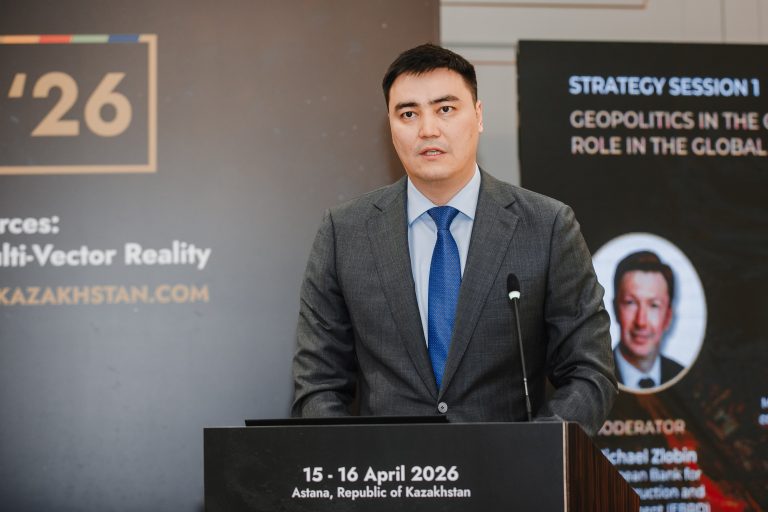
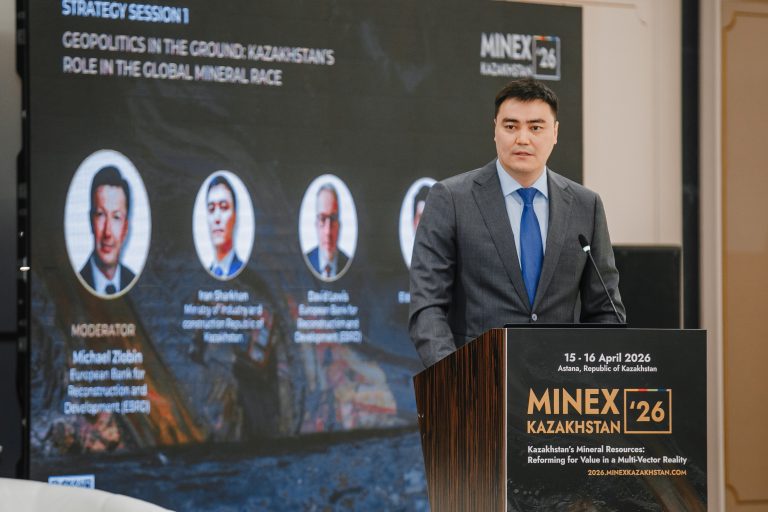
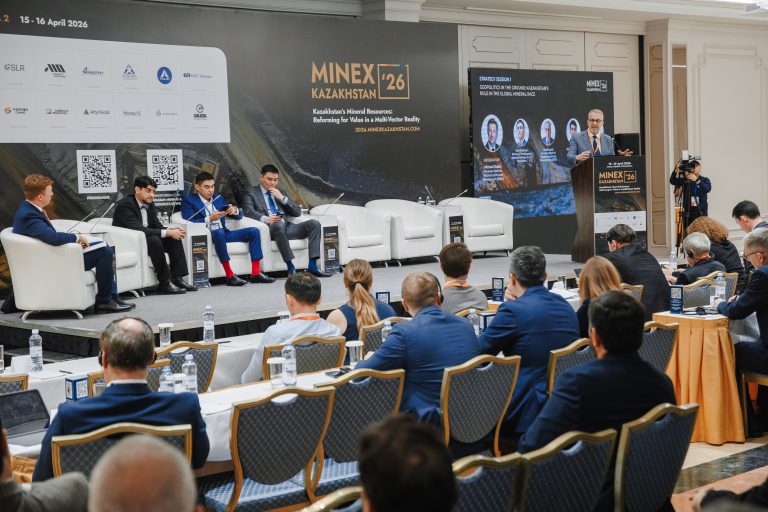
    Kazakhstan’s mining sector has reached a turning point, with the era of easy extraction behind it and a new strategic imperative to build domestic value chains, attract long-term investors and align national legislation with international best practice — that was the overarching message from the XVI MINEX Kazakhstan 2026 forum in Astana, held under the motto “Mineral Resources of Kazakhstan: Reforming for Value in a Multi-Vector Reality.”

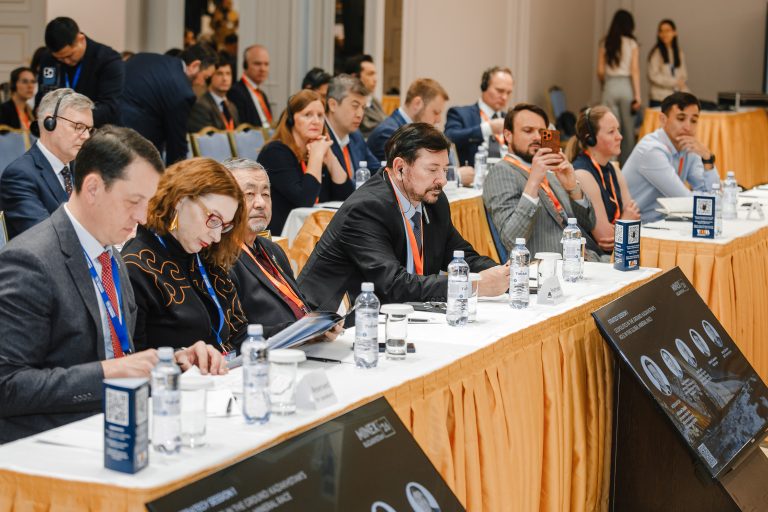
    The forum brought together more than 500 representatives of government bodies, mining company executives, financiers, scientists and technology suppliers from over 30 countries. Opening the event, MINEX executive chairman Artur Polyakov declared that the global mining industry had entered a new era in which the focus is shifting from rapid extraction to the strategic use of key minerals as instruments of economic competitiveness, energy security and international influence.

    Vice minister of industry and construction Iran Sharkhan reaffirmed the scale of Kazakhstan’s geological endowment — approximately 10,000 registered deposits, with 17 new objects including Kok-Zhon, Altyn-Shoko and Samombet placed on the state register in 2025 alone — and highlighted the 2025 amendments to the Subsoil and Subsoil Use Code as a significant step toward simplified administrative procedures, investment attraction and process digitalisation.

    However, the forum also surfaced persistent structural problems. Nikolai Radostovets, executive director of the Association of Mining and Metallurgical Enterprises, acknowledged the importance of the 2018 Subsoil Code while noting that its adoption failed to fully synchronise provisions with the Land, Water, Environmental and Tax codes — a gap that continues to generate administrative barriers for exploration and production projects. “Kazakhstan must not only maintain investment attractiveness but also bring national legislation in line with the best international practices,” he said, citing growing global interest in critical and rare earth metals as a further reason for urgency.

    Geopolitical forecasting analyst Eldaniz Huseynov, founder of Nightingale Ind., argued that Kazakhstan should move beyond passive openness to investment toward actively offering turnkey projects to international partners. He identified molybdenum, zinc, cobalt, uranium and tungsten as priority resources for domestic processing, and said competition between investors from China and Europe could itself serve as a lever to improve cooperation terms. “Kazakhstan must build strategic partnerships and confidently offer its own projects to the international community,” he said, adding that investor engagement should encompass technology development, domestic supply chain integration, job creation and infrastructure commitments — not merely raw material exports.

    The forum concluded that Kazakhstan must simultaneously advance extraction infrastructure, refine its legislative framework, improve the investment climate and consolidate its position as a reliable partner in global critical mineral supply chains.

  • US Ambassador Reaffirms Critical Minerals Partnership With Kazakhstan at MINEX as Joint Tungsten Processing Deal Takes Shape

    US Ambassador Reaffirms Critical Minerals Partnership With Kazakhstan at MINEX as Joint Tungsten Processing Deal Takes Shape

    The United States intends to deepen its critical minerals partnership with Kazakhstan, with the two countries moving from diplomatic agreements to concrete industrial projects, US Ambassador to Kazakhstan Julie Stufft told the MINEX mining and geology forum in Astana.

    “Kazakhstan is a key player in the global market and an important partner for the United States,” Stufft said, pointing to the country’s role as a producer of multiple strategic minerals and its growing significance in global supply chains. She recalled that in November 2025, during President Kassym-Jomart Tokayev’s visit to the United States, the two countries signed a memorandum of cooperation on critical minerals. In February 2026, Kazakhstan’s foreign minister Yermek Kosherbayev attended the first critical minerals ministerial conference in Washington, where he outlined Kazakhstan’s mineral potential and the country’s readiness to contribute to reliable and resilient global supply chains.

    Stufft emphasised that Kazakhstan retains full sovereignty over how it works with and sells its critical minerals, and that the US respects the country’s multi-vector approach to bilateral and multilateral engagements in the sector. “Kazakhstan independently chooses how to work and how to sell its critical minerals. The US is pleased to be Kazakhstan’s partner,” she said.

    On the practical side, the US Geological Survey is actively working with its Kazakhstani counterpart, and American company representatives make regular visits to Kazakhstan to expand industrial cooperation. A concrete example of the partnership advancing to project level came this year, when Kazakhstan’s national mining company Tau-Ken Samruk and US investment company Cove Capital signed documents on a project envisaging deep processing of tungsten at the North Katpar and Upper Kairakty deposits in Karaganda Region — a deal Stufft described as an important step in strengthening Kazakhstan’s position in the global critical minerals supply chain.

  • UK Ambassador Highlights Kazakhstan’s Critical Mineral Wealth at MINEX as Britain Seeks Energy Transition Partners

    UK Ambassador Highlights Kazakhstan’s Critical Mineral Wealth at MINEX as Britain Seeks Energy Transition Partners

    Kazakhstan holds 27 of the 36 critical minerals listed in the United Kingdom’s energy transition strategy, the British ambassador to Kazakhstan has revealed, underscoring the growing strategic importance of the Central Asian nation to Britain’s green energy ambitions.

    Speaking at the MINEX forum in Astana, ambassador Sally Axworthy noted that while more than 50% of the UK’s electricity is now generated from renewable sources, green energy infrastructure is directly dependent on a reliable supply of critical minerals — a dependency that makes Kazakhstan an increasingly significant partner.

    “Kazakhstan is a world leader in uranium, beryllium, titanium, copper and zinc, and also produces many other resources,” Axworthy said, pointing to the breadth of the country’s mineral endowment as a key factor in the bilateral relationship. The UK has previously provided financial support for OECD research on critical raw materials governance in Kazakhstan and the broader Central Asian region as part of its Integrated Security Fund programme.

    The remarks reflect a broader pattern of Western nations accelerating engagement with Kazakhstan as competition for critical mineral supply chains intensifies globally, driven by the energy transition, defence needs and the push to reduce dependence on Chinese-dominated supply.

  • Kazakhstan Vice Minister Outlines Royalty Reform and 50 New Auction Sites at MINEX 2026 as Country Targets Value-Added Mining Model

    Kazakhstan Vice Minister Outlines Royalty Reform and 50 New Auction Sites at MINEX 2026 as Country Targets Value-Added Mining Model

    Kazakhstan’s vice minister of industry and construction has set out the government’s priorities for the mining and subsoil use sector at the MINEX Kazakhstan 2026 forum in Astana, anchoring the country’s strategy around a shift from raw material exports to domestic deep processing, legislative modernisation and the attraction of long-term strategic investors.

    Speaking at the forum, Iran Sharkhan said Kazakhstan was moving decisively from a resource-based economic model toward value-added production. “The priority is deep processing of raw materials within the country, technology development and attracting strategic investors oriented toward long-term impact,” he said. He added that improving the investment climate remained a core government objective, pointing to amendments introduced in 2025 to the Subsoil and Subsoil Use Code aimed at refining sector regulation, stimulating investment and digitalising licensing procedures.

    Two legislative changes stand out. The first is a transition from a mineral extraction tax to a royalty-based system, which officials say will improve transparency and make the sector more attractive for sustained investment, particularly in processing. The second is the formal establishment of a strategic investor status, granting preferential conditions to investors who commit to processing raw materials domestically — directly incentivising value chain development over simple extraction and export.

    Kazakhstan’s mineral resource base encompasses approximately 10,000 registered deposits. In 2025, seventeen deposits were placed on the state register for the first time, including Kok-Zhon, Altyn-Shoko and Samombet. Geological survey coverage has now reached 2.038 million square kilometres against a 2026 target of 2.2 million square kilometres, with a transition to more detailed mapping scales planned to improve the identification of prospective areas. In 2026, auctions for subsoil use rights across 50 deposits are planned for exploration and hard mineral extraction. A modern laboratory complex is also under development in Astana on the basis of the National Geological Survey, with commissioning scheduled for 2028.

    MINEX Kazakhstan 2026, running from 14 to 16 April, has brought together more than 500 participants, over 100 speakers, 40 exhibitors and more than 1,000 visitors from 33 countries, with sector reform, processing development and investment attractiveness as its central themes.

  • MINEX Kazakhstan Forum Calls for Systemic Shift to Deep Processing as Foundation of Economic Competitiveness

    MINEX Kazakhstan Forum Calls for Systemic Shift to Deep Processing as Foundation of Economic Competitiveness

    Experts at the MINEX Kazakhstan forum in Astana have called for Kazakhstan to move decisively away from its raw materials export model and build domestic processing capacity across copper, polymetallic, rare and rare earth metals — arguing that the transition represents not a collection of individual projects but a fundamental restructuring of the national economy.

    Artur Poliakov, managing director of Advantix and chairman of the MINEX forum, framed the stakes in systemic terms. “When processing emerges, the entire structure of the economy changes — new industries appear, supply chains form, jobs are created and the technological level rises,” he said. The shift, he argued, goes far beyond building factories: it requires creating the conditions under which investors can understand how they will operate, how their investments will be protected and what the economics of a project will look like. “It is not simply a matter of building plants — you need to create conditions where an investor understands how they will work, how their investments are protected, what the project economics will be. This is a complex task,” Poliakov said.

    Participants emphasised that attracting investment and technology, alongside the establishment of clear and stable conditions for business, remain the decisive prerequisites for any meaningful progress on processing. Forum participants concluded that the development of mineral processing is a strategic priority on which the long-term resilience and competitiveness of Kazakhstan’s economy depends.

  • Solidcore Resources Confirms 2028 Completion of Kazakhstan’s First Full-Cycle Gold Processing Plant as Payback Period Shrinks to Seven Years

    Solidcore Resources Confirms 2028 Completion of Kazakhstan’s First Full-Cycle Gold Processing Plant as Payback Period Shrinks to Seven Years

    Solidcore Resources has confirmed that construction of Kazakhstan’s first full-cycle gold concentrate processing facility — the Ertis Hydrometallurgical Plant near Pavlodar — remains on track for completion in the fourth quarter of 2028, with the project’s payback period now estimated at seven to eight years as elevated gold prices dramatically improve the economics of the $978 million investment.

    Speaking at the MINEX Kazakhstan 2026 forum in Astana, Solidcore Resources chief executive Vitaly Nesis said construction was proceeding at full pace and that the company was close to signing legally binding financing documentation with the European Bank for Reconstruction and Development. When the project was originally approved by the board, payback was calculated at 12 years based on a gold price of $2,800 per ounce. “At current price levels, taking into account tax increases and tenge strengthening, payback will be around seven to eight years,” Nesis said.

    The Ertis plant, with a 30-year project lifespan, will be capable of processing up to 300,000 tonnes of gold-bearing concentrate annually and producing up to 500,000 ounces of gold in doré form per year, with a permanent workforce of up to 500 employees. It will be the first facility of its kind in Kazakhstan, marking a significant step in the country’s push to process its mineral wealth domestically rather than export raw concentrates.

    Nesis also commented on a wave of recent consolidation in Kazakhstan’s gold sector. In October 2025, Chinese group Zijin Mining acquired RG Gold — owner of the Raygorodok deposit in Akmola Region — from Bulat Utemuratov for $1 billion. More recently, in late March 2026, entrepreneur Shakhmurat Mutalip, owner of construction company Integra Construction KZ, was reported to have agreed to acquire 100% of Altynalmas, one of Kazakhstan’s three largest gold producers. Nesis said such activity should be welcomed, expressing hope that the deals would lead to more Kazakhstani mining companies listing on the Astana International Exchange.

    On Solidcore’s own acquisition plans, Nesis noted that a deal to acquire the Tokhtar gold deposit in northern Kazakhstan has not yet been approved by state authorities and declined to comment further. He did confirm, however, that the company had established subsidiaries in Oman and Tajikistan over the past six months in the hope of securing deals in those markets.

    Solidcore Resources, listed on the Astana International Exchange, operates the Bakyrchik deposit in Abai Region and the Varvarinskoye and Komarovskoye deposits in Kostanai Region. In 2024 the company acquired a 55% stake in the rare earth and polymetallic Syrymbет deposit in North Kazakhstan Region for $82.5 million, where subsidiary Tin One Mining plans to commission a mining and processing plant in 2028 at an investment cost of $227.8 million. The company is also reported to be borrowing $100 million in Germany toward EGMK construction and plans to liquidate its gold inventory in the first half of 2026.

  • First Quantum Minerals Commits $4-5 Million to Kazakhstan Copper Exploration in 2026 as Chu-Sarysu Basin Moves Up Global Priority List

    First Quantum Minerals Commits $4-5 Million to Kazakhstan Copper Exploration in 2026 as Chu-Sarysu Basin Moves Up Global Priority List

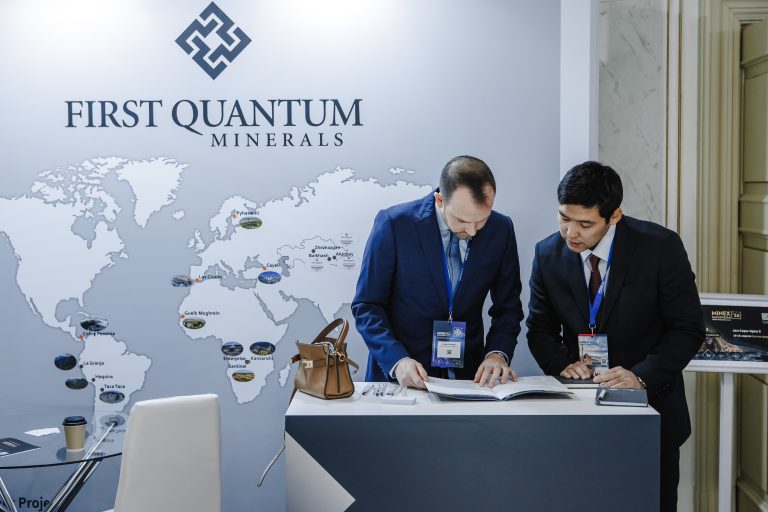
    Canadian mining giant First Quantum Minerals is entering its third consecutive year of copper exploration in Kazakhstan, with a planned exploration budget of $4-5 million for 2026 that makes the country the company’s second-largest exploration destination globally after Zambia, a senior company geologist has revealed.

    Speaking on the sidelines of the MINEX Kazakhstan 2026 forum in Astana, James Banyard, geology manager of FQM Exploration Kazakhstan, said the company’s outlook for the country remains highly positive. “The prospects in Kazakhstan are still very promising,” he told qazba.kz. “Thanks to the reforms of recent years, the volume of foreign investment attracted and competition are certainly growing. But we still believe there are areas where we, as First Quantum, have a competitive advantage — and our experience from Zambia gives us a different perspective on the Chu-Sarysu basin than other companies have.”

    The company has been steadily building its own licence portfolio, moving away from its initial reliance on joint ventures with Pallas Resources. FQM now holds five licences covering approximately 700 square kilometres entirely in its own name, plus one joint venture licence with Pallas covering around 450 square kilometres. Licence areas include two sites near the historic Kounrad mine north of Balkhash, with the remainder concentrated around Zhezkazgan.

    Last summer, FQM conducted diamond drilling at three locations in the Chu-Sarysu basin. While results did not indicate economically viable mineralisation, Banyard described the programme as a critical learning exercise — the first time the company had directly encountered the basin’s rock formations. “We learned a great deal about the basin, and it was really the first time we as a foreign company have seen these rocks. It is very important that we learn as quickly as possible, and drilling is the fastest way to learn,” he said. Further target definition and drilling are planned across the full portfolio through 2026.

    On uranium — a relevant concern given that discoveries in the Chu-Sarysu basin could trigger competing claims from Kazatomprom under Kazakhstani law — Banyard was reassuring. “We are looking for uranium but have not found any so far. The uranium deposits are further south in the basin, away from our exploration areas. We expect not to find uranium in the northern part of the basin where we are currently working.”

    FQM is simultaneously reducing its exposure to peripheral assets elsewhere. The company is selling the Çayeli copper-zinc mine in Türkiye to Cengiz Holding and has disposed of its Las Cruces copper project in Spain — moves consistent with a strategy of concentrating production in Zambia and Latin America while using Kazakhstan as an optionality play to diversify global risk. The company is also watching developments in Mongolia and Uzbekistan, which Banyard noted possess rich porphyry copper deposits, though he said any entry into those jurisdictions would depend on the legal and operating framework meeting FQM’s international standards as a listed company.

    On community relations, Banyard said local needs in Kazakhstan broadly align with FQM’s preferred operating approach, which favours in-kind contributions over cash payments. Last year the company drilled several water wells in the village of Aktogai in Karaganda Region to help residents irrigate trees — a model consistent with its community engagement approach in other operating countries.

  • Private Mining Investment in Kazakhstan Rises 2.5-Fold as Forum Targets $10 Billion Processing Deals and 10,000 New Jobs

    Private Mining Investment in Kazakhstan Rises 2.5-Fold as Forum Targets $10 Billion Processing Deals and 10,000 New Jobs

    Private investment in Kazakhstan’s geological exploration sector has grown 2.5 times in recent years, officials announced at the MINEX mining and geology forum in Astana, where more than 500 participants from 33 countries gathered to advance the country’s ambitions as a global critical minerals hub.

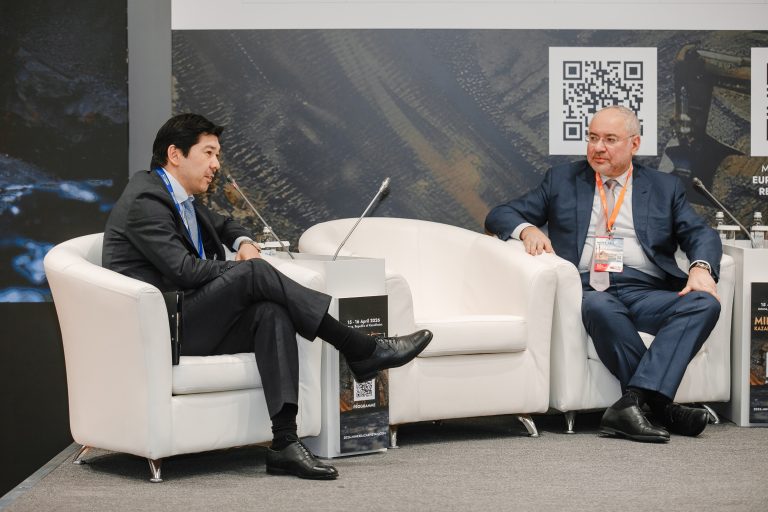
    The forum served as the primary dialogue platform between the Kazakhstani state and international investors, with discussions centred on deep processing development, technological innovation and the strengthening of long-term strategic partnerships. Forum executive chairman Artur Polyakov set out the country’s case for global relevance: “With more than 9,500 deposits, significant world reserves of uranium, tungsten, copper, rare earth metals, lithium and graphite, and a location between Europe and Asia, Kazakhstan has the potential to become one of the world’s most important critical minerals centres.”

    A key policy announcement came from Vice Minister of Industry and Construction Iran Sharkhan, who highlighted the activation of a previously dormant legal mechanism — the Solid Mineral Processing Agreement — as a major driver of near-term investment. “We have made the mechanism that was previously in a dormant state — called the Solid Minerals Processing Agreement — work in full. By our rough estimates, in the short term this mechanism will attract around $10 billion to the sector and create 10,000 additional jobs,” he said. The instrument creates binding commitments for investors to process raw materials domestically, directly incentivising value-added industrial development over simple extraction and export.

    On the state side, approximately $500 million in government investment is earmarked for geological exploration over the next three years — nearly double the level of public funding directed to the sector over the preceding decade. Authorities identified improved investment climate, digitalisation and the significant expansion of exploration activity as the three key priorities underpinning the sector’s development strategy.

  • Kazakhstan Bets on AI, Deep Processing and $500 Million in Geology Funding to Spark World-Class Mineral Discoveries

    Kazakhstan Bets on AI, Deep Processing and $500 Million in Geology Funding to Spark World-Class Mineral Discoveries

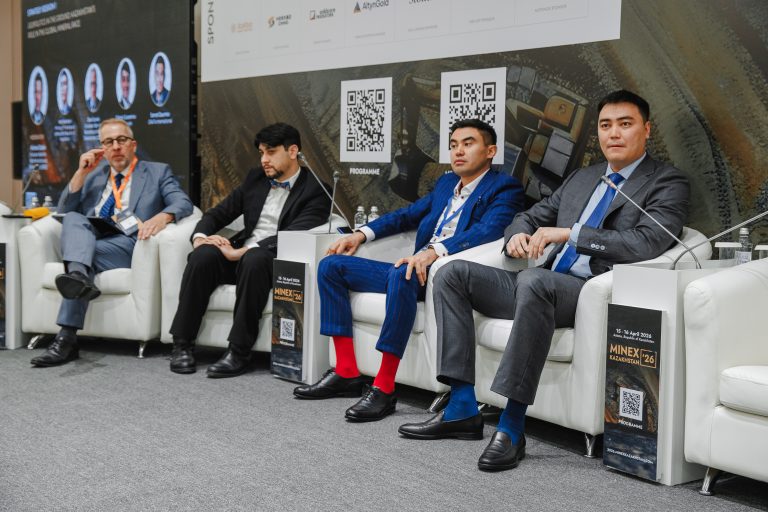
    The era of easy extraction and quick results is over. Finding and developing Kazakhstan’s remaining mineral wealth now demands advanced technology and substantial capital — and how to attract both was the central question at the MINEX international forum in Astana, where delegations from more than 30 countries gathered to assess the country’s geological ambitions and investment potential.

    The Kazakhstani state is committing approximately 240 billion tenge — equivalent to more than 40 billion Russian roubles — to mineral exploration over the next three years, and authorities say they are ready to share that burden with private investors, whose own contributions to exploration have grown 2.5 times over the past five years. The opportunity is significant: beyond already catalogued deposits, the country holds substantial reserves of hydrocarbons, uranium, tungsten, copper, rare earth elements, lithium and graphite.

    Vice Minister of Industry and Construction Iran Sharkhan framed the scale of Kazakhstan’s geological endowment: “Kazakhstan possesses unique geological opportunities. The state register currently lists more than 10,000 deposits — around 1,000 of which are solid mineral deposits.” But having deposits, he made clear, is no longer enough. The country is moving away from selling cheap raw materials toward deep processing, new technologies and expanded export markets.

    MINEX forum executive director Artur Polyakov outlined the twin imperatives: “Kazakhstan must build domestic value chains that transform raw materials into refined products, industrial materials and ultimately high-technology manufacturing. And technology — artificial intelligence, geostatistics, digital exploration tools and modern processing technologies — will play a key role in developing more complex deposits, improving efficiency and reducing environmental impact.”

    Twenty priority areas have been identified for detailed geological mapping and seismic survey work, covering a combined area of 100,000 square kilometres, with a further 30,000 square kilometres to be added each year. The head of Kazakhstan’s National Geological Survey, Yerlan Galiyev, expressed optimism that the intensified programme could yield a discovery of global significance: “We very much hope that a major world-class porphyry copper deposit will be found. The most recent discoveries of this type globally were in Mongolia and the Democratic Republic of Congo. We hope the next one will be in Kazakhstan — and all the work we are doing is directed toward that goal.”

    Artificial intelligence is already playing a practical role in the search. A programme developed at the K. Turysov Institute of Geology and Oil and Gas Affairs has been fed all available geophysical data from known gold deposits and tasked with identifying analogous prospective zones in surrounding areas. “We gave the programme all the geophysical data corresponding to known deposits and asked it to find more prospective zones,” said Professor Gulzada Umirova. “Which it did.”

  • Kazakhstan Pivots From Raw Materials to Value-Added Economy With Royalty Reform and Strategic Investor Status at MINEX 2026

    Kazakhstan Pivots From Raw Materials to Value-Added Economy With Royalty Reform and Strategic Investor Status at MINEX 2026

    Kazakhstan is accelerating its transition from a raw materials export model toward a higher value-added economy, with deep in-country processing, legislative reform and the attraction of long-term strategic investors now at the centre of its mining sector strategy, according to the country’s vice minister of industry and construction.

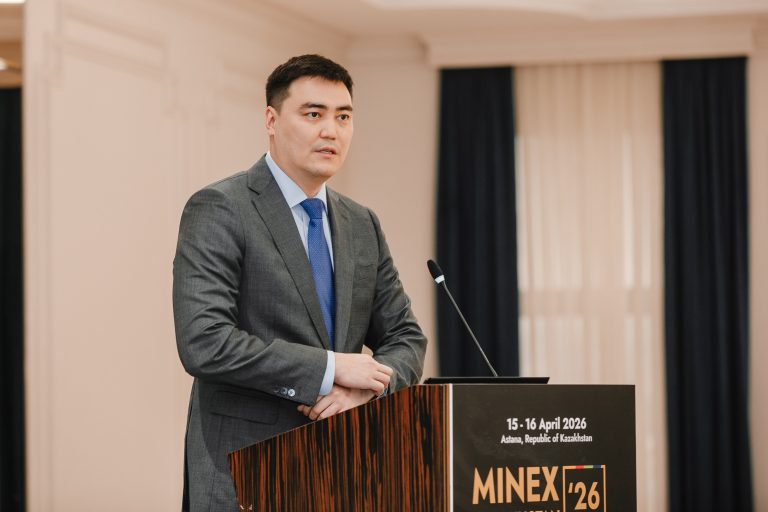
    Speaking at the MINEX Kazakhstan 2026 forum in Astana, Iran Sharkhan outlined the government’s core priorities for the subsoil use sector. “Kazakhstan is moving from a raw materials model to a value-added economy,” he said. “The priority is deep processing of raw materials within the country, technology development and attracting strategic investors oriented toward long-term impact.”

    Central to the reform agenda are two significant legislative changes introduced through 2025 amendments to the Subsoil and Subsoil Use Code. The first is a shift from a mineral extraction tax to a royalty-based system, which the ministry says will improve sector transparency and make Kazakhstan more attractive for long-term investment, particularly in the deep processing segment. The second is the formal introduction of a “strategic investor” status, granting preferential conditions to investors who commit to processing raw materials domestically — creating a direct incentive for value-added industrial development over simple extraction and export.

    On the geological front, Kazakhstan’s mineral resource base encompasses approximately 10,000 registered deposits. In 2025, seventeen deposits were placed on the state register for the first time, including Kok-Zhon, Altyn-Shoko and Samombet. Survey coverage has now reached 2.038 million square kilometres against a target of 2.2 million square kilometres by 2026, with a transition to more detailed geological mapping scales planned to improve the identification of prospective areas. In 2026, auctions for subsoil use rights across 50 deposits are planned for both exploration and hard mineral extraction. A modern laboratory complex is also under development in Astana on the basis of the National Geological Survey, with commissioning scheduled for 2028.

    MINEX Kazakhstan 2026, running from 14 to 16 April in Astana, has brought together more than 500 participants, over 100 speakers, 40 exhibitors and more than 1,000 visitors from 33 countries, with industry reform, processing development and investment attractiveness as its central themes.