Tag: MINEX Kazakhstan 2026

  • Kazakhstan Rewrites the Rules for Mining Investors With Royalty Switch and Processing Incentives at Heart of New Strategy

    Kazakhstan Rewrites the Rules for Mining Investors With Royalty Switch and Processing Incentives at Heart of New Strategy

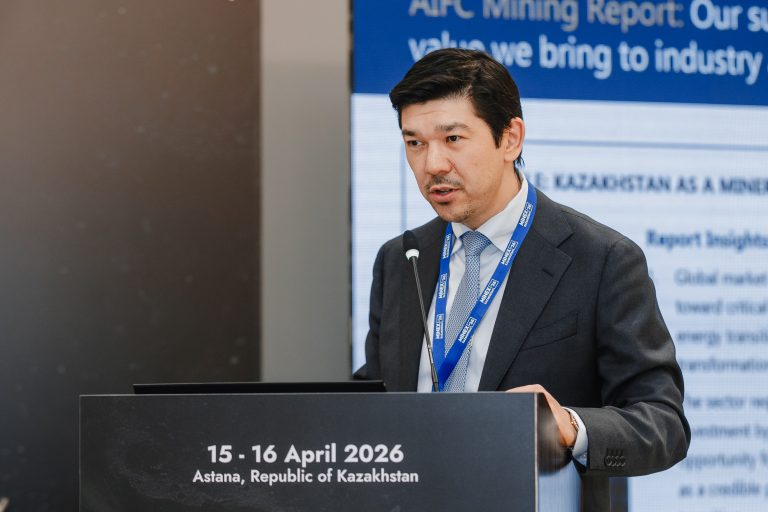
    Kazakhstan is overhauling the terms on which it engages with the mining industry, replacing a decades-old extraction tax with a royalty system and creating a new class of privileged investor for companies prepared to process minerals inside the country — a package of changes that vice minister of industry and construction Iran Sharkhan says marks a decisive break with the country’s raw material past.

    The reforms, introduced through 2025 amendments to the Subsoil and Subsoil Use Code, are designed to do two things simultaneously: make Kazakhstan more competitive against other mineral-rich jurisdictions in the global race for investment, and ensure that the country captures more of the economic benefit from its own resources rather than simply shipping them abroad. The royalty system replaces the mineral extraction tax with a mechanism officials say is more transparent and better aligned with international investment norms. The strategic investor status adds a direct incentive for downstream commitment — companies that agree to process raw materials domestically receive preferential treatment unavailable to those focused solely on extraction.

    Sharkhan told the MINEX Kazakhstan 2026 forum in Astana that the country’s geological endowment gives it an unusually strong hand to play in the current global environment. Ten thousand deposits are registered on the state books, seventeen of them added for the first time in 2025 — among them Kok-Zhon, Altyn-Shoko and Samombet. Geological survey coverage has reached 2.038 million square kilometres against a 2026 target of 2.2 million square kilometres, with a move to more detailed mapping scales in progress to sharpen identification of high-potential areas.

    To translate geological potential into investment activity, fifty deposits will go to auction this year for exploration and extraction rights. And to strengthen the scientific infrastructure underpinning the entire system, a modern laboratory complex is being built in Astana on the basis of the National Geological Survey, due for commissioning in 2028.

    The MINEX forum, running from 14 to 16 April, brought together more than 500 participants and over 1,000 visitors from 33 countries, with processing development and investment climate reform at the top of its agenda.

  • AIFC’s New Junior Mining Platform Tackles Kazakhstan’s Early-Stage Financing Gap as Global Minerals Demand Creates Narrow Window of Opportunity

    AIFC’s New Junior Mining Platform Tackles Kazakhstan’s Early-Stage Financing Gap as Global Minerals Demand Creates Narrow Window of Opportunity

    With more than 65% of Kazakhstan’s territory still geologically underexplored and some 3,000 active exploration licences in need of capital, the Astana International Financial Centre has launched a dedicated platform to bridge the structural gap between early-stage mineral projects and the investors willing to fund them — a gap that has long kept promising licences stranded at the riskiest point in the mining cycle.

    The Junior Mining Platform, announced ahead of the MINEX Kazakhstan 2026 forum, addresses what AIFC chief product officer Zhanbolat Kakishev described as the sector’s defining problem: a lack of structured access to capital at the exploration stage. Many projects stall precisely because they cannot yet demonstrate reserve confirmation under internationally recognised standards — JORC or KAZRC — which institutional investors typically require before committing funds. The platform is designed to move projects through that gap by pre-screening and curating them according to industry criteria, then presenting the resulting pipeline to both domestic and international investors.

    The timing is deliberate. Global demand for critical minerals is accelerating, and the world’s capital requirement for the extractive sector is estimated to reach $2.1 trillion by 2050. Kazakhstan, whose mining sector generated 12.1% of GDP and approximately 33% of total exports in 2024, is positioned to capture a meaningful share of that investment flow — but only if early-stage projects can access financing before competitors in other jurisdictions do. Mining and metallurgy currently account for 17%, or roughly $3 billion, of Kazakhstan’s total foreign direct investment, a figure that experts say should rise significantly if exploration-stage barriers are lowered.

    To oversee the platform’s development, the AIFC has established a Mining Sector Expert Council drawing on senior figures from across the industry, including the chairmen of Tau-Ken Samruk and the National Geological Survey, the deputy chief executive of Solidcore Resources, the founder of Aurora Minerals Group and the chief executive of Arras Minerals Corp. The council’s mandate is to develop modern financial instruments suited to junior mining — including royalties, streaming agreements and earn-in structures — that can create a replicable and transparent model for connecting licence holders with capital providers.

    Junior companies wishing to apply to the platform can find selection criteria and submission details on the AIFC’s official website.

  • Turkey’s Miryıldız Mining Breaks Ground on $480 Million Kazakhstan Gold Project With 750,000-Ounce Deposit at Its Core

    Turkey’s Miryıldız Mining Breaks Ground on $480 Million Kazakhstan Gold Project With 750,000-Ounce Deposit at Its Core

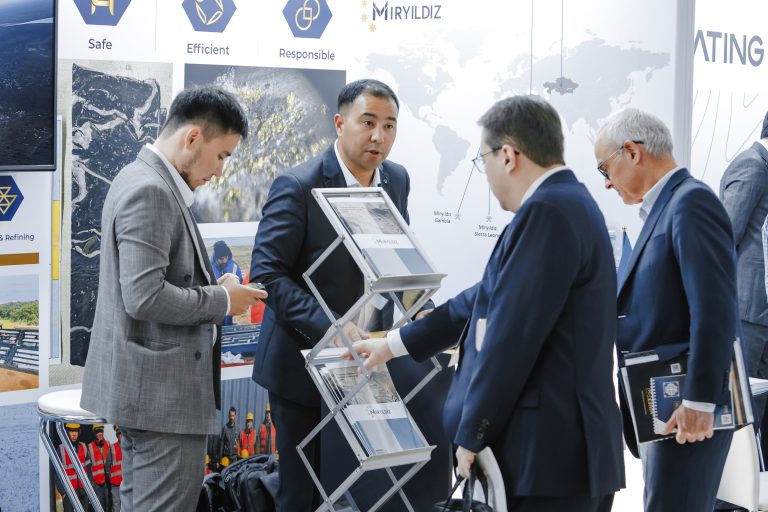
    Turkish mining company Miryıldız Mining has announced preparations to develop the Zhanan gold deposit in Kazakhstan’s Abai Region, committing $480 million across construction, site development and exploration as the company consolidates its position as one of the more ambitious new entrants in the country’s mining sector.

    Chief executive Emrah Erdem made the announcement at the MINEX Kazakhstan 2026 forum in Astana, confirming that construction of a gold ore production complex at Zhanan is already underway. The deposit, located 100 kilometres from Semey, holds confirmed reserves exceeding 750,000 ounces of gold — equivalent to 23.3 tonnes — across a licence area of 1,030 square kilometres. Once in production, the site is expected to employ between 1,300 and 1,800 people.

    The project is currently at the pre-production stage. Geological data on Zhanan was originally compiled during the Soviet era, when gold was previously extracted at the site using heap leaching methods. Miryıldız began its own exploration in 2025, conducting aeromagnetic surveys across the full licence area. Subsequent geophysical work and drilling confirmed the Soviet-era data and returned strong results, providing the foundation for the company’s investment commitment.

    Beyond Zhanan, Miryıldız holds four additional exploration projects distributed across Kazakhstan: a 358 square kilometre licence area near Balkhash, 440 kilometres from Almaty; a 172 square kilometre area near Bayanaul, 165 kilometres from Pavlodar; a 77 square kilometre area near Boke-Ayagoz, 175 kilometres from Ust-Kamenogorsk; and a 63 square kilometre area 130 kilometres from Almaty. Seven drilling rigs are currently active across the portfolio, with geophysical survey work ongoing at all sites.

    Miryıldız entered Kazakhstan two years ago and currently holds 25 licences — 24 exploration and one production. The company, which ranks among the three largest copper producers in Turkey, is targeting gold, copper, chromium and other metals across its Kazakhstani portfolio.

  • Foreign Investors Moving From Market Study to Active Asset Acquisition in Kazakhstan, MINEX Forum Chair Says

    Foreign Investors Moving From Market Study to Active Asset Acquisition in Kazakhstan, MINEX Forum Chair Says

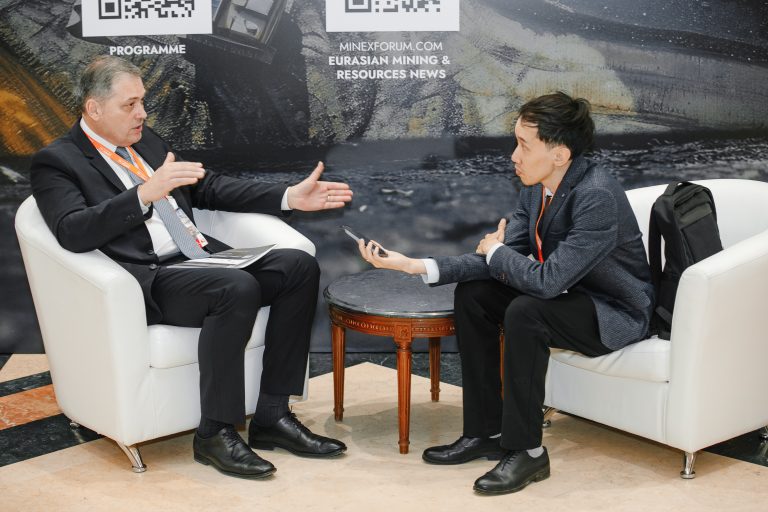
    Foreign companies are no longer arriving in Kazakhstan merely to assess opportunities — they are moving directly into specific assets and projects, a shift that marks a qualitative change in the country’s standing as an investment destination, the organiser of the MINEX Kazakhstan 2026 forum has said.

    Artur Polyakov, managing director of Advantix and chairman of the MINEX Forum, told Kazinform that investor behaviour had transformed in recent years. “If before it was more of a declaration that Kazakhstan is open for business — primarily to attract investment in geological exploration — now we see this transforming into real projects. Companies are coming not just to study the market, but to look at specific assets and enter them,” he said.

    Polyakov emphasised that geological exploration remains the riskiest but strategically most critical phase of the mining cycle, as all subsequent industrial development depends on the quality of what exploration uncovers. The shift toward concrete project commitments, he suggested, reflects growing confidence in Kazakhstan’s reformed regulatory environment and the availability of genuinely compelling assets.

    The trend is visible at the corporate level too. Prime Minister Olzhas Bektenov confirmed on 15 April that KazMunayGaz and Turkish Petroleum Corporation are in discussions on cooperation in geological exploration and extraction — a development that illustrates how the practical dimension of foreign engagement is extending beyond junior mining companies to encompass major energy sector partnerships.

  • Baiterek Holding to Direct Minimum $2.5 Billion Into Kazakhstan’s Mining and Metals Sector in 2026

    Baiterek Holding to Direct Minimum $2.5 Billion Into Kazakhstan’s Mining and Metals Sector in 2026

    Kazakhstan’s national investment holding Baiterek plans to commit at least $2.5 billion to mining and metallurgical sector projects in 2026, maintaining the pace of investment it achieved in 2025 as it doubles down on financing domestic processing and production capacity.

    Managing director Aydin Akan made the announcement on the sidelines of the MINEX Kazakhstan 2026 forum in Astana on Thursday. “The dynamics are very good — we are growing twofold on an annual basis. This year, I think, will be similar — no less than $2.5 billion will be financed in 2026 for mining and metallurgical projects,” he said.

    Akan confirmed that the holding’s mining and metals financing in 2025 also reached approximately $2.5 billion, out of a total investment volume of $20 billion deployed across the Kazakhstani economy. He emphasised that the actual figure for 2026 will depend on the availability of projects ready for implementation in the processing and manufacturing space.

    Baiterek’s mandate is explicitly focused on the downstream end of the value chain. “We do not finance exploration or extraction — we finance specifically the creation of added value from raw materials,” Akan said, pointing to processing plant construction and production capacity development as the core targets for the holding’s capital. The approach directly supports Kazakhstan’s broader strategic shift away from raw material exports toward a domestic value-added industrial model.

    Baiterek is an integrated development institution ultimately owned by the Kazakhstani government, with a mandate spanning entrepreneurship support, agro-industrial development and housing provision alongside its industrial financing role.

  • Kazakhstan’s Mining Reform Delivers 2.5-Fold Investment Rise But Resource Depletion Looms as MINEX Forum Weighs Next Steps

    Kazakhstan’s Mining Reform Delivers 2.5-Fold Investment Rise But Resource Depletion Looms as MINEX Forum Weighs Next Steps

    Kazakhstan’s subsoil reform programme has delivered a 2.5-fold increase in geological exploration investment — rising from $400 million in the pre-reform period of 2012 to 2017 to $1 billion between 2019 and 2024 — but the country now faces a fresh challenge: several major deposits are approaching exhaustion, and new discoveries must be made within the next five years to safeguard the industry’s long-term future.

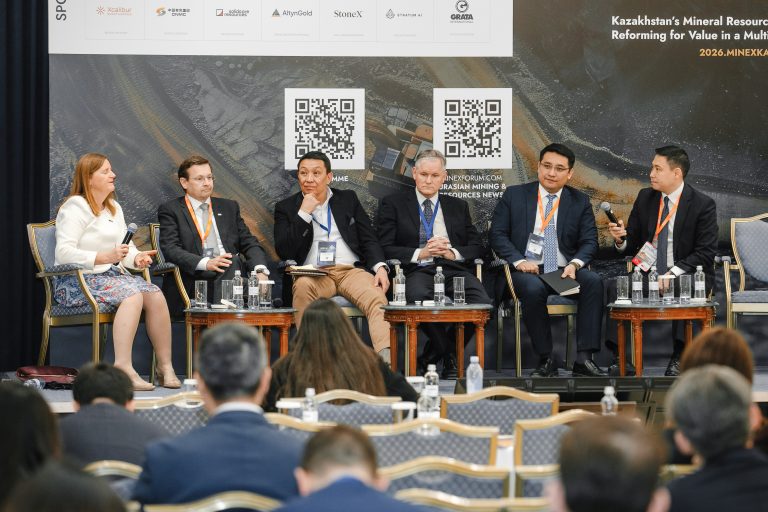
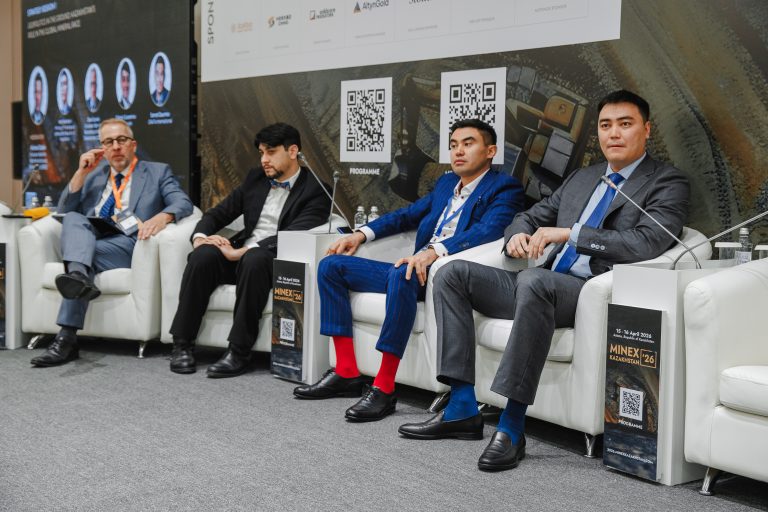
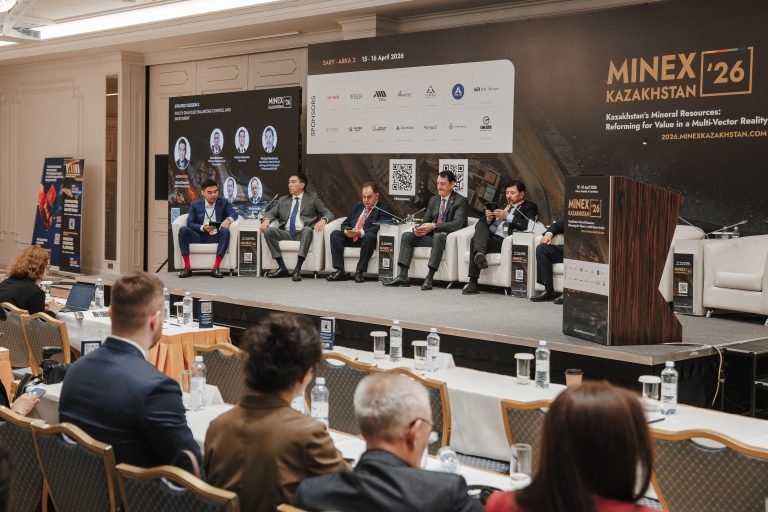
    Those were among the most striking findings to emerge from the MINEX Kazakhstan 2026 forum in Astana, where more than 500 specialists from 33 countries and 40 exhibitors gathered under the motto “Mineral Resources of Kazakhstan: Reforming for Value in a Multi-Vector Reality.”

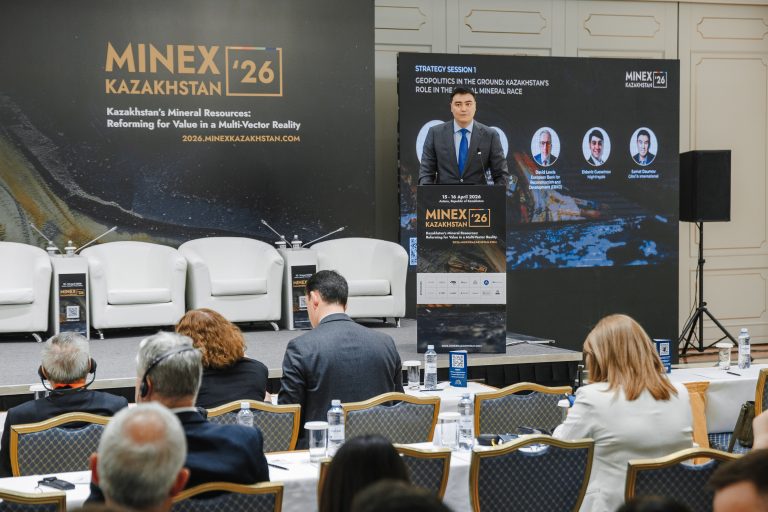
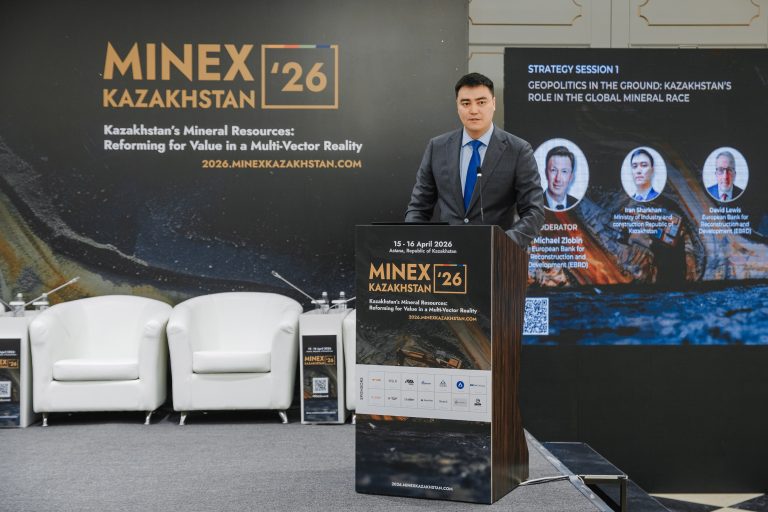
    Vice minister of industry and construction Iran Sharkhan opened a strategic session by detailing the concrete results of the 2025 exploration season. The 17 deposits newly registered on the state roster this year — including the largest, Kok-Zhon, Altyn-Shoko and Samombet — yielded reserve additions of 136 tonnes of gold, 152 tonnes of silver, 75,000 tonnes of copper and 1.3 million tonnes of phosphorites. Kazakhstan’s mineral resource base now encompasses approximately 10,000 registered deposits, and the 2018 Subsoil Code reform has created the competitive environment that produced the investment surge the sector has seen in recent years.

    Rustam Shuntukov, managing director of the mining and metallurgical complex department at the National Chamber of Entrepreneurs Atameken, acknowledged significant systemic progress — particularly the opening of virtually all of Kazakhstan’s territory to exploration through improved access to geological information and the integration of digital decision-making tools. But he struck a note of urgency on depletion. “We have old deposits where the remaining extraction period is only five to six years — that is a major risk for the sector,” he said. “We need to structure our work so that over the next five years we can open new deposits and then ensure their full development over ten years.”

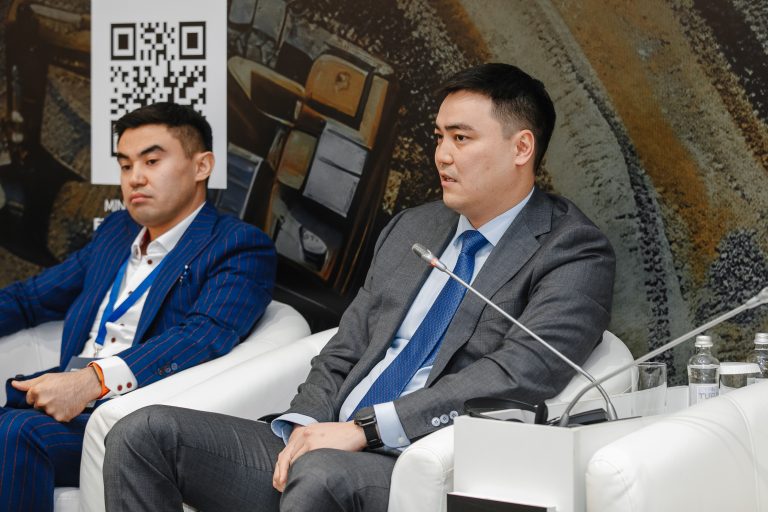
    Nikolai Radostovets, executive director of the Republican Association of Mining and Metallurgical Enterprises, welcomed the influx of new investors and modern technology as a long-awaited development. But it was Ruslan Baimishev, president of the Kazakhstan Mining Chamber, who raised one of the forum’s most pointed governance questions: how to preserve market-wide transparency while extending preferential rights to strategic investors.

    Baimishev acknowledged that the strategic investor status cannot and should not be available to all — but warned that the mechanism must be clearly understood across the industry if it is not to damage the broader investment climate. “For investors operating under the general regime, transparency in decision-making is critically important,” he said. “The mechanism must be comprehensible to the entire sector, and transparency can be ensured through digitalisation and open data.”

  • Kazakhstan Opens 50 Mining Deposits to Auction and Builds New National Geology Lab in Push to Attract Processing-Focused Investors

    Kazakhstan Opens 50 Mining Deposits to Auction and Builds New National Geology Lab in Push to Attract Processing-Focused Investors

    Kazakhstan is expanding access to its subsoil resources and modernising the infrastructure underpinning its geological research sector, as the government advances a strategy to draw in a new class of investor — one committed not just to extraction but to building processing capacity inside the country.

    Speaking at the MINEX Kazakhstan 2026 forum in Astana, vice minister of industry and construction Iran Sharkhan confirmed that auctions for exploration and production rights across 50 deposits of solid minerals are planned for 2026, significantly broadening the pool of opportunities available to both domestic and international investors. The auctions will be conducted through Kazakhstan’s newly launched Unified Subsoil Use Platform, which has digitalised 22 state services and allows investors to browse available areas and submit applications without intermediaries.

    To support the science underpinning exploration, a modern laboratory complex is under construction in Astana on the basis of the National Geological Survey, with commissioning targeted for 2028. The facility is expected to raise the quality and speed of geological research, providing a stronger data foundation for the exploration decisions of both state bodies and private investors. Geological survey coverage has now reached 2.038 million square kilometres against a 2026 target of 2.2 million square kilometres, with a shift to more detailed mapping scales prioritised to sharpen the identification of prospective areas. Seventeen new deposits — including Kok-Zhon, Altyn-Shoko and Samombet — were added to the state register in 2025, bringing the total to approximately 10,000.

    Sharkhan reaffirmed that the legislative framework is being redesigned to reward investors who commit to value-added activity. A royalty system is set to replace the existing mineral extraction tax, and a strategic investor status will provide preferential conditions to companies that take on domestic processing obligations. Amendments to the Subsoil and Subsoil Use Code introduced in 2025 have also targeted the digitalisation of regulatory procedures and the simplification of licensing processes. “Kazakhstan is moving from a raw materials model to a value-added economy,” Sharkhan said. “The priority is deep processing of raw materials within the country, technology development and attracting strategic investors oriented toward long-term impact.”

  • Kazakhstan Vice Minister Details Royalty Shift, Strategic Investor Status and 50 New Auctions in Mining Sector Overhaul

    Kazakhstan Vice Minister Details Royalty Shift, Strategic Investor Status and 50 New Auctions in Mining Sector Overhaul

    Kazakhstan’s vice minister of industry and construction has set out the most detailed account yet of how the country intends to move away from its raw material export model, outlining a package of tax, regulatory and infrastructure reforms at the MINEX Kazakhstan 2026 forum in Astana.

    Iran Sharkhan described the transition as a shift toward a value-added economy, with domestic deep processing, technology development and the attraction of long-term strategic investors at its core. He confirmed that 2025 amendments to the Subsoil and Subsoil Use Code were designed to improve sector regulation, attract investment and digitalise licensing and permitting procedures — building a more transparent and predictable environment for business.

    On taxation, the government plans to replace the mineral extraction tax with a royalty system, a change officials say will improve transparency and better align Kazakhstan with international investment norms. Alongside this, a new strategic investor status will be introduced, granting preferential conditions to companies that commit to processing raw materials inside the country — creating a direct financial incentive for domestic value-added production rather than export of unprocessed ore.

    Sharkhan emphasised the breadth of Kazakhstan’s geological endowment, noting that the state register contains approximately 10,000 deposits. In 2025 alone, seventeen new deposits were added, including Kok-Zhon, Altyn-Shoko and Samombet. Geological survey coverage has now exceeded two million square kilometres, with particular emphasis being placed on more detailed mapping scales to improve the precision of prospective area identification.

    To expand business access to subsoil resources, auctions for exploration and extraction rights across 50 deposits of solid minerals are planned for this year. On the infrastructure side, a modern laboratory complex is being built in Astana on the basis of the National Geological Survey, with commissioning scheduled for 2028. The facility is expected to raise the quality of geological research and accelerate the pace of deposit development across the country.

  • MINEX Kazakhstan 2026 Calls for Second Wave of Mining Reforms as Legal Fragmentation Holds Back Investment

    MINEX Kazakhstan 2026 Calls for Second Wave of Mining Reforms as Legal Fragmentation Holds Back Investment

    Kazakhstan’s XVI MINEX Kazakhstan 2026 forum in Astana delivered a clear verdict: the country’s first wave of mining sector reform has laid important foundations, but a deeper, systemic second phase is now urgently needed if Kazakhstan is to realise its ambition of becoming a global critical minerals hub rather than simply remaining a large raw material exporter.

    The forum’s central thesis — articulated by speakers from government, industry and the expert community — is that mineral resources must no longer be viewed purely as export potential, but as the foundation for value creation, technological modernisation and industrial sovereignty. MINEX executive chairman Artur Polyakov set the tone in his opening remarks, noting that Kazakhstan’s endowment of more than 9,500 deposits and significant global reserves of uranium, tungsten, copper, rare earth metals, lithium and graphite, combined with its location between Europe and Asia, gives the country the potential to become one of the world’s most important critical minerals centres. “But geology alone is not enough,” he said. “The key question is not whether Kazakhstan has resources, but how the country can turn them into long-term prosperity, industrial capacity and international partnerships.”

    Vice minister of industry and construction Iran Sharkhan outlined the practical reform agenda: a transition to a royalty-based tax system replacing the mineral extraction tax, the introduction of a strategic investor status granting preferential conditions tied to domestic processing commitments, and 2025 amendments to the Subsoil Code aimed at simplifying regulation, attracting investment and digitalising procedures. Geological survey coverage has reached 2.038 million square kilometres against a 2026 target of 2.2 million square kilometres, and 17 new deposits were placed on the state register in 2025 alone.

    The most pointed intervention came from Nikolai Radostovets, executive director of the Republican Association of Mining and Metallurgical Enterprises, speaking at the forum’s strategic session on the balance between regulatory control and investment. He acknowledged that the 2018 Subsoil Code was a landmark modernisation — introducing the first-application licensing principle, new approaches to geological data management and improved investor access to exploration. But in practice, he said, the code cannot be fully implemented because it was never synchronised with the Land, Water, Environmental and Tax codes. The result is a web of administrative barriers: difficulties obtaining land rights, contradictory water legislation requirements, excessive environmental procedures and misaligned tax norms that collectively slow both exploration and production projects and erode investment attractiveness.

    The Association is calling for the second phase of subsoil reform to focus specifically on amending the adjacent codes that obstruct the Subsoil Code’s implementation. Concrete proposals include a land reservation mechanism for subsoil use purposes, simplified land allocation procedures for exploration and extraction, streamlined regulation of works in water protection zones, reduced bureaucracy in environmental permitting, and adjustments to royalty calculation methodology, processing taxation and the taxation of technogenic mineral formations.

    The forum’s conclusion was unambiguous: for Kazakhstan to secure stronger positions on the emerging global critical minerals market, it requires modern legislation, quality geological data, predictable regulation, advanced technology and sustained investor confidence — and all of these must advance together.

  • Deep Processing Emerges as Kazakhstan’s Core Economic Strategy at MINEX as Industry Calls for Systemic Transformation

    Deep Processing Emerges as Kazakhstan’s Core Economic Strategy at MINEX as Industry Calls for Systemic Transformation

    The transition from raw material extraction to deep mineral processing dominated discussions at the MINEX Kazakhstan forum in Astana, where business representatives and industry experts argued that the shift requires not isolated investment projects but a fundamental restructuring of the economy.

    Priority sectors identified by participants include the processing of copper, polymetallic, rare and rare earth metals — materials whose strategic value is rising rapidly in global markets. But forum speakers were clear that the ambition goes far beyond building individual facilities.

    “When processing emerges, the entire structure of the economy changes — new industries appear, supply chains form, jobs are created and the technological level rises,” said Artur Polyakov, managing director of Advantix and chairman of the MINEX Forum. He argued that creating the right conditions for investors is as important as the physical infrastructure itself. “It is not simply a matter of building plants — you need to create conditions where an investor understands how they will work, how their investments are protected, what the project economics will be. This is a comprehensive task — from legislation to technology,” he said.

    The forum has previously noted growing interest from foreign investors in Kazakhstan, a trend Polyakov attributed in part to the country’s reform momentum and the global scramble to secure critical mineral supply chains outside China. Participants concluded that the processing question has become not merely a sectoral concern but a strategic national priority on which Kazakhstan’s long-term economic resilience and competitiveness depend.