Tag: LKAB

  • LKAB Introduces 120-Tonne Electric Trucks for Underground Iron Ore Mining

    LKAB Introduces 120-Tonne Electric Trucks for Underground Iron Ore Mining

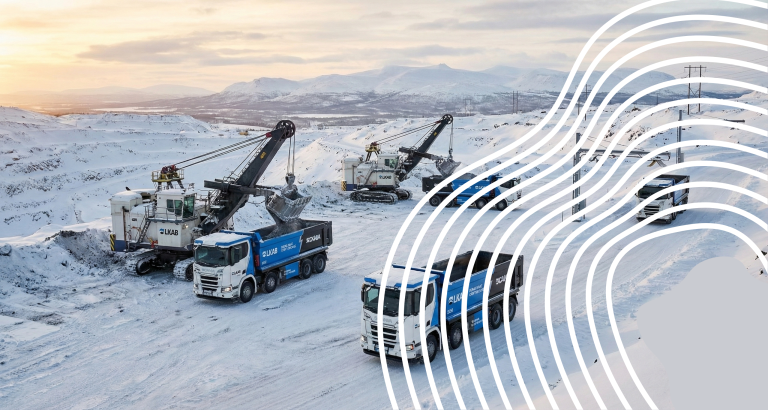
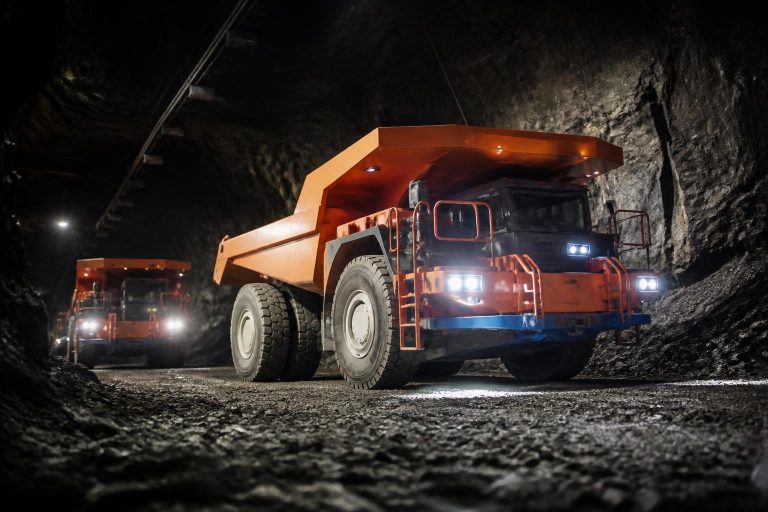
    Swedish mining giant LKAB has taken a significant step towards sustainable mining by deploying two 120-tonne battery-electric trucks at its Malmberget iron ore mine. These trucks, developed in collaboration with Scania, are designed to operate at depths of up to 1,250 metres and have already transported over 100,000 tonnes of iron ore since their introduction. Each truck boasts a payload capacity of just over 70 tonnes and is equipped with a 624 kWh battery, allowing for approximately seven hours of operation on a single charge.

    The deployment of these electric trucks marks a pivotal moment in the mining industry, particularly for underground operations where electrification poses unique challenges. LKAB’s Malmberget mine moves more than 50,000 tonnes of iron ore daily, and the new trucks have completed around 1,500 round trips, transporting roughly 3,200 tonnes per charge. The charging infrastructure supports rapid charging at up to 375 kW, enabling a full charge in about 80 minutes.

    One of the key challenges for LKAB is ensuring that these battery-electric trucks can match the productivity and availability of traditional diesel trucks. As the company continues to innovate, another battery-electric model, the Sleipner, is entering its next testing phase. This 8×4 heavy-duty tipper is designed for continuous operation and will be evaluated for its ability to replace diesel trucks in ongoing production scenarios.

    The partnership between LKAB and Scania has been ongoing for several years, with previous tests of a 6×4 battery-electric tipper demonstrating promising results. By 2027, LKAB aims to electrify 30 per cent of its mining fleet, targeting the extraction and handling of at least five million tonnes of material annually without local emissions. This ambitious goal underscores the company’s commitment to reducing its environmental footprint while maintaining operational efficiency in one of the most demanding sectors of the economy.


  • Sweden Declares Critical Minerals Mining a National Security Interest

    Sweden Declares Critical Minerals Mining a National Security Interest

    In a significant move to bolster its mining sector and reduce reliance on foreign sources, particularly China, Sweden has officially designated the mining of critical metals and rare earth minerals as a national security interest. This announcement was made by Ebba Busch, Sweden’s Enterprise Minister and Deputy Prime Minister, on 23 July 2026. The strategy aims to enhance Sweden’s position in the global mining landscape, especially as China currently dominates the rare earth market, accounting for approximately 69% of global production. This dependency has raised concerns among Western nations, prompting Sweden to take decisive action to secure its mineral supply chains.

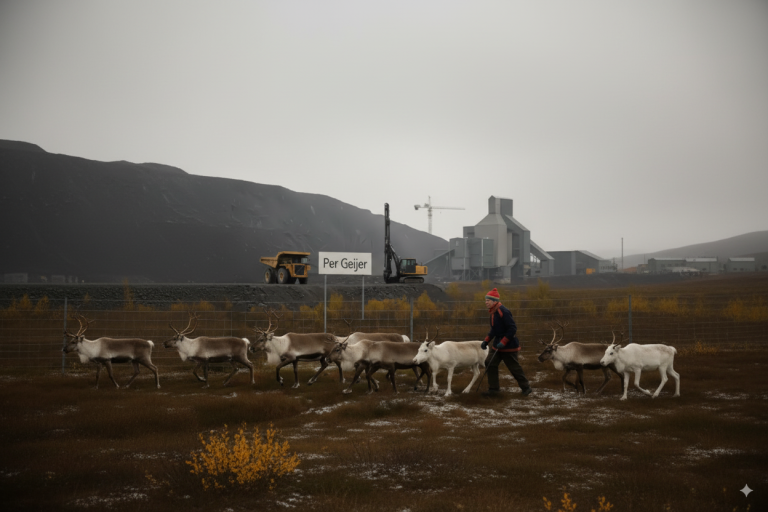
    Central to Sweden’s strategy is the Per Geijer deposit located at LKAB’s Kiruna mine, which is one of the European Union’s flagship projects aimed at reducing reliance on Chinese imports. The deposit boasts an impressive 1.2 billion tonnes of total mineral resources, including 2.2 million tonnes of rare earth oxides. Johan Menckel, the newly appointed President and CEO of LKAB, emphasised the company’s potential role in shaping Europe’s industrial value chains. The Swedish government plans to expedite the environmental permitting process for mining projects by establishing a dedicated authority, addressing current delays that hinder project approvals.

    Additionally, the government is exploring the establishment of a state-owned investment company to further support the mining sector. Deputy Prime Minister Busch highlighted the necessity for Sweden to leverage its rich natural resources and world-class mining companies. The strategy also includes a review of the mineral fee structure to ensure that local communities benefit more directly from mining activities. However, the expansion of mining rights has raised concerns among Sweden’s indigenous Sami population, who fear that increased mining activities could threaten their traditional way of life. As Sweden moves forward with its ambitious mining strategy, it must balance economic interests with the rights and concerns of local communities.


  • EU Backs Sweden’s Largest Rare Earth Project but Faces Legal Barriers of Its Own Making

    EU Backs Sweden’s Largest Rare Earth Project but Faces Legal Barriers of Its Own Making

    The European Union is channelling significant financial support into LKAB’s Per Geijer rare earth project in northern Sweden as part of its strategy to reduce dependence on China for critical raw materials. However, the same EU legal framework designed to protect the environment and Indigenous rights is emerging as a major obstacle to the project’s progress.

    The Per Geijer deposit near Kiruna has been granted Strategic Project status under the EU’s Critical Raw Materials Act (CRMA), making it eligible for EU-backed loans, guarantees and other de-risking instruments. The designation reflects the project’s importance to Europe’s green transition, defence capabilities and electric vehicle supply chains. Under the CRMA, the EU aims to mine at least 10% of its strategic raw materials domestically and process 40% within the bloc by 2030.

    To support these targets, Brussels is deploying financing through tools such as InvestEU, the Innovation Fund and European Investment Bank lending, with nearly €3 billion earmarked for mining, processing and recycling projects. Northern Sweden has been identified as a priority region, and Per Geijer is seen as a flagship initiative.

    Despite this political and financial backing, the project remains subject to Sweden’s Environmental Code and EU environmental legislation, including the Environmental Impact Assessment Directive and the Habitats and Birds Directives. These rules require extensive assessments of impacts on biodiversity, water resources, emissions and climate, and allow for legal appeals that can delay projects for years. Strategic status does not provide exemptions from these requirements.

    Additional complexity arises from Indigenous rights considerations. The Per Geijer deposit overlaps with traditional reindeer-herding land used by the Sami people, triggering legal obligations under Swedish law, EU law and international human rights conventions. Requirements for meaningful consultation and protection of minority rights sit uneasily alongside the CRMA’s push for faster permitting.

    Per Geijer is part of a broader LKAB value chain that includes rare earth extraction at Malmberget and processing facilities in Luleå, all of which have also received Strategic Project status. However, the European Commission retains the right to withdraw this status if sustainability criteria are not met or if projects fail to deliver.

    The case highlights a structural tension within EU policy. While Brussels is accelerating funding and political support to secure raw material autonomy, its environmental and rights-based legal framework gives courts and civil society strong tools to slow or block projects. The outcome in Kiruna is increasingly seen as a test of whether the EU can reconcile its industrial ambitions with the legal principles at the core of the Green Deal.

  • Deep beneath Kiruna, Sweden pushes forward in Europe’s race to mine rare earths

    Deep beneath Kiruna, Sweden pushes forward in Europe’s race to mine rare earths

    In the depths of Arctic winter, with temperatures plunging to minus 20 degrees Celsius and daylight reduced to a few hours of twilight, a team of miners is advancing one of Europe’s most strategically important resource projects beneath the Swedish town of Kiruna. Around 900 metres underground, workers at the state-owned LKAB are tunnelling toward the Per Geijer deposit, regarded as one of the continent’s largest known concentrations of rare earth elements.

    Europe currently has no operating rare earth mines, despite rising demand for materials critical to electric vehicles, renewable energy systems, consumer electronics and defence technologies. The push to develop domestic supply has intensified as geopolitical tensions grow and China maintains near-total dominance over rare earth processing and magnet production.

    At Kiruna, the rare earths occur alongside iron ore in a magnetite-hematite-phosphate formation identified more than a century ago. Teams work at depths of up to 1.3 kilometres, drilling, blasting and reinforcing tunnels that will eventually link the existing iron ore mine with the Per Geijer resource roughly two kilometres away. Progress is incremental, averaging about five metres per day, reflecting both the technical complexity and environmental sensitivity of the operation.

    LKAB’s strategy differs from earlier mining approaches. Rather than exposing the entire deposit at once, the company plans phased development, gradually integrating rare earth extraction into the established iron ore system. Chief executive Jan Moström has said this approach is essential to manage risk, control costs and accelerate learning as Europe rebuilds lost mining and processing capabilities.

    To shorten timelines, LKAB has invested €80 million in a demonstration plant in Luleå to test separation technologies ahead of full-scale mining. The company has also taken a stake in Norway-based REEtec to develop cleaner refining methods, aiming to meet strict European environmental standards.

    Industry experts note that even with favourable geology, moving from resource discovery to refined rare earth products can take a decade or more. Still, Kiruna is widely viewed as Europe’s strongest near-term opportunity to reduce dependence on Chinese supply chains, which currently account for around 85% of global rare earth processing and virtually all heavy rare earth refining.

    European officials, including EU industry commissioner Stéphane Séjourné, have visited the site, underlining its strategic importance as the bloc seeks greater resource autonomy. While China is expected to retain dominance for years, projects like Kiruna are seen as critical first steps toward a more resilient European supply chain.

  • Scania and LKAB Unleash “Sleipner”

    Scania and LKAB Unleash “Sleipner”

    Scania and LKAB have taken their collaboration to the next level with the introduction of a new fully electric 8×4 heavy tipper truck at LKAB’s Malmberget mine in northern Sweden. This groundbreaking vehicle, named “Sleipner” after Odin’s legendary eight-legged horse, is the first Scania electric truck to feature two steerable front axles. It has been designed to tackle the rigorous demands of mining transport, offering improved stability and load-bearing capabilities on tough mine roads.

    Sleipner represents a significant milestone in Scania’s commitment to electrifying heavy-duty transportation in challenging environments. With a total weight of 60 tonnes—38 tonnes of which is payload—the electric truck replaces its internal combustion counterpart, offering an eco-friendly alternative for transporting waste rock at LKAB’s mining operations.

    Powered by two MP20 battery packs with 416 kWh capacity, and a 400 kW electric motor, Sleipner has been built on Scania’s modular electric platform. This technology enables the vehicle to haul materials over a 5 km route with a 250-meter elevation gain while achieving substantial CO₂ savings. If successful, Sleipner could provide LKAB with a fully fossil-free solution for their transport needs, a major step in meeting their sustainability goals.

    “This vehicle is just the start of many more mining solutions to come,” said Tony Sandberg, Head of Scania Pilot Partner. The vehicle is the latest in a series of electric trucks operating at the Malmberget mine, demonstrating how Scania’s electric technology can be adapted for the toughest of environments.

  • Europe’s Green Transition Paradox: Rare Earths vs. Sami Rights in Sweden’s Kiruna

    Europe’s Green Transition Paradox: Rare Earths vs. Sami Rights in Sweden’s Kiruna

    Kiruna, Sweden — When LKAB confirmed earlier this year that its Per Geijer deposit contains approximately 1.2 billion tonnes of ore, including 2.2 million tonnes of rare-earth oxides (REO), the news sent shockwaves through European capitals. Designated as Europe’s largest known rare-earth deposit, the Per Geijer project was swiftly elevated to “strategic project” status under the EU’s Critical Raw Materials Act (CRMA). However, beneath the surface of this economic boon lies a complex paradox: the deposit directly intersects the Gábna Sami community’s centuries-old reindeer migration corridor, a vital lifeline now further threatened by climate change and a century of mining activity.

    The CRMA’s 2030 benchmarks are clear: at least 10% of strategic raw materials must be mined within the EU, 40% processed domestically, 25% recycled, and no more than 65% dependence on any single third country. Rare earths, however, remain a critical weak link. According to Eurostat and the European Commission, 95% of the EU’s rare-earth imports in 2024 originated from China, Malaysia, and Russia, with Europe’s dependency on China for heavy rare earth elements (REEs) being effectively absolute. Per Geijer is thus positioned as a linchpin in Europe’s clean-tech ambitions, supplying essential elements like neodymium, praseodymium, and dysprosium for electric-vehicle motors and offshore wind turbines. Yet, for the Sami people, the stakes are profoundly different. “The mine would cut our land in half,” says Lars-Marcus Kuhmunen, head of the Gábna sameby. “It would end reindeer herding as we know it.”

    Mining is not new to Kiruna. LKAB’s century-old Kiirunavaara iron-ore mine has already forced the relocation of the entire town, including Kiruna Church, which was moved 5 kilometers in August 2024 to avoid subsidence. For the Sami, the situation is exacerbated by the rapid warming of the Arctic, which is occurring nearly four times faster than the global average. Winter rain events now frequently ice over lichen, starving reindeer herds, while hotter summers erode their weight reserves. The loss of migration access is not merely a cultural loss but a threat to their survival.

    LKAB first unveiled Per Geijer in January 2023, estimating it could contain over 1 million tonnes of REO, but cautioned that permitting could take 10–15 years. Even with a smooth process, production is unlikely before the 2030s. This year, the company launched an 8-kilometer underground exploration drift to better define the orebody, signaling intent but not immediate production. While LKAB emphasizes its role in Europe’s green transition, it has yet to propose concrete solutions for preserving Sami migration routes.

    Even if the rare earths are mined, Europe lacks sufficient separation and alloying capacity. China currently dominates all midstream processing stages. Efforts are underway to address this, such as REEtec’s Herøya plant in Norway, backed by LKAB, which aims for commercial separation by 2025, and Solvay’s La Rochelle facility in France, upgrading to produce magnet-grade oxides. However, analysts, including Bernstein Research, warn that without accelerated funding and permitting, Europe risks falling short of CRMA targets.

    CRMA status does not override Swedish law, and projects must still pass national environmental reviews and address Indigenous rights substantively. Nordic precedent is clear: in 2021, Norway’s Supreme Court struck down the Fosen wind farm, ruling it violated Sami cultural rights by disrupting grazing. The case set a precedent that green-transition infrastructure can be unlawful if it severs reindeer husbandry.

    Industry observers suggest that any workable compromise at Per Geijer would require engineered migration corridors built before production, seasonal traffic windows to avoid peak herding periods, legally binding co-management with Sami herders backed by compensation tied to measurable herd health, and off-site processing via facilities like REEtec to minimize local disruption.

    Europe’s decarbonization targets and geopolitical autonomy are colliding head-on in Kiruna. The paradox is not unique to Sweden but symptomatic of global green-transition mining conflicts. For mining professionals, Per Geijer illustrates how permitting risk is now as much about cultural rights and climate resilience as ore grade and cut-off ratios. Investors should track Indigenous rights litigation closely, as a single ruling could reshape the economics of strategic minerals across the Nordics.

    With production realistically a decade away, Europe’s dependence on Chinese REEs will persist into the 2030s. In the meantime, Sami concerns are escalating, and Brussels faces a choice: fast-track raw material security or enforce the same environmental and cultural protections it champions abroad. The Per Geijer paradox will test whether Europe can mine its way to a green future without undermining the Arctic’s oldest cultural landscapes.

  • Kiruna Seeks Government Help as Iron Ore Mine Expansion Forces Relocation of One-Third of Residents

    Kiruna Seeks Government Help as Iron Ore Mine Expansion Forces Relocation of One-Third of Residents

    The Arctic town of Kiruna, already known for its unprecedented relocation to accommodate mining activity, now faces another massive move. Municipal officials say 2,700 additional homes and some 6,000 residents — a third of the town’s population — will need to be relocated over the next decade due to the planned expansion of LKAB’s giant underground iron ore mine.

    “I call on the Swedish government to contact Kiruna municipality as quickly as possible. We can’t manage without help from the state and the government in this situation,” municipal leader Mats Taaveniku told reporters on Friday.

    State-owned miner LKAB, which operates the world’s largest underground iron ore mine, confirmed in updated forecasts on Thursday that relocation must begin immediately to secure operations until and beyond 2035.

    The latest phase follows earlier moves: in 2022, a new retail district opened 3 km from the original town center, and just this month Kiruna’s historic church was physically transported to a new location.

    Sweden’s Minister for Energy, Business and Industry, Ebba Busch, said the government had contacted the municipality and acknowledged the complexity of balancing “different national interests.” She emphasized that LKAB had committed to providing compensation and welcomed the company’s continued investments in Norrbotten, which she said would safeguard jobs and reduce reliance on “dangerous states” for raw materials.

  • LKAB to Replace Aging Sorting Plant in Vitåfors

    LKAB to Replace Aging Sorting Plant in Vitåfors

    Swedish mining company LKAB has announced plans to replace its aging sorting plant in Vitåfors, which has reached the end of its service life. The new facility will be constructed adjacent to the existing plant on a 24,000-square-meter site, improving efficiency and accommodating larger volumes of iron ore processing.

    “The sorting plant has served us well over the years, but it no longer meets modern operational requirements in terms of work environment and technology. Additionally, we need to handle greater production volumes,” said Monika Sammelin, Area Manager at LKAB.

    The project will begin with excavation work to create space for the new plant, followed by foundation engineering and groundwork preparations. A construction contract will be signed when building work officially begins.

    This initiative follows an earlier agreement in June 2024, when LKAB partnered with NCC to build a direct reduction plant and related infrastructure in Malmberget. The companies are now expanding their collaboration in the Swedish Ore Fields.

    “By being involved from an early stage, we can provide both resources and specialist expertise to ensure an efficient project implementation. We are pleased to support LKAB’s continued growth,” said Helena Hed, Head of NCC Green Industry Transformation.

  • Sweden’s LKAB Aims to Meet 18% of Europe’s Rare Earth Needs with Per Geijer Mine

    Sweden’s LKAB Aims to Meet 18% of Europe’s Rare Earth Needs with Per Geijer Mine

    Swedish state-owned mining company LKAB has announced it could fulfil approximately 18% of Europe’s rare earth requirements through its Per Geijer mine in the Arctic north, whilst breaking ground on a new processing facility.

    The firm commenced construction of an £62 million processing plant in Lulea, northern Sweden, which will transform mining waste into rare earth concentrate, phosphoric acid for fertiliser production, and gypsum.

    Darren Wilson, senior vice president of LKAB’s special products division, outlined the company’s ambitious plans: “Our initial phase will meet roughly 6% of European phosphate demand and 2.5% of rare earth requirements. Upon full expansion and development of Per Geijer, we anticipate meeting approximately 18% of rare earth demand”.

    The Lulea facility will initially process waste from LKAB’s existing Malmberget mine, with commercial operations expected to commence in late 2029 or early 2030. The facility’s development will proceed independently of the Per Geijer project, which boasts resources of approximately 1.7 million tonnes of rare earth oxides but requires additional regulatory approvals before mining can begin.

    Rare earth elements, comprising 17 crucial metals, are essential components in various products ranging from lasers to iPhones and green technologies vital for achieving Europe’s climate objectives. Their strategic importance has been heightened by growing trade tensions with China, the ongoing conflict in Ukraine, and increased focus on securing critical mineral supplies.

    The development aligns with the EU’s Critical Raw Materials Act, adopted in 2023, which aims to reduce the bloc’s dependence on foreign sources for vital minerals such as neodymium, dysprosium and praseodymium – essential components in permanent magnets used in wind turbines and electric motors.

    Whilst LKAB has submitted an application for processing rights at Per Geijer, the project still requires environmental permits and additional regulatory clearances before commercial operations can commence, a process that could take up to a decade.

  • LKAB Commences Construction of Critical Minerals Facility – a First for Europe

    LKAB Commences Construction of Critical Minerals Facility – a First for Europe

    LKAB has officially begun construction of its new Demonstration plant for processing phosphorus and rare earth elements in Luleå, Sweden. This facility will be the first of its kind in Europe and serves as a crucial building block in LKAB’s strategy to diversify its business with new minerals and improve resource utilisation.

    The construction of the demonstration plant is a major step forward for Europe’s critical minerals industry, as the continent currently relies heavily on imports for these essential materials. By extracting these minerals domestically, LKAB aims to strengthen Europe’s future competitiveness, improve security of supply, and enhance preparedness.

    Importance of Critical Minerals

    Phosphorus is a vital element for food security, as it is used in the production of mineral fertilisers. Rare earth elements are essential for the electrification and digitalisation of society, playing a crucial role in the production of permanent magnets for electric vehicles and wind turbines.

    LKAB’s demonstration plant is expected to meet approximately seven times Sweden’s needs and six percent of the EU’s demand for phosphorus in agriculture. The company also plans to extract rare earth elements from the facility, which are currently not mined in Europe.

    Government Support and Collaboration

    The Swedish government has recognized the importance of this project and has expressed its support for LKAB’s efforts. Minister for Energy, Business and Industry, Ebba Busch, emphasised the significance of the facility in reducing Europe’s import dependency and ensuring access to critical minerals for the future.  Several local and regional authorities have also welcomed the project, highlighting its potential benefits for the region’s economy and development.

    LKAB’s Investment and Future Plans

    LKAB has invested approximately 800 million SEK (approx 70 mln Euro) in establishing the demonstration plant, which is expected to be operational in 2026. The company plans to further develop and verify the process for utilising material flows from iron ore production in Gällivare, where apatite concentrate is produced for further refinement and production of critical minerals in Luleå.  The demonstration plant will also serve as a research and development center, providing an opportunity to explore and develop future potential sources for further refinement. LKAB has identified significant potential for extracting phosphorus and rare earth elements from other mineralizations, and the results from the plant will form the basis for future decisions on scaling up production.

    About LKAB

    LKAB is a leading international mining and minerals group that offers sustainable iron ore, minerals, and special products. The company is committed to developing carbon-free processes and products by 2045 and is driven by its vision of a sustainable future. With a workforce of over 5,200 employees in 12 countries, LKAB generated sales of about SEK 43 billion in 2023.