Tag: Kyrgyzstan

  • The Dark Price of Coal: Environmental Impact at Kara-Keche

    The Dark Price of Coal: Environmental Impact at Kara-Keche

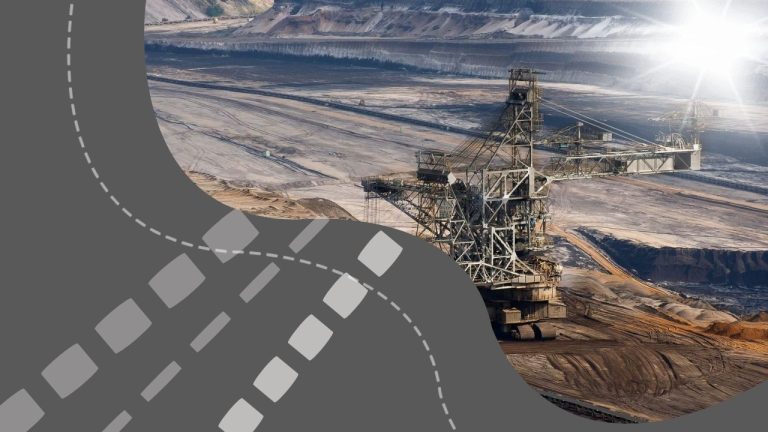
    Kyrgyzstan’s Kara-Keche coalfield, located in the Naryn region, has become a critical energy resource but at a devastating environmental cost. Once home to clear glacial streams, lush pastures, and thriving pine forests, the area now battles blackened waters, waste-clogged gorges, and shrinking green spaces. Villagers from Baizak and Bash-Kuugandy report that pastures have drastically deteriorated, water sources have become blocked or contaminated, and coal waste is being improperly disposed of in critical areas. Despite raising these issues with authorities for years, local residents have seen little to no action.

    Environmental studies reveal troubling results. A 2022 analysis found toxic substances in the water, and landslides triggered by mining operations have compounded the destruction, burying roads, streams, and infrastructure. In recent years, illegal dumping and neglect of environmental protocols have exacerbated the situation. Villagers allege that the Kara-Keche branch of the state enterprise Kyrgyzkomur, alongside private companies like Sharbon and Akzhol, fail to comply with safety and restoration requirements outlined in Kyrgyzstan’s environmental laws.

    Conflicts between economic development and ecological preservation are starkly visible here. While Kara-Keche contributes significantly to Kyrgyzstan’s coal production—over one million tons annually—the unchecked mining has displaced local communities and threatened their livelihoods. Complaints to the Environmental and Technical Supervision Service have been met with limited responses due to a government decree banning business audits, further weakening oversight.

    The area also grapples with political and social tensions. A history of conflicts includes landslides, armed confrontations, and allegations of corruption. In one instance, a massive landslide in 2020 caused severe disruption, isolating roads and power lines, while other incidents have highlighted the lack of adherence to safety measures. Despite promises of reforms and fines for mining companies, the damage continues unabated.

    As Kara-Keche’s coal reserves—estimated at 400 million tons—are extracted, the toll on the environment and local populations raises urgent questions about sustainability. The residents demand stricter enforcement of regulations and restoration of the damaged ecosystem to ensure the preservation of Kyrgyzstan’s natural resources for future generations.

  • Kyrgyzstan’s Gold Exports Increase in 2024

    Kyrgyzstan’s Gold Exports Increase in 2024

    From January to November 2024, Kyrgyzstan exported 16.1 tons of gold valued at $1.26 billion, reflecting a 4% rise in weight and a 30% increase in value compared to the same period in 2023, when exports amounted to 15.4 tons worth $972 million. The United Kingdom emerged as the leading buyer, accounting for 82% of exports with 13.3 tons valued at over $1 billion. Early in 2024, exports to China were prominent, but later shifted entirely to the UK, halting sales to China, the UAE, and Switzerland.

  • Kyrgyzstan Produces 26 Tons of Gold in 2024

    Kyrgyzstan Produces 26 Tons of Gold in 2024

    In 2024, Kyrgyzstan extracted 26 tons of gold, according to Meder Masheyev, the Minister of Natural Resources. This total includes 400 kilograms of alluvial gold. Preliminary figures also show coal production at 4.1 million tons and oil at 290,000 tons.

    Additionally, 182.5 tons of new gold deposits were added to the state reserves. The State Commission on Mineral Reserves reports Kyrgyzstan’s total gold reserves now stand at 1,016 tons, indicating a significant resource base for future development.

  • Kyrgyzstan Paves New Path in Mining Sector with Focus on Critical Raw Materials

    Kyrgyzstan Paves New Path in Mining Sector with Focus on Critical Raw Materials

    Kyrgyzstan is on the verge of a transformative shift in its mining industry, announcing plans to issue licenses for the extraction of critical raw materials (CRMs)—a strategy that seemed improbable just five years ago. This evolution follows extensive political reforms under President Sady Japarov, who has been pursuing new revenue streams since his election in late 2020.

    Traditionally, Kyrgyzstan has depended on mining, especially the Kumtor gold mine, due to a lack of natural gas and oil reserves. The Kumtor mine, near Lake Issyk-Kul, was initially estimated to hold 514 tons of gold but has faced controversies over environmental issues and a cyanide spill in 1998, impacting local communities and tourism.

    Public disapproval of mining activities has intensified, particularly after the 2019 Kyzyl-Ompol uranium mining controversy where nearly 30,000 citizens protested, leading to a moratorium on uranium and thorium mining due to environmental and health concerns. However, as the demand for CRMs increases globally—driven by the European Commission’s call for energy transition and secure CRM supplies—Kyrgyzstan is revisiting its mining prospects.

    In June 2024, Kyrgyzstan’s parliament lifted the uranium mining moratorium, encouraging new exploration nationwide. Amendments in subsoil use and biosphere territories regulations aim to streamline CRM resource development.

    Kyrgyzstan, however, faces obstacles in attracting foreign investment due to a fraught history with international mining companies, notably the Centerra dispute over Kumtor. Yet the government is eager to attract both domestic and international partners, with recent talks involving the Zhicun Lithium Industry Group for lithium mining.

    While mining activities, such as the start of operations at Kyzyl-Ompol, underscore the government’s commitment, environmental concerns persist. Incidents like a glacier damaged by a Chinese coal mining company and a radioactive waste spill have renewed public apprehensions, evoking memories of past controversies. Kyrgyzstan’s shift toward CRM mining raises questions about sustainable development, with hopes to avoid previous missteps and create long-term economic benefits for the country.


  • Kyrgyz President Calls for Enhanced Climate Cooperation at Central Asia-Germany Summit

    Kyrgyz President Calls for Enhanced Climate Cooperation at Central Asia-Germany Summit

    The President of Kyrgyzstan, Sadyr Japarov, urged his counterparts to increase cooperation on climate change during the Central Asia-Germany Summit, according to a statement from the President’s press office. In his speech, Japarov highlighted the growing global influence of Central Asia in recent years. He stressed that regional and interregional integration is essential for a shared future.

    Japarov also expressed optimism that sustained collaboration between Kyrgyzstan and Germany could lead to stronger investment and trade partnerships. He pointed out Kyrgyzstan’s vast potential in green energy and metal mining, particularly in rare-earth elements.

    Addressing the urgent need for climate cooperation, Japarov noted a worrying statistic: Kyrgyzstan’s glaciers have shrunk by 16% over the last 70 years. He also cited the lack of funding as a major obstacle to achieving the targets of the Paris Climate Agreement, with limited options for broad public financing of environmental initiatives. As a solution, he proposed a new mechanism of exchanging public debt for green projects to support climate action.

  • Kyrgyz Prime Minister Discusses Lithium Exploration with Chinese Company

    Kyrgyz Prime Minister Discusses Lithium Exploration with Chinese Company

    Kyrgyzstan media said the Prime Minister, Akylbek Japarov, had discussed with China’s Zhicun Lithium to explore potential lithium exploration, mining, and lithium carbonate processing projects within Kyrgyzstan. These discussions took place during Japarov’s official visit to Urumqi, Xinjiang, China, coinciding with the 8th China-Eurasia Expo held from June 26 to 30, 2024.

    Zhicun Lithium has laid out four subsidiaries in Xinjiang, aiming to build lithium carbonate production lines in Ruoqiang, Hotan, and Altay, which could achieve over 300,000 tonnes of carbonate-producing capacity if the development follow the investment blueprints. In July 2023, Zhicun started the operation of a 120,000 tonnes of battery-grade lithium carbonate producing project in Ruoqiang, with Phase I targeting at 60,000 tonnes per year.

    This April, Zhicun was also in talks with Kazakh Invest for lithium projects in Kazakhstan. Kazakh Invest’s Project Director and the company’s Vice President have met and discussed the strategic importance of developing the lithium industry in Kazakhstan.

  • Kyrgyz Parliament Lifts Ban on Uranium and Thorium Mining, Focusing on Economic Benefits

    Kyrgyz Parliament Lifts Ban on Uranium and Thorium Mining, Focusing on Economic Benefits

    Deputies of the Kyrgyz Parliament have voted in favor of a bill to lift the ban on mining uranium and thorium, with 69 votes in favor and three against. The parliamentarians are confident that these legislative changes will bring substantial economic dividends to the country.

    The ban on uranium and thorium mining was initially imposed in 2019 when authorities sought to sell a development license for a deposit. However, local residents expressed concerns about potential environmental damage and harm to the water table, leading to a complete ban across the Republic.

    Over the past century, the Issyk-Kul region of Kyrgyzstan alone has accumulated 150,000 cubic meters of radioactive waste from uranium mining. The country currently has 92 burial sites containing 23 tailing dumps with uranium elements, resulting in a total volume of 2.9 million cubic meters of poisonous and hazardous substances.

    The new bill emphasizes the need for alternative sources of income due to severe economic impacts in recent years. However, it also highlights the importance of strict compliance with environmental norms and standards in uranium and thorium mining.

    Minister of Natural Resources, Environment, and Technical Supervision, Melis Turganbayev, assured the deputies that the passage of the bill would not harm the environment or the health of Kyrgyz citizens. Turganbayev explained that the focus is not solely on uranium but also on associated metals. The plan is to mine titanomagnetite, which contains uranium and thorium. The extracted uranium will be sold to other states, while thorium will be stored. Processing will take place at the Kara-Balta Combine in Chui Oblast.

    While three deputies voted against the bill, citing environmental concerns, Doctor of Geological and Mineral Sciences, academician Rozalia Jenchuraeva, described the 2019 ban as a “big folly.” She highlighted the need to address the harmful waste and contamination of soil and water caused by hazardous materials lying just 20 meters below the surface. Jenchuraeva believes that mining these elements will clean up the land and create opportunities for the Kara-Balta Combine.

    President Japarov, who met with residents near the Kyzyl-Ompol deposit, expressed optimism about the development. He stated that it would create over a thousand jobs and become a significant resource similar to the Kumtor gold deposit. The aim is to boost the local budget and improve the living standards of the people.

    Kyzyl-Ompol, a uranium-thorionite placer deposit discovered in 1951, is one of the five areas in Kyrgyzstan where these minerals are found. It has been extensively explored by the Kyrgyz Institute of Geology.

  • Kyrgyzstan’s Kumtor Gold Mine Reports $300 Million Profit in the Last Two Years

    Kyrgyzstan’s Kumtor Gold Mine Reports $300 Million Profit in the Last Two Years

    During a forum in Bishkek, Kyrgyzstan’s Prime Minister Akylbek Japarov announced that the profit from the Kumtor gold deposit over the past two and a half years amounted to $300 million, with dividends totaling $100 million from 1994 to May 2021. Japarov highlighted the significant financial era the nation has entered due to their productive work. Kumtor, one of the largest gold mines in Central Asia, is located in the Issyk-Kul region in northern Kyrgyzstan, approximately 60 km from the Chinese border at an altitude of over 4,000 meters. The mine was previously owned by Canadian Centerra Gold Inc., but Kyrgyzstan took control in May 2021 citing environmental concerns and tax issues. Legal disputes arose, leading to an international arbitration initiated by Centerra, though a settlement was later reached. As of February 2023, Kyrgyzstan’s Cabinet of Ministers ended the temporary management of Kumtor Gold Company, which now operates as a subsidiary of the state-owned Kyrgyzaltyn. Formerly producing 15-17 tons of gold annually up to 2021, the mine yielded 17.3 tons in 2022.

  • Kyrgyzstan Budget Committee Approves Concept of Uranium and Thorium Mining Law

    Kyrgyzstan Budget Committee Approves Concept of Uranium and Thorium Mining Law

    The Committee on Budget, Economic, and Fiscal Policy of the Jogorku Kenesh (Parliament) of the Kyrgyz Republic today, May 27, considered and approved the draft law “On Amendments to Certain Legislative Acts of the Kyrgyz Republic (to the Code of the Kyrgyz Republic on Administrative Offenses, the Law of the Kyrgyz Republic “On Subsoil”) and the recognition of the Law of the Kyrgyz Republic “On Prohibition of Activities Related to Geological Exploration of Subsoil for the Purpose of Uranium and Thorium Deposits Exploration and Development in the Kyrgyz Republic” as no longer in force in the first reading.

    The Minister of Natural Resources, Ecology, and Technical Supervision, Melis Turgunbaev presented the information about the draft law. The Minister noted that the draft law proposes to declare the Law of the Kyrgyz Republic “On Prohibition of Activities Related to Geological Exploration of Subsoil for Uranium and Thorium Deposits Exploration and Development in the Kyrgyz Republic” dated December 14, 2019, No. 139, which prohibits activities related to geological exploration of subsoil for uranium and thorium deposits, as no longer in force. The adoption of the Law will be accompanied by monitoring by state bodies of modern technologies for uranium and thorium extraction, which will contribute to minimizing the negative impact of mineral extraction on the environment. If such technologies are identified, state bodies will introduce requirements for their implementation by subsoil users.

    During the discussion, deputies Azamat Isirailov, Aisarakan Abdybaeva, and Nadira Narmatova raised questions about mechanisms and procedures for ensuring environmental safety and protecting public health. The Minister emphasised that adopting the draft law will be accompanied by introducing and enforcing environmental protection standards by subsoil users, including minimising emissions of harmful substances, ensuring workplace safety, and compliance with norms regarding the permissible impact on water and soil resources.

    The lifting of the ban would enable the extraction of valuable minerals at 83 deposits highly demanded in the global market. Turgunbayev highlighted the Kyzyl-Ompol deposit, which holds significant reserves of titanomagnetite, with mining operations to be conducted by state-owned companies.

  • Chaarat Gold Secures Major Funding for Tulkubash Mine in Kyrgyzstan

    Chaarat Gold Secures Major Funding for Tulkubash Mine in Kyrgyzstan

    Chaarat Gold Holdings Ltd announced on Friday significant progress in securing funding to initiate production at the Tulkubash gold mine in Kyrgyzstan. The company’s shares surged 43% to 4.00 pence each in London following the announcement.

    Chaarat Gold, a mining exploration and development company, has entered into a non-binding term sheet with Xiwang International Co Ltd (XWIC) for a USD 150 million funding package. This investment would grant XWIC a 60% economic interest in the Tulkubash project, while Chaarat would retain a 40% stake.

    XWIC, an investment company based in the British Virgin Islands and an affiliate of Touchstone Capital Partners, aims to build a substantial portfolio of mining assets globally. This agreement represents a key step in advancing discussions between the parties and sets a clear action plan for a successful transaction.

    The completion of this deal would provide full financing for the development and commencement of production at the Tulkubash gold project. It would also enable Chaarat to restructure its existing commitments and lay the groundwork for potential future joint ventures in the gold mining sector.

    Chaarat continues to engage with other potential funding sources and plans to enter discussions with convertible bondholders regarding outstanding bonds due for repayment at the end of July. The Tulkubash project has an initial mine life of six years, with significant development potential from additional prospects such as Karator and Ishakuldy. The company aims to extend the total mine life beyond 15 years.