Tag: Kazakhstan

  • Kazakhstan Approves New Technical Regulations for Coal and Coal Products

    Kazakhstan Approves New Technical Regulations for Coal and Coal Products

    The Ministry of Industry and Construction of Kazakhstan has introduced a new technical regulation, “Requirements for Coal and Coal Processing Products”, via Order No. 84 dated March 11, 2025. The regulation will take effect 12 months after its official publication.

    The rules apply to:

    1. Coal and its sorted, enriched, and agglomerated products.
    2. Thermochemical coal processing products, including coke, semi-coke, coal tar, coal oil, boiler fuel, and activated carbon.

    Key changes include:

    • Clear classification of coal grades and processed products.
    • Updated conformity assessment procedures.
    • Removal of mining process requirements (covered by other laws).
    • Differentiated safety standards based on coal type and processing method.

    For example, the regulation now explicitly covers coke, semi-coke, and activated carbon, classified under the Eurasian Economic Union’s trade codes. New rules also set storage limits for processed coal products and fire safety standards.

    To support compliance, 52 mandatory standards and 116 additional standards for conformity assessment have been developed.

    The current regulation (“Safety Requirements for Coal and Its Mining, Processing, Storage, and Transportation”, 2010 No. 731) will be repealed once the new rules take effect.

  • Kazakhstan Explores Investment Opportunities with Turkey’s Çalik Holding

    Kazakhstan Explores Investment Opportunities with Turkey’s Çalik Holding

    Kazakhstan’s Minister of Industry and Construction, Ersayin Nagaspayev, held a meeting with Ahmet Çalık, Chairman of the Board of Çalik Holding, to discuss potential investment opportunities in the country’s industrial and mining sectors.

    Çalik Holding, a major Turkish financial-industrial group with an annual revenue of $2.5 billion, operates across 34 countries, including Central Asia, the Balkans, the Middle East, and Africa. The company specializes in resource extraction, construction, light industry, energy, and finance.

    The meeting focused on the group’s interest in investing in Kazakhstan’s economy, particularly in the mining sector. Çalik Holding is considering acquiring ready-to-extract deposits of precious and base metals such as gold, silver, copper, zinc, and lead, or conducting geological exploration in areas with high potential for mineral discovery.

    Both sides highlighted the strong potential for cooperation in industry, construction, mining, and geological exploration. Minister Nagaspayev emphasized that Kazakhstan has fully digitized its mineral rights application process through the unified “Minerals.e-qazyna.kz” platform. Additionally, the Ministry has prepared a list of 50 solid mineral deposits, which will be auctioned electronically in the second quarter of this year.

    At the conclusion of the meeting, both parties reaffirmed their interest in strengthening and expanding their partnership.

  • Kazakhstan Defies Global Steel Production Decline with 6.5% Growth in 2024

    Kazakhstan Defies Global Steel Production Decline with 6.5% Growth in 2024

    Despite a global downturn in steel production and a 20% average drop in steel prices, Kazakhstan has emerged as a standout performer in 2024, achieving an 8th-place ranking worldwide with a 6.5% increase in production. This growth contrasts sharply with the global trend, where steel output fell by 0.8%, according to the World Steel Association. Major producers like China, the United States, Japan, and Russia recorded declines, while countries such as the UK, Argentina, and Pakistan saw even steeper drops.

    The global steel crisis has forced several major plants to halt operations, including Hyundai Steel’s Pohang-2 in South Korea, Acerinox in Spain, and Huachipato in Chile, which closed after 74 years of operation. Similarly, facilities in the US and Portugal have been temporarily idled.

    Kazakhstan’s success is attributed to strategic investments in domestic raw materials and the expansion of production at the Qarmet metallurgical plant. Yerbol Ismailov, Managing Director of Qarmet, highlighted that the company’s growth was anticipated, driven by $3.5 billion in investmentsand a focus on modernization. Qarmet produced over 3.5 million tons of steel in 2024, a 15% increase from the previous year, with plans to reach 5 million tons annually by 2028.

    However, challenges remain. Competing with China and Russia, which offer lower production costs, has been difficult. Qarmet has addressed this by reducing operational costs by 23.5%, lowering the price per ton of slab from 440∗∗to∗∗320, with a target of $280. The company has also implemented anti-corruption measures, digitized operations, and optimized procurement processes to enhance efficiency.

    Despite rumors of financial instability, Qarmet has invested heavily in worker safety, digitalization, and waste management, underscoring its commitment to sustainable growth.

  • Qarmet Reports Robust Growth in 2024 and Ambitious Targets for 2025

    Qarmet Reports Robust Growth in 2024 and Ambitious Targets for 2025

    Kazakhstan’s leading steel producer Qarmet has announced impressive results for 2024 and outlined ambitious plans for the coming year. The company, formerly known as ArcelorMittal Temirtau, demonstrated significant growth across all its major departments.

    Steel Department: Five-Year Production Record
    The company’s Steel Department posted a production volume of 3.5 million tons, marking a notable 16% increase compared to the previous period. May 2024 saw a production peak of 330,000 tons, the highest in five years, showcasing the department’s efficiency and growth trajectory.

    Coal Department: Solid Gains
    The Coal Department mined 6.6 million tons of coal in 2024, reflecting an 8.2% increase from the prior period. This consistent growth underscores Qarmet’s strategic focus on optimizing operations and meeting market demands.

    Iron Ore Department: Leading the Charge
    2024 was a standout year for the Iron Ore Department, which achieved a production volume of 3.3 million tons—an impressive 23% surge compared to the previous period. This sharp growth highlights the department’s strong operational performance.

    Environment & Safety: Significant Progress
    Qarmet’s commitment to sustainability was evident in its ecological and safety initiatives. Preliminary degassing of mines in 2024 resulted in a 50% reduction in methane gas levels, emphasizing the company’s focus on environmental responsibility and worker safety.

    Ambitious Goals for 2025
    Qarmet aims to build on its 2024 successes by achieving a 5% increase in production across steel, coal, and iron ore.

    The targets for 2025 are:

    • Steel: 3.7 million tons
    • Coal: 7.0 million tons
    • Iron Ore: 3.5 million tons

    With a strong foundation and ambitious plans, Qarmet is poised for continued growth and leadership in its sectors, combining operational excellence with a commitment to sustainability and innovation.

  • Kazakhstan to Invest Over 7 Billion Tenge in Geological Exploration Over Next Two Years

    Kazakhstan to Invest Over 7 Billion Tenge in Geological Exploration Over Next Two Years

    Kazakhstan has announced plans to allocate more than 7.6 billion tenge from the state budget for geological exploration and mineral resource studies in 2025-2026. According to the Ministry of Industry and Construction, the funds will be used for geological re-evaluation, mineragenic mapping, and deep-level mapping of the country’s territory. By the end of 2026, the geological and geophysical awareness of Kazakhstan’s land is expected to increase to 2.2 million square kilometers, up from 2 million square kilometers in 2023.

    The ministry highlighted Kazakhstan’s significant reserves of manganese ore, chromium, lead, zinc, titanium, and lithium. The country ranks second globally in manganese ore reserves, with 600 million tons, and eighth in iron ore deposits, with 12.5 billion tons. Additionally, Kazakhstan holds 30% of the world’s chromite ore reserves and boasts extensive deposits of lead and zinc.

    Kazakhstan also possesses the world’s largest chromium reserves and is the second-largest holder of uranium. Annual production includes 907.9 thousand tons of manganese ore, 6.1 million tons of chromium, 280 thousand tons of zinc, 110 thousand tons of lead, and 15 thousand tons of titanium.

    In efforts to attract investment, the ministry reported ongoing collaborations with the European Union, United States, United Kingdom, and other nations. Foreign companies are encouraged to participate in subsoil use auctions through a digital state platform. Furthermore, Kazakhstan officially joined the Minerals Security Partnership Forum in 2024, enhancing opportunities for projects and policy dialogues on critical minerals at both governmental and corporate levels.

  • Kazakhstan Poised to Meet Global Demand for Critical Minerals Amid Energy Transition

    Kazakhstan Poised to Meet Global Demand for Critical Minerals Amid Energy Transition

    Kazakhstan has the potential to ensure uninterrupted supplies of critical minerals and help meet the growing global demand driven by the energy transition and the expansion of the electric vehicle market, according to the Astana International Financial Centre (AIFC). Experts at the center highlight that Kazakhstan possesses export potential in nine key commodity groups, including metals already being exported and others with untapped potential.

    The AIFC report emphasizes that the global shift toward low-carbon development and the rapid growth of the electric vehicle industry will significantly increase demand for critical minerals. Kazakhstan, with its vast resources, is well-positioned to play a pivotal role in this transition. The country has already demonstrated competitive advantages in exporting copper, zinc, aluminum, silver, and lead. Additionally, gold, nickel, lithium, and rare earth metals are identified as emerging export opportunities that could further strengthen Kazakhstan’s position in the global market.

    Kazakhstan holds a 5% share of the global zinc market, ranking seventh in reserves with 6.7 million tons in 2023. In 2022, 70% of its zinc exports went to Turkey, Russia, and China. The country also accounts for nearly 4% of the global copper market, with 20 million tons in reserves, and its top export destinations include China, Turkey, and the UAE.

    While Kazakhstan’s share in the global lead market is around 3%, its silver reserves rank third globally, with an annual demand of 26,000 tons. The country’s aluminum reserves, though less than 1% of the global market, are significant, with major exports going to Turkey, Italy, and Greece.

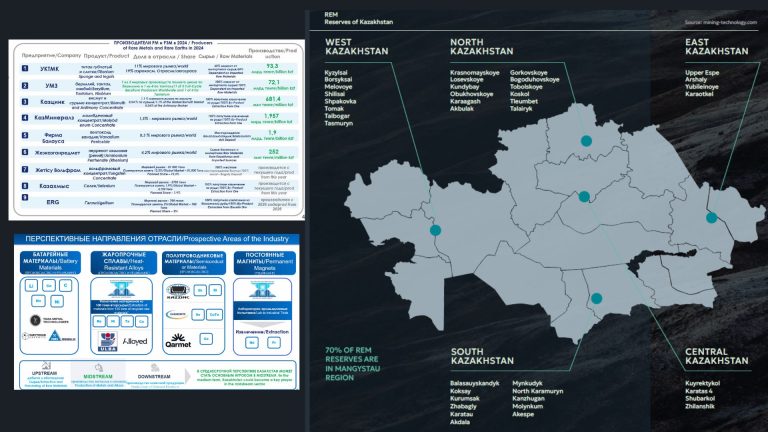
    Looking ahead, Kazakhstan is exploring opportunities in nickel, lithium, and rare earth metals. The country ranks among the top 20 globally in nickel reserves, with 1.5 million tons, and is collaborating with companies from Germany, South Korea, and the UK to develop lithium deposits. A recent discovery in March 2024 revealed a lithium deposit in Eastern Kazakhstan worth an estimated $15.7 billion.

    Furthermore, Kazakhstan has seen a 3.8-fold increase in rare earth metal exports since 2020. The government has adopted a comprehensive plan for 2024-2028, investing 2.4 billion tenge to develop this sector. With potential resources valued at $46 trillion, Kazakhstan is set to become a key supplier of critical raw materials to the European Union, as highlighted in a recent agreement worth 3 million euros.

  • Kazakhstan Unveils Ambitious Mining Reforms at PDAC-2025 Forum in Toronto

    Kazakhstan Unveils Ambitious Mining Reforms at PDAC-2025 Forum in Toronto

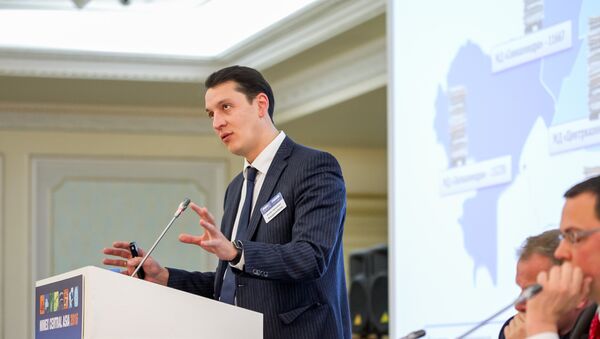
    Toronto, March 2, 2025 — At the PDAC-2025 Conference, the Ministry of Industry and Construction of the Republic of Kazakhstan took centre stage with its “Meet Kazakhstan: The Power of Geology in the Ninth Largest Nation” forum. The event, held in Toronto, showcased the nation’s vast geological potential and highlighted sweeping reforms in the mining and metallurgical sectors aimed at attracting international investment.

    A Vision for Modernization and Global Partnership
    In an invitation issued by Minister Kanat Sharlapaev, Kazakhstan outlined its strategic priorities to modernize its mining industry. The forum underscored efforts to shift from the Soviet-era regulatory framework to a more efficient, transparent system—one that mirrors best practices seen in established mining nations such as Canada and Australia. The nation’s reforms include the adoption of advanced processing technologies, updated legislative measures, and the development of robust infrastructure, all designed to boost investor confidence and integrate Kazakhstan into the global value chain.

    High-Level Panel Discussions Drive the Narrative
    The session titled “Investment, Supply Chain Development and National Legislation” was moderated by Mr. Wael Jaber, Director of Mining and Metals Consulting at Wood Mackenzie. The panel featured influential voices including Mr. Gabidulla Ospankulov (Chairman of the Investment Committee of Kazakhstan’s Ministry of Foreign Affairs), Mr. Garth Kirkham (Chairperson, CIM Canada CRIRSCO), Mr. Michael Stanley (Mining Sector Lead, World Bank Group), Mr. Andres Blanco (CEO of Xcalibur Smart Mapping), and Mr. Timur Odilov (Partner, Haller Lomax).

    Panellists explored a wide range of topics—from the integration of next-generation mapping technologies and data analytics in exploration to the critical role of international financial institutions in supporting infrastructure development. Mr. Ospankulov emphasised Kazakhstan’s unique geographic advantage as a bridge between Europe and Asia, which bolsters cross-border transportation and enhances the country’s appeal for foreign direct investment.

    Reforming for a Competitive Edge
    A recurring theme throughout the discussions was the overhaul of the nation’s mining legislation. Experts detailed how dismantling outdated Soviet-era regulations has paved the way for a modernized legal framework. This new approach offers incentives such as tax exemptions and streamlined investment support through initiatives like the “Kazak Invest One Stop Shop.” Such reforms are not only intended to attract major multinational corporations but also to foster the growth of junior mining companies and stimulate local supply chain development.

    Michael Stanley of the World Bank Group noted that Kazakhstan’s regulatory clarity and commitment to transparency are key to ensuring that investors can confidently compare projects across borders, regardless of whether they are based in Kazakhstan, Canada, or Australia. The session also highlighted the emerging trend of integrating artificial intelligence into geological data analysis—a move that could accelerate exploration timelines and enhance resource evaluation.

    Implications for the Global Mining Landscape
    Kazakhstan’s proactive approach to mining sector modernization comes at a time when the global energy transition is reshaping resource markets. The forum not only illustrated the country’s abundant mineral reserves—including its position as one of the top five titanium producers globally—but also its readiness to engage with international partners to harness these resources responsibly and sustainably.

    By fostering open dialogue, knowledge exchange, and strategic partnerships, Kazakhstan is positioning itself as a key player in the global mining arena. The insights shared at the forum are expected to catalyse deeper economic ties with the international community, ultimately transforming the nation into a magnet for mining and metallurgical investments.

    For a closer look at the discussions, interested parties can view the session on YouTube here.

  • Kazakhstan and China Discuss Nuclear Energy Cooperation

    Kazakhstan and China Discuss Nuclear Energy Cooperation

    Kazakhstani President Kassym-Jomart Tokayev met with Shen Yanfeng, General Director of China National Nuclear Corporation (CNNC), to explore opportunities for collaboration in nuclear energy.

    During the discussion, Tokayev outlined Kazakhstan’s strategic plans for the sector, highlighting the recent establishment of the Nuclear Energy Agency to oversee the industry’s systematic development. He expressed interest in CNNC’s extensive expertise as a leading force in China’s nuclear sector.

    Shen Yanfeng, in turn, provided an overview of CNNC’s projects both within China and internationally. The meeting also covered potential cooperation in advancing peaceful nuclear technologies and training Kazakhstani specialists.

    CNNC, founded in 1999, is China’s largest state-owned enterprise dedicated to nuclear energy development, technological innovation, and research.

  • Kazakhstani Scientists Help Optimize Gold Extraction and Reduce Losses

    Kazakhstani Scientists Help Optimize Gold Extraction and Reduce Losses

    Gold remains one of the most valuable and in-demand metals globally, occurring in nature both in free form and as part of mineral compositions. Efficient gold extraction requires precise data on its natural distribution and concentration.

    Scientists from the branch of the National Center for Complex Processing of Mineral Raw Materials of Kazakhstan (VNIItsvetmet) conduct highly accurate analyses, determining gold content with a precision of up to 0.01 g/t. Their research allows mining companies to optimize ore processing, potentially saving up to 300 million tenge annually at a single beneficiation plant, such as KazZinc LLP.

    VNIItsvetmet experts have established close cooperation with industry enterprises, helping to address key production challenges. Their recommendations have enabled KazZinc to prevent the loss of approximately 10–12 kg of gold each year at just one processing facility.

    Each year, VNIItsvetmet conducts around a hundred specialized analyses to determine gold content in ores from various deposits and enrichment products for domestic clients. This work plays a crucial role in strengthening Kazakhstan’s gold mining sector.

  • Kazakhstan to Launch 190 Industrial Projects Worth $3 Billion in 2025

    Kazakhstan to Launch 190 Industrial Projects Worth $3 Billion in 2025

    Kazakhstan is set to implement 190 industrial projects worth 1.5 trillion tenge ($3 billion) in 2025, marking the highest number of such initiatives in the past five years. This announcement was made by the Ministry of Industry and Construction of Kazakhstan, highlighting the country’s push to boost its industrial sector.

    Among these projects are nine major investments in metallurgy, machine building, and the chemical industry, with plans for completion by 2035. Once these new enterprises reach their full operational capacity, the total value of their output is expected to reach $7.3 billion annually.

    Key projects include the launch of hot-briquetted iron production, the construction of a copper smelting plant, a potash salt production complex, and a hydrometallurgical plant. Additionally, Kazakhstan will ramp up production of hydrogen peroxide, liquid glass, sulfuric acid, mineral fertilizers, polypropylene, and yellow phosphorus, according to Sputnik Kazakhstan.

    These initiatives are part of Kazakhstan’s broader strategy to diversify its economy and strengthen its industrial base, positioning the country as a key player in regional and global markets.