Tag: Kazakhstan critical minerals

  • Kazakhstan Emerges as Central Asia’s Critical Minerals Powerhouse as Uranium, Tungsten and Rare Earths Drive Global Investor Interest

    Kazakhstan Emerges as Central Asia’s Critical Minerals Powerhouse as Uranium, Tungsten and Rare Earths Drive Global Investor Interest

    Kazakhstan is undergoing a fundamental repositioning in global resource markets, moving from a country primarily associated with oil, gas and bulk commodities to one increasingly recognised as a strategic supplier of uranium, rare earth elements, tungsten and other critical minerals essential to advanced manufacturing, defence systems and the energy transition.

    Three themes dominated Central Asian mining capital markets over the past week: strategic developments at Kazatomprom, shifting ownership dynamics at Eurasian Resources Group, and US government-backed financing for Kazakhstan’s tungsten projects.

    Kazatomprom, the world’s largest uranium producer, reinforced investor confidence by announcing the partial redemption of $100 million in long-term bonds — a signal of balance sheet strength during one of the strongest uranium markets in decades. The company’s market value has grown to approximately $19 billion, more than six times its IPO valuation, as nuclear energy regains strategic favour across Europe, North America and Asia. Management expects production growth in 2026 while maintaining a disciplined approach that prioritises value creation over aggressive volume expansion. State ownership through Samruk-Kazyna remains an important factor for investors assessing long-term strategic direction.

    ERG, one of the world’s largest producers of ferroalloys, iron ore, aluminium, copper and cobalt, attracted attention following ownership changes involving a significant stake. Investors interpreted the development as part of a broader trend toward greater government influence over strategically important mining assets — a pattern that extends beyond corporate governance given ERG’s critical minerals portfolio. The group previously accounted for approximately 20% of global gallium production, a metal classified as strategic by both the US and EU for its applications in semiconductors, telecommunications equipment and advanced electronics. ERG’s growing importance to global resource security has elevated it from a traditional mining group to a company viewed as critical infrastructure within global supply chains.

    On the tungsten front, a company developing the Northern Katpar and Upper Kairakty deposits — among the largest tungsten developments outside China — has reportedly sought an additional $400 million in US government-backed financing, supplementing previous expressions of interest valued at up to $1.6 billion. The scale of international backing reflects how strategic mineral projects are increasingly evaluated through a national security lens rather than as conventional commodity investments.

    Both Kazakhstan and Uzbekistan are pursuing policies designed to move beyond raw material exports, attracting investment in processing, refining and downstream industrial operations to capture a greater share of the value chain domestically. This strategic shift mirrors approaches seen in other resource-rich regions seeking long-term economic resilience, and creates new investment opportunities across multiple segments of the mining and industrial ecosystem.

  • C5+1 Critical Minerals Dialogue Convenes in Astana Ahead of AMM-2026 Congress as Kazakhstan Highlights 9,500-Deposit Resource Base

    C5+1 Critical Minerals Dialogue Convenes in Astana Ahead of AMM-2026 Congress as Kazakhstan Highlights 9,500-Deposit Resource Base

    A C5+1 Critical Minerals Dialogue was held in Astana on the eve of the 16th Astana Mining and Metallurgy Congress, co-chaired by Kazakhstan’s Minister of Industry and Construction Yersaiyn Nagassayev and US Special Envoy for South and Central Asia Sergio Gor, bringing together government representatives from Kyrgyzstan, Tajikistan, Turkmenistan and Uzbekistan alongside the United States.

    Discussions focused on priority areas of cooperation between Central Asian states and the US across the full critical minerals value chain — geological exploration, extraction, processing and supply to global markets. Participants identified long-term cooperation directions including the development of high-technology processing industries, creation of industrial clusters, technology transfer, workforce training and strengthened scientific and technical cooperation. Logistics and supply chain reliability for delivering products to world markets also featured prominently in the agenda.

    Minister Nagassayev emphasised Kazakhstan’s position at the centre of the format’s mineral security agenda. “President Tokayev particularly underscores the important role of the C5+1 platform as a new format of interaction between Central Asia and the United States. The C5+1 Critical Minerals Dialogue is aimed at deepening cooperation in sustainable strategic raw material supply, developing technological interaction and building reliable global supply chains,” he said. He described Kazakhstan’s critical minerals sector as one of the country’s industrial policy priorities, noting that the country’s resource base encompasses more than 9,500 deposits, over 100 of which contain rare and rare earth metals. Digitalisation measures and the adoption of international standards have driven a significant increase in investment, attracting major global companies including Rio Tinto, Barrick Gold, First Quantum, Ivanhoe, Teck, Fortescue and Cove Capital.

    All parties confirmed their interest in developing multilateral cooperation and implementing joint industrial and infrastructure projects.

  • C5+1 Format Broadens Into Culture and Heritage as Critical Minerals Session in Astana Follows Tashkent Diplomatic Week

    C5+1 Format Broadens Into Culture and Heritage as Critical Minerals Session in Astana Follows Tashkent Diplomatic Week

    The United States and Central Asia advanced the C5+1 format on multiple fronts in the same week, with a cultural cooperation meeting in Tashkent on 5 June followed days later by a critical minerals dialogue session in Astana — a sequence that reflects the format’s deliberate expansion from security and energy diplomacy into a more comprehensive regional engagement framework.

    The Tashkent meeting brought together culture ministers from all five Central Asian states alongside US Under Secretary of State for Public Diplomacy Sarah Rogers. Participants discussed the formation of a permanent C5+1 Working Group on Culture, a joint Culture and Innovation Forum, expanded places for Central Asian cultural professionals in US education and exchange programmes, and closer cooperation in the creative industries. Uzbekistan proposed establishing joint English for Culture centres with US partners at cultural education institutions — a concrete institutional base for an agenda that has previously remained at the level of declarations. The meeting concluded with a protocol reaffirming commitments from the November 2025 Washington summit, covering joint events in art, literature, theatre, cinema and music, museum partnerships, heritage digitisation and tourism routes.

    The cultural diplomacy track sits alongside the more commercially focused critical minerals agenda that brought the C5+1 format to Astana for the 10 June Critical Minerals Dialogue, held immediately before the Astana Mining and Metallurgy Congress on 11 to 12 June. The congress programme covers investment conditions, taxation, transport and logistics, copper as a strategic metal and the transition from mineral resources to funded investment projects, with B2B and B2G meetings and a site visit to a Qarmet enterprise on 13 June. Companies and organisations from Kazakhstan, Canada, China, Germany, Saudi Arabia, Sweden and the United States are among confirmed participants.

    Kazakhstan’s position at the centre of these discussions reflects its genuine strategic weight. The country accounted for 39% of global uranium production and 48.8% of global natural uranium exports in 2024, while hard minerals and metals made up 18% of exports by value. Refined copper exports generated $2 billion that year, zinc $788 million and silver $588 million. Kazakhstan is also working to develop rare earth potential into bankable projects, following the 2025 announcement of the Zhana Kazakhstan deposit with estimated resources exceeding 20 million metric tonnes containing neodymium, cerium, lanthanum and yttrium.

    The week’s sequence illustrates how the C5+1 format is evolving from broad diplomatic declarations toward working-level deliverables. Leaders set priorities in Washington in November 2025; ministers and sectoral officials are now converting those priorities into practical workstreams. For the United States, critical minerals represent the strongest economic rationale for maintaining the format’s momentum. For Central Asian governments, the incentive is technology transfer, financing, market access and a larger share of value captured domestically from their own resources.

  • UK Ambassador Highlights Kazakhstan’s Critical Mineral Wealth at MINEX as Britain Seeks Energy Transition Partners

    UK Ambassador Highlights Kazakhstan’s Critical Mineral Wealth at MINEX as Britain Seeks Energy Transition Partners

    Kazakhstan holds 27 of the 36 critical minerals listed in the United Kingdom’s energy transition strategy, the British ambassador to Kazakhstan has revealed, underscoring the growing strategic importance of the Central Asian nation to Britain’s green energy ambitions.

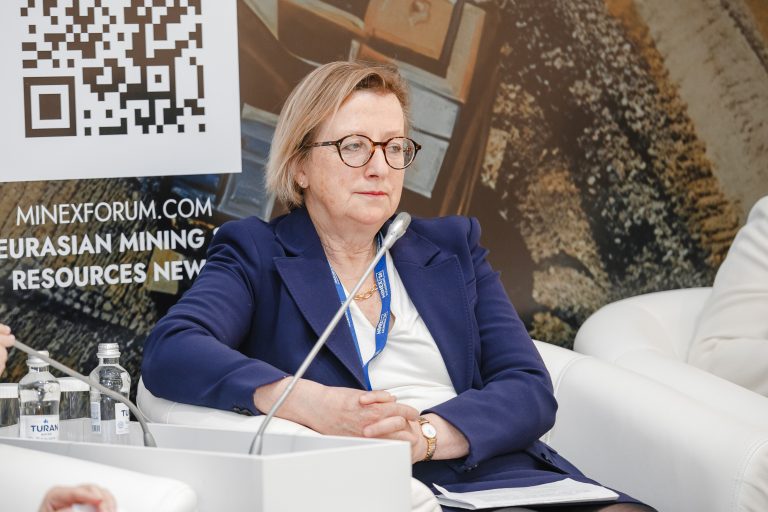
    Speaking at the MINEX forum in Astana, ambassador Sally Axworthy noted that while more than 50% of the UK’s electricity is now generated from renewable sources, green energy infrastructure is directly dependent on a reliable supply of critical minerals — a dependency that makes Kazakhstan an increasingly significant partner.

    “Kazakhstan is a world leader in uranium, beryllium, titanium, copper and zinc, and also produces many other resources,” Axworthy said, pointing to the breadth of the country’s mineral endowment as a key factor in the bilateral relationship. The UK has previously provided financial support for OECD research on critical raw materials governance in Kazakhstan and the broader Central Asian region as part of its Integrated Security Fund programme.

    The remarks reflect a broader pattern of Western nations accelerating engagement with Kazakhstan as competition for critical mineral supply chains intensifies globally, driven by the energy transition, defence needs and the push to reduce dependence on Chinese-dominated supply.

  • Kazakhstan Faces Tough Road to Deep Processing as Critical Minerals Forum Highlights Technology and China Competition Challenges

    Kazakhstan Faces Tough Road to Deep Processing as Critical Minerals Forum Highlights Technology and China Competition Challenges

    Kazakhstan’s mining sector stands on the threshold of transformation, but turning ambition into reality will require overcoming significant technological, financial and competitive hurdles — a frank assessment that emerged from discussions at the mining and geology forum in Astana, where the path from raw material extraction to high-value processing was the central theme.

    The forum’s focus on critical and rare earth metals reflects a global reality: demand for these materials is rising rapidly, driven by the energy transition, defence needs and advanced manufacturing. For Kazakhstan, the logic is clear — selling unprocessed ore generates far less revenue than supplying refined or intermediate products. The country possesses the resource base; what it still lacks, participants agreed, is the technology and investment required to move up the value chain.

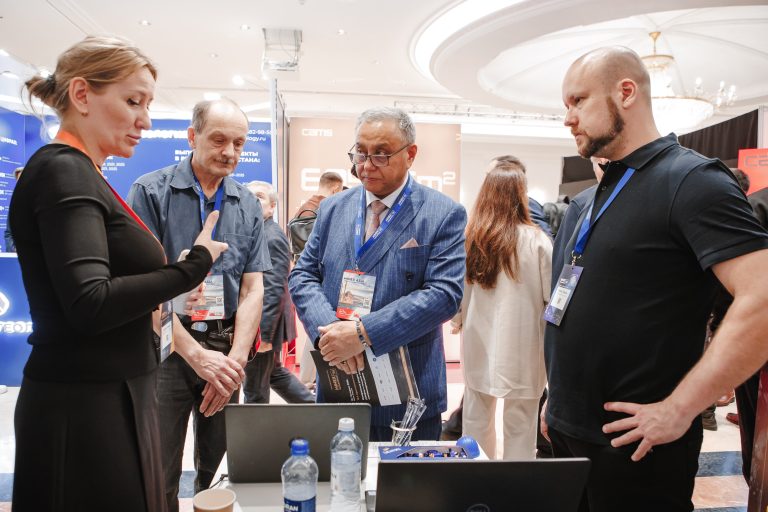
    New portable analytical equipment on display at the forum illustrated how technology is already beginning to change fieldwork. Vasily Makeyev, a representative of a equipment distribution company, demonstrated devices capable of performing on-site chemical analysis of ore and rock samples without the need to wait for laboratory results. “A geologist, right in the field or underground in a mine, can immediately assess the chemical composition of material on the spot,” he said, “rather than waiting for laboratory data that can take several hours or even several days to process.”

    On the broader challenge of building a domestic deep processing industry, participants were candid about the obstacles. Ros Lund, chief executive of the Eurasian Critical Minerals Organisation, acknowledged that while Kazakhstan has the intent and policy mechanisms, competing in processing is far from straightforward. “Next door is China with enormous capacity,” he said. “The key question is how to motivate companies to build processing facilities in Kazakhstan. Tax incentives are already in place and the process is moving. New plants should appear within the next five years.”

    The forum comes as Kazakhstan intensifies efforts to position itself as a critical minerals hub, backed by subsoil use reforms, increased state geological funding and new frameworks for attracting strategic investors committed to domestic value-added production.