Tag: Iron ore

  • Ferrexpo Suspends Ukrainian Operations Again After Renewed Power Disruptions

    Ferrexpo Suspends Ukrainian Operations Again After Renewed Power Disruptions

    Ukrainian operations of Ferrexpo have been temporarily suspended after fresh disruptions to electricity supplies caused by renewed attacks on the country’s energy infrastructure.

    According to a statement cited by Ukrinform, further damage to power generation and transmission facilities has once again limited electricity availability at the company’s sites. Management has therefore decided to halt production and place part of the workforce on temporary leave until a stable and sufficient power supply can be secured.

    The suspension follows an earlier production stoppage announced on 8 November 2025, when Ferrexpo paused operations at the Yeristove and Poltava mining and processing plants in the Poltava region after similar power outages.

    The company confirmed that no employees were injured during the attacks and that its production assets were not physically damaged.

    Ferrexpo previously reported that iron ore output in 2025 declined by 9% year-on-year to 6.14 million tonnes.

  • Tajikistan highlights key mining contracts and projects announced over the past year

    Tajikistan highlights key mining contracts and projects announced over the past year

    The past year was marked for Tajikistan’s extractive industry not by major new discoveries, but by a series of significant contracts and project announcements shaping development plans for the coming years. Several large initiatives across antimony, iron ore, gold, coal and lithium were either launched or confirmed.

    In July 2025, construction began on a mining and processing plant at the Pakhandara antimony deposit in the Sughd region, located at an altitude of about 3,000 meters above sea level. The project is scheduled for completion by 2027. The license for both open-pit and underground mining is held by Pakhandara Mining, while HKSkyline Development Limited is acting as the contractor. Once operational, the plant is expected to process more than 150,000 tonnes of ore annually and produce around 5,000 tonnes of antimony.

    The same month also saw the commissioning of several other facilities, including a new antimony processing plant operated by ARB Minerals Group, the second phase of the TVEA Dushanbe gold mining enterprise, and the Angishti Takht coal beneficiation plant.

    In December, the Tajik Metallurgical Plant signed an agreement with the government to build an iron ore mining and processing facility, using deposits located in the Sughd region as its raw material base. The first phase of the project is set to be launched in 2027, with the second phase planned for 2031. The design capacity of the complex is 2.5 million tonnes of ore and 1.1 million tonnes of iron ore concentrate per year.

    At the International Mining and Metallurgical Forum of Tajikistan held in Dushanbe in December, officials also announced the construction of a lithium plant in the country, although further details of the project have not yet been disclosed. During the same event, it was stated that around 800 prospective mineral deposits have been identified nationwide, while just over 100 sites covering 50 types of mineral raw materials are currently involved in active development.

  • Tajik Metallurgical Plant to Build Iron Production Facility Under Import Substitution Program

    Tajik Metallurgical Plant to Build Iron Production Facility Under Import Substitution Program

    ZAO Tajik Metallurgical Plant has signed an agreement with the government of Tajikistan to construct a new iron production facility, according to the Committee for Investments and State Property Management. The project will be implemented in several stages, with the first phase scheduled to come on stream in 2027 and the second to be completed by 2031.

    Once fully operational, the plant is expected to process up to 2.5 million tons of iron ore annually, producing around 1.1 million tons of iron concentrate. The project may also allow for the extraction of associated by-products.

    The source of raw materials has not been specified, though the Tajik Metallurgical Plant is located in the Sughd region, which is known for its rich iron ore resources. The area hosts the large Chokadambulak iron-bismuth deposit as well as other promising sites, including Tutli Kuduk.

    The investment project will be financed exclusively with domestic funds and is classified as part of Tajikistan’s import substitution program. At the same time, the company plans to supply iron ore concentrate not only to the domestic market but also for export.

    During the first stage of the project, the company expects to create about 1200 new jobs, with more than 800 additional positions to be added after the final launch.

    The announcement follows the recent commissioning of another metallurgical facility in Tajikistan, Aluminium Avvalin, which was launched last week.

  • Kyrgyzstan Unveils Critical Minerals Strategy at MINEX Eurasia Conference in London

    Kyrgyzstan Unveils Critical Minerals Strategy at MINEX Eurasia Conference in London

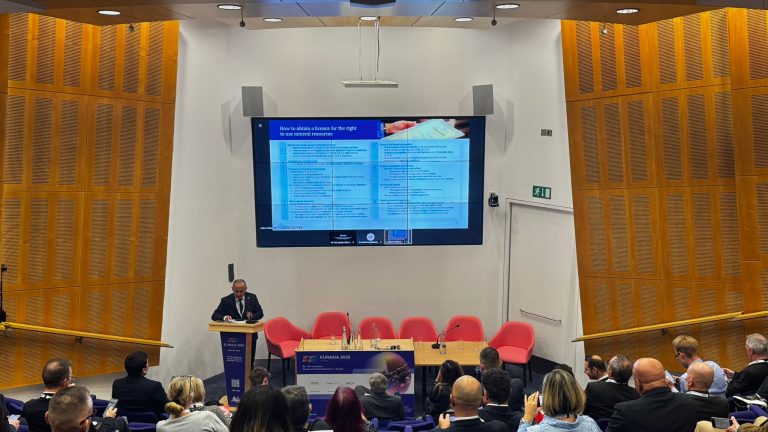
    London, 1 December 2025 – The MINEX Eurasia conference in London hosted a keynote address by H.E. Meder Mashiev, Minister of Natural Resources, Ecology, and Technical Supervision of Kyrgyzstan, outlining the country’s strategic vision for its critical minerals sector.

    Kyrgyzstan’s Strategic Minerals Vision

    The Minister outlined Kyrgyzstan’s methodical approach to prioritising and developing its critical minerals sector, identifying 21 key minerals based on global demand, local deposits, and resource concentrations. Kyrgyzstan’s analysis resulted in the selection of 4 priority projects, 5 promising deposits, and 16 prospective areas for further study and development. These assets, spread across antimony, beryllium, rare earths, molybdenum, bismuth, zinc, silver, and others, offer significant commercial and strategic potential for investors and end-users in energy, electronics, and high-value manufacturing.

    Investment and Development Framework

    State companies, notably Kyrgyzgeology, are driving exploration and project development, supported by government incentives and openness to international partnership. Strategic sites are being actively promoted for joint ventures or direct investment. Major domestic and international firms manage several large sites, while more than 100 mining enterprises operate in the country—spanning gold, copper, and polymetallic ores.

    Tax and Licensing Regime

    The session detailed Kyrgyzstan’s tax policy, which includes a mix of one-time bonuses for mining rights, royalties, profit tax, and VAT. The overall effective tax burden stands between 25–30%, complemented by social and environmental levies such as waste disposal, emissions, and water usage fees. Procedures for subsoil use licensing are harmonized with those in neighbouring countries, with initiatives being considered to simplify the processes and make it more transparent.

    ESG, Transparency, and Sustainable Mining

    Kyrgyzstan’s evolving strategy strongly emphasizes environmental, social, and governance (ESG) standards, aiming to foster responsible mineral development, minimize ecological impact, ensure transparency, and maximize benefits for local communities. The new strategy promotes the deployment of advanced technologies, environmental sustainability, and transparent investment processes, aligning with best practices to attract reliable, long-term partners.

    Opportunities for International Partnership

    Kyrgyzstan welcomes active collaboration with global investors and mining enterprises, seeking to leverage modern mining technologies, improve environmental outcomes, and maximize economic benefits. The country’s critical mineral strategy is closely linked to green growth targets and broader Eurasian supply chain integration.

  • Rio Tinto Targets Strong Q4 Finish to Meet Iron Ore Shipment Goals Amid China Demand Surge

    Rio Tinto Targets Strong Q4 Finish to Meet Iron Ore Shipment Goals Amid China Demand Surge

    Rio Tinto said on Tuesday that it will need a robust fourth-quarter performance to hit its 2025 iron ore shipment target, as Chinese demand strengthens on the back of infrastructure-driven stimulus and front-loaded global investment ahead of potential new tariffs.

    The world’s largest iron ore miner reported 84.3 million tonnes of iron ore shipped from its Western Australia operations during the third quarter, slightly below the Visible Alpha consensus estimate of 85.5 million tonnes. Despite the shortfall, iron ore prices have climbed to their highest levels since February, fuelled by Beijing’s targeted infrastructure programs that have spurred steel production.

    China’s iron ore imports reached a record high in September, according to Rio, reflecting renewed industrial momentum despite ongoing economic challenges such as deflation, weak manufacturing, slow exports, and persistent property market struggles.

    Rio reaffirmed its annual shipment guidance of 323–338 million tonnes, but noted that four cyclones earlier this year disrupted output, meaning results are likely to fall near the lower end of the range.

    “A strong Q4 performance is required as the system remains tightly balanced and has limited ability to mitigate further losses,” the company said.

    Shares of Rio Tinto (ASX: RIO) jumped 3.6% in early trading to their highest since late September, tracking gains across major iron ore producers. BHP and Fortescue Metals Group also rose more than 2% each.

    Under its new CEO Simon Trott, who restructured Rio into three main divisions — iron ore, aluminium and lithium, and copper — the company continues to focus on safety and diversification. Rio confirmed that shipments from its Simandou project in Guinea remain on track to begin before year-end, despite a recent fatality at the site.

    Beyond iron ore, Rio reported record copper production at Oyu Tolgoi in Mongolia, forecasting a more than 50% increase in copper output this year as demand surges for energy transition metals. The miner also logged a second consecutive record quarter for bauxite production, prompting an upward revision of its full-year forecast to 59–61 million tonnes, supported by strong performance at the Amrun mine in northern Australia.

  • SSGPO Secures $400 Million Syndicated Loan for Strategic Expansion

    SSGPO Secures $400 Million Syndicated Loan for Strategic Expansion

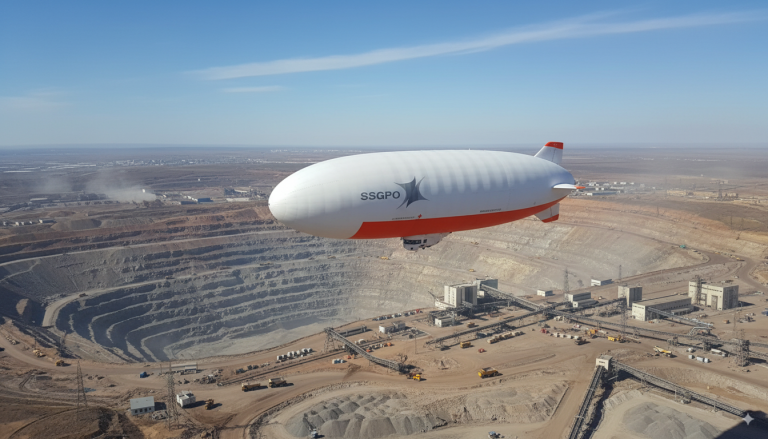
    Sokolovsko-Sarbayskoye Mining Production Association (SSGPO), part of the Eurasian Resources Group (ERG), has opened a new syndicated credit line worth up to $400 million with other firms under common control, according to its recently published financial report. The agreement was finalised in February 2025 and is set to run until 2029. The document states that the interest rate on the loans, denominated in US dollars and euros, will be a market rate.

    This latest move follows a similar arrangement made in 2024, when SSGPO signed a syndicated credit line agreement with affiliated companies for up to $300 million, with a repayment deadline of the end of 2028. Furthermore, SSGPO acts as a co-guarantor for ERG’s loans, alongside other subsidiaries within the group. As part of the new credit line, SSGPO provided a loan of $6 million to an unnamed company under common control in June 2025.

    SSGPO’s core business is the extraction and processing of iron ore. The company holds a number of iron ore mining contracts in the Kostanay region, which are due to expire in 2033, 2035, and 2040. In addition, SSGPO is currently constructing a hot-briquetted iron plant in Rudny, which is scheduled to commence operations in late 2027. The company’s financial performance for 2024 showed an increase in revenue to 424.1 billion tenge from 389.6 billion tenge in the previous year, although it recorded a loss of 69.3 billion tenge, a slight improvement on the 71.4 billion tenge loss in 2023. The sole owner of SSGPO is ERG Iron Ore Holding B.V., which is part of the broader ERG group. The Eurasian Resources Group itself is co-owned by the Ministry of Finance of the Republic of Kazakhstan, which holds a 40% stake, with the remaining shares divided between the heirs of Alexander Mashkevich and the Ibragimov family, each with 20.7%, and Patokh Shodiev, who holds 18.6%. The Ibragimov family is listed by Forbes as the seventh wealthiest in Kazakhstan, with a net worth of $2.06 billion.

  • Ferrexpo Slashes Iron Ore Output by 40% Amid Ukraine VAT Refund Freeze

    Ferrexpo Slashes Iron Ore Output by 40% Amid Ukraine VAT Refund Freeze

    Ferrexpo, the London-listed iron ore producer with major operations in Ukraine, reported a steep 40% drop in second-quarter production after a suspension of value-added tax (VAT) refunds crippled its liquidity and forced the company to scale back operations.

    In a statement on Monday, Ferrexpo revealed that total commercial production fell to 1.3 million tonnes for the quarter ending June, down from 2.1 million tonnes in Q1. The company attributed the decline to a $31 million VAT refund freeze by Ukrainian authorities, covering the period from January to April.

    The company’s Poltava Mining unit, already under pressure from potential bankruptcy proceedings, has responded by placing approximately 37% of its workforce on reduced hours or furlough and cutting back on procurement of goods and services required for production.

    Ferrexpo said the halt in VAT payments is linked to personal sanctions on its largest shareholder, Kostiantyn Zhevago, who was arrested in 2022 on embezzlement charges. Although the company itself is not under sanctions, the indirect impact has been severe, hampering its ability to operate in Ukraine’s strained financial environment.

    The miner warned that these constraints could continue to impact output unless the financial pressure eases.

  • Uzbekistan and Limaomaoli Metal Company Discuss Syurenota Iron Ore Project

    Uzbekistan and Limaomaoli Metal Company Discuss Syurenota Iron Ore Project

    On March 14, Uzbekistan’s Deputy Minister of Investments, Industry, and Trade, Ilzat Kasymov, met with Song Liping, CEO of Limaomaoli Metal Company, to discuss the development of the Syurenota iron ore deposit in the Tashkent region.

    The meeting covered the project’s progress, challenges faced by the investors, and potential areas for further cooperation. Representatives of the Chinese company expressed appreciation for the support received and reaffirmed their commitment to strengthening the partnership.

    Founded in November 2019, Limaomaoli Metal Company specializes in mineral exploration and iron ore extraction.

  • Ukraine’s Mineral Wealth Attracts Global Interest, Valued at $26 Trillion

    Ukraine’s Mineral Wealth Attracts Global Interest, Valued at $26 Trillion

    Ukraine’s vast mineral resources, estimated to be worth $26 trillion, have drawn significant international attention. The country’s subsoil holds approximately 5% of the world’s total mineral resources, including rare earth metals, which have sparked particular interest from the new US president.

    Ukraine boasts over 20,000 mineral deposits of at least 20 types, making it a key player in the global mining industry. Among its most valuable resources are iron ore, titanium, manganese, uranium, rare earth metals, graphite, lithium, gallium, copper, and zinc.

    The Kryvyi Rih Basin is home to Ukraine’s largest iron ore reserves, estimated at 27.4 billion tons, accounting for over 90% of the country’s production. Ukraine also holds the largest titanium reservesin Europe, representing about 7% of the global total, a critical resource for industries like aerospaceand medical equipment.

    In addition, Ukraine is a global leader in manganese reserves, with significant deposits in the Nikopol Basin. The country also possesses 2.3% of the world’s uranium reserves and a variety of rare earth metals essential for nuclear energy and advanced technologies.

    Ukraine ranks among the top five countries globally for natural graphite reserves, with 18 million tonsof confirmed deposits and 100 million tons of potential resources. The country is also a major supplier of lithium, with estimated reserves of 500,000 tons, crucial for battery production.

    Furthermore, Ukraine is the fifth-largest producer of gallium, a vital component in semiconductor manufacturing, and a significant producer of copper (4th in Europe) and zinc (6th in Europe).

  • LKAB to Replace Aging Sorting Plant in Vitåfors

    LKAB to Replace Aging Sorting Plant in Vitåfors

    Swedish mining company LKAB has announced plans to replace its aging sorting plant in Vitåfors, which has reached the end of its service life. The new facility will be constructed adjacent to the existing plant on a 24,000-square-meter site, improving efficiency and accommodating larger volumes of iron ore processing.

    “The sorting plant has served us well over the years, but it no longer meets modern operational requirements in terms of work environment and technology. Additionally, we need to handle greater production volumes,” said Monika Sammelin, Area Manager at LKAB.

    The project will begin with excavation work to create space for the new plant, followed by foundation engineering and groundwork preparations. A construction contract will be signed when building work officially begins.

    This initiative follows an earlier agreement in June 2024, when LKAB partnered with NCC to build a direct reduction plant and related infrastructure in Malmberget. The companies are now expanding their collaboration in the Swedish Ore Fields.

    “By being involved from an early stage, we can provide both resources and specialist expertise to ensure an efficient project implementation. We are pleased to support LKAB’s continued growth,” said Helena Hed, Head of NCC Green Industry Transformation.