The Lomonosov iron ore deposit in Kazakhstan’s Kostanay region, initially discovered in 1949, is set to undergo a significant revival after years of inactivity. According to financial reports from Lomonosov LLP for the year 2025, the company has announced plans to commence industrial mining operations. A supplementary agreement to the subsoil use contract is soon to be finalised, which will include a working programme extending until the end of 2046, the construction of a processing plant, and commitments to supply concentrate to Kazakh enterprises.
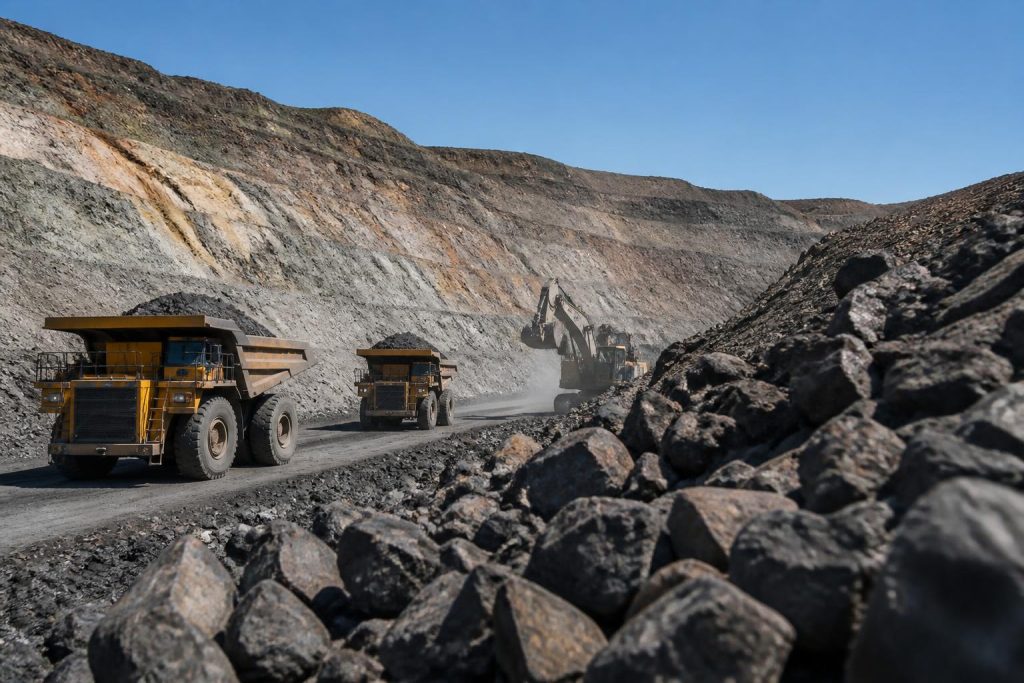
This project, which received approval from the Ministry of Industry and Infrastructure Development’s working group in May 2026, is centred around a processing facility with a capacity of 16 million tonnes of ore per year. Preparatory work for the site is expected to take place by the end of 2026, with stripping operations scheduled between 2026 and 2028. The extraction phase is slated to begin in 2029, according to the development schedule.
As of the end of 2015, the state commission approved the deposit’s reserves at 177 million tonnes. However, a 2014 report by Mining Associates estimated that the measured and inferred resources are significantly higher, at 507.8 million tonnes. The mining plan outlines that a total of 275.3 million tonnes of ore will be extracted over the project’s lifespan, yielding 73.5 million tonnes of concentrate with a 67% iron content. The project’s capacity is expected to increase gradually, peaking at 22 million tonnes of ore per year during the final stages of operation.
Additionally, the Lomonosov ores contain vanadium, enhancing the project’s strategic value. The financial projections are based on a concentrate price of $100 per tonne, indicating a potentially lucrative venture for stakeholders involved in this revitalisation effort.