Tag: investment

  • Eurasian Resources Group Commits $1 Billion to Kazakhstan’s Industrial Future

    Eurasian Resources Group Commits $1 Billion to Kazakhstan’s Industrial Future

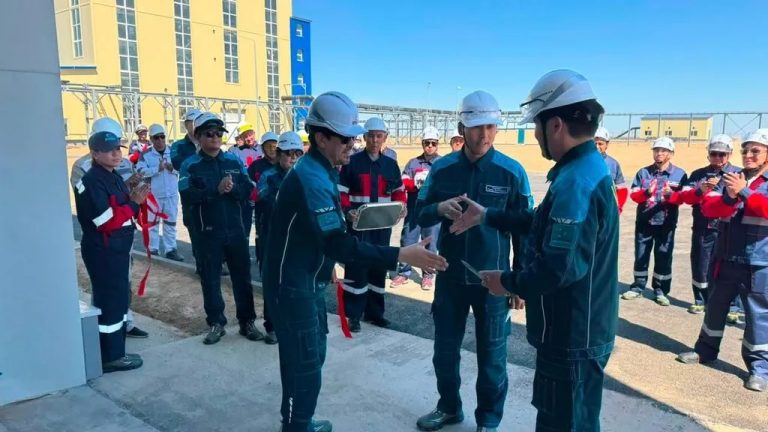
    Eurasian Resources Group (ERG) has announced a significant investment of approximately $1 billion in Kazakhstan, aimed at bolstering the country’s industrial potential and long-term competitiveness. This investment strategy is rooted in the belief that the most impactful investments are those that continue to create value well beyond the initial capital commitment. ERG’s development program is designed not only to expand its business operations but also to enhance regional economies and contribute to the overall economic landscape of Kazakhstan.

    The investment initiative is set to modernise mining operations and production facilities, promote cleaner energy solutions, and accelerate the digital transformation within the industry. By the end of next year, ERG anticipates creating over 1,100 new jobs, while also contributing an estimated $1.3 billion annually to Kazakhstan’s GDP through direct production and associated economic activities. Key projects under this initiative include the Bolashak Mine, ERG Green, Spetskoks, and various renewable energy ventures, all of which reflect a commitment to industrial performance and environmental responsibility.

    Kudrat Shamiyev, CEO of ERG Kazakhstan, emphasised that effective leadership is about making decisions that will positively impact future opportunities, not just immediate financial results. He highlighted the extraordinary industrial potential of Kazakhstan and the necessity for strategic partnerships, continuous innovation, and responsible environmental practices to unlock this potential. The projects currently underway are viewed as foundational steps towards a more robust industrial future for Kazakhstan, reinforcing the notion that investment should focus on building a stronger future for the nation.


  • Recommendations for the EU’s Critical Raw Materials Centre: Enhancing Security and Investment

    Recommendations for the EU’s Critical Raw Materials Centre: Enhancing Security and Investment

    The Geneva Platform for Resilient Value Chains has submitted a comprehensive input paper to the European Commission’s Directorate-General for Internal Market, Industry, Entrepreneurship and SMEs (DG GROW) regarding the establishment of the Critical Raw Materials Centre (CRMC). This paper outlines five core pillars and two cross-cutting themes aimed at addressing the current gaps in the EU’s raw materials strategy. The authors, Dr. Tom Moerenhout and Maximilian Kessler, argue that the EU’s approach to critical raw materials must evolve to ensure security of supply and competitiveness in the global market.

    The first pillar focuses on establishing an ‘Industry Intelligence’ hub to collect and analyse market data, which is currently lacking in the EU. The authors highlight the need for a structured system to gather forward-looking information about demand, project pipelines, and supply chain vulnerabilities. They draw comparisons with Japan’s successful trading house model, which integrates state and industry efforts to provide a clearer picture of market dynamics. The proposed Intelligence Hub would serve as a central platform for confidential information sharing, enabling better-informed decisions on investment support and stockpiling.

    The second pillar advocates for ‘Early-risk investment’, proposing a fund similar to Japan’s JOGMEC to support exploration and feasibility studies. The authors stress that the EU currently lacks coherent funding mechanisms for early-stage projects, which hampers the development of strategic mining initiatives. The paper also discusses the need for coordinated financing, stockpiling strategies, and international co-investment to enhance the EU’s position in the global critical minerals landscape. By implementing these recommendations, the CRMC could significantly bolster the EU’s resilience against supply chain disruptions and enhance its competitive edge in critical raw materials.


  • European Metals Association Supports Establishment of EU’s Critical Raw Materials Centre

    European Metals Association Supports Establishment of EU’s Critical Raw Materials Centre

    The European Metals Association has expressed strong support for the objectives of the Critical Raw Materials Act (CRMA), aimed at enhancing the resilience and sustainability of Europe’s raw materials value chains. The association welcomes the establishment of an EU Critical Raw Materials Centre, which is intended to provide crucial support for projects related to critical raw materials (CRMs). This includes diversifying supply, offering financial and technical assistance, pooling demand, and providing market intelligence focused on ensuring supply security.

    In its response to a public consultation, the European Metals Association outlined several key recommendations for the CRM Centre. These include the need for robust market intelligence capabilities to monitor the dynamics of critical raw materials markets and the downstream demand from European industries. The association advocates for the Centre to operate as an independent body, equipped with the necessary financial tools to facilitate CRM investments in close collaboration with member states and industry stakeholders. Additionally, they stress the importance of strategic stockpiling, which should be risk-based and developed in cooperation with industry, ensuring that it does not distort market conditions.

    The association also highlighted the necessity of a dedicated Critical Raw Materials Fund, which should combine various financial instruments to support both existing industrial bases and new strategic projects across the CRM value chain. Furthermore, they called for improved regulatory coherence across EU legislation to eliminate barriers that hinder investment in the raw materials sector. The European Metals Association’s comprehensive recommendations aim to strengthen the EU’s critical raw materials value chain, ensuring that Europe can secure its supply of essential materials amidst growing global demand and geopolitical challenges.


  • UK-Kazakhstan Strategic Partnership: A New Era of Economic Cooperation

    UK-Kazakhstan Strategic Partnership: A New Era of Economic Cooperation

    The recent entry into force of the Strategic Partnership and Cooperation Agreement (SPCA) between the United Kingdom and Kazakhstan marks a significant milestone in the bilateral relationship, with implications that extend beyond mere diplomacy. British Ambassador to Kazakhstan, Sally Axworthy, emphasised that the SPCA is not just a ceremonial agreement but a ‘signal of intent’ that opens avenues for collaboration across various sectors, including critical minerals, energy, education, and technology. This agreement is poised to reshape how the two nations work together, fostering a more integrated economic partnership.

    As global competition for critical minerals intensifies, Kazakhstan’s mineral wealth positions it as a key player in the evolving landscape of resource management and supply chain resilience. The SPCA formalises a shift in focus from traditional sectors to a broader range of industries, reflecting the changing priorities of both countries. Notably, the agreement facilitates discussions around value creation and processing of resources, moving beyond mere extraction to encompass technological advancements and higher-value production. A prime example of this shift is the recent $107 million agreement between the UK’s Maritime House and Kazakhstan’s Zhezkazganredmet, aimed at expanding cooperation in rhenium recycling, a material crucial for aerospace manufacturing.

    Education plays a pivotal role in this evolving partnership, with the UK emerging as a leading partner in higher education for Kazakhstan. The Bolashak Scholarship programme has fostered strong ties, with many Kazakh professionals educated in the UK. The establishment of British university campuses in Kazakhstan signifies a commitment to long-term investment in human capital, aligning educational initiatives with industrial cooperation. As both nations navigate this new phase of their partnership, the SPCA serves as a foundational framework for future collaboration, with the potential to enhance economic ties and foster sustainable growth.


  • US Outpaces Europe in Critical Minerals Investment, Raising Supply Concerns

    US Outpaces Europe in Critical Minerals Investment, Raising Supply Concerns

    The United States is significantly outspending Europe in the race to secure critical minerals, according to a report from The Wall Street Journal. Over the past five years, Washington has committed approximately $46 billion to critical raw materials projects through various financial mechanisms, including grants, loans, and tax incentives. This figure is roughly eight times greater than the amount allocated by the European Union, as highlighted by an analysis from the French Institute of International Relations. This disparity in investment raises concerns that European manufacturers may remain overly reliant on Chinese supplies, which could jeopardise their competitiveness in the global market.

    The aggressive strategy adopted by the US has already begun to disrupt European efforts to establish independent supply chains for critical minerals. For instance, Pensana, a London-based rare earth developer, has shifted its plans for a processing plant from the UK to the US in order to take advantage of financing from the Export-Import Bank. Similarly, the Brazilian rare earth producer Serra Verde has secured US government-backed financing and has entered into a long-term agreement to sell its magnetic rare earth production, further illustrating the impact of US investment on international supply chains.

    In response to these developments, European industry leaders are expressing concerns about the potential for the US to dominate emerging non-Chinese supply chains. Pensana’s founder, Paul Atherley, described the situation as akin to ‘friendly fire’ among Western nations. In light of these challenges, the European Union is formulating its own response, which includes plans for a €3 billion financing hub, the establishment of strategic stockpiles, and partnerships with resource-rich countries such as Canada, Argentina, Norway, and South Africa. By 2030, the EU aims to ensure that no single country provides more than 65% of its strategic raw material needs, a goal that reflects the bloc’s commitment to diversifying its supply sources and reducing dependence on any one nation.


  • Navoi Mining and Metallurgical Combine Reports Strong H1 2026 Results with 1.5 Million Ounces of Gold Production

    Navoi Mining and Metallurgical Combine Reports Strong H1 2026 Results with 1.5 Million Ounces of Gold Production

    The Navoi Mining and Metallurgical Combine (NGMK), a major mining enterprise in Uzbekistan, has released its operational results for the first half of 2026, demonstrating robust performance across key metrics. During the six-month period, the company produced 1.508 million troy ounces of gold, solidifying its position as a significant player in Central Asia’s precious metals sector. The monetary value of total production reached 86.2 trillion Uzbek som, reflecting both strong operational efficiency and favorable market conditions for gold during the reporting period.

    The company’s investment program showed substantial capital deployment, with 236.8 million dollars invested in development and expansion initiatives during the first half of 2026. This significant investment underscores NGMK’s commitment to modernizing its operations and enhancing production capacity. Additionally, the enterprise created 1,008 new jobs during the same period, contributing to employment growth in the Navoi region and supporting the broader economic development objectives of Uzbekistan’s mining sector.

    NGMK has also made notable progress on its localization program, producing domestically-sourced products valued at 808.7 billion som. Furthermore, the company procured approximately 4.2 trillion som worth of products through inter-industry industrial cooperation initiatives. These figures demonstrate the combine’s strategic focus on supporting local supply chains and fostering industrial integration within Uzbekistan’s economy, while maintaining operational excellence in gold production and processing.


  • IEA Warns Critical Mineral Supply Concentration and Export Restrictions Pose Growing Economic Security Risks

    IEA Warns Critical Mineral Supply Concentration and Export Restrictions Pose Growing Economic Security Risks

    The International Energy Agency’s (IEA) 2026 Global Critical Minerals Outlook, released today, paints a stark picture of mounting vulnerabilities in the supply chains for minerals essential to the global energy transition and high-tech industries. The report finds that despite a rebound in prices in 2025 and early 2026 due to tightening supply conditions, investment in critical mineral projects fell by 9% in 2025, ending several consecutive years of growth. This decline is attributed to price volatility and escalating geopolitical tensions, which have been exacerbated by a wave of new export restrictions from dominant suppliers. Geographic concentration has intensified, particularly in refining, with top refiners—Indonesia for nickel and China for other key energy minerals—accounting for over three-quarters of total growth in refined supply over the past two years. In markets for manganese, nickel, and graphite, virtually all supply growth came from the dominant supplier. The report highlights that rare earth export controls introduced by China in April 2025 forced some automakers to reduce production or temporarily suspend operations. Further controls announced in October 2025, though delayed for one year, could jeopardize an estimated $6.5 trillion in annual downstream production outside China if fully enacted. However, there are signs of progress. Public finance commitments for critical mineral supply expansion more than quadrupled between 2023 and 2025, reaching $65 billion. In rare earth refining, new projects in the United States and increased production in Malaysia reduced the top supplier’s share from over 90% in 2023 to 85% in 2025, with projections to fall to 70% by 2035. Gaps between projected demand and anticipated supply for copper and lithium have also narrowed. Despite these gains, the report identifies a structural imbalance: investment is concentrated in mining, while refining and downstream capacity expansion lag. For rare earths, planned refining capacity reaches only about two-thirds of expected mine output by 2035, and planned magnet production amounts to just one-third. The IEA urges policymakers to focus on strategic minor minerals, where small markets but outsized economic impacts from disruptions offer opportunities for cost-effective supply security improvements. IEA Executive Director Fatih Birol emphasized that while critical minerals account for a small share of final product prices—allowing diversification costs to be absorbed with limited consumer impact—addressing technology, equipment bottlenecks, and workforce skills is essential. The report recommends emergency preparedness, enabling investment, and closing gaps in technology and skills to build resilient supply chains.


  • Uzbekistan’s Uzmetkombinat Launches First Casting and Rolling Complex, Boosting Steel Production Capacity

    Uzbekistan’s Uzmetkombinat Launches First Casting and Rolling Complex, Boosting Steel Production Capacity

    Uzbekistan has marked a significant milestone in its industrial development with the commissioning of the country’s first casting and rolling complex at the Uzbek Metallurgical Plant (Uzmetkombinat) in Bekabad. President Shavkat Mirziyoyev personally attended the launch ceremony, underscoring the strategic importance of the project for the nation’s mining and metallurgical sector.

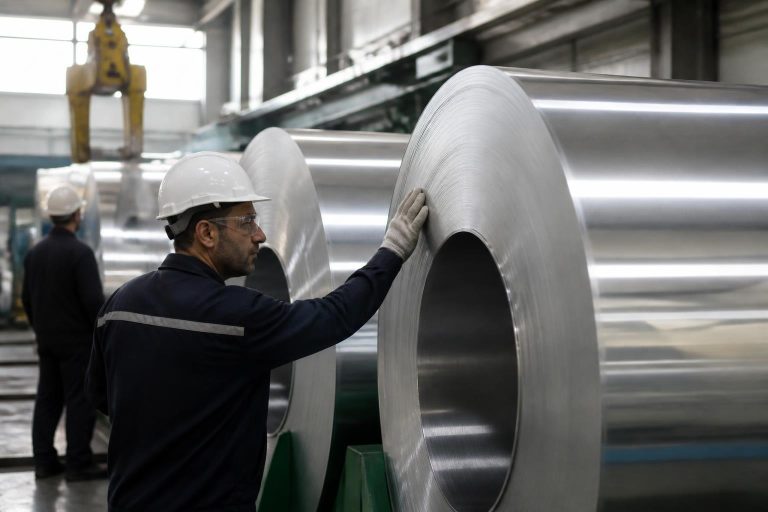
    The new facility is designed to produce hot-rolled sheet metal, a product previously not manufactured domestically, and will enable the plant to produce up to 1 million tons of sheet metal annually, valued at approximately 8 trillion soums. This output is expected to fully meet the sheet metal needs of metallurgical enterprises in Tashkent and Samarkand, while creating around 1,200 new high-paying jobs. The launch is part of broader reforms that have attracted about US$2 billion in foreign investment to Uzbekistan’s mining and metallurgical industry over the past decade. During this period, 31 large production capacities have been commissioned, and the number of enterprises has exceeded 150. Annual metal product output has surged from 800,000 tons in 2016 to 3 million tons today, with value rising from 1.5 trillion soums to 23 trillion soums. The industry now produces around 80 new types of products for mechanical engineering, electrical engineering, defense, and energy sectors, diversifying beyond its traditional focus on construction-grade rolled metal. President Mirziyoyev emphasized that economic growth and infrastructure projects will drive demand for metal products up by about 1.5 times. Future plans include increasing the use of domestic raw materials, with iron ore reserves estimated at 1.5 billion tons. The development of the Tebinbulak deposit is expected to boost steel production to 1 million tons per year within three to four years, while processing ore from the Surun-ota deposit will yield 600,000 tons of iron ore raw materials annually. A new US$180 million metallurgical plant is also planned. Additionally, US$30 million will be invested to double steel ball production capacity from 250,000 to 500,000 tons per year. The creation of the Industrial Park of Ecological Technologies of Uzbekistan on site will host six projects worth US$70 million for producing large-diameter pipes, overhead cranes, and filtration equipment, generating another 660 jobs. The complex is expected to introduce energy-efficient technologies and digital solutions, boosting labor productivity and product quality.


  • Mongolia Fails to Select Investor for Borteeg Coal Project

    Mongolia Fails to Select Investor for Borteeg Coal Project

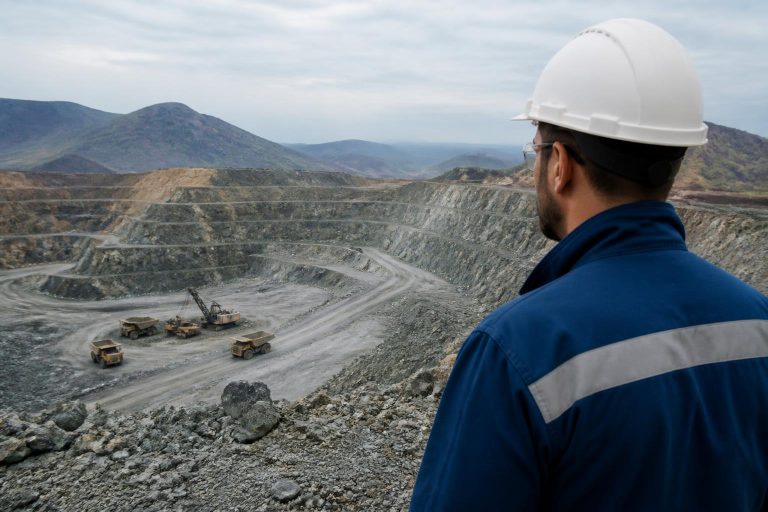
    Mongolia has failed to identify a suitable investor for the development of the Borteeg section of the Tavantolgoi coal deposit group after none of the bids submitted in an international tender met government requirements.

    The Mongolian government has now decided that the project will be managed by state-owned coal producer Erdenes Tavantolgoi. According to Minister of Economy and Development Jadamyn Enkhbayar, coal production and exports at the site will proceed with the participation of domestic companies, local media outlet Montsame reported.

    The open tender, announced in February, invited both Mongolian and foreign companies to invest in the development of the Borteeg deposit and participate in exploiting its reserves.

    Under the tender conditions, the winning bidder was expected to finance and construct all required infrastructure for coal extraction, processing, sales and transportation. A key condition imposed by the government required Mongolia to receive at least 51% of total sales revenue throughout the life of the project.

    According to the Ministry of Economy and Development, seven companies from Mongolia and abroad submitted proposals. A working group evaluated the bids based on financial and economic returns, experience in implementing similar projects and the existence of a comprehensive development plan.

    However, none of the proposals scored highly enough to proceed to the negotiation stage, ministry officials stated.

    The Borteeg section is estimated to contain 424.2 million tonnes of coal reserves. Annual production capacity could reach up to 15 million tonnes.

  • A Strategic Assessment of Promise vs. Reality in Central Asia’s Mineral Development

    A Strategic Assessment of Promise vs. Reality in Central Asia’s Mineral Development

    Central Asia’s role in global critical minerals took a decisive turn at the 4 February 2026 Critical Minerals Ministerial in Washington, where officials from more than 50 countries acknowledged the region as a strategic hub rather than a geopolitical buffer.

    While Washington presented an ambitious framework to advance mineral sovereignty, analysts caution that the region—not the U.S.—must drive implementation to avoid becoming a passive arena for major‑power competition.

    U.S. Strategy: A Vertical Integration “New Order”

    The U.S. vision, centred on the FORGE initiative and the concept of “Pax Silica,” positions minerals and energy as shared strategic assets among trusted partners and offers an alternative to dependency on China.
    Washington differentiates its value proposition in three areas:

    1. Market Stability Through Price Floors
      Proposed tariff‑backed price floors aim to counter predatory market dumping and protect investments in assets such as Kazakhstan’s rare earth reserves.
    2. Vertical Value Integration
      The U.S. framework prioritises domestic processing and refining over raw‑ore exports, enabling Central Asian states to capture more value across the supply chain.
    3. Connectivity Autonomy
      By incorporating the Middle Corridor into initiatives like TRIPP, the West presents routes that bypass Russia and China, reducing geopolitical transit pressures.

    Kazakhstan and Uzbekistan have responded quickly—Kazakhstan has declared critical minerals the “new oil” and joined the Abraham Accords to strengthen supply‑chain integration, while Uzbekistan has pursued strategic MOUs to modernise mining and secure battery‑metal supply chains.

    Reality Check: Gaps Between Intent and Implementation

    Despite strong rhetoric, Western engagement has largely taken the form of frameworks and MoUs—not operational projects.

    Three challenges persist:

    • Operational Disparity – China continues to deliver turnkey, financed projects backed by contractors and long‑term offtake agreements, while Western partners emphasise declarations.
    • U.S. Inward Focus – Washington’s drive for techno‑economic sovereignty favours selective, de‑risked engagements rather than proactive industrial development in the region.
    • Execution Gaps – Uzbekistan’s $2.6bn program covering 76 projects illustrates regional ambition, but real progress requires partners capable of building at scale.

    Strategic Imperative: Central Asian Agency

    Experts argue that relying on future U.S. demand is a strategic mistake.
    To convert high‑level dialogue into economic gains, Central Asia must prioritise:

    1. Midstream Capabilities

    Refining and producing intermediary products offer higher margins and reduce reliance on long‑distance transport of low‑value raw ore.

    2. Direct Private‑Sector Engagement

    Regional firms should proactively present project‑ready opportunities to U.S. companies rather than depending on government‑to‑government frameworks.

    Conclusion

    The U.S. “New Order” provides Central Asia with a potential pathway to diversify away from Beijing and Moscow while improving price stability and long‑term sovereignty.
    But success hinges on regional execution. Astana and Tashkent must convert diplomatic signals into tangible midstream capacity—and do so quickly—to secure their strategic autonomy before the current window closes.