Tag: Gold Production

  • Uzbekistan to Boost Gold and Uranium Output Through New Exploration Methods

    Uzbekistan to Boost Gold and Uranium Output Through New Exploration Methods

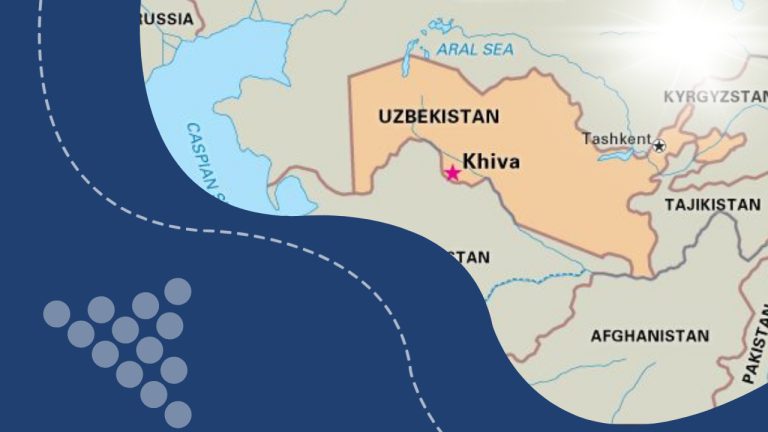
    Uzbekistan plans to increase production of gold and uranium this year by introducing new approaches in geological exploration, President Shavkat Mirziyoyev told national broadcaster Uzbekistan 24.

    According to the president, the country’s total gold output stood at 86 tonnes in 2016, while by the end of 2025 it is expected to reach 118 tonnes. Uranium production volumes, he noted, have doubled over the same period.

    Figures from the World Gold Council show that Uzbekistan produced more than 129 tonnes of gold in 2024, placing it among the world’s top ten producers of the precious metal.

    In the first seven months of this year, Uzbekistan increased gold exports to $7.6 billion — 1.8 times higher than in the same period of 2024. Gold accounted for nearly 38% of the country’s total export revenues.

    Navoi Mining and Metallurgical Company (NMMC), the country’s largest producer, raised its gold output in 2024 to 3.10 million ounces (96.4 tonnes), up 5.4% compared to 2023. The growth was attributed to the launch of new processing facilities.

  • Kyrgyzstan Launches Underground Gold Mining at Kumtor, Prioritizing Sustainability and State Control

    Kyrgyzstan Launches Underground Gold Mining at Kumtor, Prioritizing Sustainability and State Control

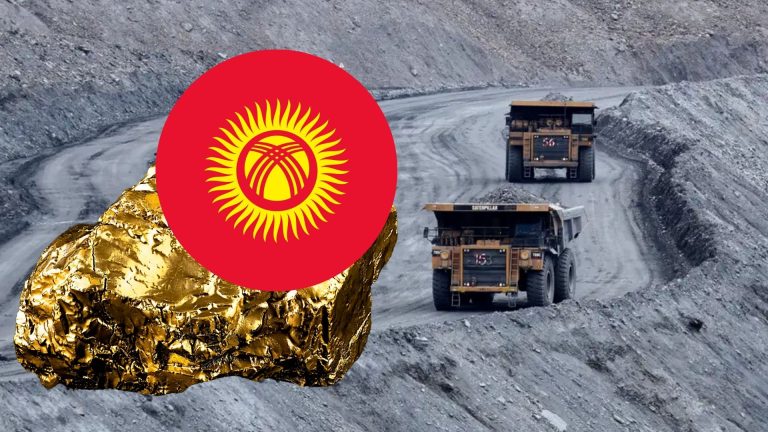
    BISHKEK, Kyrgyzstan — President Sadyr Zhaparov officially launched an underground gold mining project at the Kumtor Gold Company during a working visit to the Issyk-Kul region on Wednesday, marking a significant shift in the country’s mining strategy and environmental approach.

    The project, which builds on over 1,600 meters of developed tunnels, is set to tap into high-grade ore deposits containing over 5 grams of gold per ton. The underground operation is expected to last 17 years and has added 147 tonnes of gold to Kyrgyzstan’s state reserve balance.

    President Zhaparov hailed the move as both an economic and environmental milestone.

    “This marks a new chapter for Kumtor — one that aligns with our goals of sustainable development and environmental protection, especially in preserving our glaciers,” he said.

    The president underscored the importance of the Kumtor deposit’s return to state ownership, calling it a historic achievement. Under domestic management since May 2021, Kumtor has generated $3.45 billion in revenue, of which $891.6 million has gone to the state budget. Over 54 tonnes of gold have been produced in that time, with $441 million in dividends transferred to the state — a dramatic increase compared to just $100 million during the previous 28 years of foreign operation.

    The project is being executed entirely by local specialists, with underground mining chosen for its lower environmental impact compared to open-pit methods. While open-pit operations will continue, the strategic focus will increasingly shift underground.

    Zhaparov also revealed plans to process gold-rich tailings and develop new sites, including the Togolok deposit and the Jangart exploration area, as part of Kyrgyzstan’s broader efforts to maximize national resource benefits.

  • Kazakhstan’s RG Gold Expands Operations, Safety Standards, and Workforce Development Amid Booming Mining Sector

    Kazakhstan’s RG Gold Expands Operations, Safety Standards, and Workforce Development Amid Booming Mining Sector

    Kazakhstan’s mining industry is thriving as rising gold and commodity prices drive exploration, investment, and legislative reform. Among the country’s leading players, RG Gold is charting a growth path that blends operational expansion, safety leadership, and employee development while preparing for its transition into a global gold operator.

    Deputy CEO and CFO Marat Shaimardanov said recent government reforms, including a new royalty-based tax code and deregulation of mining laws, have spurred fresh activity. “There’s a lot of deregulation happening for the mining industry, which is reflected by its current increased activity,” he noted.

    Operational Growth and Heap Leach Revival
    RG Gold has restarted its heap leach operations after exploration revealed remaining potential, buoyed by higher gold prices. The site is expected to run for another five years. Meanwhile, the company’s carbon-in-pulp (CIP) plant, built in 2022, has been upgraded from 5 Mtpa to a 7.2 Mtpa run rate, with plans to stabilize at 7+ Mtpa by 2026. Exploration has also expanded resources to more than 10 million ounces, with reserves rising from 450,000 oz to 4 million oz in less than eight years.

    The firm is expanding its tailings storage facility, identifying new nearby deposits, and improving environmental compliance through a new oxygen plant. It is also preparing to transition from outsourced mining to owner-operated fleets to boost efficiency and safety.

    Safety and Cultural Transformation
    Shaimardanov stressed that safety remains a cornerstone of RG Gold’s strategy. The company has tripled its safety department headcount and changed its reporting culture to encourage incident disclosure without penalizing staff KPIs. “Even our CEO was once stopped at site for not wearing the correct gloves,” he said, underlining a culture where safety applies to all, from top management to contractors.

    Local and Workforce Engagement
    RG Gold prioritizes local contractors for both essential and non-essential services, strengthening ties with surrounding villages and SMEs while sourcing international partners only for specialized needs such as SGS lab testing.

    Employee development has also advanced, with personal development plans, international training programs, and partnerships with universities. The company supports professional associations, including a geotechnical engineering network now recognized internationally. Staff turnover has dropped sharply from 19% to 5% in just two years.

    Looking Ahead
    With construction projects delivered on schedule and ore reserves expanding, RG Gold is now focused on sustaining operational quality, ensuring smooth shareholder transitions, and pursuing new gold tenders. “It’s really about sustaining the business, raising the bar in operational quality, retaining employees, and taking our expansion to the next level,” Shaimardanov said.

  • Navoi Mining and Metallurgical Combine Produces Gold Worth $2.2 Billion in Q1 2025

    Navoi Mining and Metallurgical Combine Produces Gold Worth $2.2 Billion in Q1 2025

    In the first quarter of 2025, the Navoi Mining and Metallurgical Combine (NMMC) produced goods worth 27.8 trillion Uzbek soums (approx. $2.2 billion), according to the company’s press service.

    From January to March, NMMC extracted 753,500 ounces of gold. The combine also invested $118.4 million under its investment program and created nearly 700 new jobs. Through cost optimization efforts, the company managed to reduce production costs by 786 billion soums.

    During the reporting period, the combine completed the feasibility study for operations at the Muruntau deposit. This project aims to increase ore supply to the second hydrometallurgical plant to 60 million tonnes.

    In addition, over 100 units of equipment were acquired to support development at the Kokpatas and Daugyztau deposits.

    Previously, Kursiv Uzbekistan reported that NMMC received the highest rating for its anti-corruption performance.

  • Navoi Mining and Metallurgical Works Posts Strong Q1 Results Amid Sustainability and Efficiency Push

    Navoi Mining and Metallurgical Works Posts Strong Q1 Results Amid Sustainability and Efficiency Push

    Navoi Mining and Metallurgical Works (NGMK) reported steady operational performance for Q1 2025, with a production volume of 27.8 trillion UZS, marking a 0.7% year-on-year increase.

    Gold output reached 753,500 ounces, slightly up from 748,100 ounces in the same period of 2024, reinforcing NGMK’s position as a leading gold producer. The company invested $118.4 million under its Investment Program, while 697 new jobs were created in the quarter.

    Cost optimization efforts resulted in a 786 billion UZS reduction in production expenses. Under the Localization Program, products worth 349.8 billion UZS were sold, and inter-industry cooperation purchases exceeded 1.8 trillion UZS.

    NGMK’s flagship Muruntau deposit, the world’s largest gold reserve (101 million ounces), remains its core asset, with total company reserves estimated at 148 million ounces.

    In February, Sustainable Fitch assigned NGMK an ESG rating of “3”, the first public ESG rating in Uzbekistan’s mining sector — highlighting progress in environmental, social, and governance practices.

    Key sustainability initiatives included:

    • Planting 65,850 seedlings along the M-37 highway and at GMZ-1;

    • Over 300,000 trees planted across industrial sites, all tracked via an electronic platform as part of the “Green Space” project;

    • Ongoing “Labor Protection Month” initiative aimed at reducing workplace injuries;

    • Recognition as a national leader in cybersecurity for 2024.

    To expand the company’s resource base, NGMK is actively adopting advanced exploration and development practices.

    Corporate governance remained robust:

    • 3 meetings of the Supervisory Board, covering 11 key issues;

    • 25 meetings of the Board of Directors, resulting in 41 decisions.

    NGMK continues to balance production growth with environmental responsibility and workforce safety, setting benchmarks in Uzbekistan’s mining sector.

  • Kyrgyzstan Aims for 46% Gold Production Increase by 2030, Backed by Chinese Mining Venture

    Kyrgyzstan Aims for 46% Gold Production Increase by 2030, Backed by Chinese Mining Venture

    The Ministry of Natural Resources of the Kyrgyz Republic has announced plans to boost annual gold production to 38 tons by 2030, a 46% increase compared to the previous year. Minister Meder Mashiev attributed this growth to the industrial-scale operations of China’s Zhong Ji Mining Company at the Solton-Sary deposit’s Buchuk site.

    Located 355 km from Bishkek on the northern slope of the Kapka-Tash ridge, the Solton-Sary gold deposit will host a processing plant with an annual capacity of 600,000 tons of ore and approximately 1.8 tons of gold. In the long term, ZAO “Chaarat Zav” plans to develop the Chaarat deposit in the Chatkal district, which holds reserves exceeding 100 tons of gold.

    Despite these ambitions, Kyrgyzstan’s gold output dropped to 26 tons in 2024, down from an average of 30 tons annually. Meanwhile, Kazakhstan reported a 4.6% rise in refined gold production, surpassing 74.2 tons last year.

  • Navoi Mining Secures ESG Rating, Reinforcing Sustainability Commitment

    Navoi Mining Secures ESG Rating, Reinforcing Sustainability Commitment

    Navoi Mining & Metallurgical Company (NMMC), the world’s fourth-largest gold producer, has received its first Environmental, Social, and Governance (ESG) Entity rating from Sustainable Fitch. The company was assigned a rating of ‘3’ on a five-point scale, where ‘1’ indicates low risk and ‘5’ represents high risk, with an overall entity score of 51 out of 100.

    The rating reflects an in-depth evaluation of NMMC’s sustainability initiatives, corporate governance standards, and environmental and social performance. The company’s environmental and social metrics earned a rating of ‘3,’ acknowledging strong internal policies on emissions and water management, an absence of major environmental incidents, and a low gender pay gap. Its corporate governance received a rating of ‘2,’ highlighting adherence to international financial reporting standards, robust internal audits, and a structured risk management framework.

    NMMC’s ESG rating aligns with global mining industry standards, considering the sector’s environmental footprint, high resource consumption, and waste generation. Notably, NMMC is the first mining company in Uzbekistan to secure a public ESG rating, reinforcing its leadership in sustainability and transparency.

    Eugene Antonov, First Deputy CEO and Head of Transformation at NMMC, emphasized the company’s commitment to ESG principles as part of its ongoing transformation program. He also noted that Uzbekistan’s designation of 2025 as the “Year of Environmental Protection and the Green Economy” aligns with NMMC’s sustainability goals under the national “Uzbekistan-2030” strategy.

    Boris Samoylenko, Head of ESG at NMMC, stated that the rating validates the company’s efforts to integrate sustainable practices while setting a benchmark for future improvements in ESG performance.

  • Kyrgyzstan Produces 26 Tons of Gold in 2024

    Kyrgyzstan Produces 26 Tons of Gold in 2024

    In 2024, Kyrgyzstan extracted 26 tons of gold, according to Meder Masheyev, the Minister of Natural Resources. This total includes 400 kilograms of alluvial gold. Preliminary figures also show coal production at 4.1 million tons and oil at 290,000 tons.

    Additionally, 182.5 tons of new gold deposits were added to the state reserves. The State Commission on Mineral Reserves reports Kyrgyzstan’s total gold reserves now stand at 1,016 tons, indicating a significant resource base for future development.

  • Dundee Precious Metals (DPM) Preliminary Production Results for 2024

    Dundee Precious Metals (DPM) Preliminary Production Results for 2024

    Dundee Precious Metals Inc. (TSX: DPM) reported its preliminary gold and copper production for Q4 and FY 2024. Both Chelopech and Ada Tepe mines achieved their annual production guidance, marking DPM’s tenth consecutive year meeting gold production targets.

    Chelopech processed 2,143.7 Kt of ore, producing 167,000 ounces of gold and 29.7 million pounds of copper for the year, while Ada Tepe processed 772.4 Kt, yielding 94,300 ounces of gold. Consolidated annual production totaled 261,300 ounces of gold and 29.7 million pounds of copper. The Q4 results were highlighted by Ada Tepe’s strongest quarter with 29,000 ounces of gold produced.

    Additionally, DPM concluded a tolling agreement, receiving $162M from Sinomine Resource Group, and maintained capital returns through share repurchases ($50M in 2024) and dividends ($0.04/share payable January 15, 2025).

  • NMMC Secures $150 Million Loan from Japan’s MUFG for Expansion Plans

    NMMC Secures $150 Million Loan from Japan’s MUFG for Expansion Plans

    Navoi Mining and Metallurgical Company (NMMC), Uzbekistan’s largest industrial enterprise, has signed a $150 million bilateral loan agreement with Japan’s Mitsubishi UFJ Financial Group (MUFG). The funding will be directed toward NMMC’s ongoing investments, particularly to enhance its operations and expand its production capabilities.

    NMMC operates two major mining sites, seven hydrometallurgical plants, and two heap leaching facilities, positioning it as the largest gold producer in Central Asia. The company’s flagship asset is the Muruntau-Myutenbai open-pit mine, considered the largest of its kind globally, with a resource base of 101 million ounces of gold. In total, NMMC’s gold reserves are estimated at 148 million ounces.

    The loan comes after NMMC received long-term credit ratings of “BB-” with a stable outlook from both Fitch and S&P, reflecting its standing as a top-four global gold producer. Production is forecasted to surpass 3 million ounces by 2024. NMMC CFO, Jakhongir Khasanov, emphasized that the loan highlights the company’s strong financial health, noting that it will support further investments in expanding operations.

    In addition to the loan, NMMC has embarked on an ambitious investment program, set to increase processing capacity and production volumes while creating new jobs and modernizing existing facilities. The company is reportedly ahead of schedule on several projects, with expectations of boosting production capacity by 30% compared to 2017.

    Analysts have praised NMMC for its low-cost base, long mine life, high profit margins, and low debt levels. Fitch highlighted the structural reforms in Uzbekistan, which have contributed to macroeconomic stability, as a key factor in the company’s positive outlook. NMMC is 98% owned by Uzbekistan’s Ministry of Economy and Finance.

    MUFG, headquartered in Tokyo, is Japan’s largest financial institution and operates in over 40 countries, making it one of the biggest banking groups globally.