Tag: Gold Production

  • Zijin RG Gold Unveils New Gold Processing Plant Project in Akmola Region

    Zijin RG Gold Unveils New Gold Processing Plant Project in Akmola Region

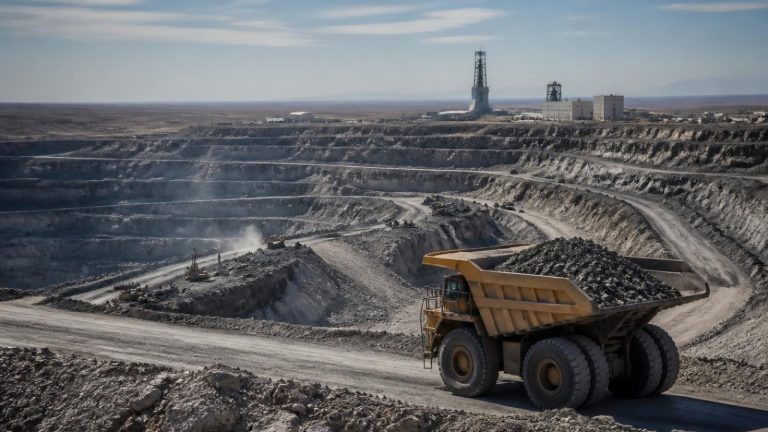
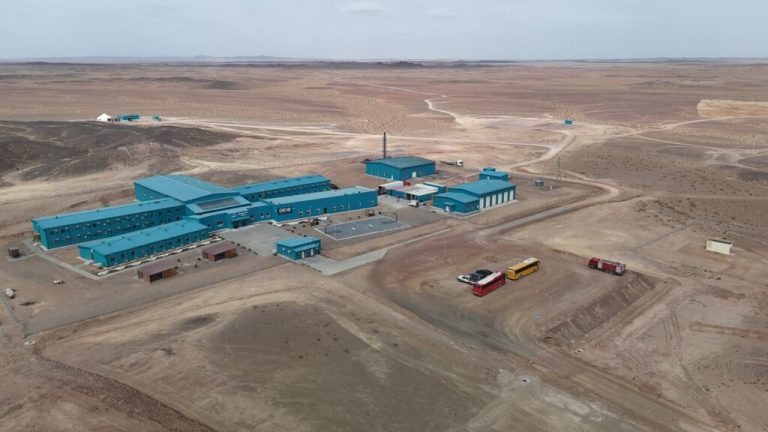
    Zijin RG Gold has announced plans for a new gold processing plant at the Raygorodok deposit located in the Burabay District of Akmola Region, Kazakhstan. The proposed facility will have a processing capacity of 10 million tonnes of ore annually, significantly enhancing the overall mining and processing capabilities of the site. Upon completion, the total capacity of the production complex at Raygorodok will reach 16 million tonnes per year.

    The announcement follows the successful commissioning of an initial processing plant in 2022, which operates at a capacity of 6.5 million tonnes per year. This earlier project has allowed Zijin RG Gold to develop essential production and engineering expertise, setting the stage for the new plant’s construction and operation.

    The new processing facility is expected to yield an additional 7 tonnes of gold in doré alloy each year, bringing the total annual gold production from the complex to over 12 tonnes. This increase in output is anticipated to bolster the company’s position in the gold mining sector and contribute positively to the local economy.

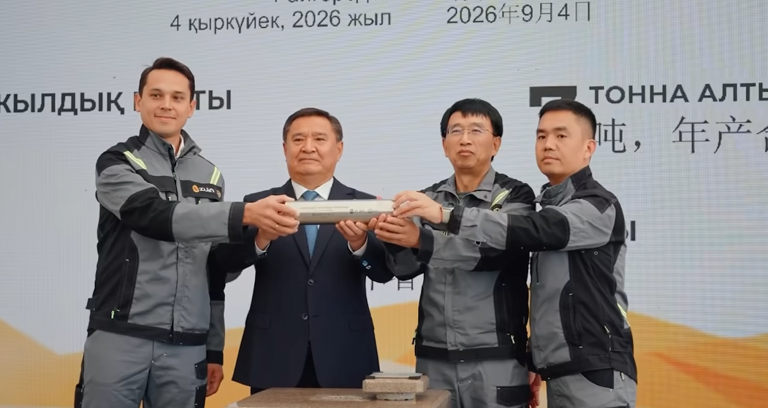
    The project was officially introduced during a ceremonial capsule-laying event at the future plant site, marking a significant milestone for Zijin RG Gold. The company currently employs more than 1,800 individuals, with 51% of its workforce being residents of the Akmola Region. The expansion is expected to create additional job opportunities, further supporting the local community and economy.


  • NGMK’s Investment Projects: Boosting Gold Production and Modernisation

    NGMK’s Investment Projects: Boosting Gold Production and Modernisation

    The Navoi Mining and Metallurgy Combinat (NGMK) in Uzbekistan is making significant strides in gold production and modernisation, as highlighted during the MINEX Kazakhstan 2026 forum. The company has increased its gold output to 98.2 tonnes in the previous year, achieving a net profit of $3.5 billion, a 64% increase, largely due to favourable market conditions where the average price per ounce exceeded $3,400. NGMK plays a crucial role in Uzbekistan’s strategy for 2030, which aims to elevate the country’s gold production from 118 tonnes to 175 tonnes. This ambitious target positions NGMK as a leader in the region, which currently accounts for 7.5% of global gold production, with nearly half of that attributed to the NGMK.

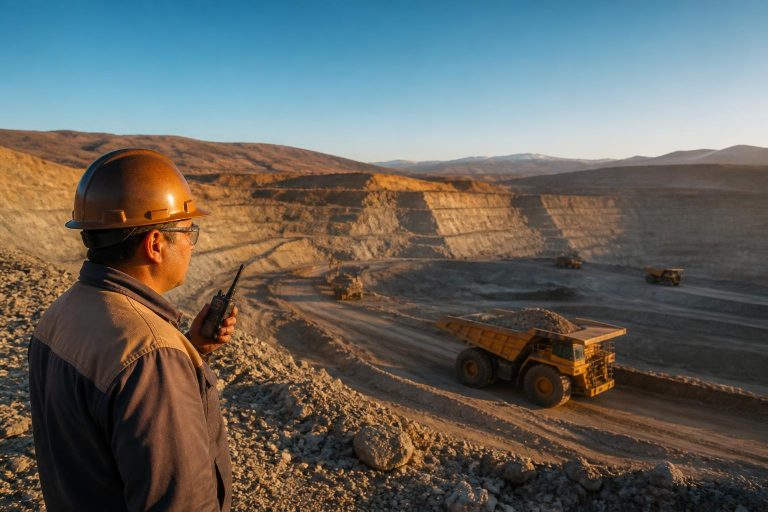
    To maintain its growth momentum, NGMK is leveraging various tools for sustainable development, including geological exploration, advanced technologies, and infrastructure improvements. The company has invested significantly in expanding the Muruntau mine, which has been recognised as a global leader in gold production. The mine’s dimensions have grown substantially since its inception in 1967, and recent investments have further enhanced its capacity.

    In addition to expanding existing operations, NGMK is also focusing on exploring new mineral deposits. The company has acquired licenses for new areas and is conducting geological exploration to confirm gold reserves in regions like Kokpatas and Daugiztau. The resource base of NGMK currently stands at approximately 140 million ounces of gold, with ongoing efforts to increase this through the processing of lower-grade ores.

    Investment in infrastructure is another key focus for NGMK, with over $1 billion allocated for 2025 alone. This includes modernising existing facilities and introducing new technologies to improve operational efficiency. The company has successfully implemented various projects aimed at enhancing its processing capabilities and expanding its mining fleet, which is crucial for meeting the growing demand for gold.

    Digital transformation is also a priority for NGMK, with a strategy in place to modernise operations by 2030. This includes the adoption of information technologies for geological exploration, automated inventory calculations, and real-time monitoring of production processes. The integration of artificial intelligence and machine learning is helping to optimise operations and reduce human error, thereby improving overall efficiency.

    As NGMK continues to evolve, its commitment to sustainable practices and technological advancement positions it well for future growth in the competitive global mining landscape. The company’s proactive approach to investment and innovation not only strengthens its market position but also contributes to Uzbekistan’s economic development and industrial sovereignty.


  • Erdene Resource Development Faces Investor Caution Amid Gold Project Execution Risks

    Erdene Resource Development Faces Investor Caution Amid Gold Project Execution Risks

    Erdene Resource Development Corporation (TSX:ERD), a Canadian mining company focused on gold production in Mongolia, has seen its stock decline by 4.20% as of August 28, 2026. This downturn is attributed to investor concerns regarding operational execution, market volatility, and the inherent risks associated with transitioning from development to production. The company’s primary asset, the Bayan Khundii Gold Project, is central to its growth strategy, yet the recent stock performance reflects a broader hesitance among investors who are reassessing the company’s operational capabilities and market conditions.

    As Erdene continues to ramp up production at Bayan Khundii, the company has reported improvements in mining efficiency and operational performance. However, the transition phase is fraught with challenges, including the need for consistent production levels, effective cost management, and the ability to navigate the complexities of mine expansion. Investors are particularly focused on whether the company can sustain its operational improvements amidst fluctuating gold prices and rising costs.

    The gold market remains volatile, influenced by factors such as interest rate expectations, inflation trends, and geopolitical uncertainties. While gold typically serves as a safe haven during economic instability, mining equities can suffer when investors reassess their risk exposure. Erdene’s recent stock decline is a reflection of this cautious sentiment, as investors weigh the company’s production capabilities against the backdrop of a challenging market environment.

    Erdene’s business model is centred around gold production, with its financial performance closely tied to gold prices, production volumes, and operational efficiency. The company is not currently prioritising dividend payments, opting instead to reinvest in growth initiatives and strengthen its production platform. This growth-oriented strategy is aimed at enhancing shareholder returns through increased production and exploration opportunities.

    Despite the challenges, Erdene’s long-term outlook remains optimistic, supported by the potential growth of the Bayan Khundii project and additional exploration assets in Mongolia. However, the near-term outlook is cautious as investors continue to monitor the company’s ability to manage production ramp-up risks, cost pressures, and geopolitical exposures. The future performance of Erdene Resource Development will largely depend on its operational delivery, financial discipline, and progress across its mining portfolio, as investor confidence is closely linked to these factors.

  • Oman Delegation Visits Solidcore Resources in Kazakhstan to Explore Investment Opportunities

    Oman Delegation Visits Solidcore Resources in Kazakhstan to Explore Investment Opportunities

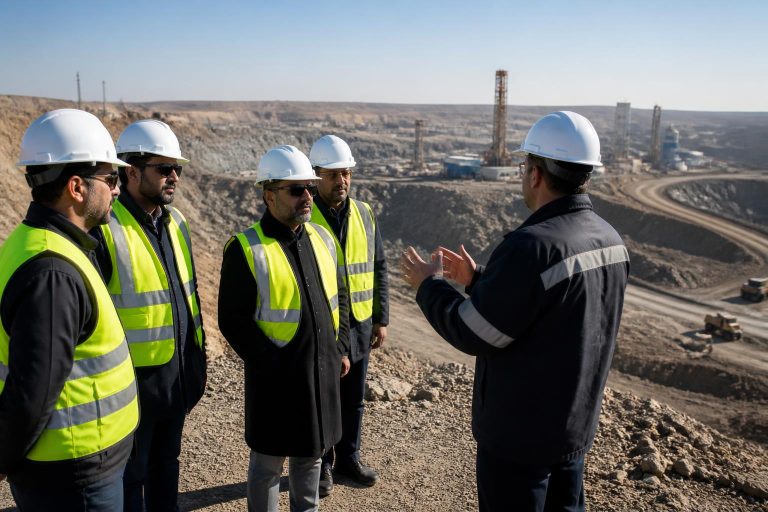
    A delegation from the Sultanate of Oman, led by His Excellency Abdul Salam Al Murshidi, President of the Oman Investment Authority (OIA) and Chairman of the Board of Solidcore Resources, recently visited Kazakhstan to engage with the leadership of Solidcore and tour the Kyzyl mine and processing complex. The visit underscores Oman’s commitment to strengthening its investment ties with Kazakhstan, particularly through Solidcore, where Maaden International Investment, a wholly-owned fund of the Omani government, holds a significant 31.7% stake.

    Accompanying the delegation were key figures from Minerals Development Oman (MDO), including Chairman Hamid Al Naamani and CEO Mattar Al Badi. MDO is a partner in a joint venture with Solidcore on the Khabiyat copper-gold project, which marks the first international geological exploration project in Oman, with an agreement signed earlier this year.

    During their meeting with Solidcore’s management, the delegation was briefed on the company’s operations and the progress of the Ertis hydrometallurgical plant (EGMK). His Excellency Al Murshidi highlighted Solidcore as a flagship investment project for Oman in Kazakhstan, emphasising the importance of a predictable regulatory environment in the country. He stated, “We view Kazakhstan as a long-term strategic partner. The stable and predictable investment climate established under the President’s leadership, along with the government’s efforts to protect sovereign investments, forms the basis for long-term cooperation. We intend to continue supporting the growth of Solidcore and expand our investments in the country. The recently signed Investment Cooperation Agreement between our countries is a significant step in defining new investment opportunities between Oman and Kazakhstan.”

    The Omani delegation also visited the Kyzyl mine, Solidcore’s largest operation, which produces approximately 350,000 ounces of gold annually at a grade of 5 g/t. His Excellency Al Murshidi concluded by noting that Solidcore’s deep expertise in ore processing and responsible mining provides a solid foundation for prospective joint projects in Oman, the Gulf region, and potentially Africa. These opportunities will contribute to Solidcore’s evolution into an international mining company, leveraging its technical competencies, quality assets, robust corporate governance, and experienced team.


  • Uzbekistan’s NMMC Reports $7.23 Billion Gold Production in First Half of 2026

    Uzbekistan’s NMMC Reports $7.23 Billion Gold Production in First Half of 2026

    In the first half of 2026, Uzbekistan’s Navoi Mining and Metallurgical Company (NMMC) achieved a remarkable production of 1.51 million troy ounces of gold, valued at approximately UZS 86.2 trillion (around $7.23 billion). This achievement is attributed to the company’s ongoing commitment to substantial investments in gold mining, ore processing, and infrastructure development. The operational results reflect a robust output, with NMMC producing 1,508.8 thousand troy ounces of gold during this period.

    The company has also made significant strides in local economic development, investing $236.8 million under Uzbekistan’s Investment Programme, which has resulted in the creation of 1,008 new jobs. As part of its localization programme, NMMC produced localized products worth UZS 808.7 billion (approximately $67.8 million). Furthermore, the company engaged in inter-industry cooperation by purchasing around UZS 4.2 trillion (about $352.2 million) worth of products from local producers, thereby bolstering the domestic economy.

    NMMC is actively advancing its major investment projects, particularly the fifth stage of the second phase of the Muruntau mine development, a key asset for the company. Between January and July 2026, over 96 million cubic meters of rock were mined at this site. The company has also enhanced its operational capabilities by supplying new haul trucks and mining equipment to its Central Mining Administration’s transport division. Additionally, construction and installation of conveyor lines using cyclic-flow technology are underway at the mine, which is expected to improve efficiency.

    At the Kokpatas and Daugyztau gold deposits, construction and installation of the tailings storage facility for Hydrometallurgical Plant No. 3 are ongoing. The company has introduced new electric excavators, motor graders, and front-end loaders to enhance operations at the Daugyztau and Vostochny mines.

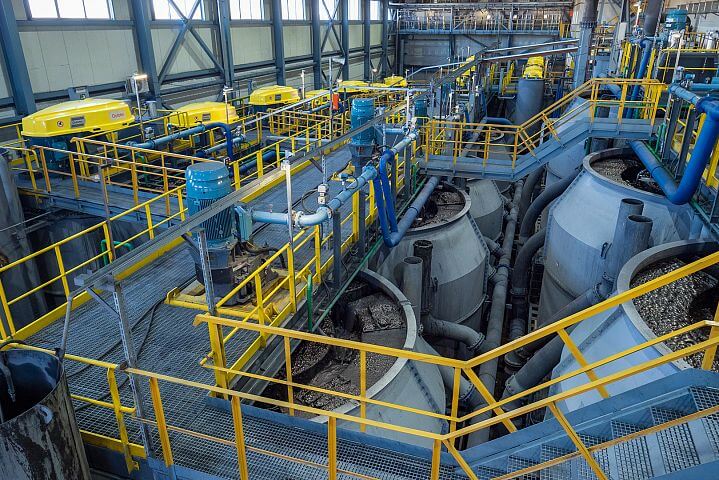
    Moreover, NMMC is expanding Hydrometallurgical Plant No. 7 to increase its processing capacity. While construction works for the ore preparation and screening sections have been completed, efforts continue on thickening and desorption facilities, as well as on the power-supply infrastructure. The modernization of Hydrometallurgical Plant No. 2, the company’s largest facility by production performance, is also in progress, with the launch of additional mill blocks bringing the total number of operating mills to 82.

    Lastly, NMMC is reconstructing the tailings facility serving Hydrometallurgical Plants No. 2 and No. 7, which includes the construction of new waste-storage cells, embankments, water-intake facilities, and a 21-kilometer slurry pipeline. These developments not only signify NMMC’s commitment to enhancing its operational efficiency but also reflect its dedication to sustainable mining practices in Uzbekistan.


  • Shugyla Gold to Commence Gold Production at Akdingek Deposit in 2027

    Shugyla Gold to Commence Gold Production at Akdingek Deposit in 2027

    Shugyla Gold LLP is set to begin gold extraction at the Akdingek deposit in the Zharminsky district of the Abai region, with production slated to start in 2027. The company plans to extract 100,000 tonnes of gold-bearing ore annually, utilising open-pit mining techniques and employing blasting operations. The mine is expected to operate for five years, from 2027 to 2031, with a daily production capacity of 137 tonnes.

    The geological structure of the Akdingek deposit allows for open-pit mining to a depth of 40 metres. While the specific gold content in the ore has not been disclosed, the project documentation indicates that mining operations will be conducted in shifts, with a continuous work schedule throughout the year. The site will be powered by a diesel-electric station.

    In January 2025, Shugyla Gold announced plans to extract placer gold from the valleys of the Büyük and Colorado rivers, also located in the Zharminsky district. This area is part of the Boko-Vasilyevsky ore field, with confirmed reserves estimated at 905,100 cubic metres of ore, containing 202.4 tonnes of pure gold at an average concentration of 0.224 grams per cubic metre.

    The company aims to mine 392,700 cubic metres of ore from this site between 2026 and 2028. However, financial reports for 2024 indicate that Shugyla Gold incurred a loss of 4.8 billion tenge, a significant increase from a loss of 200.1 million tenge in 2023. Despite these losses, the company reported its first revenue of 281.1 million tenge in 2024, marking a shift from its previous focus solely on mineral exploration.

    Shugyla Gold is owned by Shugyla Kent LLP, both of which are registered at the same address in the Akzhal village of the Zharminsky district. Shugyla Kent also owns KST Production, based in Ust-Kamenogorsk, which is managed by Tazlime Sarsebaeva and Abzal Nuriyev.


  • Uzbek President Critiques Rising Costs in Strategic Enterprises

    Uzbek President Critiques Rising Costs in Strategic Enterprises

    Uzbekistan’s President Shavkat Mirziyoyev has raised concerns over the increasing costs at the country’s strategic enterprises during a meeting held on July 21. Notably, the Navoi Mining and Metallurgy Combinat (NGMK) reported an 8.2% rise in the cost of producing one ounce of gold, with overall expenses soaring by 22%, amounting to 6.2 trillion sums. The President highlighted that the previous reporting method, which focused on percentage reductions in total costs, did not accurately reflect the true state of affairs. A detailed analysis of production costs revealed the stark reality of rising expenses across various sectors.

    In addition to gold production, the Uzbek Metallurgical Plant saw a 5.4% increase in the cost of producing steel balls, while the cost of urea production at Uzkimyosanoat rose by 11.1%, and ammonium nitrate by 8.3%. The President’s remarks underscore the need for a more transparent and realistic assessment of operational costs within state-owned enterprises, especially as Uzbekistan prepares for the initial public offerings (IPOs) of several major companies.

    Consultants from Franklin Templeton, who are analysing the performance of 13 large state-owned companies, indicated that Uzbekistan Airways is missing out on approximately $120 million in revenue due to an unoptimised route network, long intervals between flights, frequent delays, and a lack of competition in onboard catering and maintenance services. Furthermore, they assessed the potential market value growth for several state companies, estimating that the value of Regional Electric Networks could double, Uzbekistan Airways could increase by 40%, and Uztelecom by 50%. Franklin Templeton, which manages the National Investment Fund of Uzbekistan, has previously evaluated the airline’s operations and proposed a transformation programme comprising 115 initiatives aimed at boosting its market value from $1.6 billion to $2.3 billion by 2025.


  • Navoi Mining and Metallurgical Combine Reports Strong H1 2026 Results with 1.5 Million Ounces of Gold Production

    Navoi Mining and Metallurgical Combine Reports Strong H1 2026 Results with 1.5 Million Ounces of Gold Production

    The Navoi Mining and Metallurgical Combine (NGMK), a major mining enterprise in Uzbekistan, has released its operational results for the first half of 2026, demonstrating robust performance across key metrics. During the six-month period, the company produced 1.508 million troy ounces of gold, solidifying its position as a significant player in Central Asia’s precious metals sector. The monetary value of total production reached 86.2 trillion Uzbek som, reflecting both strong operational efficiency and favorable market conditions for gold during the reporting period.

    The company’s investment program showed substantial capital deployment, with 236.8 million dollars invested in development and expansion initiatives during the first half of 2026. This significant investment underscores NGMK’s commitment to modernizing its operations and enhancing production capacity. Additionally, the enterprise created 1,008 new jobs during the same period, contributing to employment growth in the Navoi region and supporting the broader economic development objectives of Uzbekistan’s mining sector.

    NGMK has also made notable progress on its localization program, producing domestically-sourced products valued at 808.7 billion som. Furthermore, the company procured approximately 4.2 trillion som worth of products through inter-industry industrial cooperation initiatives. These figures demonstrate the combine’s strategic focus on supporting local supply chains and fostering industrial integration within Uzbekistan’s economy, while maintaining operational excellence in gold production and processing.


  • Steppe Gold Raises Production Forecast, Announces New Auditor

    Steppe Gold Raises Production Forecast, Announces New Auditor

    Ulaanbaatar, Mongolia – December 9, 2025 – Steppe Gold Ltd. (TSX: STGO) (OTCQX: STPGF) (FSE: 2J9) (“Steppe Gold”) today announced a significant upgrade to its fourth-quarter production guidance for the Boroo Gold mine, alongside a change in its external audit firm.

    Following strategic fleet upgrades implemented throughout 2025, coupled with focused maintenance and recovery efforts following a period of downtime in the third quarter, the Boroo Gold mine has demonstrated a remarkable turnaround. As a result, Steppe Gold now anticipates overall fourth-quarter production to surpass 23,000 ounces of gold, a considerable increase from the previously projected 15,000 ounces.

    With the processing of finished goods from September 30, 2025, completed in October, projected sales for the quarter are expected to exceed 30,000 ounces. Looking ahead, the Company projects full year production for the Group – encompassing all of Steppe Gold’s subsidiaries – to reach 70,000 ounces.

    Furthermore, Steppe Gold announced that Kingston Ross Pasnak LLP has resigned as the Company’s auditor, effective December 8, 2025. Emmerich, Córdova y Asociados S. Civil de R.L., a member firm of KPMG International, has been appointed as the successor auditor. This transition was driven by the desire to align the audit relationship with the broader Group and reinforce consistency and transparency across all related entities.

    Importantly, the audit change was executed without any modified opinions or reportable events as defined by National Instrument 51-102 – Continuous Disclosure Obligations (“NI 51-102”). The Board’s decision was reviewed and approved by the Audit Committee and the Board of Directors. All required documentation, including notices of change and supporting letters from both the former and successor auditors, has been filed on SEDAR+.

    Steppe Gold is recognized as Mongolia’s leading precious metals producer.

  • Kyrgyzstan Boosts Mineral Output in Early 2025 Amid Sector Consolidation

    Kyrgyzstan Boosts Mineral Output in Early 2025 Amid Sector Consolidation

    Kyrgyzstan recorded significant growth in gold, silver, coal, and natural gas production during the first half of 2025, according to data from the Kyrgyz Geological Service. Despite the increase, the number of active companies in the sector fell, reflecting a wave of license revocations and industry consolidation.

    Compared to the same period in 2024, the country produced an additional 700 kg of gold and 1.1 million cubic meters of natural gas. Silver production surged from 198 kg to 3.8 tons, while coal output rose from 3.1 million to 4.4 million tons.

    The state resource balance for January–June 2025 was as follows:

    • Regular gold: 5.8 tons

    • Placer gold: 57 kg (up from 28.3 kg)

    • Silver: 3.8 tons (up from 198 kg)

    • Coal: 4.4 million tons (up from 3.1 million tons)

    The sector also delivered stronger fiscal results, with tax and non-tax revenues climbing from 17.9 billion KGS ($205.2 million) in 2024 to 27.8 billion KGS ($318.5 million) in 2025. Industrial production reached 30.7 billion KGS ($352 million), an increase of nearly 3 billion KGS ($34.4 million).

    At the same time, licensing activity slowed. Authorities revoked 199 production licenses in the first half of 2025, citing inactivity, while only 15 new licenses were issued, compared with 26 during the same period last year. Expired permits were reallocated to other operators.

    Officials welcomed the rise in output as a positive contribution to GDP and a sign of improved efficiency. However, the report warned of risks to construction resources such as marble, sand, and gravel, which are being rapidly depleted due to high demand from the building sector.

    Experts caution that while the surge in mining strengthens revenues and energy security, long-term sustainability will require careful planning to prevent overexploitation of finite resources.