Tag: Germany

  • Germany’s Altmark basin emerges as potential lithium powerhouse through direct extraction technology

    Germany’s Altmark basin emerges as potential lithium powerhouse through direct extraction technology

    Northern Saxony-Anhalt, a region historically associated with natural gas production, is drawing renewed attention as a potential cornerstone of Europe’s lithium supply. New assessments indicate that deep underground brines in the Altmark basin contain far larger volumes of lithium than previously believed, offering a possible breakthrough for the continent’s battery materials strategy.

    Neptune Energy, which operates in the area, announced in late 2025 that an independent resource estimate by Sproule ERCE placed the Altmark deposit at around 43 million tonnes of lithium carbonate equivalent. Verified under the CIM/NI 43-101 standard, the estimate would rank Altmark among the world’s largest known single-site lithium resources if confirmed through further development.

    The lithium is hosted in deep geothermal brines within Rotliegend sandstone and volcanic formations at depths of 3,200 to 4,000 meters. Average lithium concentrations of about 375 milligrams per litre have been recorded, largely attributed to long-term mineral leaching from mica-rich volcanic rocks under high-temperature conditions.

    Rather than conventional open-pit mining or evaporation ponds, Neptune is advancing direct lithium extraction technologies. Pilot projects completed in 2025 successfully produced battery-grade lithium carbonate using ion exchange and adsorption methods. These enclosed systems return processed brine underground, significantly reducing land use and water consumption compared with traditional approaches.

    The project aligns with the European Union’s Critical Raw Materials Act, which targets greater domestic sourcing of strategic minerals such as lithium by 2030. By reusing legacy gas infrastructure and combining lithium recovery with geothermal heat potential, Altmark could offer a lower-impact model for mineral production within Europe.

    Commercial output has yet to begin, and further permitting and demonstration-scale validation are required. German regulators are expected to closely review groundwater protection, waste handling and long-term environmental performance. If successful, Altmark may play a pivotal role in reshaping Europe’s position in the global lithium supply chain.

  • Germany Reports “Constructive” Signals from China on Rare Earth Supplies

    Germany Reports “Constructive” Signals from China on Rare Earth Supplies

    German Foreign Minister Johann Wadephul says China has shown willingness to cooperate on rare earth exports to Europe, offering a rare moment of optimism amid deepening geopolitical and trade tensions. Speaking during a two-day visit to Beijing, Wadephul said Chinese officials indicated they would work “constructively” with European importers seeking general licences to secure supplies of rare earths — metals critical to electronics, defence technologies and electric vehicles.

    The minister met with Commerce Minister Wang Wentao, Foreign Minister Wang Yi and Vice President Han Zheng, using the talks to address Beijing’s recent export restrictions on rare earths, as well as concerns over industrial overcapacity in China’s EV and steel sectors. In a message posted following the meetings, Wadephul said Germany and China remained committed to “balanced economic relations,” while acknowledging the need to confront “imbalances” such as market-access barriers and trade controls.

    China introduced new export restrictions on several rare earth products this year, forcing global manufacturers to confront their dependence on Chinese supply. Wadephul said Beijing reassured him that it had “no intention” of burdening German companies with additional hurdles and encouraged them to apply for general licences under China’s evolving export framework. Wang Wentao also emphasised that the licensing system was designed to keep supply chains “stable and smooth.”

    The discussions come at a time of heightened strain in German-Chinese relations. Chancellor Friedrich Merz has pledged a firmer stance toward Beijing, and Wadephul previously cancelled an earlier trip after criticising China’s activities around Taiwan. German officials have repeatedly warned that the country — long one of China’s closest European trading partners — is now highly exposed to Beijing’s leverage over critical raw materials.

    Last month, Finance Minister Lars Klingbeil left China with only informal assurances regarding rare earth supplies, highlighting the limits of European influence. The European Union is preparing to mobilise at least €3 billion over the next year to reduce its dependency on China for strategic raw materials, including through mining, processing and recycling initiatives.

    Wadephul also used the Beijing meetings to press China to exert pressure on Russia to engage in “serious negotiations” over its war against Ukraine. He said European expectations were clearly conveyed: “If there’s one country that has influence on Russia, it’s China.”

  • Vulcan Energy Breaks Ground on Germany’s First Geothermal-Lithium Extraction Plant

    Vulcan Energy Breaks Ground on Germany’s First Geothermal-Lithium Extraction Plant

    Vulcan Energy has begun construction on its flagship Project Lionheart, officially laying the foundation stone for the combined geothermal and lithium extraction plant (G-LEP) in Landau, Germany. The ceremony, attended by European Investment Bank Vice-President Nicola Beer and other senior officials, follows the company securing a €2.2 billion (A$3.9 billion) financing package to fully fund Phase One of the development.

    Phase One Lionheart will deliver an integrated lithium and renewable energy project in the Upper Rhine Valley, targeting annual production of 24 000 t of lithium hydroxide monohydrate — enough for roughly 500 000 electric vehicle batteries — alongside 275 GWh of renewable electricity and 560 GWh of renewable heat for local consumers. The project has an expected operational life of about 30 years.

    The G-LEP facility is central to Vulcan’s plan to produce carbon-neutral lithium using deep geothermal brine, while also supplying long-term renewable district heating to the City of Landau. Executives described the groundbreaking as a major milestone for European critical raw material security and the region’s clean-energy transition.

    CEO Cris Moreno said the launch signalled strong momentum for Europe’s efforts to build domestic lithium supply chains and reduce reliance on imports. He added that Vulcan would now focus on advancing construction of the G-LEP and delivering climate-friendly lithium and renewable heat to the region.

  • Vulcan Energy Secures $2.56bn to Build Europe’s Largest Lithium Project, Clearing Way for Construction

    Vulcan Energy Secures $2.56bn to Build Europe’s Largest Lithium Project, Clearing Way for Construction

    Vulcan Energy has secured a $2.56 billion financing package to build what is set to become Europe’s largest lithium production project, marking a major step forward for the region’s electric-vehicle supply chain. The funding will enable construction of the Lionheart lithium project in Germany to begin immediately, after multiple years of delays linked to fluctuating lithium prices and weakened investor appetite.

    The Australia-listed company — backed by mining magnate Gina Rinehart — plans to produce around 24,000 tonnes of lithium hydroxide annually during the project’s first decade, enough to supply battery material for approximately 500,000 electric vehicles per year. The financing package is one of the largest ever assembled for a European critical minerals project and includes support from the European Investment Bank, German and EU government agencies, five export credit agencies, and seven commercial banks.

    As part of the package, Vulcan will raise up to €603 million in equity at a fixed price of €2.24 per share. The company has already secured long-term supply agreements with Stellantis, Umicore, and Glencore, with roughly 90% of the first decade of production already contracted, many of them either at fixed prices or under price-floor and price-ceiling structures.

    Executive chair Francis Wedin confirmed that the board has taken a final investment decision, telling Reuters: “It’s fully funded and we will be putting shovels in the ground on Friday.”

    Vulcan previously targeted first production in 2023, later shifting the date to 2025. The revised timeline now points to 2028. Earlier this year, the company ended its long-standing supply agreement with Renault to “free up” volumes for other buyers, while Stellantis remains both a major customer and one of Vulcan’s largest shareholders.

    Lithium prices have dropped sharply since their peak above $70,000 per tonne in 2023, with lithium carbonate trading just below $10,000 per tonne at the end of October, according to Benchmark Mineral Intelligence — a decline that has challenged new project financing across the sector. Vulcan’s ability to secure such a substantial funding package is therefore considered a significant milestone for European battery-material independence.

  • Germany Moves to Secure Bolivian Lithium as Serbia’s Jadar Project Stalls

    Germany Moves to Secure Bolivian Lithium as Serbia’s Jadar Project Stalls

    Germany is accelerating efforts to secure long-term lithium supplies from Bolivia while exploring domestic mining options, even as Rio Tinto’s Jadar project in Serbia remains effectively dormant. Ahead of his visit to La Paz, Germany’s Foreign Minister Johann Wadephul emphasized Bolivia’s strategic importance, calling its vast lithium and rare earth reserves “indispensable” for Germany’s energy transition and electric mobility sectors.

    Wadephul is one of the first foreign officials to engage with Bolivia’s newly elected president Rodrigo Paz Pereira, stressing Germany’s readiness to strengthen cooperation and support the country’s economic recovery. Bolivia holds the world’s largest lithium reserves, but previous governments strictly limited foreign participation in mining projects.

    Germany’s intensified outreach comes as competition for lithium and rare earths escalates globally amid China’s market dominance and ongoing US–China trade tensions. Berlin has also indicated it may tap its national raw materials fund to support domestic lithium extraction projects, including those based on geothermal brines.

    Meanwhile, Rio Tinto’s Jadar project in Serbia—once seen as a cornerstone of Europe’s lithium supply strategy—has made little progress despite receiving strategic backing from the EU and Germany in 2024. Political instability in Serbia has slowed development, with officials now estimating that the environmental impact assessment will take at least 18 months to complete. Final approval remains uncertain, leaving Europe’s long-term battery supply ambitions in limbo.

  • Vulcan Energy Secures Approval to Build Commercial Lithium Extraction Plant in Germany

    Vulcan Energy Secures Approval to Build Commercial Lithium Extraction Plant in Germany

    Vulcan Energy Resources, the German-Australian company pioneering geothermal lithium production in Europe, has received construction approval for its commercial Lithium Extraction Plant (LEP) in Landau, Germany, marking a key milestone toward establishing Europe’s first carbon-neutral lithium supply chain.

    The City of Landau granted the permit for the facility in the D12 industrial zone, complementing previously approved construction permits for the site’s ORC geothermal power plant and 110/20 kV substation. According to Vulcan, it now holds all necessary permits to construct its combined geothermal and lithium extraction plant (G-LEP) in Landau.

    In the project’s first phase, Vulcan plans to produce several thousand tonnes of lithium chloride, which will be transported to Frankfurt-Höchst for further conversion into battery-grade lithium hydroxide monohydrate (LHM). Once fully operational, annual production is expected to reach 24,000 tonnes of LHM — enough to supply approximately 500,000 electric vehicles per year.

    The company’s lithium extraction process uses geothermal brine from the Upper Rhine Valley, home to Europe’s largest combined geothermal and lithium resource. Vulcan’s technology captures geothermal heat for district heating and renewable electricity generation, while extracting lithium chloride from cooled brine before reinjecting it underground. The company notes that the entire operation will be “carbon neutral and fossil fuel-free over its life cycle.”

    Vulcan has already tested the process at pilot scale in Landau and Höchst. In April 2024, the company’s Lithium Extraction Optimisation Plant (LEOP) successfully produced the first lithium chloride from geothermal brine, later refined into battery-grade lithium hydroxide at the Central Lithium Electrolysis Optimisation Plant (CLEOP) in Höchst.

    The upcoming commercial-scale LEP will be built later this year, contingent on the completion of the €690 million financing package for both Landau and Höchst facilities. The German federal government and the states of Rhineland-Palatinate and Hesse have pledged €103.6 million in funding through the EU’s Temporary Crisis and Transition Framework (TCTF) under the “Resilience and Sustainability of the Battery Cell Manufacturing Ecosystem” program.

    In March 2025, the European Union designated Vulcan’s Landau facility as one of 47 strategic projects under the Critical Raw Materials Act (CRMA).

    To secure final financing, Vulcan is leveraging offtake agreements with several major customers. Its latest supply deal, signed with Glencore, covers 36,000–44,000 tonnes of LHM over eight years. The company has also revised earlier agreements with Umicore (23,000 tonnes over six years), LG Energy Solution (31,000 tonnes over six years), and Stellantis (128,000 tonnes over ten years).

    While construction will begin soon, deliveries are now expected later than initially planned. Once operational, Vulcan’s German facilities will play a central role in Europe’s battery supply chain, reducing dependence on imported lithium and advancing the EU’s green industrial strategy.

  • Germany Expects EU Approval for €1.75 Billion Coal Exit Compensation to LEAG

    Germany Expects EU Approval for €1.75 Billion Coal Exit Compensation to LEAG

    The German government expects the European Commission to give the green light “within weeks” for €1.75 billion in compensation payments to LEAG, the lignite mining and power company operating in eastern Germany. The payments form part of Germany’s broader coal phase-out plan, which aims to end coal-fired power generation by 2038 at the latest, according to the Ministry for Economic Affairs and Climate Action (BMWK).

    The legislative changes needed to unlock the funds were recently approved by Germany’s coalition government. The compensation package, first agreed in 2020, had faced delays in Brussels due to differences over the timeline for the eastern German coal exit, which lags behind the 2030 phase-out already underway in western Germany.

    Under the revised plan, LEAG, owned by Czech energy group EPH, will receive €377 million to reimburse earlier payments into funds for recultivation of mining areas. From 2025 to 2029, the company is set to receive €91.5 million per year in additional payments from the federal budget to support environmental restoration and social transition measures.

    The compensation is part of Germany’s Coal Exit Law, which seeks to cushion the social and economic consequences of the energy transition for affected regions and workers. The government has said these payments will ensure “a fair and orderly exit from lignite power.”

    LEAG may also qualify for further compensation for so-called social costs — losses related to early plant closures or infrastructure decommissioning. These payments could extend until 2042, depending on determinations by the Federal Network Agency (BNetzA) regarding lost profits or system reliability needs.

    Critics have questioned the scale of the compensation, arguing that it may cover profits companies would not have earned under normal market conditions. Environmental groups have also expressed frustration that the eastern coal phase-out remains slower than in western Germany.

    LEAG, which operates in Lusatia, continues to be a key regional employer and economic anchor in eastern Germany, where the coal exit is closely linked to the rollout of new gas-fired capacity to maintain energy security. Germany plans to tender up to 20 gigawatts of gas plants to support grid stability — a process delayed nearly two years and still pending EU approval.

  • Germany Launches €6 Billion Decarbonisation Program Including Carbon Capture Technology

    Germany Launches €6 Billion Decarbonisation Program Including Carbon Capture Technology

    Germany’s Economy Minister Katherina Reiche on Monday announced a €6 billion ($7 billion) funding initiative to accelerate industrial decarbonisation, marking the first inclusion of carbon capture and storage (CCS) technology in the country’s climate protection contracts.

    The program targets energy-intensive industries such as chemicals, steel, cement, and glass — key sectors facing mounting pressure to meet stringent climate goals while maintaining global competitiveness. Companies have until December 1 to register their projects for next year’s bidding process.

    Bidding is expected to begin in mid-2026, pending parliamentary budget approval and clearance from the European Commission under EU state aid rules.

    Building on last year’s climate contracts program, the new round expands eligibility to projects that incorporate CCS technology, which captures CO₂ emissions and stores them underground.

    Under the scheme, the German government will offer 15-year contracts subsidizing the costs of transitioning to low-emission production methods. The subsidies are designed to offset risks from volatile energy and carbon prices, helping industries adapt to cleaner technologies without losing competitiveness.

    Contracts will be awarded through competitive auctions, prioritizing projects that achieve the greatest emission reductions at the lowest cost per tonne of CO₂ saved. Companies receiving support will also have to meet binding emissions reduction milestones throughout the contract period.

    Industry groups have welcomed the inclusion of CCS and praised the government’s pragmatic, flexible approach. They emphasized that maintaining a balance between ambitious climate goals and the economic realities of high energy costs and industrial slowdown is crucial to securing Germany’s industrial base.

  • Phenogy Launches Europe’s Largest Sodium-Ion Battery Installation in Germany

    Phenogy Launches Europe’s Largest Sodium-Ion Battery Installation in Germany

    Swiss energy storage company Phenogy has unveiled its first commercial-scale sodium-ion battery deployment, marking the largest installation of its kind in Europe. The single-container system, located near Bremen Airport in northern Germany, delivers 400 kW of power with nearly 1 MWh of storage capacity. Paired with a 50 kW solar array, the unit operates in island mode, powering electric vehicle chargers and optimizing on-site energy consumption.

    One of the challenges for sodium-ion batteries at scale has been inverter compatibility due to their broader voltage range. To address this, Phenogy integrated eight Sunny Island X 50 inverters from SMA into its 20-foot PHENOGY 1.0 container. These pre-production inverters, designed for flexibility beyond lithium iron phosphate (LFP) systems, enable efficient voltage matching with the sodium-ion chemistry.

    While sodium-ion is often seen as a cheaper and more sustainable alternative to lithium-ion due to sodium’s abundance and lower extraction costs, the technology has yet to achieve mass-market maturity. China currently leads global deployment, with 100 MW-scale projects by companies such as CATL, BYD, and Huawei.

    Phenogy CTO Max Kory emphasized the strategic value of sodium-ion technology for Europe and North America, noting that reliance on Chinese lithium-ion precursors could pose long-term risks. “Lithium prices will rise again – with mine closures in China, the market is nearing a breaking point. As prices climb, alternative chemistries become more attractive, and sodium-ion is the prime candidate for building localized supply chains,” he told ESS News.

    Key to scaling production will be local cathode and anode manufacturing, particularly hard carbon derived from agricultural waste. While production costs remain higher than LFP today, Phenogy believes strategic buyers seeking supply chain independence will drive early adoption.

    Founded in 2019, Phenogy employs about 60 people across Europe and the US, with operations in South Carolina and research collaborations with the University of South Carolina, Exentis Group, and Fraunhofer Institutes. The company is positioning itself as a vertically integrated manufacturer to strengthen local supply chains and support the global energy transition.

  • Kazakhstan and Germany Launch Consortium to Boost Mining and Metallurgy Education

    Kazakhstan and Germany Launch Consortium to Boost Mining and Metallurgy Education

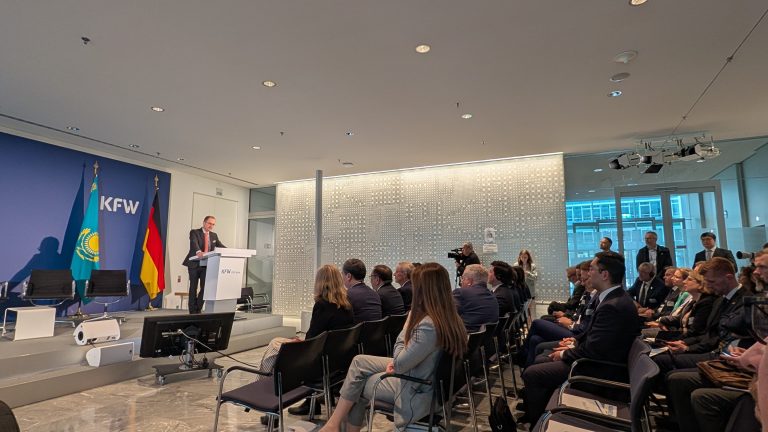
    The second Kazakh-German Week, themed Science and Education: Partnership between Kazakhstan and Germany, opened on September 23 at Serikbayev East Kazakhstan Technical University in Oskemen (Ust-Kamenogorsk), the industrial hub of East Kazakhstan and a cornerstone of the nation’s mining and metallurgical sector.

    A central outcome of the opening ceremony was the creation of the Consortium for the Development of the Kazakh-German Institute of Science and Technology. Founded in 2024 at East Kazakhstan Technical University, the institute focuses on specialized training for mining and metallurgy professionals.

    The new Consortium unites leading academic institutions from both countries, including Serikbayev East Kazakhstan Technical University, Kazakh-German University, Freiberg University of Mining and Technology, Ruhr University Bochum, Clausthal University of Technology, Technical University of Dortmund, and the University of Duisburg-Essen. Its mission is to strengthen cooperation in research, academic exchange, technology transfer, and applied projects across mining, geology, rare earth metals, energy, and environmental engineering.

    Industrial leaders in East Kazakhstan, such as Kazzinc, the Ust-Kamenogorsk Titanium and Magnesium Plant, and the Ulba Metallurgical Plant, have pledged their support through partnerships in applied science and innovation.

    In a video message, Minister of Science and Higher Education Sayasat Nurbek highlighted the strategic importance of German universities in developing Kazakhstan’s future workforce. Officials emphasized that the consortium will play a vital role in ensuring the long-term sustainability of East Kazakhstan’s mining and metallurgical industries through the integration of science, innovation, and advanced technical education.