Tag: Germany

  • Mkango Resources Completes Acquisition of Remloy Rare Earth Magnet Recycling Business

    Mkango Resources Completes Acquisition of Remloy Rare Earth Magnet Recycling Business

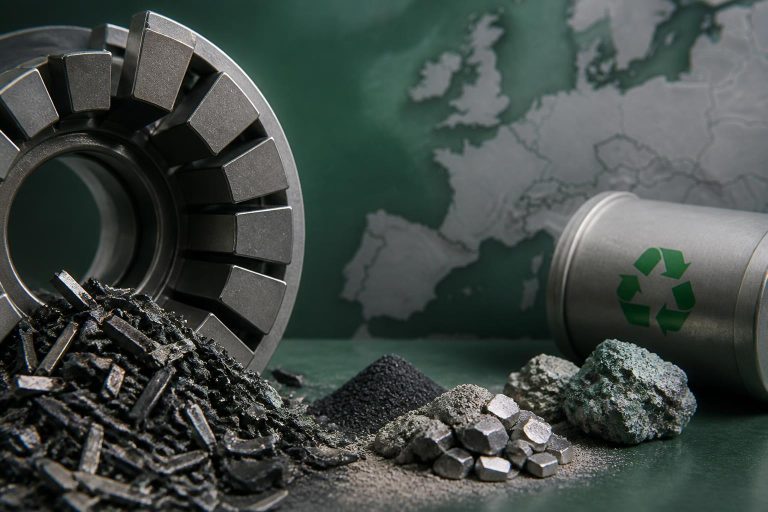
    Mkango Resources Ltd. has successfully finalised its acquisition of the Remloy rare earth magnet recycling business from Heraeus Amloy Technologies GmbH for €8 million (approximately US$9.3 million). This transaction, which was first announced on 20 May 2026, includes an initial payment of €5 million (around US$5.8 million) upon closing, with the remaining €3 million (approximately US$3.5 million) due on 28 August 2028, marking the second anniversary of the deal’s completion.

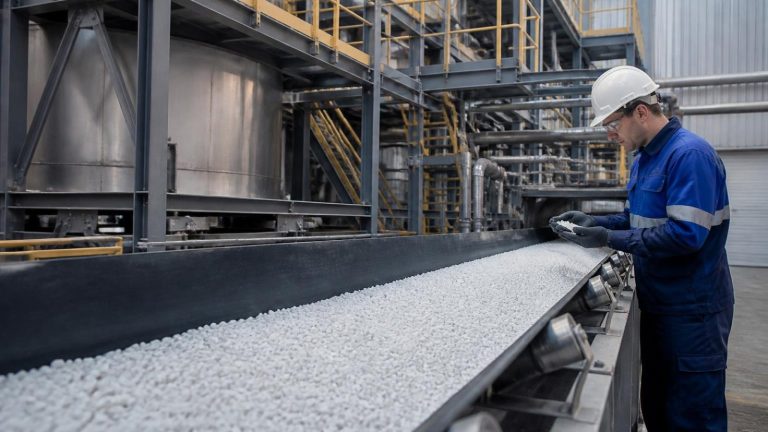
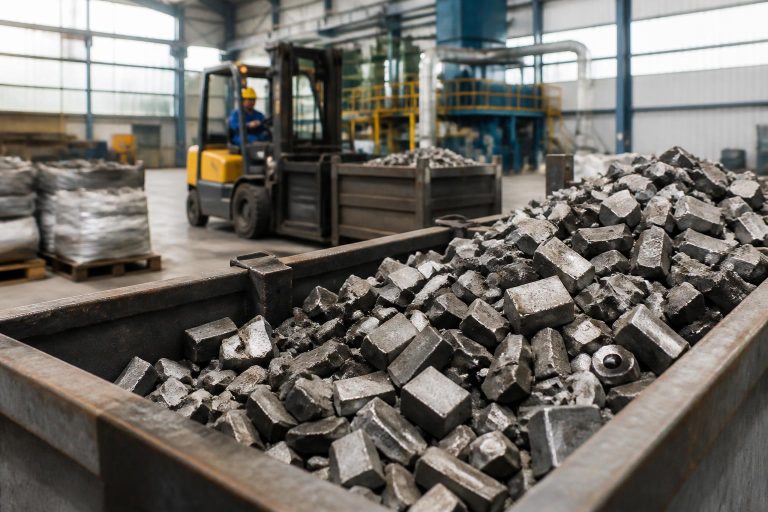
    Remloy operates a recycling facility in Bitterfeld, Germany, which employs a melting process to recycle end-of-life rare earth magnets. This process produces neodymium-iron-boron (NdFeB) alloy powders, catering to the bonded and hot-deformed magnet markets. The Remloy recycling method complements the short loop recycling process of HyProMag, which focuses on producing sintered magnets, and Mkango Rare Earths UK’s long loop recycling process aimed at generating mixed rare earth carbonates and oxides. The facility aims for a production capacity of at least 500 tonnes of NdFeB alloy powder annually.

    The acquisition comes with several advantages, including a fully commissioned production facility bolstered by substantial investments in equipment and feedstock. At the time of completion, Remloy had a significant stockpile of approximately 345 tonnes of end-of-life rare earth magnets and alloys, which will provide essential feedstock for both Remloy and HyProMag, supporting their growth strategies and creating future trading opportunities.

    Mkango’s CEO, William Dawes, expressed optimism about the acquisition, highlighting the potential to enhance the rare earth supply chain and recycling ecosystem in Germany and surrounding regions. He noted that Mkango is now strategically positioned across the entire rare earth supply chain in Europe and North America, with operations spanning recycling, magnet and alloy manufacturing in the UK, Germany, and the USA, as well as rare earth separation in Poland and mining activities in Malawi.

    David Bender, the newly appointed Managing Director of Remloy, emphasised the company’s readiness to scale up production and recycling capacities for rare-earth magnets. He believes that the integration into Mkango will significantly bolster supply chain resilience and security of supply in Europe, allowing Remloy to better serve its customers through enhanced synergies within the Mkango Group.

    Overall, this acquisition marks a significant step for Mkango Resources as it aims to solidify its position in the rare earth sector, particularly in the context of increasing demand for sustainable recycling solutions and the growing importance of rare earth materials in various industries.


  • AMG Critical Materials to List Shares on Frankfurt Stock Exchange

    AMG Critical Materials to List Shares on Frankfurt Stock Exchange

    AMG Critical Materials N.V. has announced plans to apply for a secondary listing of its shares on the Frankfurt Stock Exchange, expected to take effect in 2026. This strategic move aims to broaden the company’s investor base and enhance liquidity for its shares. Dr. Heinz Schimmelbusch, Chairman and CEO of AMG, highlighted that Germany has been integral to AMG’s industrial and technological heritage for over a century. The company operates nine production sites in Germany and has invested significantly in critical materials and technologies, including lithium and catalyst recycling. The Frankfurt listing will complement AMG’s existing primary listing on Euronext Amsterdam, where it has been publicly traded since 2007. AMG does not intend to issue new shares in conjunction with this secondary listing. The company is committed to providing critical materials and technologies to support a less carbon-intensive world, focusing on energy storage materials and advanced metallurgy. With approximately 3,500 employees and operations worldwide, AMG continues to strengthen its position in the critical materials sector, particularly in the lithium and vanadium markets. The company will also provide an information document in compliance with EU regulations regarding the listing.


  • Mkango Resources Completes Acquisition of Remloy Rare Earth Magnet Recycling Business

    Mkango Resources Completes Acquisition of Remloy Rare Earth Magnet Recycling Business

    Mkango Resources Ltd. has successfully completed its acquisition of the Remloy rare earth magnet recycling business from Heraeus Amloy Technologies GmbH for €8 million (approximately US$9.3 million). This strategic move, announced on 31 August 2026, marks a significant step in Mkango’s efforts to enhance its position within the rare earth supply chain in Europe. The transaction includes an initial payment of €5 million, with the remaining €3 million due on 28 August 2028.

    Remloy operates a fully commissioned recycling facility in Bitterfeld, Germany, which utilises a melting process to recycle end-of-life rare earth magnets into neodymium-iron-boron (NdFeB) alloy powders. This process complements Mkango’s existing recycling initiatives, including the short loop recycling process of HyProMag and the long loop recycling process of Mkango Rare Earths UK. With a target capacity of at least 500 tonnes per year, Remloy is poised to play a crucial role in the production of high-demand magnet materials.

    The acquisition comes at a time when the demand for rare earth materials is surging, driven by their critical applications in various high-tech industries. Mkango’s CEO, William Dawes, expressed optimism about the transaction, highlighting the potential for strengthening the rare earth supply chain and enhancing recycling capabilities in Germany and its neighbouring countries. He noted that Mkango is now uniquely positioned across the entire rare earth supply chain, with operations spanning recycling, magnet and alloy manufacturing in the UK, Germany, and the USA, as well as rare earth separation in Poland and mining activities in Malawi.

    David Bender, the newly appointed Managing Director of Remloy, emphasised the company’s readiness to scale up production and meet customer demands. He stated that the synergies within the Mkango Group would enhance their ability to provide a comprehensive range of products, thereby contributing to supply chain resilience and security of supply in the rare earth sector.

    As Mkango Resources continues to expand its operations, the integration of Remloy is expected to facilitate growth and innovation in rare earth magnet recycling, positioning the company as a key player in the European market. The strategic acquisition aligns with global trends towards sustainability and the circular economy, as industries increasingly seek to recycle and reuse materials to reduce environmental impact and ensure a stable supply of critical resources.

  • DMT GROUP Engages in Technical Due Diligence for German Raw Materials Fund Projects

    DMT GROUP Engages in Technical Due Diligence for German Raw Materials Fund Projects

    DMT GROUP, a prominent player in the mining and commodities sector, has been appointed to conduct technical due diligence for projects under the German Raw Materials Fund, which was established by the German government. This initiative aims to secure long-term access to critical raw materials, reduce strategic dependencies, and enhance the competitiveness of German and European industries. The fund is managed by KfW on behalf of the Bundesministerium für Wirtschaft und Energie, with PwC overseeing the overall coordination of due diligence processes. DMT’s role focuses on evaluating the technical viability of various projects, assessing factors such as project implementation, process chains, infrastructure, cost assumptions, and potential technical risks.

    Julia Ridder, Project Manager for Technical Due Diligence at DMT, highlighted the comprehensive approach taken during the evaluation process. The technical due diligence involves a thorough examination of essential factors, including geology, mining operations, processing methods, logistics, and implementation strategies. This meticulous analysis aims to provide a reliable foundation for investment decisions that will bolster the supply of raw materials in Germany and across Europe. The results of these evaluations will inform technical assessments, recommendations, and risk analyses, ensuring that investments are based on solid technical groundwork.

    Jens-Peter Lux, Managing Director at DMT, emphasised the significance of the German Raw Materials Fund as a strategic tool for advancing critical raw material projects. He noted that similar initiatives are emerging in other European countries, reflecting a broader commitment to enhancing national security regarding raw material supplies. This fund represents a crucial step towards fostering long-term cooperation within the extractive sector across Europe, aiming to strengthen the region’s resilience and competitiveness in the global market.


  • Kazakhstan Investment Day in Frankfurt

    Kazakhstan Investment Day in Frankfurt

    Analysis of the Germany-Kazakhstan Strategic Partnership

    The Kazakhstan Investment Day, held on 24 February 2026, at the KfW Bankengruppe headquarters in Frankfurt, highlighted a pivotal shift in Eurasian trade dynamics. The event centered on the deepening energy and mining alliance between Germany and Kazakhstan, a relationship that has gained strategic urgency as Kazakhstan effectively replaces Russian oil volumes and leverages deep-rooted cultural ties to strengthen bilateral cooperation.

    Financial and Strategic Framework

    The scale of this partnership is substantial, with bilateral trade recently seeing a 10% increase to reach €4 billion. Kazakhstan is currently positioned to supply 21 of the 34 critical raw materials (CRMs) identified on the EU’s strategic list.

    To facilitate this, several financial and logistical mechanisms have been established:

    • The Development Bank of Kazakhstan (DBK): A $1 billion financing program (2025–2030) has been launched, specifically dedicated to the extraction and processing of rare and critical materials.

    • Foreign Direct Investment (FDI): Kazakhstan aims to attract $400 billion in FDI by 2029, supported by Germany’s raw materials fund and backing from institutions like KfW IPEX and DEG.

    • The Middle Corridor: The Trans-Caspian International Transport Route is being developed as a highly efficient logistical artery connecting Central Asia to Europe, bypassing sanctioned territories.

    Operational Success vs. Bureaucratic Hurdles

    There is a notable contrast between engineering achievements and administrative delays. Industry leaders from Thyssen Schachtbau and Qazaq Kalium have demonstrated successful deep-shaft mining projects, proving that German technology is effectively unlocking Kazakh resources. Furthermore, the German development agency GIZ is pivoting its strategy by forming a dedicated in-country team focused exclusively on CRM partnerships.

    However, several impediments remain:

    • The “Bearocracy”: Despite the strategic need, Kazakh businesses face extreme delays and bureaucratic hurdles regarding German visa regimes, a point acknowledged by German officials.

    • Sanction Compliance: German leadership maintains a hard line, stating there will be zero support for any trade or logistics involving Russia or sanctioned companies.

    • Implementation Lag: While the financial architecture is in place, the actual development of new mining projects remains slowed by EU-wide bureaucratic processes.


    A Shifting Global Context

    The global competition for resources is accelerating. Coinciding with these discussions in Frankfurt, China introduced a supply ban of critical minerals to 40 major Japanese industrial firms over “remilitarisation” concerns. This geopolitical shift forces Japan to seek immediate alternative suppliers, placing Kazakhstan and the broader Central Asian region directly in their sights. The consensus is clear: while the foundations for a Euro-Kazakh partnership are solid, the slow pace of European administration may cause the EU to lose ground in an increasingly aggressive global race for resources.

  • Germany Deepens Strategic Partnership With Kazakhstan on Energy and Critical Resources

    Germany Deepens Strategic Partnership With Kazakhstan on Energy and Critical Resources

    Germany considers Kazakhstan one of its key partners in Central Asia and a reliable supplier of energy resources, according to statements cited by the Kazakh Ministry of Foreign Affairs. German Foreign Minister Johann Wadephul described Kazakhstan as “an economically, politically, and strategically pivotal country in Central Asia.”

    For Astana, cooperation with Western partners is primarily aimed at attracting investment and implementing modern technologies, while for Berlin, the partnership ensures stable resource supplies and access to Central Asian markets. Kazakhstan’s mineral resource base includes more than 5,000 deposits, with an estimated value in the tens of trillions of dollars. The country ranks first globally in proven reserves of zinc, tungsten, and barite; second in silver, lead, and chromite; third in copper and fluorite; fourth in molybdenum; and sixth in gold. It also ranks ninth in proven oil reserves, eighth in coal, and second in uranium.

    Energy cooperation remains central to bilateral ties. Kazakh oil supplies to the Schwedt refinery in Germany reached approximately 1.5 million tons in the first nine months of 2025. In 2026, monthly shipments are expected to increase from 100,000 to 130,000 tons.

    Discussions are also under way on exporting green hydrogen from Kazakhstan to Germany and other EU countries. For Germany, this supports energy security and decarbonisation goals, while for Kazakhstan it represents an opportunity to build a new high value-added export sector and attract long-term investment.

    Trade turnover between the two countries reached $3.9 billion from January to November 2025, with Kazakh exports rising by 7.9 percent and imports of German goods increasing by 6.1 percent. By January 2026, 36 investment projects involving German capital had been implemented in Kazakhstan, with total investments amounting to approximately €49.7 billion. Many of these projects are already operational. Cooperation is expanding in mechanical engineering, chemicals, and the mining and metallurgical sector, alongside the introduction of German technologies and management practices.

    In February 2026, Kazakh Foreign Minister Yermek Kosherbayev took part in the “Central Asia – Germany” foreign ministers’ meeting in Berlin. During talks with Katherina Reiche, he emphasised Kazakhstan’s intention to expand economic cooperation both bilaterally and within broader EU–Central Asia frameworks.

    The development of the Trans-Caspian International Transport Route is further strengthening Kazakhstan’s role as a transit hub between Europe and Asia. Germany views the corridor as a reliable alternative supply route, while Kazakhstan benefits from infrastructure development and increased industrial cooperation.

    Overall, the partnership reflects mutual strategic interests: Germany seeks stable access to energy and raw materials, and Kazakhstan aims to diversify its economy through investment, technology transfer, green energy development, and expanded transport connectivity.

  • Germany Seeks Deeper Partnership With Australia on Critical Raw Materials

    Germany Seeks Deeper Partnership With Australia on Critical Raw Materials

    Germany is looking to strengthen its cooperation with Australia on the supply and development of critical raw materials, German Foreign Minister Johann Wadephul said on Thursday during an official visit to Canberra.

    Following talks with Australian Foreign Minister Penny Wong, Wadephul described Australia as a key partner for Germany in diversifying global supply chains. He highlighted the strategic importance of minerals extracted in Australia, particularly lithium, and said Berlin is keen to expand collaboration in the raw materials sector.

    Australia hosts some of the world’s most significant mineral resources, including the largest hard-rock lithium mine, located near the town of Greenbushes south of Perth. The site spans more than 2000 hectares and is responsible for roughly 20% of global lithium production. Lithium is a crucial component in lithium-ion batteries used in consumer electronics and electric vehicles.

    In addition to lithium, Australia holds substantial reserves of rare earth elements such as neodymium and terbium, which are essential for manufacturing permanent magnets used in electric motors and other advanced technologies.

    Wadephul acknowledged that closer cooperation in developing and exploiting mineral resources would require significant financial investment. He noted that extraction and processing of critical raw materials can be costly, but emphasised that Germany’s economy is particularly reliant on secure access to these resources.

  • Germany Faces Renewed Calls to Repatriate Gold Stored in the United States

    Germany Faces Renewed Calls to Repatriate Gold Stored in the United States

    Germany is once again under political and public pressure to reconsider the location of its gold reserves, as shifting transatlantic relations and geopolitical uncertainty revive concerns over assets held in the United States.

    The country holds the world’s second-largest official gold reserves and keeps roughly one-third of them, about 1,200 tonnes, in the vaults of the New York Federal Reserve. This storage strategy dates back to the Cold War, when placing bullion abroad was intended to guarantee rapid access in the event of a major global conflict. In addition to New York, Germany also stores gold in London and Paris.

    However, the return of US President Donald Trump to office and the escalation of trade and geopolitical tensions have prompted fresh debate in Berlin. Since April last year, German politicians and fiscal commentators have increasingly questioned whether the United States remains a reliable custodian for such a large share of the country’s reserves.

    Emanuel Mönch, a former senior research official at the Bundesbank, said recently that Germany should reassess its long-standing approach. Speaking to the financial newspaper Handelsblatt, he argued that greater strategic autonomy would justify bringing more gold back to domestic vaults.

    Similar views have been voiced by Michael Jäger, head of the European Taxpayers Association, who has repeatedly urged German authorities to accelerate repatriation plans. This month, he renewed his call after the United States increased pressure over Greenland, warning that political unpredictability could put foreign-held reserves at risk.

    The debate is unfolding against the backdrop of a historic rally in gold prices. The metal has surged to record levels above $5,100 per ounce, up around 80% over the past year. At current prices, Germany’s gold stored in New York alone would be valued at roughly $128 billion.

    Not all economists support the idea. Clemens Fuest, president of the Ifo Institute for Economic Research, cautioned that repatriation could strain diplomatic relations with Washington and potentially trigger unintended economic or political consequences.

    Germany is not alone in facing such pressure. Italy, which ranks as the world’s third-largest holder of gold reserves, has also seen renewed calls to bring home bullion stored in New York.

  • Zinnwald Lithium advances German lithium project after planning assessment

    Zinnwald Lithium advances German lithium project after planning assessment

    Zinnwald Lithium has completed the spatial impact assessment for its proposed integrated lithium mining and processing project in Germany. The Saxony State Directorate concluded that the development concept outlined in the company’s pre-feasibility study is spatially compatible and the most favourable option for large-scale development.

    The concept предусматривает processing at Liebenau with ore transported via a conveyor tunnel. While the assessment does not constitute a development permit, it provides the planning framework needed to proceed to the environmental impact assessment and mining permitting stages under the Saxon Mining Authority. The milestone reduces regulatory risk and supports the project’s role in supplying lithium to Europe’s battery industry.

  • Germany calls for stronger cooperation on critical raw materials ahead of Washington talks

    Germany calls for stronger cooperation on critical raw materials ahead of Washington talks

    German Finance Minister Lars Klingbeil on Sunday urged closer international cooperation on critical raw materials as he prepared to travel to Washington for high-level talks with counterparts from major industrialized nations.

    Speaking before his departure from Berlin, Klingbeil, who also serves as vice chancellor and leader of the Social Democratic Party (SPD), said Germany and the European Union remain committed to fair, rule-based and reliable trade. He emphasized that access to critical raw materials such as lithium, cobalt and rare earths is essential for economic growth, technological development and job security.

    The United States has invited finance ministers from several leading economies to discuss securing access to these materials, whose global supply chains are highly concentrated and largely dependent on a small number of countries, including China.

    “Access to critical raw materials and reliable supply chains is of utmost importance for the economy and jobs,” Klingbeil said, adding that Germany has a strong interest in expanding international cooperation to strengthen supply security, reduce strategic dependencies and ensure stable economic conditions. He stressed that joint action should be taken wherever possible.