Tag: Geology

  • Kazakhstan to Use AI for Analyzing Soviet-Era Geological Data

    Kazakhstan to Use AI for Analyzing Soviet-Era Geological Data

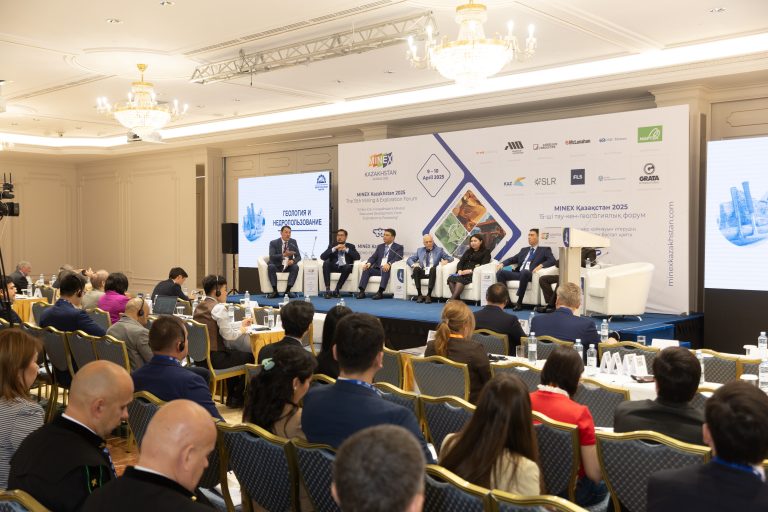
    Kazakhstan’s Ministry of Industry and Construction is integrating artificial intelligence to analyze geological data collected between the 1950s and 1980s, Vice Minister Zhannat Dubirova announced at MINEX Kazakhstan. The digitization of this historic data is set to be completed by the end of the year, with AI tools helping to identify and interpret geological characteristics, create predictive models, and process even low-quality data using Big Data technologies.

    According to Dubirova, over 56,000 geological reports have already been digitized. The AI system currently recognizes up to 90% of information and allows for manual corrections where needed. By 2026, the ministry plans to fully convert all geological data into machine-readable formats, accessible via the Unified Subsoil Use Platform.

    This platform, launched earlier this year, streamlines the entire licensing process for exploration and extraction—from application to auction and licensing—and has already processed over 500 applications. It features an interactive map showing current and available subsoil plots and allows investors to participate directly in auctions without intermediaries.

    Digital control mechanisms are also in place to monitor compliance with issued licenses and contracts for solid mineral resources, replacing a manual system that tracked 3,000 agreements.

  • Kazakhstan Discusses Digitalization of Subsoil Use at Round Table Meeting

    Kazakhstan Discusses Digitalization of Subsoil Use at Round Table Meeting

    A round table was held in Astana at Maqsut Narikbayev University under the chairmanship of the Minister of Industry and Construction of Kazakhstan, Kanat Sharlapaev. The event brought together representatives of subsoil user companies to discuss key issues in the fields of geology and subsoil use.

    The Minister emphasized that one of the ministry’s priorities is to enhance geological exploration across Kazakhstan to replenish the country’s mineral resource base. He also reviewed the past year’s results and outlined plans for the current period.

    Deputy Minister Zhannat Dubirova presented projects aimed at digitalizing the sector, including the Unified Subsoil Use Platform (minerals.e-qazyna.kz). According to her, since its launch, the platform has processed 506 applications and provides users with open access to all geological data, including 60,000 reports.

    The platform’s interactive map enables subsoil users to analyze infrastructure, geological, and geophysical data for specific areas, as well as submit auction applications. Additionally, by April, an electronic system for monitoring compliance with license and contract obligations is set to be introduced.

    Round table participants also discussed the digitalization of primary geological reports and the need to integrate the platform into company operations.

  • Kazakhstan to Develop AI-Powered Geological Data Platform

    Kazakhstan to Develop AI-Powered Geological Data Platform

    The Ministry of Industry and Construction of Kazakhstan has convened a scientific and technical council meeting to discuss promising research in the mining sector. One of the key initiatives approved was the creation of a digital platform for geological data, which will utilize artificial intelligence to analyze information.

    This innovative system aims to reduce exploration costs, improve the accuracy of deposit forecasting, and accelerate exploration timelines. The implementation of this platform is driven by the industry’s ongoing need for digitized geological data to support efficient resource planning.

    In addition to digitalization efforts, the council reviewed research projects from major industry players, including Sokolov-Sarbai Mining and Processing Production Association (SSGPO) and Kachary Ruda, both subsidiaries of ERG. Key research areas include developing methods for pre-reducing ore from the Sarbai deposit, improving carbon-based reductants and exploring alternatives, enhancing the quality of pelletizing ore from the Sokolov deposit, and optimizing the processing of refractory ores from the Kachary deposit.

    The discussion also focused on the introduction of “green” technologies in the mining and metallurgical industry, particularly at the Korzhankul deposit. Experts believe that adopting environmentally friendly solutions will reduce the industry’s environmental footprint and enhance its long-term sustainability.

    Additionally, the council approved a new scientific program by Kazakhmys, which aims to implement high-efficiency reagents to improve the processing of copper ores at the Balkhash Processing Plant.

    The outcomes of the meeting highlight Kazakhstan’s commitment to modernizing its mining sector through digital technologies, scientific advancements, and environmentally sustainable practices.

  • Kazakhstan Considers New Royalty-Based Tax Model for Mining Sector

    Kazakhstan Considers New Royalty-Based Tax Model for Mining Sector

    Kazakhstan plans to transition from its current mineral extraction tax to a royalty-based system, calculated on the sale value of mineral raw materials. Minister of Industry Kanat Sharlapayev believes this will enhance transparency and attract foreign investors. The new model aims to incentivize domestic processing by imposing lower taxes on minerals processed locally compared to those exported raw. The proposal is set to be included in the 2026 Tax Code. Additionally, the minister emphasized boosting geology research as a fundamental science, advocating increased state funding.

  • Сhinese Geologists Discover Two New Minerals at Bayan Obo Rare-Earth Mine

    Сhinese Geologists Discover Two New Minerals at Bayan Obo Rare-Earth Mine

    Chinese geologists, in collaboration with several research institutions including the CAS Institute of Geology and Geophysics and Inner Mongolia Baotou Steel Union Co., Ltd., have made a significant breakthrough at Bayan Obo, the world’s largest rare-earth mine. They have identified two new minerals, Oboniobite and Scandio-fluoro-eckermannite, marking the 19th and 20th discoveries since research began in 1959. Oboniobite, characterized by its yellow-brown to brown hue and plate-like structure, measures between 20 to 100 micrometers. Meanwhile, Scandio-fluoro-eckermannite, the first mineral containing scandium found in China, appears in pale yellow or light blue with a columnar shape up to 350 micrometers. The discovery underscores the ongoing importance of Bayan Obo in mineral research and its contribution to scientific knowledge.

  • Kazakhstan to Collaborate with Afghanistan in Geology and Natural Resource Extraction

    Kazakhstan to Collaborate with Afghanistan in Geology and Natural Resource Extraction

    In a bid to enhance cooperation in the field of geology and natural resource extraction, Kazakhstan announces plans to establish a technical committee comprising domestic and foreign geologists, as reported by the press service of the Prime Minister of the republic. Vice Prime Minister of Kazakhstan, Serik Zhumangarin, engaged in discussions with Afghan counterparts to pave the way for future collaboration. Notably, representatives from Kazakhstani companies such as “Kazakhmys Barlau” and ERG Exploration were also involved in the deliberations.

    Afghanistan’s subsoil is renowned for its wealth in iron and non-ferrous ores, coal, and rare earth minerals. Additionally, the country boasts significant hydrocarbon reserves. It is anticipated that the potential partnership will soon provide Kazakh specialists with maps highlighting prospective areas and documents verifying the presence of mineral resources.

  • New lithium deposit discovered in Eastern Kazakhstan: Foreign investors show interest in development

    New lithium deposit discovered in Eastern Kazakhstan: Foreign investors show interest in development

    In 2023, experts from the Korea Institute of Geoscience and Mineral Resources (KIGAM) announced their discovery of a new lithium deposit in Kazakhstan. The information about the unnamed deposit was published by the “Kursiv” newspaper, citing the Korea Times.

    The discovery of the deposit occurred as a result of geological studies on an area of 1.6 km² in Eastern Kazakhstan. Foreign investors have already shown interest in developing this deposit.

    KIGAM experts estimated the potential resources of the new deposit at $15.7 billion, although the exact amount of lithium found in the ground has not been disclosed. According to estimates, the deposit contains high concentrations of lithium up to 5.3%, making it potentially profitable.

    According to previous data, German companies have actively invested in lithium mining in Kazakhstan. Three major enterprises, including GP Gunter Papenburg AG, Knauf Gruppe, and Roxtec, have formed a consortium to develop production of this strategically important metal in the republic.

  • Korean Geologists Uncover $15.7 Billion Lithium Deposit in Kazakhstan

    Korean Geologists Uncover $15.7 Billion Lithium Deposit in Kazakhstan

    Korean Institute of Geoscience and Mineral Resources (KIGAM) reveals plans to exploit a lithium deposit in eastern Kazakhstan, covering an area of 1.6 square kilometers, as reported by Orda.kz citing The Korea Times. The region, previously mined for tantalum, has resources estimated at around $15.7 billion. KIGAM, responding to Kazakhstan government’s request, studied the area since May last year, considering the significance of tantalum coexisting with lithium and cesium. Lithium, a crucial mineral for electric vehicle and modern industries, is a key component in batteries. KIGAM aims to apply for drilling rights in the region, intending to commence lithium extraction next year.

  • Kazakhstan Explores Geology-AI Integration with Key MoUs Signed at PDAC-2024 Conference in Canada

    Kazakhstan Explores Geology-AI Integration with Key MoUs Signed at PDAC-2024 Conference in Canada

    Kanat Sharlapaev, the Minister of Industry and Construction of Kazakhstan, spearheaded a delegation from Kazakhstan during the recent PDAC-2024 conference in Canada, where they inked Memorandums of Understanding (MoUs) focusing on geology, as reported by the Ministry of Industry and Construction.

    These MoUs included partnerships between the National Geological Survey of Kazakhstan (NGS) and Koan Analytics Inc., as well as between NGS and the Geological Survey of Finland (GTK), marking a significant advancement towards integrating artificial intelligence (AI) into geological practices.

    The primary objective of these agreements is to explore the establishment of a Center of Excellence in AI within the NGS framework, aimed at enhancing the precision and efficacy of mineral exploration processes through advanced technologies such as data transformation techniques, predictive models, and algorithms.

    Canadian firm Koan Analytics Inc., known for its expertise in providing industrial solutions, will be pivotal in this venture, leveraging its proficiency in data transformation and machine learning to support NGS in leveraging AI for geology.

    Furthermore, the MoU with GTK underscores the global interest in Kazakhstan’s geological resources, with GTK’s extensive experience enriching collaborative efforts in advancing the field of geology in Kazakhstan.

    Yerlan Galiyev, Chairman of the Board of NGS, emphasized the significance of these agreements in strengthening international cooperation in the geology sector and enhancing investment opportunities.

    The PDAC Convention, where these agreements were signed, serves as a crucial platform for the mining industry, fostering strategic partnerships and driving innovation amidst a diverse array of stakeholders from around the globe.

  • Partnership at the intersection of sciences: Kanat Sharlapaev’s meeting with the Director of the U.S. Geological Survey

    Partnership at the intersection of sciences: Kanat Sharlapaev’s meeting with the Director of the U.S. Geological Survey

    In the continuing effort to bolster bilateral relations between Kazakhstan and the United States of America, Kanat Sharlapaev, the Kazakh Minister of industry and construction, conducted a meeting with David Applegate, the Director of the U.S. Geological Survey.

    This visit signifies a considerable advancement in the collaborative efforts between the two nations in geology, a field of strategic significance for Kazakhstan’s industrial progression, particularly in the extraction of critical minerals.

    The discussion during the meeting focused on the prospects for cooperation in research. A particular focus was placed on the potential use of the U.S. Geological Survey’s advanced technologies and methodologies to improve the efficiency of Kazakhstani geological research and development projects.

    «I also want to highlight that our countries have historically established close trade relationships, including in the realm of critical minerals. We have unique capabilities in producing a range of rare and rare-earth metals», noted the Minister.

    Moreover, Kanat Sharlapaev emphasized the importance and potential for expanding the existing cooperation, especially in the exploration and development of critical mineral deposits in Kazakhstan, 17 out of 50 types of which are identified by the U.S. Geological Survey as crucial.

    The key directions for future collaboration will involve attracting investment in geological exploration, mining, and processing of rare and rare-earth metals, as well as facilitating Kazakhstan’s integration into the global value chain through cutting-edge technologies and expertise.

    This meeting paves new avenues for further development and deepening of industrial and scientific ties between Kazakhstan and the USA, affirming a mutual interest in joint exploration and utilization of natural resources for the benefit of both countries.