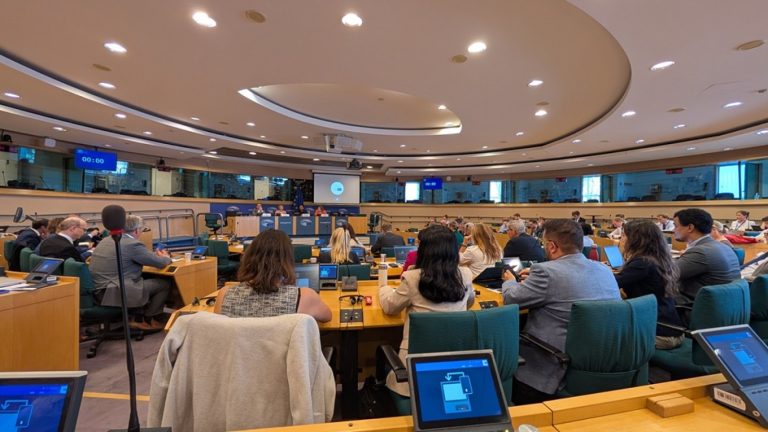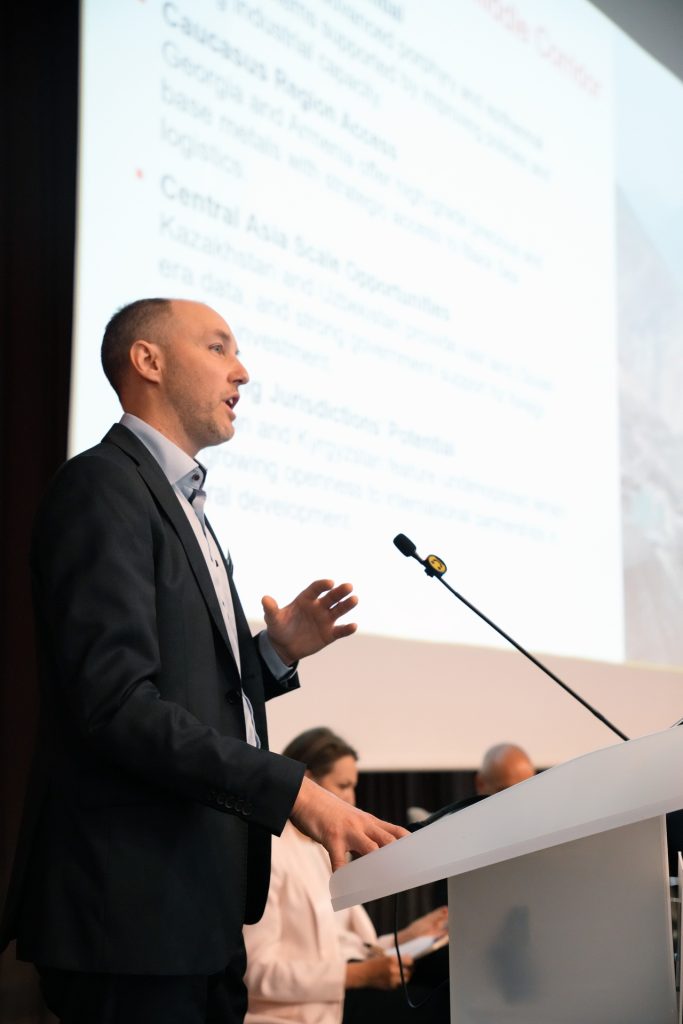
In a recent presentation, expert Hrstka shifted the focus from geopolitical and financial discussions to the practical technical tools that can aid mining companies and investors in identifying and de-risking promising projects early in their development. He emphasised the importance of advanced mineralogy and digital tools in fast-tracking project development, reducing technical risks, and optimising performance, particularly in the context of the Middle Corridor and Tethyan Belt. Hrstka’s insights were informed by his recent visit to Tajikistan, where he was able to incorporate personal photographs into his presentation, adding a touch of authenticity to his discussion.
Hrstka’s central thesis highlighted the significant opportunities present in the Tethyan Belt and Middle Corridor, underscoring the existence of geology, known deposits, active projects, and available financing. However, he pointed out the ongoing challenge of transforming geologically interesting discoveries into bankable and operable projects that are sufficiently de-risked for investment. He argued that the technological advancements in the industry have expanded the toolset available to address these challenges, urging stakeholders to leverage these digital capabilities when evaluating deposits in emerging regions.
A key aspect of Hrstka’s presentation was the distinction between elements and minerals, noting that mining companies extract and process minerals rather than isolated elements. He stressed the importance of understanding the mineral form early in a project’s lifecycle to predict how materials will behave during processing and production. He identified a persistent knowledge gap between early-stage geological and geochemical data and the final product, which he argued contributes significantly to project risk and value destruction.
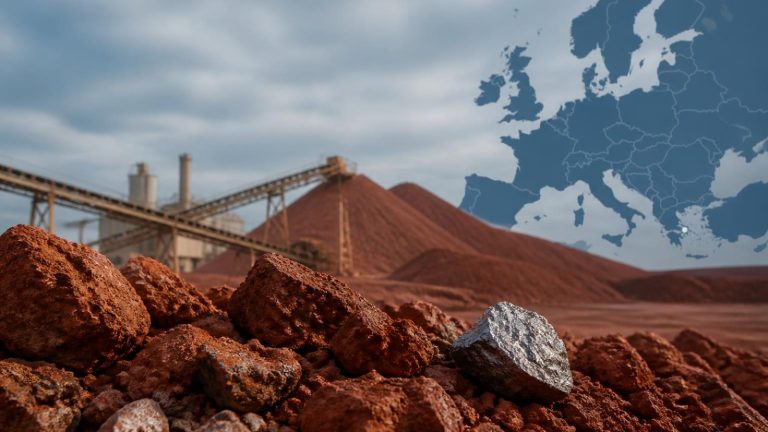
Providing geological context, Hrstka described the Tethyan Belt as a vast metallogenic province that stretches from Europe to Central Asia, formed by major tectonic processes and hosting a variety of mineral deposit styles. He referenced existing large-scale projects within the belt as evidence of its potential, while also highlighting the unexplored and underinvested territories in Kazakhstan, Uzbekistan, and Tajikistan. He asserted that the real challenge lies not in geology but in the practical processes required to convert geological potential into functioning projects.
The urgency of this topic was underscored by the rising demand for copper, lithium, gold, and graphite, driven by sectors such as AI data centres, which are both power and metal-hungry. Hrstka connected this demand surge to broader geopolitical stresses, suggesting that these pressures are pushing the industry to seek more resources and accelerate production, thereby elevating the Tethyan Belt to a strategic importance.
Delving into the technical core of his presentation, Hrstka explained mineralogy as a critical intermediary between geochemistry and metallurgical test work. He illustrated how modern digital tools enable mineralogical analysis on a larger and more statistically representative scale than previously possible, addressing a long-standing weakness in the industry. He cautioned against the common error of assuming that merely measuring the presence of an element in complex deposits is sufficient for financing decisions, emphasising the need for verification of economic recoverability through processing.
Hrstka framed mineralogy as a component to be integrated with standard metallurgical test work, building confidence progressively as projects move from evaluation to production optimisation. He provocatively suggested that mandatory mineralogical characterisation could become part of reporting requirements for critical minerals projects, given its direct impact on recovery predictions.
To illustrate the economic benefits of this approach, Hrstka presented a case study with P2 Gold, where systematic test work improved the gold recovery rate, translating into significant annual savings. He argued that targeted technical investments in understanding ore can yield substantial financial returns. Furthermore, he highlighted the potential for applying modern geometallurgical concepts to legacy projects and old tailings, particularly in Tajikistan, to unlock additional value.
In conclusion, Hrstka asserted that geology and geochemistry alone are insufficient to tackle the complexities of new mining regions. A thorough understanding of geology through the lens of downstream processing, facilitated by mineralogy, adds essential value. He cautioned against over-reliance on AI, stressing that rigorous test work and technical experience are crucial for de-risking projects, ultimately reinforcing the importance of an early, detailed mineralogical view in supporting sound investment decisions.