Tag: Geology

  • Leveraging Advanced Mineralogy and Digital Tools to De-risk Mining Projects in the Tethyan Belt

    Leveraging Advanced Mineralogy and Digital Tools to De-risk Mining Projects in the Tethyan Belt

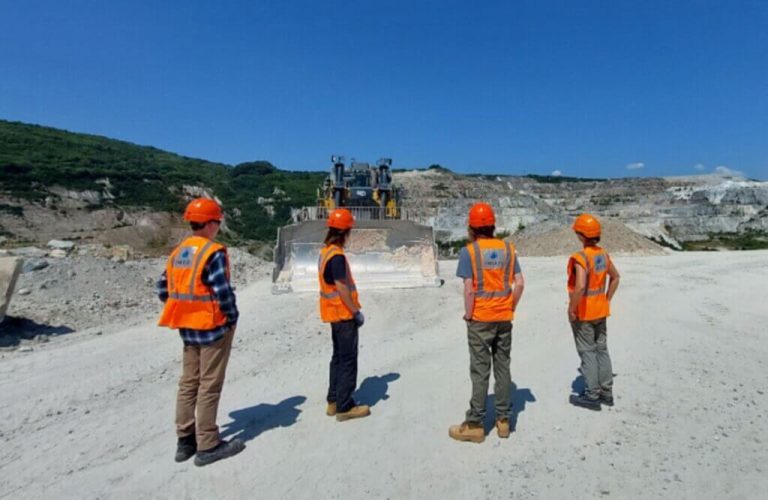
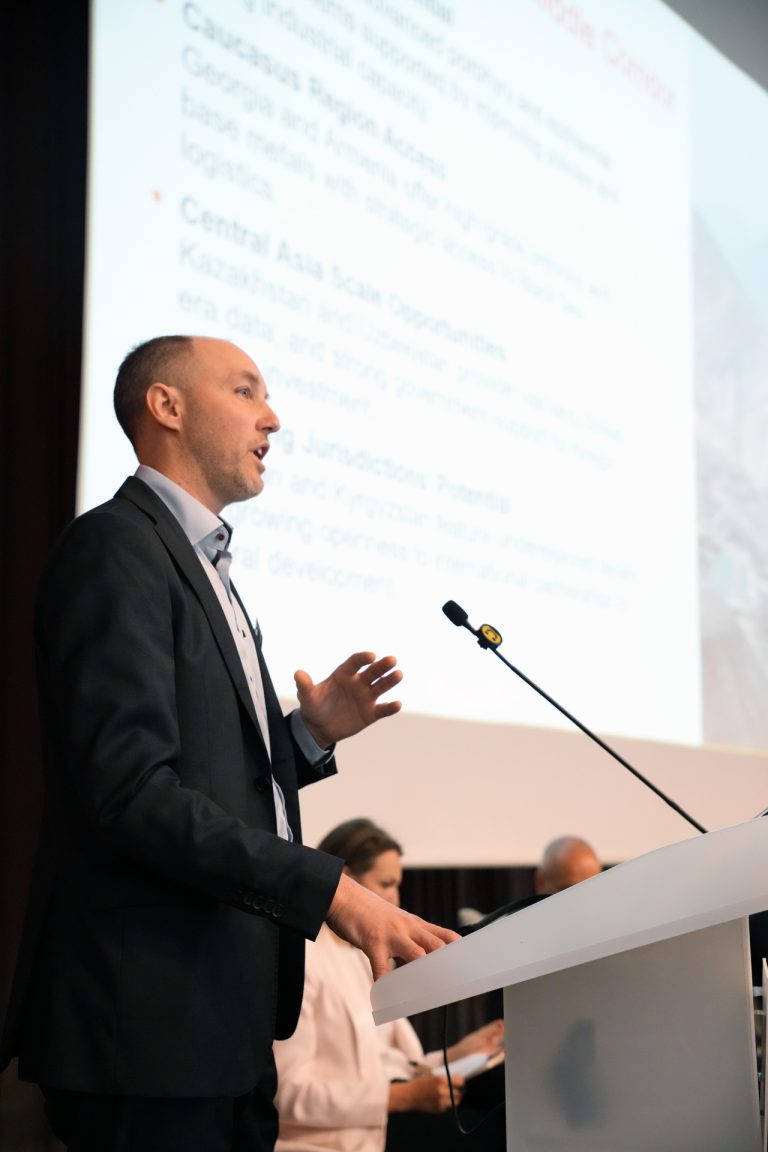
    In a recent presentation, expert Hrstka shifted the focus from geopolitical and financial discussions to the practical technical tools that can aid mining companies and investors in identifying and de-risking promising projects early in their development. He emphasised the importance of advanced mineralogy and digital tools in fast-tracking project development, reducing technical risks, and optimising performance, particularly in the context of the Middle Corridor and Tethyan Belt. Hrstka’s insights were informed by his recent visit to Tajikistan, where he was able to incorporate personal photographs into his presentation, adding a touch of authenticity to his discussion.

    Hrstka’s central thesis highlighted the significant opportunities present in the Tethyan Belt and Middle Corridor, underscoring the existence of geology, known deposits, active projects, and available financing. However, he pointed out the ongoing challenge of transforming geologically interesting discoveries into bankable and operable projects that are sufficiently de-risked for investment. He argued that the technological advancements in the industry have expanded the toolset available to address these challenges, urging stakeholders to leverage these digital capabilities when evaluating deposits in emerging regions.

    A key aspect of Hrstka’s presentation was the distinction between elements and minerals, noting that mining companies extract and process minerals rather than isolated elements. He stressed the importance of understanding the mineral form early in a project’s lifecycle to predict how materials will behave during processing and production. He identified a persistent knowledge gap between early-stage geological and geochemical data and the final product, which he argued contributes significantly to project risk and value destruction.

    Providing geological context, Hrstka described the Tethyan Belt as a vast metallogenic province that stretches from Europe to Central Asia, formed by major tectonic processes and hosting a variety of mineral deposit styles. He referenced existing large-scale projects within the belt as evidence of its potential, while also highlighting the unexplored and underinvested territories in Kazakhstan, Uzbekistan, and Tajikistan. He asserted that the real challenge lies not in geology but in the practical processes required to convert geological potential into functioning projects.

    The urgency of this topic was underscored by the rising demand for copper, lithium, gold, and graphite, driven by sectors such as AI data centres, which are both power and metal-hungry. Hrstka connected this demand surge to broader geopolitical stresses, suggesting that these pressures are pushing the industry to seek more resources and accelerate production, thereby elevating the Tethyan Belt to a strategic importance.

    Delving into the technical core of his presentation, Hrstka explained mineralogy as a critical intermediary between geochemistry and metallurgical test work. He illustrated how modern digital tools enable mineralogical analysis on a larger and more statistically representative scale than previously possible, addressing a long-standing weakness in the industry. He cautioned against the common error of assuming that merely measuring the presence of an element in complex deposits is sufficient for financing decisions, emphasising the need for verification of economic recoverability through processing.

    Hrstka framed mineralogy as a component to be integrated with standard metallurgical test work, building confidence progressively as projects move from evaluation to production optimisation. He provocatively suggested that mandatory mineralogical characterisation could become part of reporting requirements for critical minerals projects, given its direct impact on recovery predictions.

    To illustrate the economic benefits of this approach, Hrstka presented a case study with P2 Gold, where systematic test work improved the gold recovery rate, translating into significant annual savings. He argued that targeted technical investments in understanding ore can yield substantial financial returns. Furthermore, he highlighted the potential for applying modern geometallurgical concepts to legacy projects and old tailings, particularly in Tajikistan, to unlock additional value.

    In conclusion, Hrstka asserted that geology and geochemistry alone are insufficient to tackle the complexities of new mining regions. A thorough understanding of geology through the lens of downstream processing, facilitated by mineralogy, adds essential value. He cautioned against over-reliance on AI, stressing that rigorous test work and technical experience are crucial for de-risking projects, ultimately reinforcing the importance of an early, detailed mineralogical view in supporting sound investment decisions.


  • Digital Transformation in Central Asian Geology: Platforms, AI, and Workforce Challenges

    Digital Transformation in Central Asian Geology: Platforms, AI, and Workforce Challenges

    The mining industry is increasingly recognising the importance of digitalisation, particularly in the field of geology, which is one of the most knowledge-intensive sectors. However, the pace of digital transformation in Central Asia is lagging behind the demands of the business and global investment markets. This article explores how Kazakhstan and Uzbekistan are addressing this issue through strategic programmes aimed at expanding their mineral resource bases.

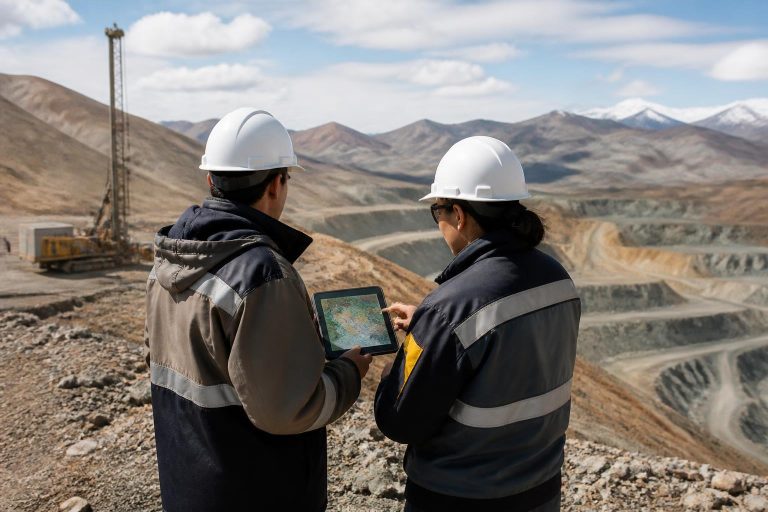
    In the competitive landscape of critical minerals, the integration of digital technologies is essential for success. From forecasting and assessing mineral reserves to product exportation, the mining industry must embrace digital solutions. Despite the existence of scientific literature and discussions at strategic business forums, the application of AI, big data, and machine learning remains limited to isolated practices. A systematic approach is needed to harness geological information effectively, and both Kazakhstan and Uzbekistan are developing their own transformation scenarios.

    Kazakhstan has made significant strides since the launch of a unified subsoil use platform in 2025. By August 2026, the country completed the digitisation of geological information, processing over 4.8 million archival materials, marking a revolutionary step that could serve as a model for other Central Asian nations. Meanwhile, Uzbekistan announced the creation of a National Geological Data Base, aiming to digitise 36,000 reports and establish a Centre for Technological Transformation, which is expected to double the quality and speed of geological data generation and modelling.

    Experts at the MINEX Kazakhstan 2026 forum highlighted that the digitalisation of geology is a matter of survival rather than prestige for Central Asian countries. Traditional methods are no longer sufficient to ensure growth or replenish mineral resources, especially as older deposits are depleted and ore quality declines. The key challenge is not just the quantity of reserves but the effective management of geological data and decision-making based on that data. Currently, only 21% of geologists in Kazakhstan have access to modern data transmission networks, significantly delaying project timelines.

    A critical barrier to digitalisation is the skills gap, particularly in the intersection of IT, big data, and geology, which are essential for quality predictive analysis. The reliance on foreign software and the lack of local intellectual resources hinder the rapid development of homegrown solutions. The competition for skilled professionals in IT and data science is fierce, with companies vying for talent by offering lucrative salaries.

    Another significant obstacle is the absence of unified standards for geological information, although Kazakhstan has made progress in this area. Without the integration of historical data, its value diminishes, and investors are less inclined to engage. To improve the situation, experts suggest a shift in focus towards innovative priorities within the industry.

    The Ministry of Industry and Infrastructure Development of Kazakhstan has begun practical steps to implement neural network models in geology, collaborating with the National Geological Service and Astana Hub. This initiative is supported by EPAM Kazakhstan and aims to address the skills shortage by training geologists in big data and machine learning techniques.

    The article also discusses various applications of AI in modelling mineral deposits and the use of digital tools in geophysical exploration across Kazakhstan and beyond. Companies are employing advanced methods such as 3D modelling and machine learning to enhance the accuracy of geological assessments and streamline operations. As Kazakhstan embarks on a state programme to study 20 areas for detailed geological surveys, the integration of IT tools will be crucial for achieving its resource potential.

    In conclusion, Central Asia is undergoing a significant transformation in its geological sector, which will ultimately determine the success of the entire mining industry in the region. The future of geology in Central Asia hinges on the successful implementation of digital technologies and the establishment of an open ecosystem for geological information, positioning countries like Kazakhstan and Uzbekistan as high-tech hubs in the Eurasian landscape.


  • Uzbekistan Accelerates Geological Sector Transformation Through Digitalisation

    Uzbekistan Accelerates Geological Sector Transformation Through Digitalisation

    Uzbekistan is embarking on a significant transformation of its geological sector, aiming to attract up to $30 billion in investments by 2030 through the implementation of digital solutions and artificial intelligence. President Shavkat Mirziyoyev recently presented an ambitious plan to modernise the mining and geological industries, highlighting the need for a comprehensive national geological database to enhance global investor interest in new projects. Currently, Uzbekistan lacks a unified geological data platform, unlike Kazakhstan, which has had its Unified Subsoil Use Platform operational since 2025. The establishment of a digital geological map is deemed essential, as it will integrate historical data with current information, thereby improving the attractiveness of Uzbekistan’s geological resources to international investors.

    To facilitate this transformation, Uzbekistan plans to digitise over 36,000 reports and other information sources stored in various formats. This process is expected to take several years, drawing on the experiences of Russia and Kazakhstan, which have already undertaken similar initiatives. The new Centre for Technological Transformation will oversee the digitisation efforts, which will include compiling geological maps, drilling data, laboratory results, and production indicators into a single electronic database. Such a consolidation is anticipated to enhance the efficiency of discovering new mineral deposits.

    The government’s strategy includes leveraging artificial intelligence to expedite the analysis of geological data, improve resource estimation, and enhance drilling operations. Specific targets have been set, including a 10% reduction in the cost of geological exploration and a doubling of the speed at which new deposits are identified. Additionally, the number of investment proposals is expected to quadruple as a result of these digital advancements.

    Currently, only 40% of Uzbekistan’s mineral resources have been explored, but the government is keen to increase this figure significantly. By 2030, the country aims to boost its reserves of gold, silver, and copper substantially. Uzbekistan is home to over 30 types of critical minerals and is actively pursuing 76 investment projects worth approximately €2.4 billion. However, further exploration is necessary for some deposits, particularly for rare earth metals and uranium.

    The government has outlined plans for 44 projects between 2026 and 2030 that will incorporate artificial intelligence and machine learning in geological activities, focusing on six key mining enterprises. These projects aim not only to automate production processes but also to enhance geological exploration through digital transformation. The use of advanced technologies, including digital geological modelling, is already being implemented by major companies like the Navoi Mining & Metallurgy Combinat.

    Furthermore, Uzbekistan is working on a geospatial monitoring system to ensure transparency and accountability in the mining sector. This system will require all mining operators to submit their reports in a machine-readable format, facilitating quicker and more accurate verification of compliance with regulations. The geospatial monitoring initiative aims to prevent illegal activities and ensure adherence to environmental standards, using aerial and satellite technology to monitor mining operations effectively. As of June 2026, information on over 2,000 mineral deposits has already been integrated into this new system, marking a significant step towards a more modern and efficient geological sector in Uzbekistan.


  • Exploring the Future of Mineral Discovery in Kazakhstan’s Sayak District

    Exploring the Future of Mineral Discovery in Kazakhstan’s Sayak District

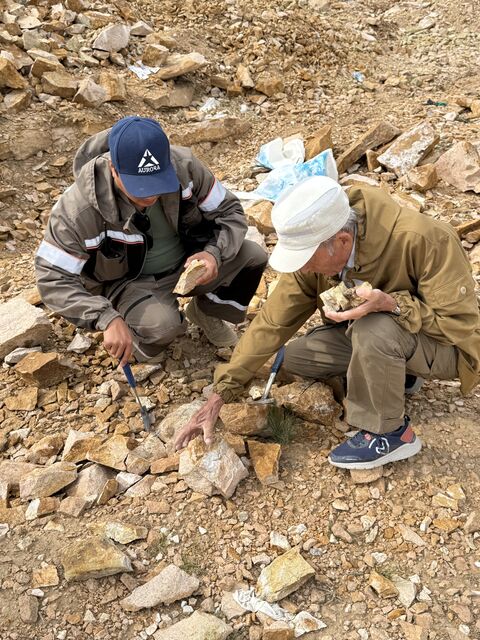
    In a recent visit to the Globmine Resources gold project located in the Sayak district of Northern Balkhash, a team of geologists, including two of Kazakhstan’s most esteemed exploration experts, Yerlan Nabiev and Daulet Muratbekov, highlighted the importance of experience and innovation in mineral exploration. Major mineral discoveries are seldom the result of luck; they stem from decades of accumulated knowledge, disciplined exploration, and a synergy between experience, capital, and cutting-edge technology.

    Yerlan Nabiev, a veteran geologist with over fifty years of experience in the Sayak region, has played a pivotal role in the discovery and evaluation of numerous mineral deposits. His extensive knowledge has earned him recognition as a ‘Discoverer of Mineral Deposits’ in Kazakhstan. Alongside him, Daulet Muratbekov brings decades of field experience across Northern Balkhash, contributing to a rich understanding of the area’s geology.

    During the site visit, the team engaged in discussions about mineralisation, structural controls, and future exploration phases. A notable remark from Nabiev resonated with the team: ‘I have worked in this region for fifty years. At best, we have explored only about thirty percent of it. There are still many discoveries waiting to be made.’ This statement underscores the vast potential that remains untapped in the region, serving as a roadmap for future exploration efforts.

    Aurora, the company behind the project, is committed to building a world-class exploration enterprise by preserving and transferring geological knowledge across generations. This commitment goes beyond traditional methods of documentation; it involves hands-on engagement in the field with seasoned geologists who have significantly contributed to Kazakhstan’s mineral discovery landscape.

    By integrating the expertise of local geologists with modern techniques such as geophysics, remote sensing, 3D modelling, and adherence to CRIRSCO reporting standards, Aurora aims to enhance its exploration capabilities. The Sayak copper-gold district has already yielded some of Kazakhstan’s most significant mineral discoveries, and Aurora believes that this is just the beginning of a new chapter in the region’s geological narrative. With a focus on innovation and collaboration, the company is poised to uncover further valuable resources in the Sayak district.


  • Kazakhstan at PDAC 2026: The Next Major Frontier for Mineral Discoveries?

    Kazakhstan at PDAC 2026: The Next Major Frontier for Mineral Discoveries?

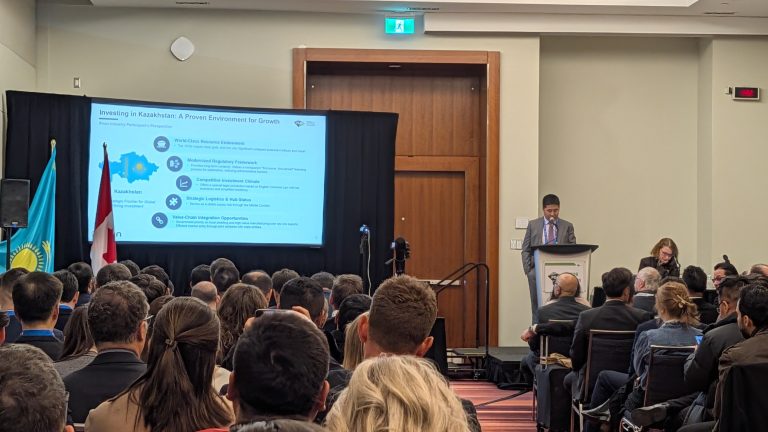
    This year marked a significant milestone as the Kazakhstan Chamber of Mines took the lead as the official organiser of Kazakhstan Day — and what a resounding success the debut turned out to be!

    Despite a packed PDAC schedule, the session drew an impressive crowd of over 130 industry leaders, investors, and exploration experts. The atmosphere in the room confirmed one thing: the global mining community is paying very close attention to Central Asia.

    MINEX Forum was proud to support the event as the Official Media Partner, capturing the insights that are shaping the next wave of exploration in the region.

    Key Highlights from the Plenary Session: The tone was set by Ruslan Baimishev, President of the Kazakhstan Chamber of Mines:

    “Kazakhstan is entering a new era of exploration — driven by robust reforms, international partnerships, and the soaring global demand for copper and critical metals.”

    We also heard high-level perspectives from H.E. Dauletbek Kussainov, Ambassador of Kazakhstan to Canada, and Iran Sharkhan, Vice-Minister of Industry and Construction.

    Expert Insights & Project Showcases: The technical session, “Unlocking New Discovery Potential in Kazakhstan,” featured a stellar line-up including Tim Barry (Arras Minerals), Charlie Liu (Zijin Mining), Simon Cooper (Pallas Resources), and world-renowned experts Anna Fonseca and Professor Jeffrey Hedenquist.

    The afternoon shifted to tangible opportunities, with project presentations from AMG Ltd, Kogadyr Gold, Taskora, and Muzbel. As Tim Barry aptly put it: “Kazakhstan offers unique opportunities for Canadian juniors to enter new jurisdictions — and the future looks bright.”

    Kazakhstan is no longer just a “prospective” jurisdiction; it is rapidly becoming the territory where the next big copper success stories are being written.

    Special thanks to the Kazakhstan Day partners:

    • General Sponsors: Aurora Minerals Group, NAC Kazatomprom, Pallas Resources.

    • Sponsors: Arras Minerals, TauGold Copper.

    Missed the session?  📺 Watch the session recordings and download expert presentations at:

  • Kazakhstan to invest $500 million in high-resolution geological mapping to boost mineral exploration

    Kazakhstan to invest $500 million in high-resolution geological mapping to boost mineral exploration

    Kazakhstan’s government is launching a new phase of subsoil exploration aimed at significantly expanding geological coverage using modern prospecting methods, in line with instructions from President Kassym-Jomart Tokayev.

    As part of this effort, 20 projects were developed last year to carry out geological mapping at a scale of 1:50,000 across a total area of 100,000 square kilometres, with plans to cover an additional 30,000 square kilometres of the most prospective areas each year. This represents a major increase in detail compared with the Soviet-era standard of 1:200,000 mapping.

    Over the next three years, the government plans to allocate 240 billion tenge, or around $500 million, to implement these projects, conduct seismic surveys in poorly studied sedimentary basins, and build modern geological infrastructure. By comparison, total investment in the sector over the past 15 years amounted to $469 million.

    The programme includes analysis of remote sensing data, aerogeophysical and geochemical surveys, and extensive fieldwork. Areas were selected based on factors such as reserve depletion, the absence or minimal presence of subsoil users, and potential for priority minerals. The identified zones show high prospects for discoveries of copper, gold, lead, zinc, rare earth elements, barite and bauxite.

    Seismic exploration is also planned in underexplored oil and gas basins, including the North Torgai, Shu-Sarysu and Syrdarya regions. In parallel, Kazakhstan intends to modernise its laboratory and analytical base and continue the digitalisation of geological data.

    According to the government, the shift to detailed geological mapping at this scale will significantly improve the accuracy of geological forecasts and align Kazakhstan with international best practice seen in the European Union, Canada, Australia and China. Detailed regional mapping is viewed as a foundation for identifying promising areas, reducing geological and investment risks, and attracting private investment into exploration and mining.

  • Kazakhstan to study lithium potential near Caspian and Aral seas from 2027

    Kazakhstan to study lithium potential near Caspian and Aral seas from 2027

    Kazakhstan plans to launch large-scale geological studies between 2027 and 2029 to assess the potential for industrial lithium extraction in several regions of the country, the Ministry of Industry and Construction of Kazakhstan said in response to an inquiry from LS.

    The programme will focus on mineralized brines, saline lake waters and salt flats located near the Caspian Sea and the Aral Sea, as well as subsurface resources in the Bayankol ore district. The aim is to determine whether these areas are suitable for commercial lithium production. The work will be carried out under the state geological exploration programme, with 600 million tenge allocated from the national budget.

    In parallel, geological assessment continues in Central Kalba. By 2027, specialists are expected to complete studies of areas prospective for lithium, as well as rare and rare earth metals within the Kalba–Narym zone.

    According to the ministry, there is a high probability of discovering new rare metal deposits in several regions, including northern Kazakhstan’s Kokshetau rare-metal province, western Kazakhstan’s Mugodzhar province with lithium-fluorine type granites, and the southeastern part of the Chingiz–Tarbagatai rare earth metallogenic zone in eastern Kazakhstan.

    The ministry also noted that lithium occurrences have already been confirmed in salt flats in the Aral Sea region and in Betpak-Dala, indicating tangible exploration potential in southern parts of the country.

  • Kazakhstan tightens rules for subsoil use and mineral rights

    Kazakhstan tightens rules for subsoil use and mineral rights

    Kazakhstan has introduced stricter requirements for obtaining and retaining subsoil use rights after Kassym-Jomart Tokayev signed amendments to the Code “On Subsoil and Subsoil Use,” LS reports.

    Under the new rules, winners of subsoil auctions must pay signature bonuses before a license is issued. Companies that refuse to make the payment will be barred for five years from obtaining new subsoil rights or acquiring them from third parties.

    The amendments also prohibit concealed extraction of solid minerals under the guise of pilot or test production. Any such violations will result in the immediate revocation of exploration licenses.

    To prevent the emergence of inactive or stalled projects, higher investment requirements have been introduced. Investors must now confirm the availability of financing with supporting documentation before receiving rights to develop mineral resources.

    The changes were previously presented in the Mazhilis and are aimed at strengthening discipline among investors and ensuring more effective and transparent development of Kazakhstan’s mineral base.

  • Kazakhstan to explore new areas for lithium extraction with state-funded geological studies

    Kazakhstan to explore new areas for lithium extraction with state-funded geological studies

    Kazakhstan plans to expand its search for lithium resources by launching new geological studies across several regions of the country, the Ministry of Industry and Construction of Kazakhstan told LS Media.

    According to the ministry, state-funded exploration works are scheduled for 2027–2029 and will focus on mineralized brines, saline lake waters and salt flats in the Caspian and Aral Sea regions, as well as hard-rock formations in the Bayankol ore district. The objective is to determine whether these areas are suitable for commercial lithium extraction. The studies will be carried out as part of the national geological exploration program, with funding of 600 million tenge allocated from the state budget.

    In parallel, authorities expect to complete an assessment of Central Kalba in 2026. The work there is aimed at identifying areas prospective for lithium-bearing mineralization, as well as complex rare-metal and rare-earth mineralization within the Kalba–Narym zone.

    The ministry also highlighted significant potential for discovering new rare-earth deposits hosted in rare-metal granites and pegmatites. Promising targets include northern Kazakhstan near the Kokshetau rare-metal province, western Kazakhstan within the Mugodzhar rare-metal province, and eastern Kazakhstan at the southeastern end of the Chingiz–Tarbagatai rare-earth metallogenic zone.

    In addition, lithium occurrences have already been identified in salt flats across the Aral Sea region, Betpak-Dala and other parts of southern Kazakhstan, reinforcing expectations that the country could expand its role in the supply of critical battery minerals.

  • Kazakhstan Reports Significant Increase in Mineral Reserves Following Exploration Work

    Kazakhstan Reports Significant Increase in Mineral Reserves Following Exploration Work

    Kazakhstan has recorded a substantial increase in mineral reserves following recent geological exploration, Vice Minister of Industry and Construction Iran Sharkhan said at a government press conference on December 18. According to him, newly identified reserves include about 98 tons of gold, 36000 tons of copper, and more than 1.3 million tons of phosphorites.

    As a result of the exploration campaign, five new deposits have been placed on the state register for the first time. These include Kok-Zhon, Altyn-Shoko, Samombet, Studenchesky, and Takyr-Kaldzhir.

    Sharkhan said Kazakhstan continues to expand the scope of its geological and geophysical surveys. More than 2 million square kilometers of territory have already been studied, with this figure expected to rise to 2.2 million square kilometers by 2026. He also noted that a promising area containing rare earth metals has been identified in the Karaganda region.

    To support further exploration, the government has allocated 240 million tenge from its reserve to develop project documentation for a transition to detailed geological studies at a scale of 1:50 000. According to the Ministry of Industry, this new approach will make it possible to identify prospective areas at earlier stages of exploration.

    Between 2026 and 2028, detailed geological studies are planned across 100000 square kilometers. The work will be carried out by a consortium involving the National Geological Service and leading research institutes, using aerogeophysical technologies. The vice minister said these methods are expected to significantly improve the efficiency of geological exploration.