Tag: Europe

  • Parliament Takes Action to Strengthen the EU’s Focus on ‘Strategic Projects’ in Critical Minerals Sector

    Parliament Takes Action to Strengthen the EU’s Focus on ‘Strategic Projects’ in Critical Minerals Sector

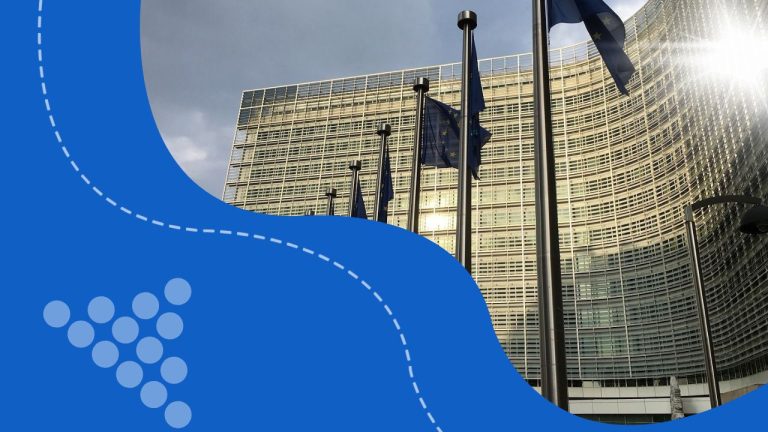
    The political groups within the European Parliament are pushing to enhance social and environmental safeguards for “strategic” mining projects in Europe and abroad as the EU seeks to secure vital raw materials for its green and digital transitions.

    The Parliament’s industry committee is set to vote on the EU’s draft Critical Raw Materials Act, which aims to reduce the bloc’s reliance on China and other countries for metals like rare earths.

    The proposal, unveiled in March by the European Commission, outlines benchmarks to increase domestic capacity for raw materials extraction, processing, and recycling. The aspirational targets correspond to 10%, 40%, and 15% of the EU’s needs, respectively.

    EU member states voted in June to raise the Commission’s proposed benchmark for processing on European soil from 40% to 50%. Lawmakers in the Parliament’s industry committee support this 50% objective but have added an international dimension. They suggest that “up to 20% of the Union’s new processing capacity” could be developed through “strategic partnerships” with foreign countries.

    These partnerships would be facilitated through “strategic projects” that receive expedited permitting rules and access to finance. However, they would also face closer scrutiny regarding environmental and social safeguards.

    These moves have been praised by green campaign group Transport and Environment (T&E), which sees the establishment of safeguards as more important than voluntary targets. Julia Poliscanova, Senior Director at T&E, emphasized that these safeguards would ensure that environmental and social standards are met.

    Strategic projects can encompass all stages of the raw materials supply chain, from mining to processing and recycling. They must be mutually beneficial for both the EU and the host country, according to the draft Parliament report.

    The EU is currently in discussions with Chile to establish a strategic partnership on raw materials as part of a broader EU-Chile trade agreement. This partnership could facilitate the EU’s access to Chile’s significant lithium reserves.

    The draft parliamentary report, authored by Nicola Beer, a centrist lawmaker from Germany’s liberal FDP party, underscores the need for diversifying raw materials supplies as a priority in the EU’s external action and diplomacy.

    The European Parliament is also considering stricter sustainability requirements for critical raw material projects. This includes imposing more stringent conditions for EU-wide recognition of industry certification schemes. These schemes will need to have multi-stakeholder governance systems in place to qualify. Compliance with EU certification standards will be verified at the site level rather than the company level.

    These certification amendments have broad cross-party support and are expected to pass. However, the fate of other aspects of the draft, such as stress tests for large companies and funding for self-sufficiency targets, remains uncertain.

    After the industry committee vote, the draft Critical Raw Materials Act is expected to be voted on in the European Parliament’s plenary session on September 11. This will initiate negotiations with EU member states to finalize the law.

  • Huge theft rocks Europe’s largest copper producer

    Huge theft rocks Europe’s largest copper producer

    “During a scheduled review of metal inventories, Aurubis has identified considerable discrepancies in target inventory,” the German company said Thursday in a statement. Aurubis claimed that “criminal activity” was behind the shortfall.

    Aurubis produces about 1.1 million tonnes (1.2 million tons) of copper “cathodes,” or square sheets, per year at plants in Europe and the United States. The company accounts for around 30% of Europe’s production of such copper and 3% to 5% of global output, a spokesperson told CNN.

    Copper is widely used in construction, including in electrical wires and water pipes. It is also a vital metal for energy transition as it is used in wind turbines, solar panels and electric cars.

    The financial hit from the theft at Aurubis “might be in the low, three-digit-million-euro range,” the company said, warning that as a result it will not achieve the profit it has forecast for this fiscal year.

    Shares of Aurubis plunged Friday, trading 12% lower by mid-afternoon in Europe.

    The company has involved the State Office of Criminal Investigation in Hamburg, Germany, where Aurubis is based, the copper producer said. A spokesperson for the public prosecutor’s office in Hamburg told CNN on Friday that it had not yet received any information from local police or the criminal investigation office about the reported theft.

    Aurubis has also opened investigations by internal and external experts to understand what happened and how its security could be improved.

    This is not the first time the company has disclosed suspected theft. In June, Aurubis said it had identified “past criminal activities.” The public prosecutor’s office and police are investigating an “organized theft ring” targeting “intermediate products” that contain precious metals and which are the result of the company’s production processes.

  • Belgium leads the way in rare earth metals recycling

    Belgium leads the way in rare earth metals recycling

    Belgium is a European leader in recycling, one of the few nations to meet recycling targets set out by the EU. Other than household and commercial waste, Belgian recycling plants are now helping to reduce Europe’s dependence on foreign minerals.

    Rare earth metals, commonly used in the production of high-tech goods, are desperately needed for the European economy. China has a monopoly on the supply of these metals, producing up to 97% of the world’s supply.

    In July, China placed export restrictions on gallium and germanium metals, which are indispensable for the production of advanced chips.

    China accounts for about 80% of the global production of gallium, which is used in integrated circuits, LEDs and solar panels, among others. The country also dominates the production of germanium, which is used in the production of fibre-optic cables and infrared applications.

    The European Commission is concerned that restrictions on exports of certain rare earth metals will impact EU supply chains, especially within the context of growing demand for these metals for the green transition. It wants to reduce dependence on third countries such as China to 65% for imports of 18 critical resources.


    Rare metals from scrap

    Belgian companies want to play a role in the transition away from reliance on rare earth metals imports. Even if Europe is not well-suited for the extraction of these precious metals, it can play a role in reducing imports, notably through recycling.

    One factory in Liège is one of the very few places in Europe to process metallurgy-related waste and recover the valuable rare earth metals. Hydrometal has been extracting gallium and germanium from waste for nearly 20 years. However, this is no simple process.

    “It’s very precise, difficult to make profitable, very competitive, and you can’t find a lot of raw materials on the market. It really requires specific knowledge and specific chemistry. Our factory is the only one in Wallonia. Today, there are two actors in Belgium who can do it, and only two actors in Europe too,” Phillipe Henry, administrator of Hydrometal, told RTL Info.

    Recent Chinese export restrictions have caused prices on the market to skyrocket. The current market price for gallium is $614 per kg, and $2,716 per kg for germanium. Faced with these rising prices, recycling has become a more profitable endeavour.

    “We are contacted almost every day to be able to respond to these challenges. They will not be easy, because we have to remain competitive, answer also have to see if it can be maintained in the long-term,” Henry noted.

    For now, Belgian companies are focused on the extraction of rare earth minerals from waste in the metallurgy industry. Granted, much of our tech and smartphones contain highly sought after rare earth metals, but these amounts are still too small to be profitable for major recycling companies.

    The amounts contained in phones amount to just a few grams per tonne, and it is not currently viable to extract gallium, germanium, or indium from them, at least in Belgium.

    While recycling plays an important role in reducing dependence on Chinese exports, Europe may soon switch to encouraging their extraction from European soil. Currently, no rare earth metals are mined in Europe.

    But new studies have revealed massive deposits of valuable rare earth metals, which could feasibly be extracted. In Sweden, mineral group LKAB discovered an untapped reserve of more than 10 million tonnes of oxides, the largest known deposit of its kind in Europe.

    The EU will reflect on the possibility of the opening of new rare earth metal mines in Europe, but will likely still face resistance from locals due to environmental concerns. The largest potential extraction site for Europe is at Kvanefjeld in Greenland, but extraction has been prevented by indigenous groups and local residents.

    The need to find new solutions is growing. Last year, European Commission President Ursula von der Leyen predicted that “Lithium and rare earth metals will soon be more important than oil and gas.”

  • Hiring activity in the European mining industry increased by 2% in Q1 2023

    Hiring activity in the European mining industry increased by 2% in Q1 2023

    Notably, Management Occupations jobs accounted for a 10% share of the European mining industry’s total new job postings in Q1 2023, drop 2% over the prior quarter.

    Management Occupations drive mining hiring activity

    Management Occupations, with a share of 10% new job postings, was the occupation with the greatest hiring activity in the European mining industry in Q1 2023 , ahead of Architecture and Engineering Occupations with a 9% share of new job postings.

    The other prominent roles included Computer and Mathematical Occupations with a 6% share in Q1 2023, Business and Financial Operations Occupations with a 6% share and Office and Administrative Support Occupations with a 5% share of new job postings.

    Top five companies accounted for 43% of hiring activity

    Constellium posted 2,043 jobs in Q1 2023 and registered a growth of 176% over the previous quarter, followed by Sulzer with 1,470 jobs and a 137% growth. Eaton, with 1,462 jobs, and ABB, with 1,181 jobs, recorded a 283% rise and a 45% drop, respectively, while Novolipetsk Steel recorded a 36% increase with a 932 new job postings during Q1 2023.

    Regional analysis of hiring in the European mining industry, Q1 2023

    France held the leading share of the European mining hiring activity with a 22.17% share, an 18% decrease over Q4 2022. Germany was next with 14.41%, four-percentage-point down over the previous quarter.

  • Italy vows to jump-start mining renaissance by year’s end

    Italy vows to jump-start mining renaissance by year’s end

    [vc_section][vc_row][vc_column width=”1/6″][/vc_column][vc_column width=”1/2″][vc_row_inner][vc_column_inner][vc_empty_space][vc_column_text]

    Enterprise Minister Urso recalled that the Italian underground holds 16 of the EU’s 34 “critical” raw materials, and promised that the legal and geographic framework that will allow the resurgence of Italy’s mining sector “will be clear” by the end of 2023

    [/vc_column_text][/vc_column_inner][/vc_row_inner][vc_empty_space][vc_separator][vc_empty_space height=”10px”][vc_row_inner][vc_column_inner width=”2/3″][widget-SocialWidget][/vc_column_inner][vc_column_inner width=”1/3″][link url=”https://decode39.com/7302/italy-mining-renaissance-2023/#:~:text=Italy%20pushes%20forward%20mines%20re,country’s%20ageing%20mineral%20resource%20maps.” content_text=”News source”][/vc_column_inner][/vc_row_inner][vc_empty_space][vc_column_text]Italy pushes forward mines re-opening effort. Back in April, Enterprise Minister Adolfo Urso announced that Rome was updating the country’s ageing mineral resource maps. On Thursday, he indicated that the companies who want to take part in resurrecting the Italian mining and refining industry “will be able to present their projects” as early as late 2023.

    • “I think that by the end of the year, the whole picture will be clear: European regulations, Italian regulations, and the potential of our territory,” he explained, referring to the extraction and processing of critical raw materials in Europe.

    Hidden, transition-relevant riches. When it unveiled its Critical Raw Materials Act, which seeks to boost the EU’s in-house production and de-risk from monopolistic suppliers (namely, China), the European Commission identified 34 critical raw materials. As Minister Urso underscored, 16 can be found in the Italian underground – in mines “that were closed 30 years ago” and that the country must now re-open and invest in to “re-activate their potential.”

    • The Italian earth houses reserves of lithium, cobalt, nickel, copper and zinc, as well as beryllium and tungsten, which are required across the greentech and digital sectors.
    • Resuming their extraction and processing is conducive to reaching the EU’s goal of producing at least 10% of the CRMs it consumes by 2030.

    It’s bigger than Italy. Today, the supply chain of such materials is firmly in Chinese hands, which gives Beijing the leverage to threaten Europe’s ecological and digital transitions. Last week, the Chinese Communist Party announced restrictions on the export of two key metals, gallium and germanium, in a warning shot to the countries that are curbing its access to other products – such as semiconductors – the country requires for its tech autonomy ambitions.

    • “We have just realised how dangerous it is to rely on Russian fossil sources. We cannot do the same with China on rare earths and precious minerals,” as Minister Urso remarked back in April – especially given Beijing’s “expansionist policy,” which entails “the acquisitions of [CRM] deposits, mainly in Africa, and then concentrating processing at home.”

    A concerted effort. In late June, Minister Urso launched a structural cooperation with his French and German counterparts to coordinate the three countries’ approaches to sourcing CRMs. The trio, representing nearly half of the EU’s GDP, vowed to expand data exchange practices and cooperation in the fields of minerals extraction, refining, processing, recycling and ESG standards while keeping the industries looped in, to work on a green transition that may cater to their needs and ultimately foster the emergence of European industrial champions.[/vc_column_text][vc_empty_space][epic_post_tag compatible_column_notice=”” font_size=”17px”][/vc_column][vc_column width=”1/6″][vc_text_separator title=”LATEST NEWS” color=”juicy_pink”][vc_empty_space height=”10px”][widget-LatestPosts post_number=”4″][vc_empty_space height=”10px”][vc_text_separator title=”MOST POPULAR” color=”juicy_pink”][vc_empty_space height=”10px”][widget-popular-posts post_count=”4″][vc_empty_space][vc_wp_search title=”Search”][vc_empty_space][lvs display_like=””][/vc_column][vc_column width=”1/6″][/vc_column][/vc_row][/vc_section][vc_section][vc_row][vc_column][distance desktop_type=”50″][/vc_column][/vc_row][vc_row][vc_column width=”1/2″][epic_block_28 compatible_column_notice=”” number_post=”6″ post_offset=”0″ first_title=”You may also like”][/epic_block_28][vc_empty_space][/vc_column][vc_column width=”1/2″][epic_hero_5 compatible_column_notice=”” hero_margin=”0″ content_filter_number_alert=”” post_offset=”0″][/vc_column][/vc_row][/vc_section][vc_section][vc_row][vc_column width=”1/6″][/vc_column][vc_column width=”1/2″][vc_row_inner][vc_column_inner][vc_empty_space][vc_column_text]

    Enterprise Minister Urso recalled that the Italian underground holds 16 of the EU’s 34 “critical” raw materials, and promised that the legal and geographic framework that will allow the resurgence of Italy’s mining sector “will be clear” by the end of 2023

    [/vc_column_text][/vc_column_inner][/vc_row_inner][vc_empty_space][vc_separator][vc_empty_space height=”10px”][vc_row_inner][vc_column_inner width=”2/3″][widget-SocialWidget][/vc_column_inner][vc_column_inner width=”1/3″][link url=”https://decode39.com/7302/italy-mining-renaissance-2023/#:~:text=Italy%20pushes%20forward%20mines%20re,country’s%20ageing%20mineral%20resource%20maps.” content_text=”News source”][/vc_column_inner][/vc_row_inner][vc_empty_space][vc_column_text]Italy pushes forward mines re-opening effort. Back in April, Enterprise Minister Adolfo Urso announced that Rome was updating the country’s ageing mineral resource maps. On Thursday, he indicated that the companies who want to take part in resurrecting the Italian mining and refining industry “will be able to present their projects” as early as late 2023.

    • “I think that by the end of the year, the whole picture will be clear: European regulations, Italian regulations, and the potential of our territory,” he explained, referring to the extraction and processing of critical raw materials in Europe.

    Hidden, transition-relevant riches. When it unveiled its Critical Raw Materials Act, which seeks to boost the EU’s in-house production and de-risk from monopolistic suppliers (namely, China), the European Commission identified 34 critical raw materials. As Minister Urso underscored, 16 can be found in the Italian underground – in mines “that were closed 30 years ago” and that the country must now re-open and invest in to “re-activate their potential.”

    • The Italian earth houses reserves of lithium, cobalt, nickel, copper and zinc, as well as beryllium and tungsten, which are required across the greentech and digital sectors.
    • Resuming their extraction and processing is conducive to reaching the EU’s goal of producing at least 10% of the CRMs it consumes by 2030.

    It’s bigger than Italy. Today, the supply chain of such materials is firmly in Chinese hands, which gives Beijing the leverage to threaten Europe’s ecological and digital transitions. Last week, the Chinese Communist Party announced restrictions on the export of two key metals, gallium and germanium, in a warning shot to the countries that are curbing its access to other products – such as semiconductors – the country requires for its tech autonomy ambitions.

    • “We have just realised how dangerous it is to rely on Russian fossil sources. We cannot do the same with China on rare earths and precious minerals,” as Minister Urso remarked back in April – especially given Beijing’s “expansionist policy,” which entails “the acquisitions of [CRM] deposits, mainly in Africa, and then concentrating processing at home.”

    A concerted effort. In late June, Minister Urso launched a structural cooperation with his French and German counterparts to coordinate the three countries’ approaches to sourcing CRMs. The trio, representing nearly half of the EU’s GDP, vowed to expand data exchange practices and cooperation in the fields of minerals extraction, refining, processing, recycling and ESG standards while keeping the industries looped in, to work on a green transition that may cater to their needs and ultimately foster the emergence of European industrial champions.[/vc_column_text][vc_empty_space][epic_post_tag compatible_column_notice=”” font_size=”17px”][/vc_column][vc_column width=”1/6″][vc_text_separator title=”LATEST NEWS” color=”juicy_pink”][vc_empty_space height=”10px”][widget-LatestPosts post_number=”4″][vc_empty_space height=”10px”][vc_text_separator title=”MOST POPULAR” color=”juicy_pink”][vc_empty_space height=”10px”][widget-popular-posts post_count=”4″][vc_empty_space][vc_wp_search title=”Search”][vc_empty_space][lvs display_like=””][/vc_column][vc_column width=”1/6″][/vc_column][/vc_row][/vc_section][vc_section][vc_row][vc_column][distance desktop_type=”50″][/vc_column][/vc_row][vc_row][vc_column width=”1/2″][epic_block_28 compatible_column_notice=”” number_post=”6″ post_offset=”0″ first_title=”You may also like”][/epic_block_28][vc_empty_space][/vc_column][vc_column width=”1/2″][epic_hero_5 compatible_column_notice=”” hero_margin=”0″ content_filter_number_alert=”” post_offset=”0″][/vc_column][/vc_row][/vc_section]