Tag: Europe

  • China’s Rare Earth Export Curbs Threaten to Disrupt Europe’s Auto Industry, Italian Lobby Warns

    China’s Rare Earth Export Curbs Threaten to Disrupt Europe’s Auto Industry, Italian Lobby Warns

    New Chinese restrictions on rare earth metal exports could severely impact Europe’s automotive industry, warned Roberto Vavassori, chairman of Italy’s auto parts association ANFIA, during the ForumAutoMotive conference in Milan on Tuesday.

    Despite a July agreement intended to streamline shipments to Europe, China has continued to maintain tight control over rare earth exports, recently expanding its export curbs even further. The country currently refines and processes the majority of the world’s rare earths, materials essential to key sectors including automotive manufacturing, semiconductors, and defence.

    Vavassori noted that while European manufacturers had so far managed to sustain production despite previous supply cuts, reserves of rare earth metals are now nearly exhausted.

    “That reserves’ buffer is not there anymore,” he said, warning that further disruptions could quickly ripple through Europe’s automotive supply chain.

    Rare earth elements are critical for producing electric motors and other advanced vehicle components, making them indispensable to Europe’s electric vehicle ambitions.

    Although the global rare earth industry is relatively small — valued at less than $5 billion — Vavassori emphasized that its strategic importance far outweighs its market size.

    “This small industry is capable of slowing down the entire global auto sector,” he cautioned.

  • Aurubis Sets Record Copper Premium as Global Supply Tightens

    Aurubis Sets Record Copper Premium as Global Supply Tightens

    Europe’s largest copper producer, Aurubis, will charge a record $315 per metric ton premium for refined copper sales to European customers in 2026, according to three market sources cited on Tuesday.

    The surcharge — applied on top of the London Metal Exchange (LME) benchmark price — represents a 38% increase from the $228 per ton level maintained over the previous two years. The company declined to comment on the pricing decision.

    The sharp rise comes amid mounting fears of a global copper shortage that has driven prices to a 16-month high of $10,800 per ton on Monday. LME copper has climbed about 8% in the past month, trading at $10,698.50 as of Tuesday morning (1027 GMT).

    The market has been rattled by a series of production setbacks across major mining regions. Freeport-McMoRan declared force majeure at its Grasberg mine in Indonesia — the world’s second-largest copper operation — following a deadly mudslide, forcing the company to cut its 2025 and 2026 sales forecasts. Additional disruptions have hit the Kamoa-Kakula mine in the Democratic Republic of Congo and Chile’s El Teniente mine.

    According to Société Générale, the loss of roughly 273,000 tons of copper output from Grasberg between September and December will push the market into its largest supply deficit since 2004. Bank of America has similarly revised its outlook, more than doubling its projected 2026 deficit to 350,000 tons.

    Analysts note that while demand for copper continues to rise — driven by electrification, renewable energy, and grid expansion — supply growth remains constrained by operational challenges and long lead times for new projects.

  • Estonia Opens First Rare Earth Magnet Plan

    Estonia Opens First Rare Earth Magnet Plan

    Europe’s first large-scale rare earth magnet production plant has opened in Estonia, marking a watershed moment in the EU’s efforts to secure supply chains for critical raw materials. The facility, developed by Canadian group Neo Performance Materials at an investment of $75 million, is more than just a factory—it represents Europe’s growing determination to reduce its reliance on China in the race toward renewable energy and electric mobility.

    Why Rare Earth Magnets Matter

    Rare earth magnets are a cornerstone of the energy transition. They power electric motors in vehicles, enable the operation of wind turbines, and play a role in advanced electronics. Without them, scaling up clean technology becomes almost impossible. The challenge is that China has long dominated both the processing and production chains, supplying over 90 percent of the world’s rare earth magnets and an estimated 98 percent of Europe’s demand. This dominance has left industries on the continent vulnerable.

    When Beijing tightened export controls on certain rare earth materials earlier this year, European manufacturers reported severe delays in securing supplies. Such disruptions risk derailing the EU’s aggressive targets for decarbonisation and the expansion of electric vehicle production. As Neo’s chief executive Rahim Suleman put it, “Customer motivations are incredibly high to diversify their supply base and to have localized supply chains.”

    A Strategic Investment for Europe

    The new Estonian plant will initially produce 2,000 tonnes of rare earth magnets annually, with plans to scale up to 5,000 tonnes. While this is still only a fraction of projected European demand—forecast to rise from roughly 22,000 tonnes today to 60,000 tonnes within the next decade—it represents a critical first step toward supply diversification.The facility’s operations are closely linked with Neo’s nearby separation plant, creating an integrated processing hub inside the EU. Raw materials will be sourced from Australia and Malaysia, regions that Europe considers more geopolitically reliable than China.

    Beyond private investment, the project has enjoyed notable public support: a €18.7 million grant from the EU’s Just Transition Fund and a $50 million line of credit from Export Development Canada.European Commission president Ursula von der Leyen underscored the significance, stating that the magnets produced in Estonia are “indispensable to growth and innovation.” Her comments align with the EU’s strategic goal of processing at least 40 percent of its critical raw materials domestically, part of a broader strategy to insulate the bloc from geopolitical shocks.

    Industrial Demand and Auto Sector Stakes

    The automotive sector stands at the heart of the rare earth magnet debate. German auto suppliers Bosch and Schaeffler have already signed contracts with Neo, highlighting the desperation among manufacturers to lock in alternative supply lines. Electric vehicles rely heavily on permanent magnets for motors, making uninterrupted access critical to Europe’s industrial competitiveness.At the same time, Europe faces a delicate balancing act. Producing magnets outside China comes at a cost premium, driven by higher environmental standards, energy costs, and raw material logistics. But as Suleman pointed out, the magnet within an electric vehicle motor represents only a small fraction of the total cost. For carmakers increasingly judged by their ability to produce cleaner vehicles, paying a premium for secure, non-Chinese inputs may soon be seen as a necessary trade-off.

    Europe vs. U.S.: Diverging Paths

    The EU is not the only region scrambling to insulate itself from China’s grip on rare earths. The United States has moved aggressively, fueled by larger federal subsidies and sharper geopolitical confrontation with Beijing.

    Washington has poured billions into rare earth mining and processing projects, while Europe has leaned more heavily on public–private partnerships and industry demand.

    Suleman contrasted the two approaches bluntly: “In the U.S., they’re chasing government money, and in Europe we’re chasing customers—or customers are chasing us.” Europe’s model may take longer to scale, but some argue it will prove more resilient, given that it is anchored in long-term demand rather than temporary government incentives.

    The Limits of Diversification

    Despite bold moves like the Estonian plant, Europe cannot entirely sever ties with China in the near future. Analysts suggest that at best, 30 percent of global rare earth magnet production could shift outside Chinese borders in the next decade, leaving Beijing with enduring dominance. France has spearheaded several projects to challenge this control, but insufficient mining and processing capacity across the continent means Europe will remain dependent on imports.

    Furthermore, the global raw material supply chain itself has bottlenecks. While Australia is emerging as a reliable supplier, and southeast Asia provides alternatives, scaling these sources to cover growing demand will take time, investment, and political stability.

    A Turning Point for Europe’s Green Transition

    The Estonian facility is ultimately a symbol of Europe’s intent to claim greater agency in a strategically vital industry. As electric vehicle adoption accelerates and renewable power scales, the demand for rare earth magnets will only intensify. Neo Performance Materials’ new plant will not solve Europe’s dependency overnight. But by anchoring at least part of the value chain closer to home, it signals to both industry and policymakers that strategic autonomy in essential raw materials is not only desirable but possible.

    For Europe, Estonia is just the beginning. The continent will need more facilities, stronger alliances with trusted suppliers, and coordinated industrial policies to reduce its rare earths vulnerability. The magnet plant may be a modest contribution in terms of tonnage, but geopolitically, it is a giant leap forward.

  • Europe Sees Surge in Canadian Aluminum Shipments as US Tariffs Bite

    Europe Sees Surge in Canadian Aluminum Shipments as US Tariffs Bite

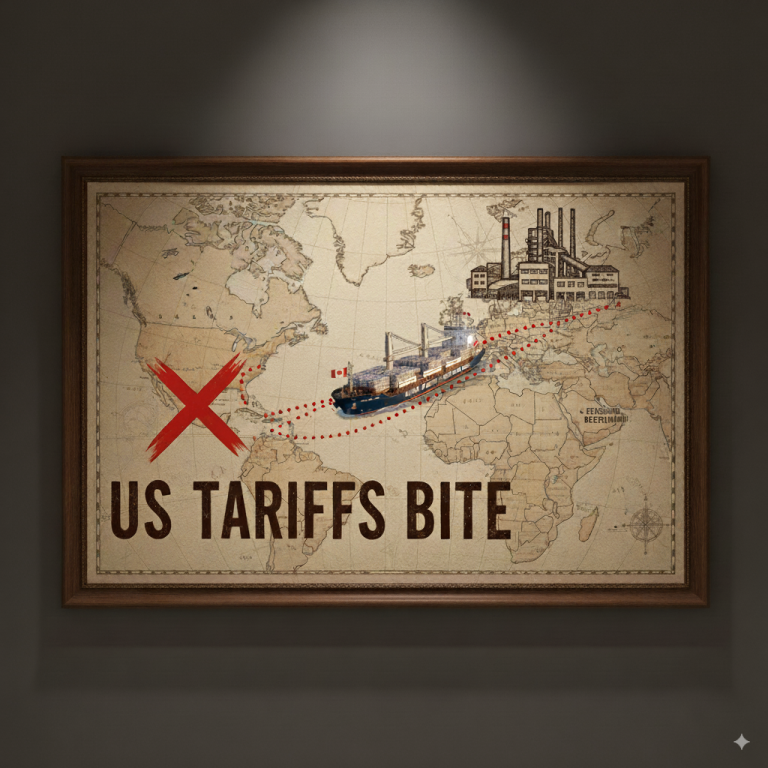
    Canadian aluminium producers have rapidly redirected exports from the United States to Europe after the US imposed tariffs of up to 50%, causing a dramatic surge in Canadian metal shipments to European markets during 2025.

    The shift is most notable among Quebec’s producers, who supply about 90% of Canada’s aluminium. The US share of Quebec’s exports fell to 78% in Q2 2025 from 95% in Q1, while Europe’s share soared to 18% from just 0.2%, according to S&P Global Market Intelligence[2]. Companies like Rio Tinto, Alcoa, and Aluminerie Alouette have led this pivot—Alouette, for instance, sent 57% of its output to Europe in Q2, up from 4% previously[1]. Alcoa alone diverted more than 100,000 metric tonnes to Europe in the quarter.

    Key European destinations now include the Netherlands (11,800 tonnes imported April–May), Italy (25,500 tonnes), and Germany[1][3]. European buyers welcome these Canadian shipments for their high quality and lower carbon footprint compared to global alternatives, as well as the opportunity to diversify supply and benefit from competitive prices[1].

    The underlying cause is the US decision to reinstate a 25% tariff on Canadian aluminium in March 2025—then double it to 50% in June[1][2][3]. This has pushed the US Midwest premium (the local price above the global benchmark) up by 82% since June, making deliveries from Canada financially unviable for many US buyers, while European warehouse premiums have dropped due to the influx of Canadian supply.

    Jean Simard, president of the Aluminium Association of Canada, said: “It’s an easy call. You ship anything you can to Europe. As the price builds up into the US, you can expect metal to come back to the US market.”

  • Savannah Resources Pushes Back on Claims Portugal Withheld Barroso Mine Data

    Savannah Resources Pushes Back on Claims Portugal Withheld Barroso Mine Data

    Savannah Resources (LON: SAV) is pushing back against media reports that a United Nations committee has accused Portuguese authorities of violating international law during the approval process for the company’s Barroso lithium project.

    In a statement to MINING.COM, Savannah’s Communications Manager António Neves Costa said that two of the public bodies named in the UN document have clarified their positions, stating that no step of the licensing process was carried out in violation of Portuguese law.

    The clarifications follow a report by the Aarhus Convention Compliance Committee, which alleged that Portugal failed to guarantee citizens’ rights to environmental information and participation during the project’s licensing process.

    The Portuguese Environmental Agency (APA) said the Barroso project underwent the longest public consultation period ever granted to an industrial project in the country, spanning more than 110 days. The Northern Regional Coordination and Development Commission (CCDR-N) also rejected the suggestion that it withheld information, stating that all documents were made available in line with national law.

    According to Reuters, the UN committee’s findings have reinforced calls from local residents and environmental groups for the project’s license to be revoked. The APA, while noting a “divergent interpretation” of the Convention, maintains that it acted in strict compliance with administrative procedures.

    Savannah Resources is seeking to develop what it calls Western Europe’s largest mine of spodumene, a hard-rock form of lithium. The company plans to build four open-pit mines in northern Portugal, with the goal of producing enough lithium annually for 500,000 to one million electric vehicle batteries. First output is slated for 2027.

  • Europe’s Lithium Paradox: New Documentary Explores EU’s Critical Mineral Dilemma

    Europe’s Lithium Paradox: New Documentary Explores EU’s Critical Mineral Dilemma

    A new documentary, Europe’s Lithium Paradox, produced by Storyrunner and SIM² KU Leuven and distributed by Journeyman Pictures, delves into the European Union’s struggle to secure a sustainable and self-sufficient supply of lithium—a metal essential for electric vehicle batteries and renewable energy storage.

    Despite possessing significant lithium reserves, Europe lacks operational mines and remains heavily dependent on imports, particularly from China. The film investigates the challenges hindering the development of domestic lithium mining, including slow permitting processes and opposition from environmental groups.

    Featuring insights from policymakers, industry experts, and civil society representatives, the documentary examines key projects across the continent, such as Serbia’s Jadar mine and Portugal’s Mina do Barroso. It also addresses the broader implications of Europe’s reliance on external sources for critical raw materials and explores potential pathways toward a more resilient and environmentally conscious supply chain.

  • European Tungsten Prices Reach Highest Level Since 2013 Amid Chinese Export Curbs

    European Tungsten Prices Reach Highest Level Since 2013 Amid Chinese Export Curbs

    European tungsten prices have surged to their highest point since 2013, driven by China’s tightening restrictions on critical mineral exports. The price of ammonium paratungstate (APT)—a vital intermediate in tungsten metal production—has reached $400 per metric ton unit (mtu) on the European spot market, marking an 18% increase since February, according to Reuters.

    The spike follows China’s recent export curbs and quota reductions on key strategic metals, including tungsten, tellurium, molybdenum, bismuth, and indium. These measures, imposed in retaliation to US tariffs earlier this year, have intensified global supply concerns.

    China dominates global tungsten production, accounting for over 80% of the 81,000 tons produced worldwide last year, according to the US Geological Survey (USGS). Tungsten’s exceptional properties—such as its highest melting point of any element, extreme hardness, and excellent electrical and thermal conductivity—make it indispensable across various industries. Initially popularized in incandescent light bulbs, tungsten now underpins sectors ranging from aerospace and semiconductors to defense and industrial drilling.

    Tungsten carbide, second only to diamond in hardness, is crucial for metalworking tools and industrial drills, while tungsten crucibles facilitate the melting of other high-temperature materials. In the defense sector, tungsten is used for “penetrators,” armor-piercing projectiles currently in high demand amid the ongoing conflict in Ukraine.

    China’s Tightening Grip on Exports
    The global tungsten scarcity has been exacerbated by China’s export restrictions. The country’s first tungsten ore mining quota for 2024 was set at 58,000 tons—a 6.5% decrease from the previous year.

    “Since the Chinese export ban was announced, there has been an over-reliance on scrap supplies, but now those are running thin, and there’s growing panic over the inability to secure new primary tungsten material,” said Oliver Friesen, CEO of Guardian Metal Resources.

    The stakes are especially high for the United States, which ceased commercial tungsten mining in 2015 and remains heavily reliant on imports. A looming 2027 deadline mandates the US military to eliminate purchases of tungsten mined or processed in China or Russia—the latter being the world’s third-largest producer.

    North American Efforts to Secure Supply
    In response, Canada’s Almonty Industries recently announced an offtake agreement to provide tungsten oxide exclusively for US defense applications. The company operates tungsten mines in Spain, Portugal, and South Korea.

    “Almonty can produce enough tungsten for US/EU/Korea defense demand but not enough for the entire US/EU/Korea market—defense and civilian combined,” Almonty’s CEO Lewis Black stated. Shares of Almonty rose 4.6% in Toronto following the announcement, giving the company a market capitalization of C$688 million ($492 million).

    “Tungsten is a small market… But the industries that depend on it are exponentially bigger, which is why it is on everyone’s critical mineral list,” Reuters columnist Andy Home noted.

  • China Export Curbs Push European Bismuth Prices to Highest Since 2008

    China Export Curbs Push European Bismuth Prices to Highest Since 2008

    European bismuth prices have surged to their highest levels since 2008, driven by concerns over impending export restrictions from China. The move, viewed as a retaliatory measure amidst escalating global trade tensions, has sparked fears of a significant supply crunch for the metal, which is crucial in pharmaceuticals, cosmetics, and nuclear research.

    Earlier this month, China announced its intention to impose export controls on five key metals: tungsten, tellurium, molybdenum, bismuth, and indium. This decision comes in response to recently implemented tariffs by the United States.

    The immediate impact on the European spot market has been dramatic. Bismuth prices, previously stable at around $6 per pound, have soared to between $12 and $18 this week. Market traders anticipate further price increases in the coming weeks.

    China’s dominance in the bismuth market is substantial. According to the United States Geological Survey (USGS), the nation accounted for over 80% of global bismuth production last year, producing approximately 13,000 tonnes. While other countries, including Japan, South Korea, and Laos, contribute to the remaining supply, traders highlight the limited availability of bismuth from these sources compared to China.

    “We have been inundated with enquiries from both our EU and US clients,” stated a European-based trader, emphasising the growing concern. They further noted that US consumers would be particularly vulnerable should the trade dispute between China and the US escalate.

    With global trade tensions on the rise, it is expected that China may further utilise its control over critical minerals as a strategic tool. The recent price surge in Europe signals the potential for significant market volatility and supply chain disruptions.

  • Europe’s Lithium Mining Debate: Environmental Costs vs. Green Transition

    Europe’s Lithium Mining Debate: Environmental Costs vs. Green Transition

    Europe is believed to hold vast but unexploited lithium reserves in Germany, Czechia, Serbia, Spain, Portugal, and Austria. However, efforts to tap into these resources have faced strong resistance from local communities and environmental groups.

    Since July 2024, Serbians have staged protests against Rio Tinto’s lithium project in the Jadar Valley, a populated rural region in the country’s northwest. In Portugal’s Barroso region, opposition has been ongoing since May 2023, while in Spain’s UNESCO-listed city of Cáceres, resistance to lithium mining has persisted for over six years.

    In a recent episode of Tech Talks, Euronews examined this divisive issue with two experts presenting contrasting views. Lindsey Wuisan, a campaigner at Friends of the Earth Europe, warns that lithium mining carries irreversible environmental and societal consequences. She highlighted concerns about water and energy consumption, chemical pollution, and threats to biodiversity, arguing that mining profits often benefit multinational companies rather than local communities.

    Conversely, Peter Tom Jones, director of the KU Leuven Institute for Sustainable Metals and Minerals, maintains that while mining has negative impacts, these can be mitigated through responsible practices. He advocates for renewable energy in mining operations, dry-stacking waste materials, and local community involvement. Jones also stressed that lithium and other metals are crucial for Europe’s transition to a climate-neutral economy and that relying on imports shifts environmental burdens abroad.

    The debate continues as Europe grapples with the balance between sustainability, local opposition, and the need for critical raw materials.

  • Europe’s EV Battery Dreams Dim as China Takes the Lead

    Europe’s EV Battery Dreams Dim as China Takes the Lead

    Europe’s ambition to develop a robust homegrown EV battery industry to reduce dependence on China is faltering, with Chinese and Asian manufacturers stepping in to fill the void.

    The most notable setback has been the collapse of Northvolt, a Swedish startup once celebrated as a cornerstone of Europe’s green energy vision. Despite securing the EU’s largest-ever green loan and support from Volkswagen and BMW, Northvolt filed for bankruptcy protection in the US, with its cofounder and CEO, a former Tesla executive, stepping down.

    Across Europe, 12 out of 16 planned European-led battery factories have been delayed or canceled. In contrast, 10 of 13 projects in Europe led by Asian manufacturers, such as China’s Contemporary Amperex Technology Co. (CATL) and South Korea’s Samsung SDI, are moving forward, underscoring a widening gap in the race for EV battery dominance.

    Europe’s original vision, driven by massive government subsidies, included factories in Sweden, Poland, Germany, and Canada, designed to produce greener batteries using 100% recycled materials like nickel, manganese, and cobalt. However, this ambition is now unraveling. Industry experts warn of severe repercussions. Andy Palmer, former CEO of Aston Martin, stated that the failure to establish domestic battery production jeopardizes Europe’s automotive industry, risking factory closures and job losses as automakers consider relocating to regions with stronger supply chains.

    Other projects are also faltering, with Mercedes-Benz and Stellantis delaying plants in Germany and Italy, while Volkswagen has pushed back capacity targets for its European facilities. The UK’s Britishvolt collapsed last year, further compounding the region’s struggles.

    China, supplying 80% of the world’s lithium-ion batteries, has outpaced Europe with massive investments in its domestic EV sector. Companies like CATL and BYD have become global leaders, while European automakers are now scaling back their electrification strategies and canceling battery orders, leaving the continent’s dreams dimming.