Tag: economic development

  • Perran Moon MP Advocates for Domestic Tin Production Amid Global Shortages

    Perran Moon MP Advocates for Domestic Tin Production Amid Global Shortages

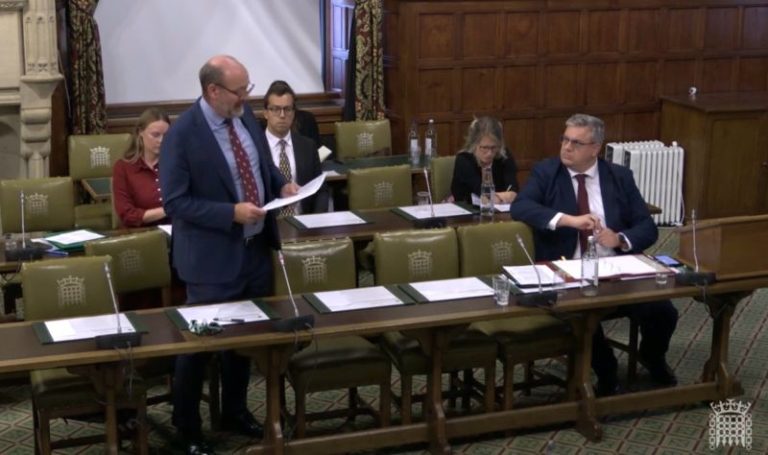
    In a recent debate held in Westminster Hall, Perran Moon, the Labour MP for Camborne, Redruth & Hayle, highlighted the critical importance of domestic tin production and processing in the UK. The debate, which garnered support from various political figures including Minister Blair McDougall and the Shadow Opposition Minister, focused on the looming global tin shortage and the rising prices that have resulted from it. Moon expressed his delight at the consensus reached among the participants regarding the significance of the tin sector, which he believes is vital not only for economic reasons but also for its cultural and historical relevance to Cornwall.

    Moon passionately articulated that Cornish tin mining is more than just an industrial activity; it is deeply intertwined with the identity and heritage of the Cornish people. He stated, “It is part of our heritage, part of who we are, not just what we did. And it is now a symbol of hope in an uncertain world.” His remarks underscore the dual role that tin mining plays in both providing employment opportunities and preserving the cultural legacy of the region.

    During the debate, Moon invited Minister McDougall to visit South Crofty, a site of ongoing regeneration efforts in Cornish tin mining, to witness firsthand the progress being made. He reiterated his commitment to advocating for the tin sector in Westminster, despite the light-hearted nickname he has earned as ‘The Tin Man.’

    The debate also featured contributions from fellow Cornish Labour MPs Noah Law and Anna Gelderd, who provided additional insights into the importance of tin mining for local communities and the economy. The discussions reflect a growing recognition of the need for strategic investment in domestic mineral production to ensure the UK can meet its future resource needs and reduce reliance on imports.

    As the global demand for tin continues to rise, driven by its essential role in various industries including electronics and renewable energy, the call for revitalising the Cornish tin mining sector is more pressing than ever. Moon’s advocacy highlights the intersection of economic development, environmental sustainability, and cultural heritage, positioning Cornwall as a key player in the future of the UK’s critical minerals landscape.


  • Altyntau Kokshetau Transitions to Underground Mining, Extending Mine Life Until 2047

    Altyntau Kokshetau Transitions to Underground Mining, Extending Mine Life Until 2047

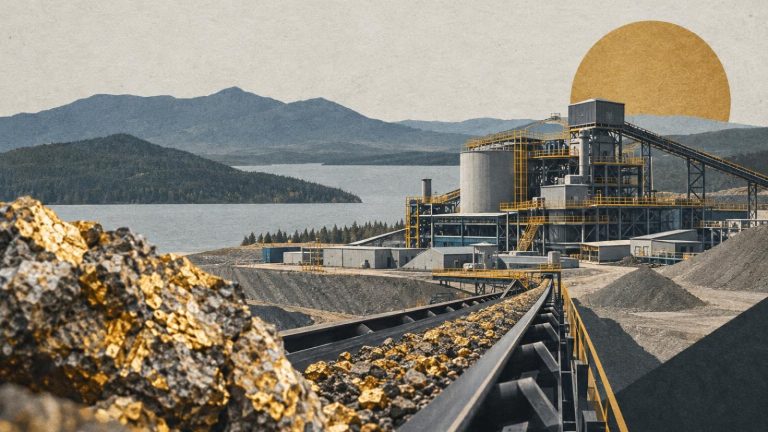
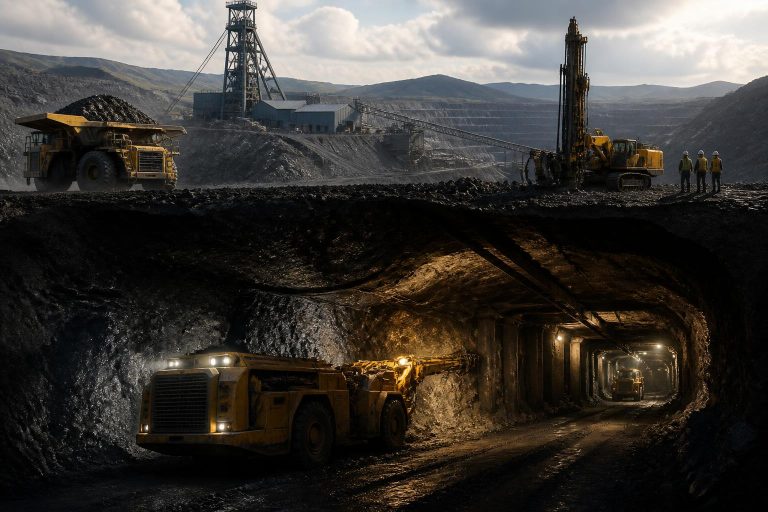
    Altyntau Kokshetau, a prominent gold mining company in Kazakhstan, has announced a strategic shift to underground mining operations at its gold deposit in the Akmolinsk region, effectively extending the mine’s operational life until 2047. This transition marks a significant milestone in the company’s history, which spans over 60 years. The regional akimat reported that underground drilling and blasting works have already commenced, signalling the start of a new phase in resource extraction.

    The decision to move to underground mining is not only a technical advancement but also a vital economic strategy for the region. The company has expanded its mining territory by acquiring an additional 1,057 hectares of land, which is essential for developing the necessary underground infrastructure. This transition is expected to bolster the local economy significantly, as Altyntau Kokshetau is one of the major employers in the area, providing jobs for over 1,700 individuals. The mine contributes 17% to the region’s total industrial output and 23% to its manufacturing sector.

    The sustainability of the mine is crucial for the social stability of the Akmolinsk region. By maintaining operations at this key enterprise, the company is not only preserving jobs but also providing a long-term planning horizon for the local community. The transition to underground mining is projected to create approximately 600 new jobs and generate over 3 billion tenge in annual tax contributions to the local budget.

    In terms of financial investment, Altyntau Kokshetau has committed to investing more than $700 million into the development of the deposit. The planned hybrid approach includes underground mining of three ore zones with an annual capacity of 2 million tonnes, alongside deepening the open pit from its current depth of 540 metres to 680 metres, which will allow for an additional 6 million tonnes of production per year. This comprehensive development strategy underscores the company’s commitment to sustainable mining practices and its role in the regional economy.

  • Kazakhstan Government Discusses New Fluorspar Concentrate Plant in Zhambyl Region

    Kazakhstan Government Discusses New Fluorspar Concentrate Plant in Zhambyl Region

    The government of Kazakhstan has recently convened to discuss an investment project aimed at constructing a new plant for the production of acid-grade fluorspar concentrate in the Zhambyl region. The meeting, chaired by First Deputy Prime Minister Nurlan Naliбаев, included representatives from Western Mining Corporation Limited, a consortium of leading Chinese companies spearheading this initiative. The proposed plant is set to produce fluorspar concentrate, which is highly sought after in the chemical industry, new energy sector, and both ferrous and non-ferrous metallurgy.

    During the meeting, Nurlan Naliбаев highlighted the government’s commitment to providing comprehensive support to investors. He underscored the strategic importance of developing the mining and processing industries, attracting foreign investments, and implementing modern environmental production standards to ensure sustainable economic growth in Kazakhstan. The project is expected to create over 200 permanent jobs, contributing to local employment and economic development.

    Following the discussions, relevant government bodies and organizations have been tasked with conducting a comprehensive assessment of the project’s economic and strategic viability. This initiative reflects Kazakhstan’s ongoing efforts to enhance its mining sector and attract international collaboration, particularly in the context of increasing demand for fluorspar in various industrial applications. As the country seeks to bolster its position in the global mining landscape, projects like this one are crucial for fostering innovation and sustainability in the industry.


  • Solidcore Resources Secures $600 Million Financing for Gold Processing Plant in Kazakhstan

    Solidcore Resources Secures $600 Million Financing for Gold Processing Plant in Kazakhstan

    Solidcore Resources, a gold producer, has secured $600 million in financing from the European Bank for Reconstruction and Development (EBRD) and a syndicate of commercial banks, including ING, Société Générale, and Abu Dhabi Commercial Bank (ADCB). The EBRD will provide $300 million over a ten-year period, while the commercial banks will contribute an additional $300 million, with each bank committing $100 million. The initial term of the credit line is set for five years, with an option to extend it to seven years. The agreement also allows for an increase in funding by up to $300 million. The Ertis Hydrometallurgical Plant (ЕГМК) will act as a co-borrower alongside Solidcore.

    The financing package includes a three-year grace period, with the repayment of the principal amount commencing after the completion of the plant in 2029. Hussein Ozhan, EBRD’s Managing Director for Central Asia and Mongolia, highlighted that the development of local processing capacities and high-value product manufacturing will enable Kazakhstan to retain a greater share of added value within the country. He emphasized the bank’s commitment to promoting advanced metallurgical technologies, creating new jobs in the Pavlodar region, diversifying Kazakhstan’s mining sector, and enhancing its international competitiveness.

    In addition to the EBRD financing, Solidcore has signed a preliminary agreement with KfW IPEX-Bank for a $100 million credit line over seven years, with documentation currently being prepared.

    The ЕГМК will focus on extracting gold from previously difficult-to-process ores, located within the special economic zone of Pavlodar. Once operational, the plant is expected to process up to 300,000 tonnes of gold-bearing concentrate annually, producing up to 500,000 ounces of doré gold from the Kyzyl deposit and additional feedstock.

    The capital expenditure for the ЕГМК is estimated at approximately $1 billion, with Solidcore planning to finance part of this through loans and the remainder from its own funds. The company anticipates that the project will create around 500 permanent jobs upon completion.

    CEO Vitaly Nesis stated that the establishment of the hydrometallurgical plant in Pavlodar aims to mitigate production, market, and geopolitical risks. Construction has already commenced, with an autoclave installed for processing gold-bearing raw materials. The project has received a positive conclusion from the state expertise for the construction of the ЕГМК and its associated infrastructure, with over a thousand workers currently on-site.

    Solidcore is actively developing several mining projects, including the Bakyrchik deposit in the Abai region and the Varvarinskoye and Komarovskoye deposits in the Kostanay region. The company has reported a remarkable 222% increase in sales volume in the first quarter of 2026, reaching 123,000 ounces in gold equivalent, with revenues soaring 5.5 times to $595 million.


  • Kyrgyzstan Launches Underground Gold Mining at Kumtor, Prioritizing Sustainability and State Control

    Kyrgyzstan Launches Underground Gold Mining at Kumtor, Prioritizing Sustainability and State Control

    BISHKEK, Kyrgyzstan — President Sadyr Zhaparov officially launched an underground gold mining project at the Kumtor Gold Company during a working visit to the Issyk-Kul region on Wednesday, marking a significant shift in the country’s mining strategy and environmental approach.

    The project, which builds on over 1,600 meters of developed tunnels, is set to tap into high-grade ore deposits containing over 5 grams of gold per ton. The underground operation is expected to last 17 years and has added 147 tonnes of gold to Kyrgyzstan’s state reserve balance.

    President Zhaparov hailed the move as both an economic and environmental milestone.

    “This marks a new chapter for Kumtor — one that aligns with our goals of sustainable development and environmental protection, especially in preserving our glaciers,” he said.

    The president underscored the importance of the Kumtor deposit’s return to state ownership, calling it a historic achievement. Under domestic management since May 2021, Kumtor has generated $3.45 billion in revenue, of which $891.6 million has gone to the state budget. Over 54 tonnes of gold have been produced in that time, with $441 million in dividends transferred to the state — a dramatic increase compared to just $100 million during the previous 28 years of foreign operation.

    The project is being executed entirely by local specialists, with underground mining chosen for its lower environmental impact compared to open-pit methods. While open-pit operations will continue, the strategic focus will increasingly shift underground.

    Zhaparov also revealed plans to process gold-rich tailings and develop new sites, including the Togolok deposit and the Jangart exploration area, as part of Kyrgyzstan’s broader efforts to maximize national resource benefits.

  • Uzbekistan Opens Nation’s First 1,000-Meter Skip Shaft at Zarmitan Mine

    Uzbekistan Opens Nation’s First 1,000-Meter Skip Shaft at Zarmitan Mine

    On April 30, 2025, Uzbekistan marked a historic milestone in its mining industry with the inauguration of the country’s first 1,000-meter-deep skip shaft. The event was held at the Zarmitan deposit, part of the Southern Mining Department in the Koshrabot district of Samarkand Region, under the investment project “Development of Lower Horizons of the Zarmitan Deposit.”

    The ceremonial launch was attended by Deputy Minister of Mining and Geology U. Yusupov, Chairman of the Board of NMMC JSC K. Sanakulov, leaders of the plant’s enterprises, representatives of Mine Construction Alliance S.r.o, media personnel, plant workers, and industry veterans.

    As part of the project, the skip shaft—measuring 6.5 meters in diameter—was deepened to 1,000 meters. This engineering achievement, which incorporates innovative construction solutions and digital technologies, will significantly boost ore transport efficiency, reduce operational costs, and create 90 new jobs. The projected annual economic benefit is estimated at 19.2 billion Uzbek soums.

  • Orano and Mongolia Sign $1.6bn Deal for Uranium Project

    Orano and Mongolia Sign $1.6bn Deal for Uranium Project

    France’s Orano Group has partnered with Mongolia’s government to develop the Zuuvch-Ovoo uranium mine, a $1.6 billion project in Dornogovi province. The agreement, signed in Ulaanbaatar, signifies a step forward for Mongolia’s mining sector and global low-carbon energy goals. Orano, in collaboration with Mongolia’s MonAtom Group, will oversee operations through their joint venture, Badrakh Energy.

    The mine, with an estimated 90,000 tonnes of uranium reserves, will leverage in-situ recovery methods. An initial $500 million investment will lead to production starting in 2028, creating 1,600 jobs and boosting Mongolia’s economy. With a projected output of 2,500 tonnes annually over 30 years, the project aligns with Mongolia’s Vision 2050 goals.

    Orano CEO Nicolas Maes emphasized the mine’s role in promoting low-carbon energy. Prime Minister Oyun-Erdene Luvsannamsrai celebrated the partnership as a milestone for economic growth and international collaboration, strengthening ties between Mongolia and France.

  • Kazakhstan Revives Mining at Key Deposits in 2024

    Kazakhstan Revives Mining at Key Deposits in 2024

    In 2024, several mining companies in Kazakhstan resumed operations at significant deposits, submitting project plans through the Unified Environmental Portal.

    OralElectroService has returned to the Uzynzhal deposit in the Karaganda region, targeting 500,000 tons of zinc-lead ore annually. The project will use open-pit mining until 2033 before transitioning to underground methods, with total reserves of 12.5 million tons.

    In East Kazakhstan, Taskara will mine gold and silver at the Taskora deposit. The three-year project focuses on processing 31,000 tons of ore annually.

    In the Zhambyl region, Ushalyk Gold Operating plans to extract 727,000 tons of ore at the Ushalyk deposit over four years, processing up to 250,000 tons annually to produce flotation concentrate.

    These initiatives highlight the mining sector’s sustained importance in Kazakhstan’s economy.

  • Kalisz Set to Begin Geothermal Drilling Project with Major Funding Support

    Kalisz Set to Begin Geothermal Drilling Project with Major Funding Support

    Kalisz, a city in Poland, is preparing to launch exploratory drilling for geothermal resources by early 2025. This project aims to harness thermal water to provide heating for both municipal and residential buildings and supply recreational facilities in the area.

    The initiative has gained momentum following the signing of funding agreements with the National Fund for Environmental Protection and Water Management (NFOSiGW) and six other municipalities. Through this funding, Kalisz will receive PLN 15 million (around USD 3.72 million) to support the geothermal drilling efforts.

    The exploratory well in Kalisz will be drilled as a vertical borehole near Sportowa Street, Wal Jagiellonski, and the Swedrnia River, reaching a depth of 1,700 meters. Following the drilling, the project will conduct hydrogeological, geophysical, and laboratory tests to confirm the site’s viability, with full hydrogeological documentation anticipated by 2026.

    Experts suggest that Kalisz‘s geothermal resources may offer higher temperatures compared to Uniejow and Poddebice, cities where geothermal heating has successfully operated for several years. Mayor Krystian Kinastowski highlighted the potential of this clean energy source, stating, “Geothermal energy offers affordable heating solutions for Kalisz residents and will benefit both current and future housing developments.”

    The geothermal project is expected to provide not only cost-effective energy but also to stimulate economic growth, contributing significantly to Kalisz’s development.

  • Bulgarian President Radev: Metallurgy and Heavy Industry Are Key to Europe’s Economic Future

    Bulgarian President Radev: Metallurgy and Heavy Industry Are Key to Europe’s Economic Future

    Bulgarian President Rumen Radev emphasized the critical role of the metallurgy, mining, and heavy industries in shaping Europe’s economic resilience during the Metallurgist’s Day celebration in Sofia, which he attended under his official patronage. He urged Bulgaria to leverage this opportunity to strengthen its economic position within Europe’s industrial landscape. Reflecting on recent global challenges, including the pandemic, the energy crisis, and the Ukraine conflict, Radev argued that these events revealed Europe’s overreliance on external energy resources and the limitations of a solely green-tech focus, advocating instead for a balanced industrial strategy.