Tag: economic development

  • Untapped Gold Reserves at Europe’s Largest Mine in Asturias, Spain

    Untapped Gold Reserves at Europe’s Largest Mine in Asturias, Spain

    Underneath the Salave Lagoon in Asturias, Spain, lies Europe’s largest untouched gold mine, holding 30 tonnes of gold, equal to about 10% of Spain’s gold reserves. Despite private interest in mining the site and extensive exploration over decades, the local community remains divided on allowing the project to proceed. Explotaciones Mineras del Cantábrico, which holds the mining rights, plans to invest over €100 million, creating direct and indirect jobs while ensuring minimal disruption to the town. However, opposition groups, such as Oro No, argue that the project poses significant environmental risks and legal issues.

  • Comparing Norway’s Oil Wealth to Serbia’s Lithium Potential

    Comparing Norway’s Oil Wealth to Serbia’s Lithium Potential

    n a recent discussion, Ana Brnabić, President of the Serbian Parliament, likened Serbia’s lithium reserves to Norway’s oil wealth, emphasizing the transformative economic potential. President Aleksandar Vučić and Mining Minister Dubravka Đedović Handanović have also supported this view, particularly focusing on the Jadar lithium project by Rio Tinto. This project, which could significantly boost Serbia’s economy, faces strong opposition from environmental groups. Critics argue that Serbia lacks the robust political and regulatory framework that enabled Norway’s successful oil industry.

    Norway discovered oil in the 1960s, leading to substantial GDP growth and the creation of a significant welfare state funded by oil revenues. Serbia aims to replicate this model through lithium mining, essential for the booming electric vehicle (EV) market. Rio Tinto projects that the Jadar mine could generate 180 million euros in annual state revenue. However, the environmental impact and public resistance present major challenges. Serbia’s political landscape and regulatory systems are not as well-established as Norway’s, complicating efforts to harness lithium’s potential sustainably.

    The Jadar project involves extracting lithium from jadarite, a unique mineral found only in Serbia. The project has the potential to make Serbia a key player in the global lithium market, essential for EV batteries. However, effective management of environmental concerns and community relations is crucial for the project’s success.

  • Kyrgyz Parliament Lifts Ban on Uranium and Thorium Mining, Focusing on Economic Benefits

    Kyrgyz Parliament Lifts Ban on Uranium and Thorium Mining, Focusing on Economic Benefits

    Deputies of the Kyrgyz Parliament have voted in favor of a bill to lift the ban on mining uranium and thorium, with 69 votes in favor and three against. The parliamentarians are confident that these legislative changes will bring substantial economic dividends to the country.

    The ban on uranium and thorium mining was initially imposed in 2019 when authorities sought to sell a development license for a deposit. However, local residents expressed concerns about potential environmental damage and harm to the water table, leading to a complete ban across the Republic.

    Over the past century, the Issyk-Kul region of Kyrgyzstan alone has accumulated 150,000 cubic meters of radioactive waste from uranium mining. The country currently has 92 burial sites containing 23 tailing dumps with uranium elements, resulting in a total volume of 2.9 million cubic meters of poisonous and hazardous substances.

    The new bill emphasizes the need for alternative sources of income due to severe economic impacts in recent years. However, it also highlights the importance of strict compliance with environmental norms and standards in uranium and thorium mining.

    Minister of Natural Resources, Environment, and Technical Supervision, Melis Turganbayev, assured the deputies that the passage of the bill would not harm the environment or the health of Kyrgyz citizens. Turganbayev explained that the focus is not solely on uranium but also on associated metals. The plan is to mine titanomagnetite, which contains uranium and thorium. The extracted uranium will be sold to other states, while thorium will be stored. Processing will take place at the Kara-Balta Combine in Chui Oblast.

    While three deputies voted against the bill, citing environmental concerns, Doctor of Geological and Mineral Sciences, academician Rozalia Jenchuraeva, described the 2019 ban as a “big folly.” She highlighted the need to address the harmful waste and contamination of soil and water caused by hazardous materials lying just 20 meters below the surface. Jenchuraeva believes that mining these elements will clean up the land and create opportunities for the Kara-Balta Combine.

    President Japarov, who met with residents near the Kyzyl-Ompol deposit, expressed optimism about the development. He stated that it would create over a thousand jobs and become a significant resource similar to the Kumtor gold deposit. The aim is to boost the local budget and improve the living standards of the people.

    Kyzyl-Ompol, a uranium-thorionite placer deposit discovered in 1951, is one of the five areas in Kyrgyzstan where these minerals are found. It has been extensively explored by the Kyrgyz Institute of Geology.

  • Kazakhstan Proposes to Declassify Rare and Rare Earth Metal Deposits

    Kazakhstan Proposes to Declassify Rare and Rare Earth Metal Deposits

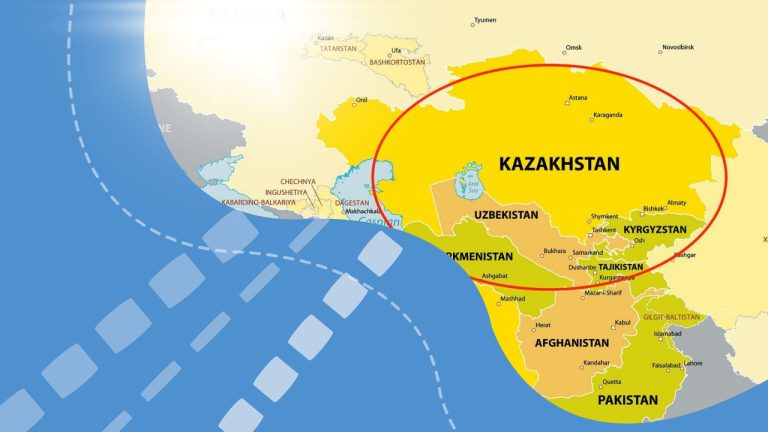
    In Kazakhstan, there is a proposal to declassify certain deposits of rare and rare earth metals, aiming to expedite the development of these valuable resources, according to inbusiness.kz. Experts predict that the demand for rare and rare earth metals, now crucial for many developed countries, will quadruple by 2040. Consequently, the active development of such deposits could significantly boost the nation’s economy.

    Deputy Andrey Lukin, who suggested declassifying the deposits, stated that the next step towards successful exploitation could be simplifying the licensing process for exploring Kazakhstan’s subsoil and expanding the areas for geological exploration. Additionally, Mr. Lukin emphasized the need to implement technical and financial support mechanisms for both local and foreign investors, alongside improving environmental standards.

    The World Bank reports that Kazakhstan possesses over 5000 unexplored sites with critically important rare metals, with an estimated value exceeding $46 trillion.

  • Uzbekistan Launches Joint Venture with Chinese Company for Mining Machinery Parts Production

    Uzbekistan Launches Joint Venture with Chinese Company for Mining Machinery Parts Production

    Today, on the eve of the Day of Mining and Metallurgical Industry Workers of the Republic of Uzbekistan, a ceremonial event was held in the Akhangaran district to mark the commencement of the joint venture LLC “HG-AMMC.” This venture is being implemented in collaboration with China’s “Huigong (Hebei) Machinery Group Co., Ltd.”

    The event saw the participation of the leadership of the Almalyk Mining and Metallurgical Combine, the president and specialists of Huigong (Hebei) Machinery Group, and various public representatives. It was noted that this enterprise is the result of agreements made during President Shavkat Mirziyoyev’s official visit to China in January of this year.

    The joint venture will undertake the project “Production of Spare Parts for Mining Machines.” This project is valued at $23 million, with an annual production capacity expected to reach $37.5 million. The partner company will produce over 282 types of spare parts for mining machinery. Additionally, an experimental project to convert oil into electricity will be implemented to reduce operational costs of mining equipment and promote green energy at the joint venture.

    The products manufactured will primarily meet local market needs and eventually be exported. The construction of the joint venture is expected to create 150 new jobs. The implementation of this project will significantly contribute to the industrial success of Uzbekistan and support economic growth.

    The event concluded with a symbolic ribbon-cutting ceremony, marking the beginning of construction.

  • Anglo Asian Mining Unveils Significant Copper Find in Azerbaijan

    Anglo Asian Mining Unveils Significant Copper Find in Azerbaijan

    Anglo Asian Mining (AAM), renowned for its expertise in gold, silver, and copper extraction in Azerbaijan, announced substantial copper mineralization at the Kharhar site in February 2024. Following Joint Ore Reserve Committee (JORC) standards, the estimated copper mineralization zone at the site stands at 24.9 million tons, boasting an average copper content of 0.48%. From 22 million tons of ore, 106,000 tons of copper have been identified, contributing to the total reserves of minerals at the site, which amount to 119,000 tons. Plans are underway for AAM to kickstart copper production at the Kharhar site by 2026, with an anticipated annual extraction of approximately 9,000 tons over the subsequent seven years. The favorable terrain at the site facilitates open-pit mining operations. Under a contract signed with the British company on August 21, 1997, encompassing the development of six sites, Azerbaijan retains a 51% share, with Anglo Asian Mining holding the remaining 49%. In September 2021, a new agreement expanded the company’s rights to three additional contract blocks, bringing the total to eight areas. Experts highlight that the development of the Kharhar site, alongside other contract areas, promises substantial revenue. The mining sector stands as a pivotal player in Azerbaijan’s non-oil sector development, with the nation actively aligning its industry with global standards, exploring innovative approaches and technologies, and seeking to attract investments. Attention is particularly focused on opportunities in liberated territories, which hold immense potential. The country continues to study and develop its mineral resource base, as outlined in the State Programme for Geological Exploration and Efficient Use of Mineral Resources Base for 2020-2024 and subsequent amendments. Estimates indicate abundant mineral deposits, including gold, mercury, copper, and more, within these territories. Positioned advantageously, Azerbaijan possesses rich reserves of diverse minerals and construction materials, positioning itself as a significant player in the regional mineral resources market.

  • Uzbekistan Aims to Tap into Mining Potential, President Urges Action

    Uzbekistan Aims to Tap into Mining Potential, President Urges Action

    Main Body: The domestic geological sector receives an annual allocation of one trillion sums, with last year’s implementation of targeted programs pushing the production volume in the mining industry to nearly $11 billion. However, the bulk of this output is directed towards precious and non-ferrous metals, despite a vast untapped potential for minerals crucial to industry. Thirty-two such valuable minerals have been identified in the country. In response, during a presentation on January 15th, the head of state issued directives to harness opportunities in this sphere. Measures, plans, and proposals were discussed at today’s meeting. With technological advancements driving global developments, there’s a growing demand for rare earth metals in industries like electric vehicles, green energy, and electronics. Consequently, prices for molybdenum, tellurium, selenium, and graphite have surged in recent years. The President emphasized the significant prospects emerging and underscored the need to expand exploration of existing and new deposits of critical raw materials. Currently, six types of such materials are extracted in the country, with the potential to derive high-value-added products from platinum group metals, indium, vanadium, as well as minerals containing tungsten, molybdenum, rhenium, zinc, and manganese. For instance, the production of previously non-existent powder metallurgy products worth $300 million annually and equipment and components worth $100 million annually could be organized. A critical raw material agreement with the European Union has recently been reached, opening access to this vast market. In light of this, officials have been tasked with formulating, with the involvement of foreign experts and investors, a program of promising projects worth $500 million for rare earth metals. Emphasis is placed on developing this direction with a scientific approach, establishing a project office for this purpose, and engaging leading institutions and research centers. The meeting also addressed increasing the production of precious metals at the Navoi Mining and Metallurgical Combine. Responsible officials reported on opportunities for further increasing both reserves and gold production volumes. The President instructed to reduce production costs at the combine by 10-15%, expand industrial cooperation and localization. A directive was issued to establish a Scientific Center for Advanced Technologies in Precious Metals.

  • Kazakhstan Implements Measures to Address Raw Material Shortage

    Kazakhstan Implements Measures to Address Raw Material Shortage

    The Ministry of Industry and Infrastructure Development of the Republic of Kazakhstan has mandated domestic raw material producers to supply the necessary volumes of products to enterprises in the processing industry. This decision comes in response to the ongoing challenge of raw material shortages faced by Kazakh metallurgists, primarily due to exports. On average, around 87% of primary metals were shipped to other countries, exacerbating the deficit domestically. It is expected that the amendments introduced in May will alleviate this issue, ensuring that domestic industrial enterprises are adequately supplied with raw materials. Additionally, these measures aim to replenish the domestic market with finished products and enhance Kazakhstan’s export potential. By 2029, Kazakhstan intends to increase lead and aluminum processing by four and five times respectively, while copper processing is projected to increase thirteenfold by that time.

  • Prime Minister of Kyrgyzstan Visits Kumtor Gold Mine

    Prime Minister of Kyrgyzstan Visits Kumtor Gold Mine

    During a recent working trip to the Issyk-Kul region, Akylbek Japarov, the Prime Minister and Head of the Administration of the President of the Kyrgyz Republic, visited the operations of the closed joint-stock company “Kumtor Gold Company.” The Prime Minister toured the plant’s machinery workshop, where he inspected the assembly of new excavators and refueling stations. Currently, the mine utilizes over 800 various types of transportation vehicles, machinery, and equipment. Japarov also visited Kumtor’s main quarry, where a project for underground gold mining has been underway since February of this year. According to estimates, the project aims to extract approximately 115 tons of gold. As reported by the cabinet, gold extraction from the mine’s ore waste, located in the tailings facility, is planned to commence from 2026. Preliminary calculations suggest an additional yield of 120 tons of gold through this initiative. In 2023, Kumtor mine yielded 13,567 tons of gold, generating a total revenue of $848 million with a net profit of $302.5 million.

  • Federal Government’s $11 Billion Investment Sparks Debate Over Rare Earth Mining in Australia

    Federal Government’s $11 Billion Investment Sparks Debate Over Rare Earth Mining in Australia

    The Federal Government’s bold investment of $11 billion to expand the Critical Minerals Facility, overseen by Export Finance Australia and the Northern Australia Infrastructure Facility, has reignited discussions surrounding rare earth mining in Australia. Despite scientific concerns, the government aims to bolster the nation’s position in the critical minerals market, tapping into the vast potential of rare earth elements crucial for various technologies including renewable energy, defense systems, and telecommunications.

    Australia, boasting approximately one-fifth of the world’s potential rare earth supply, has seen a surge in exploration endeavors supported by a $225 million fund allocated by Geoscience Australia. This initiative has spurred significant interest, leading to the establishment of 419 new exploration tenements by 49 companies. Proponents of mineral sand mining predict a prosperous future, with Professor Susan Park highlighting Australia’s advantageous position to capitalize on the impending mining boom.

    Federal Minister for Trade and Tourism Don Farrell underscored the government’s commitment to unlocking new critical minerals projects, envisioning Australia as a renewable energy powerhouse while emphasizing job creation in emerging industries. Collaborations with international partners such as the Republic of Korea and Germany are also sought to diversify global supply chains and enhance economic resilience.

    However, not all stakeholders share the government’s enthusiasm for a new mining era. Concerns voiced in the Harvard International Review highlight environmental risks associated with rare earth extraction, including the release of toxic chemicals and radioactive residues. The potential impact on agricultural land and water sources has drawn criticism, particularly regarding proposed mineral sand mines in Victoria’s Murray Basin and the Northern Territory.

    China’s recent ban on rare earth extraction and separation technologies has further underscored the global significance of Australia’s rare earth reserves. While aiming to mitigate environmental degradation and bolster national security, China’s dominance in the rare earth market has left a legacy of pollution and ecological damage, as evidenced by the devastating effects of mining activities in Bayan Obo.

    In Australia, the debate over rare earth mining continues to intensify, with proposed projects facing scrutiny over their potential impact on agricultural livelihoods and environmental sustainability. The government’s investment signals a strategic push towards economic growth and technological advancement, yet the ensuing environmental and social implications warrant careful consideration and public discourse.